October, 2019
Our sail from Tangier down the coast to Rabat lasted about 25 hours. We went 20 miles off the coast in order to avoid fishermen and their nets. Especially the tuna nets are famous among sailors who often talk about how the these nets can ruin the propellers of even big ships. Needless to say, we were quite cautious and Giorgio observed several flashing lights, possibly net markers, during his watches but we did not hit anything!

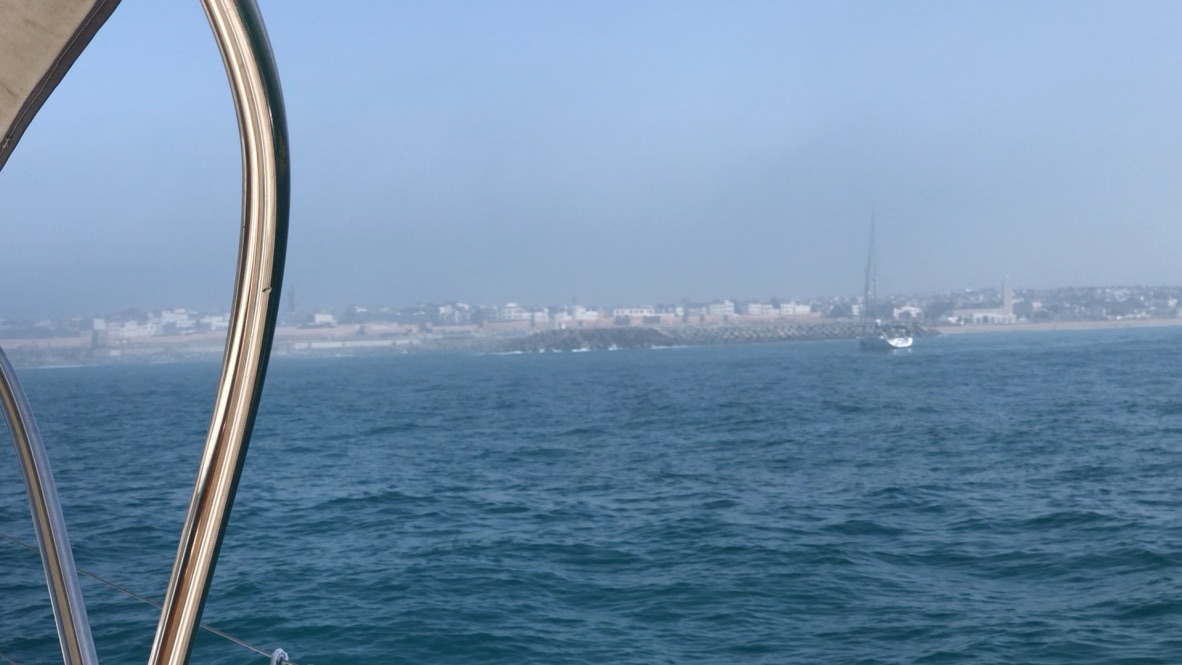
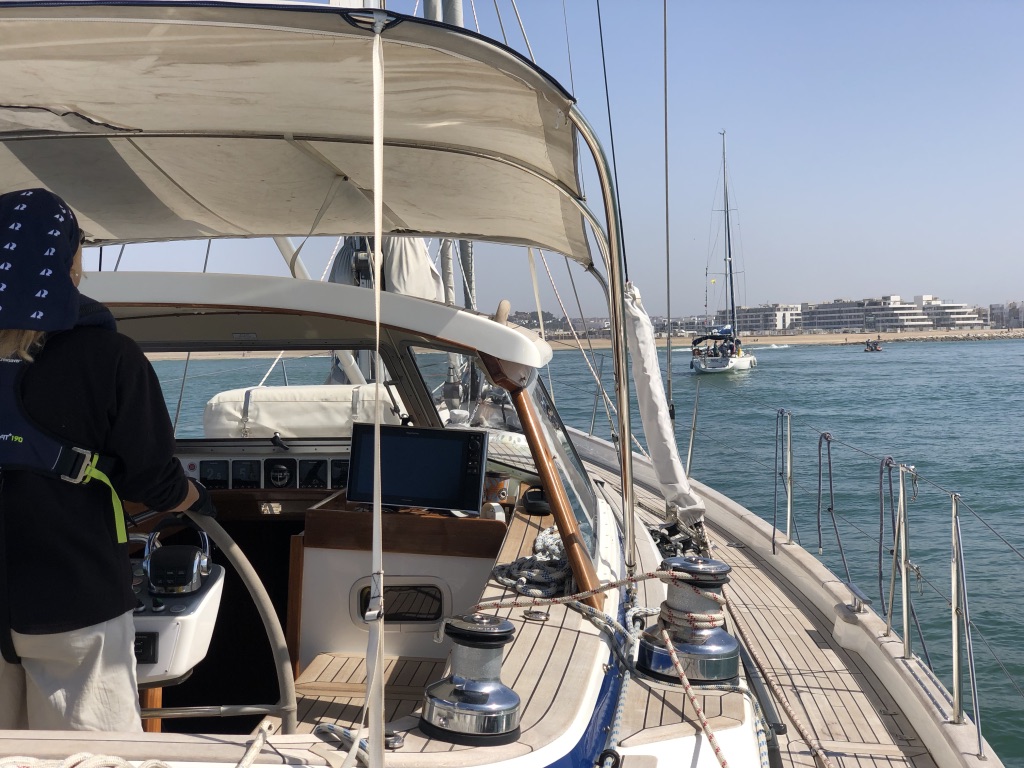
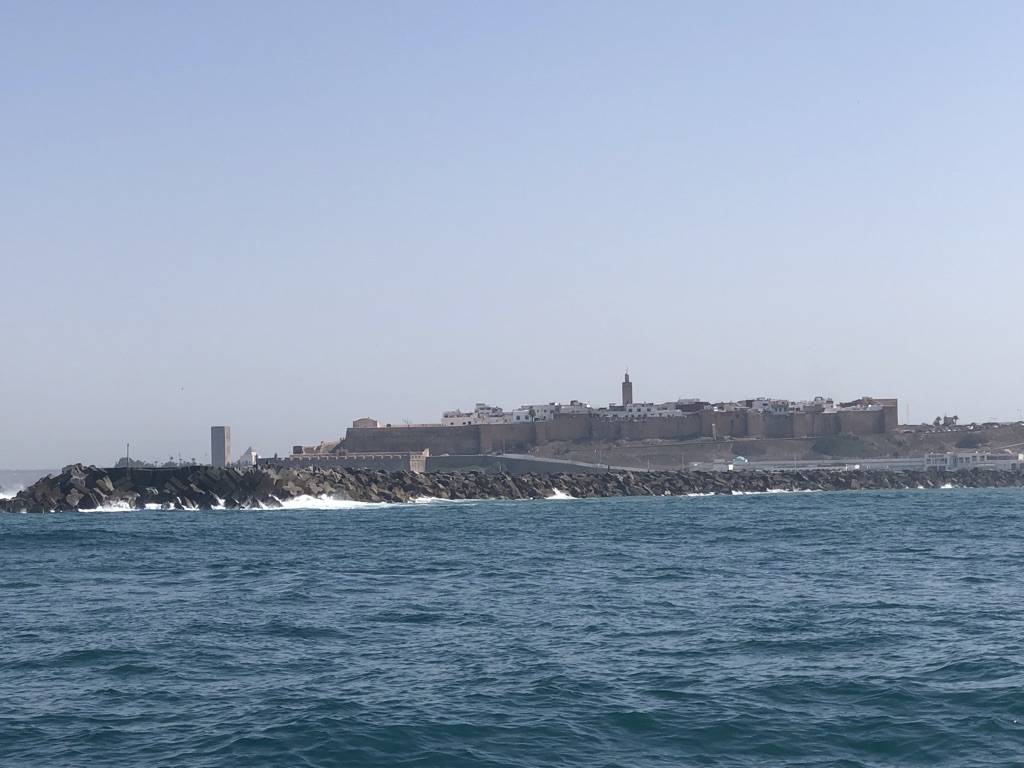
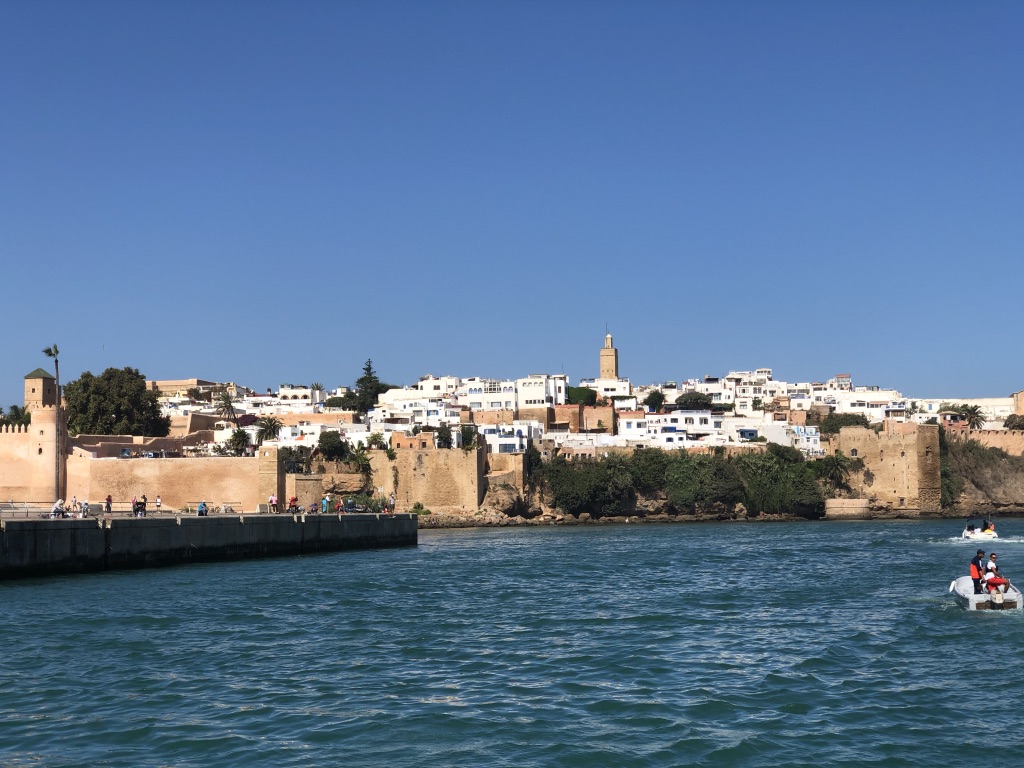
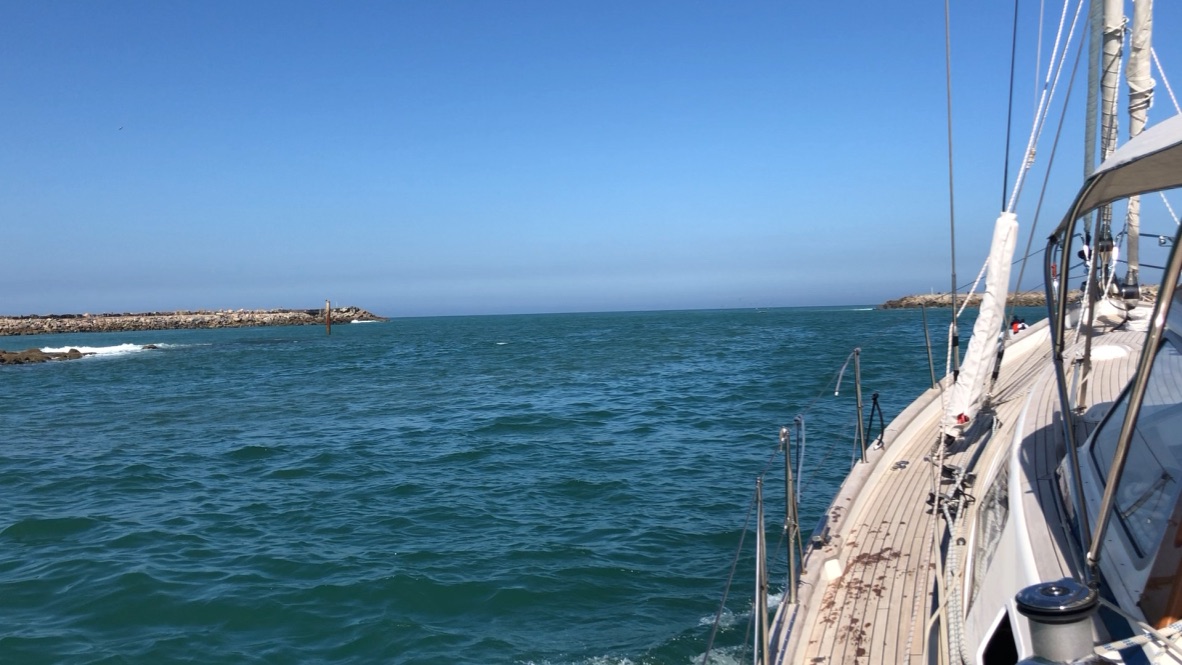
My memory of our entry from the Atlantic Ocean into the Bouregreg River at the base of walls of the Kasbah was not as I had anticipated. I had seen photos of the captivating beauty of the medieval walls meeting the ocean waves and I was excited. Our arrival, however, was hampered only a few miles from the coast as we were quickly surrounded by a dense fog. Our visibility was only a few feet! We had to use the radar continuously and blow our loud electric horn every two minutes. After communicating with the Marina, they asked us to wait for 30 minutes for the Pilot Boat escort to take us upriver. We spent the next half hour watching our moving map to make sure we weren’t going to hit any of the six boats that were also waiting, while looking all around trying to peer through the fog for any other boats without AIS (Automatic Identification System). Almost if by magic, the fog lifted in 30 minutes, and we began to see the other 6 boats (friends from the Tanja Marina Bay) who were waiting with us to follow the Pilot Boat up river to the Marina. It was at that time that I watched those magnificent walls open to us.
Rabat is the capital of Morocco and where the king, King Mohammed VI lives. It is a big city with definition between the old and new neighborhoods. There aren’t many high rise buildings but dense concentrations of three and four story buildings of non-descriptive style, and many architectural remnants from the French colonial age.
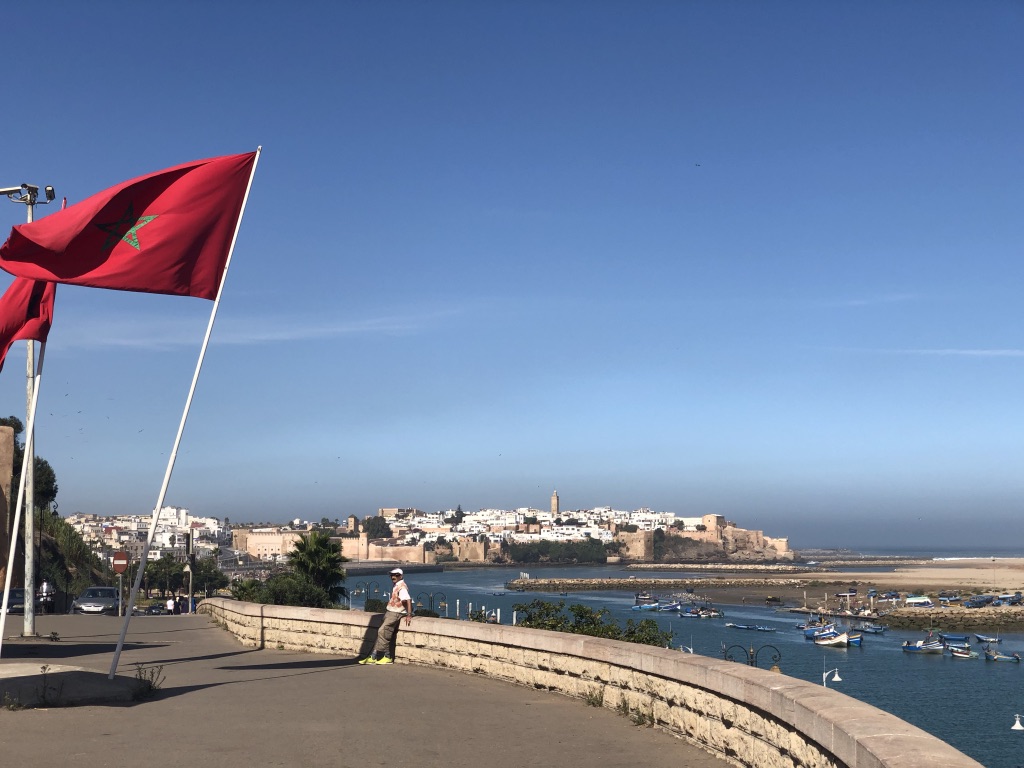
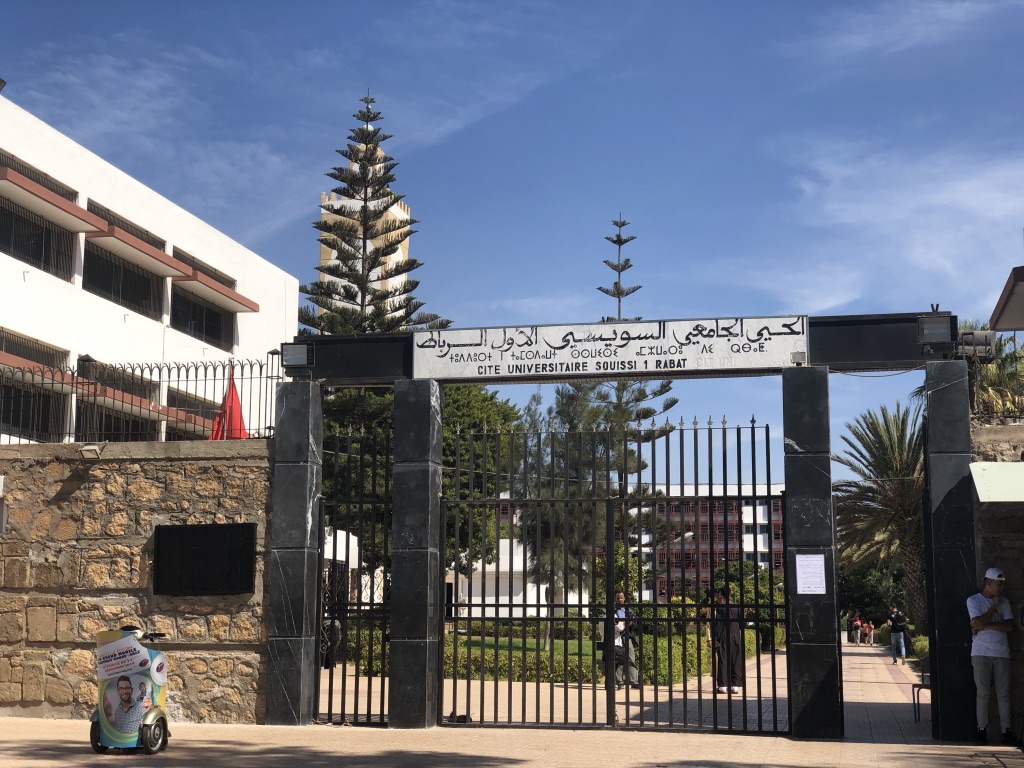
The general population seems to be quite poor. We did not see much excess in terms of luxury items such as expensive cars, clothes or high end shops. Rabat has a modern tram that goes from one end of the city to the next. The University of Rabat extends in the modern section for a couple of miles. The first day we tried to find an archaeological museum listed on Google Maps which was not where it was said to be. We spent a couple of hours walking around in the modern part of town where many embassies and the University are located.

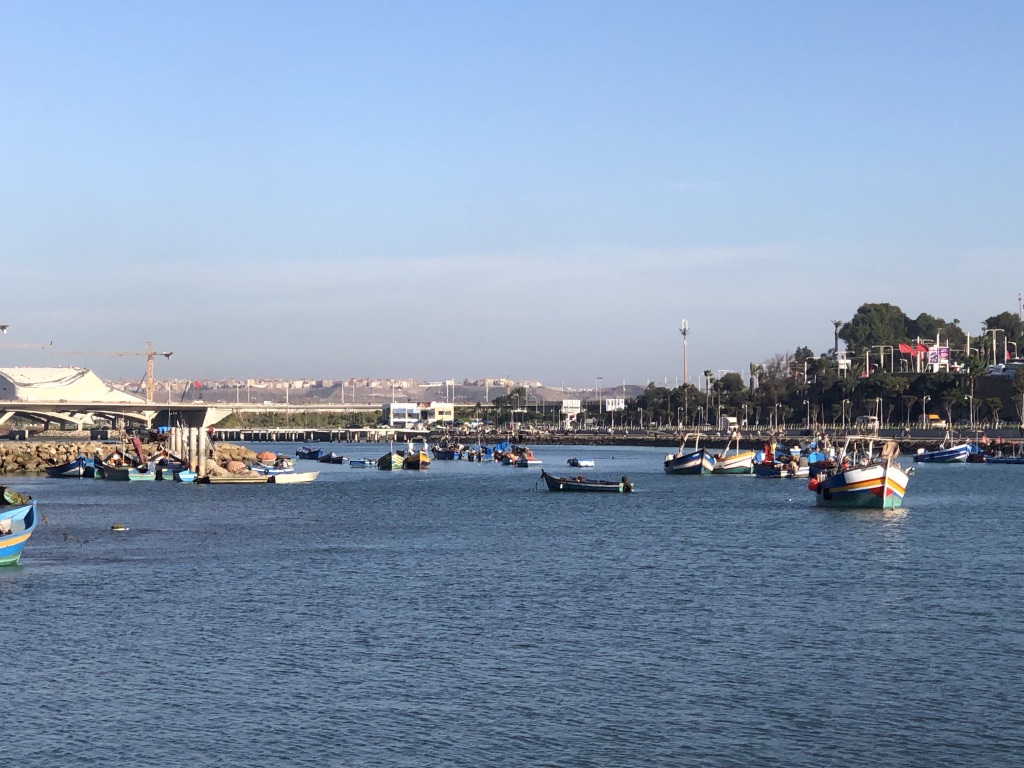
The Marina is located on the other side of the river from Rabat so in order to get to the Rabat medina or Kasbah you need to take the tram, walk or pay to cross the river with a small boat, which we did one evening.

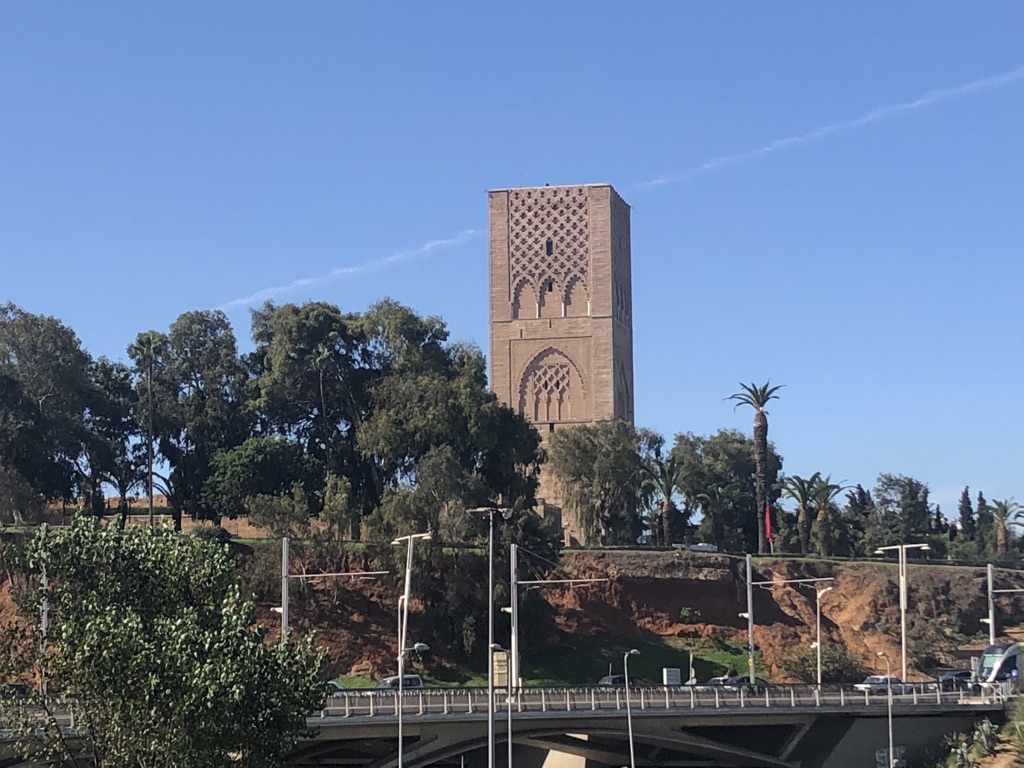
We were unable to enter any of the mosques. According to one of the local guides, there is a law, originating from French Colonial days, which prohibits non-muslims from entering the mosques . He told us that there is only one mosque that can be visited by non-muslims and it is located in Casablanca but we did not go there. We were, however, able to visit the tomb of Mohamed V flanked by the 12th century Tower of Hassam which overlooks the river and the town.
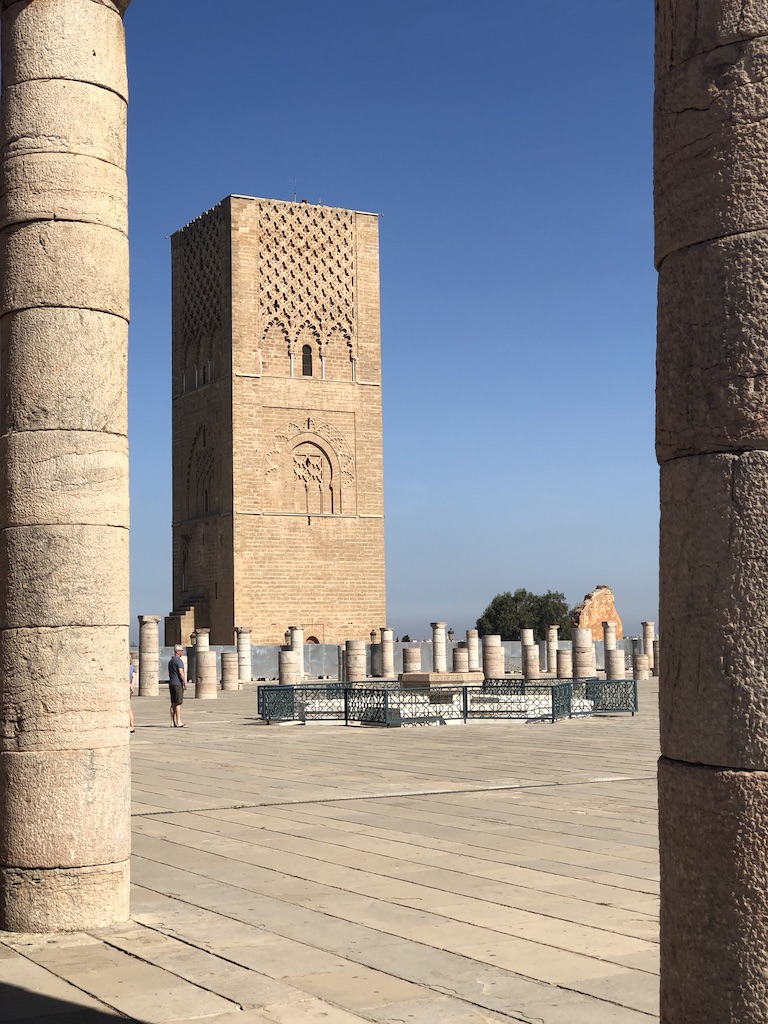
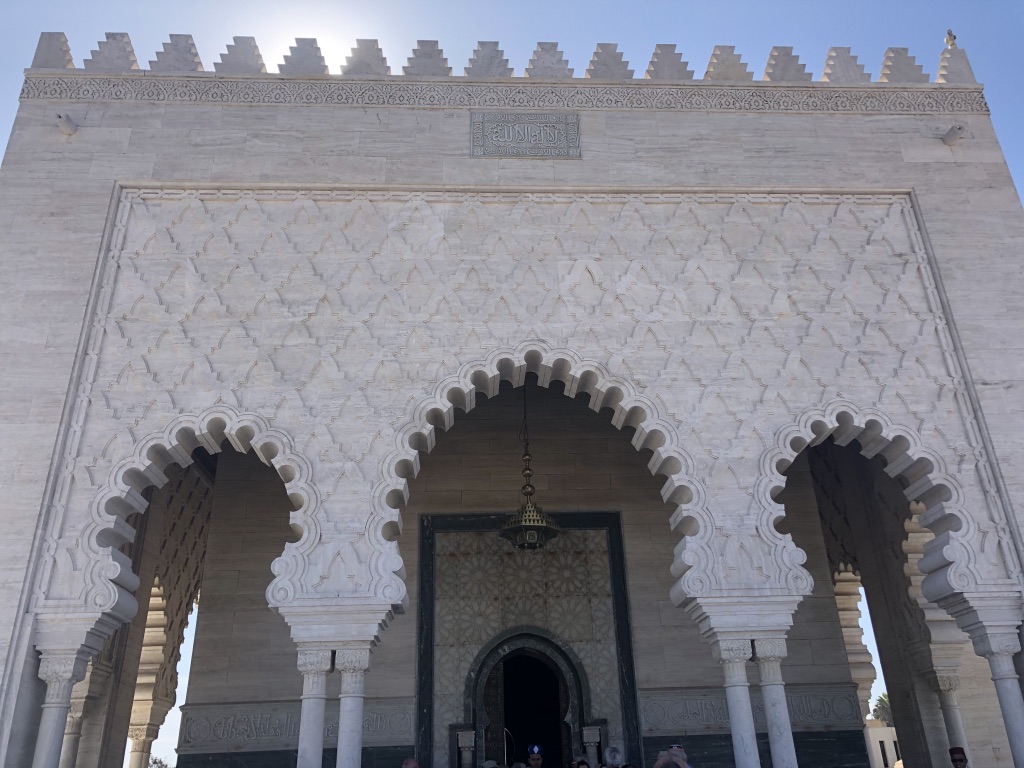
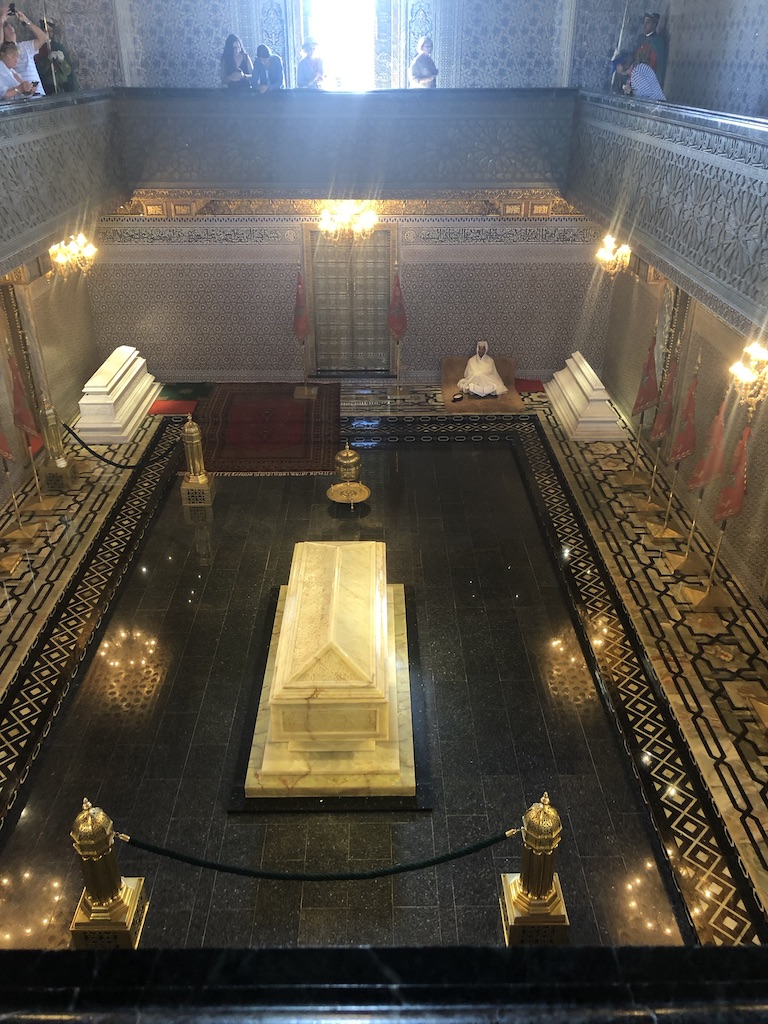
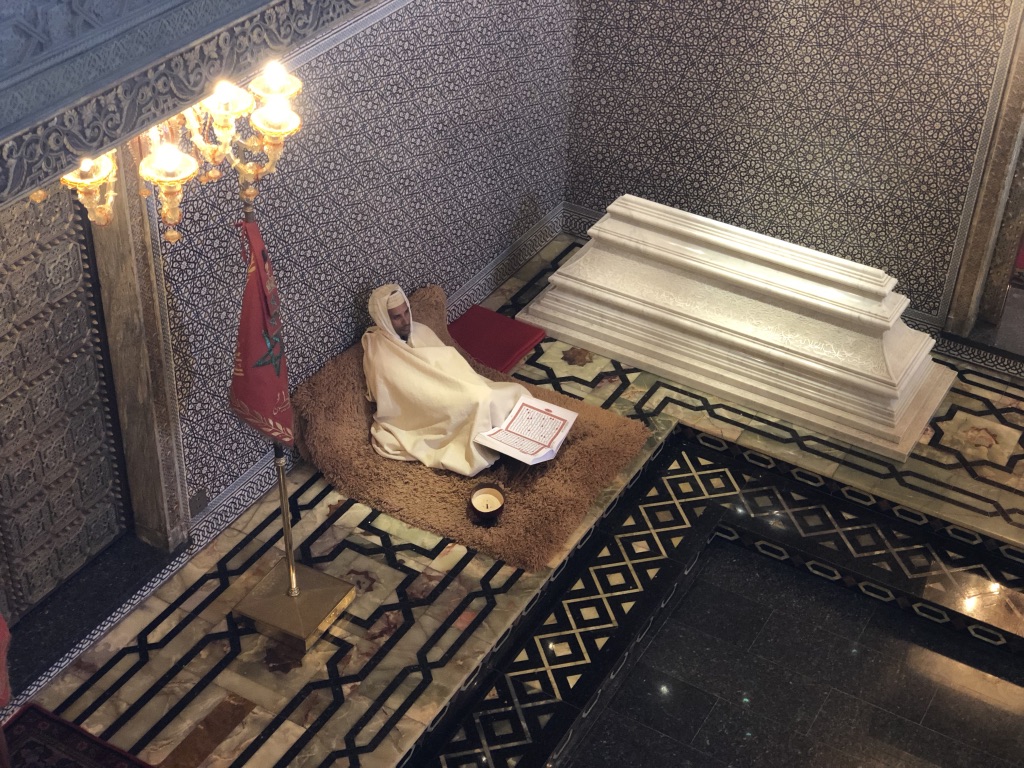
We spent several hours walking through the medina (market) and the Kasbah (fortified walls).
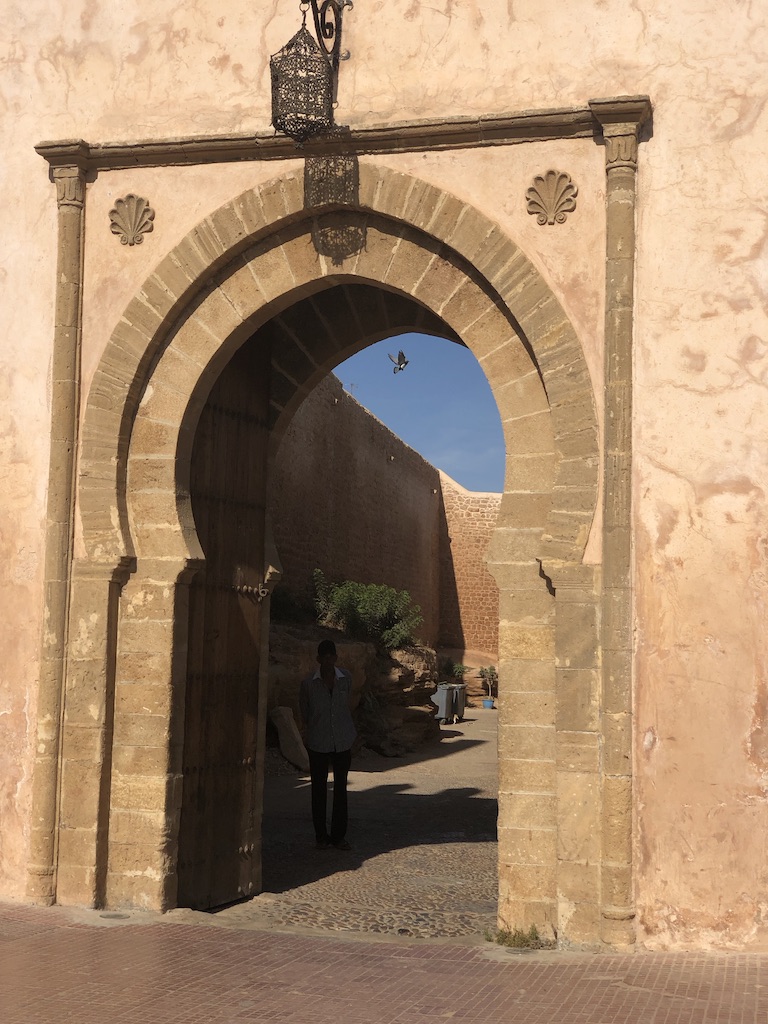

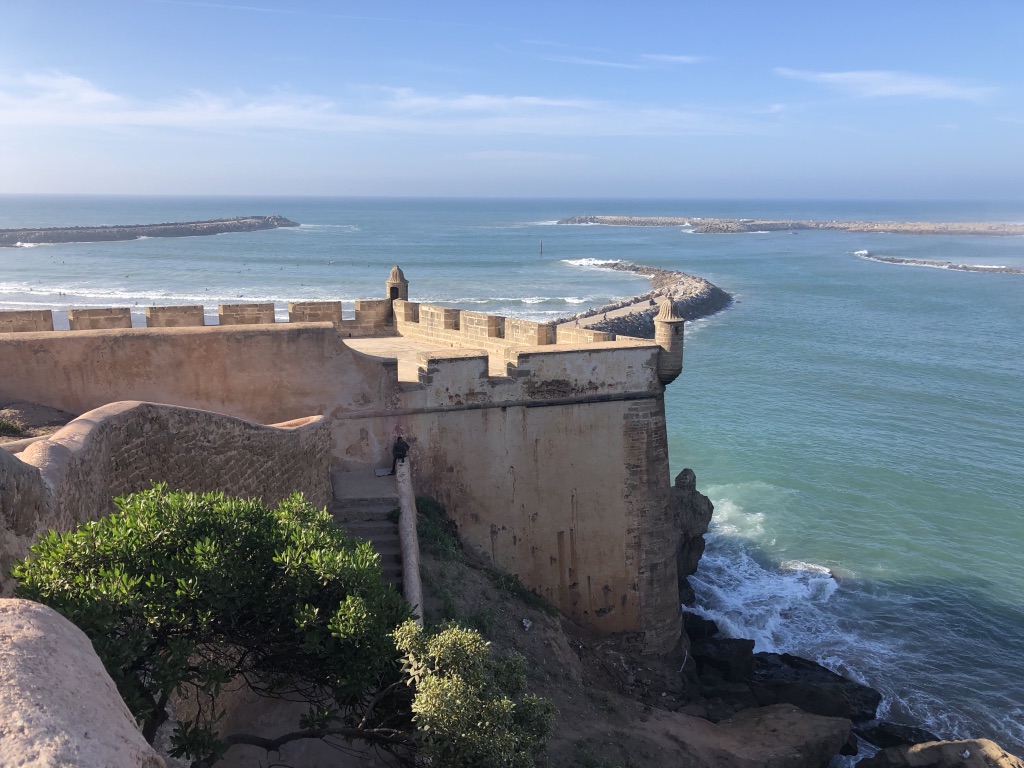

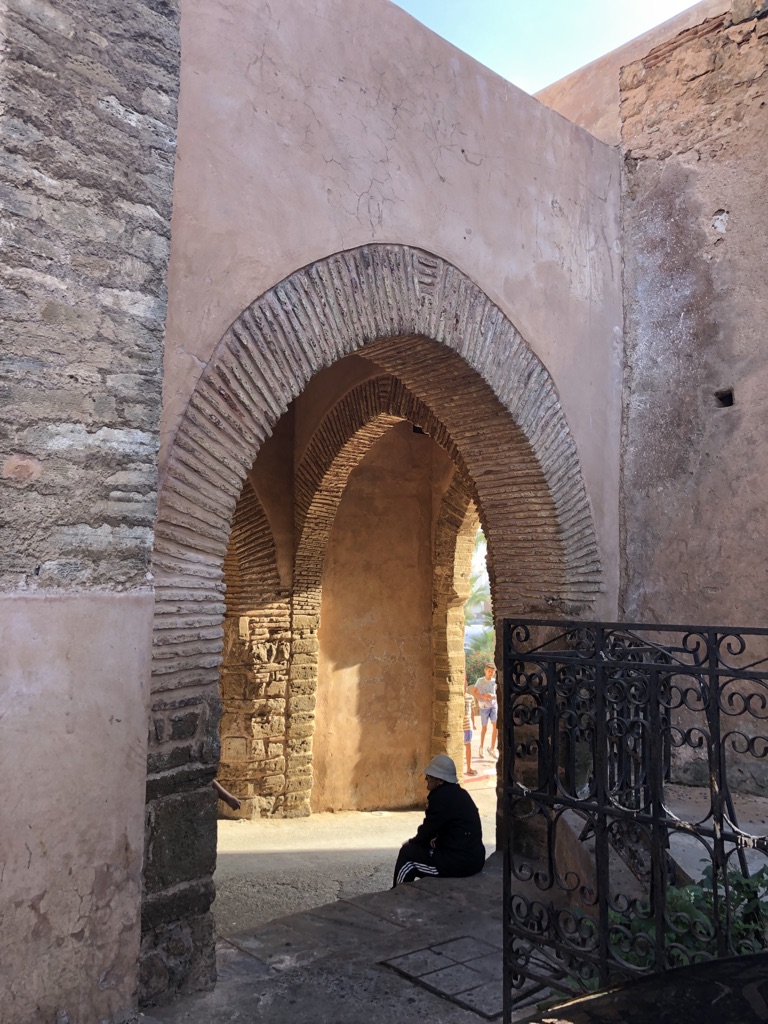

Our social life was enriched greatly in this marina since we were able to have a couple of get togethers with friends made in the last marina (Tangiers) and new friends made in this marina. Sailors like us who are making similar adventures from all over: US (several), France, Switzerland, Germany, Australia, Portugal, and many other places. And, I really hadn’t expected to encounter so many US boats.

The exit from the Marina was not quite as dramatic as the entrance, although we had tide coming in, lots of traffic and some waves. We followed the Pilot boat out while enjoying the sight of the beautiful ancient walls of the Kasbah. We then made our way out to the Atlantic to begin our 450 nautical mile passage to the Canary Islands.


 The Adventures of SV JAN