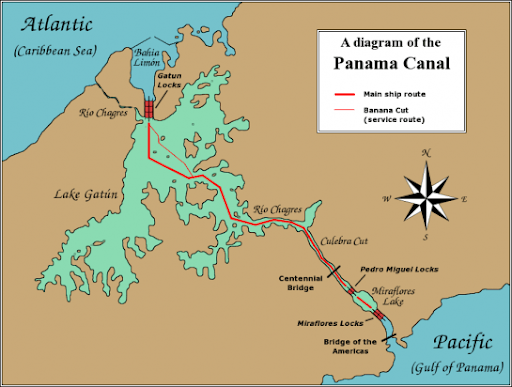
The Panama Canal connects the Atlantic Ocean with the Pacific Ocean. It is an 82 km (51 mile) long waterway which cuts across the Isthmus of Panama. On the Atlantic side are the Gatun Locks with three separate chambers going up to Gatun lake which is 26 meters (85 feet) above sea level, and lowering down to the one-chambered Pedro Miguel Locks and the two-chambered Miraflores Locks into the Pacific Ocean.
France started the first work on the canal in 1881 but went out of business most likely due to the harsh environment complicated by mudslides and malaria. The United States took on the project in 1904 and opened the canal ahead of projections in 1912. It is now managed by the Panama Canal Authority.
The Atlantic Reefer at anchor at the entrance to the Panama Canal. Measuring 176 meters (578 feet) by 23 meters (76 feet) wide, she was our companion in the Gatún Locks.
We had to have a special Panama Canal Authority advisor on board as well as 3 additional crew (to work as line handlers), besides us, to transit the canal.
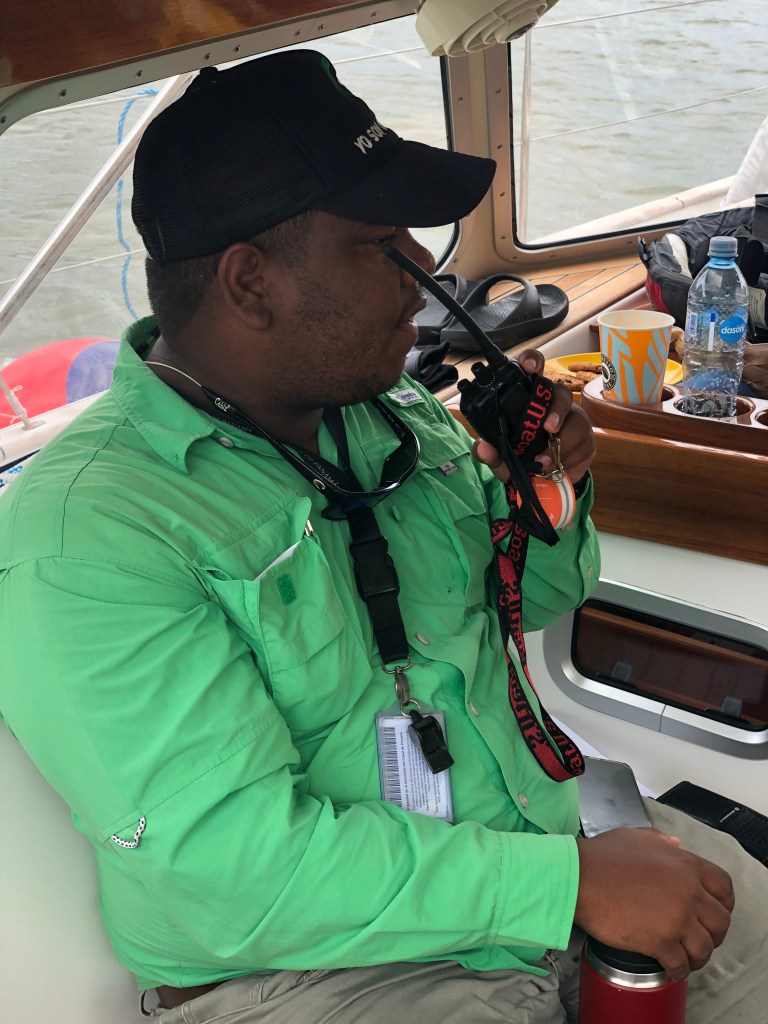
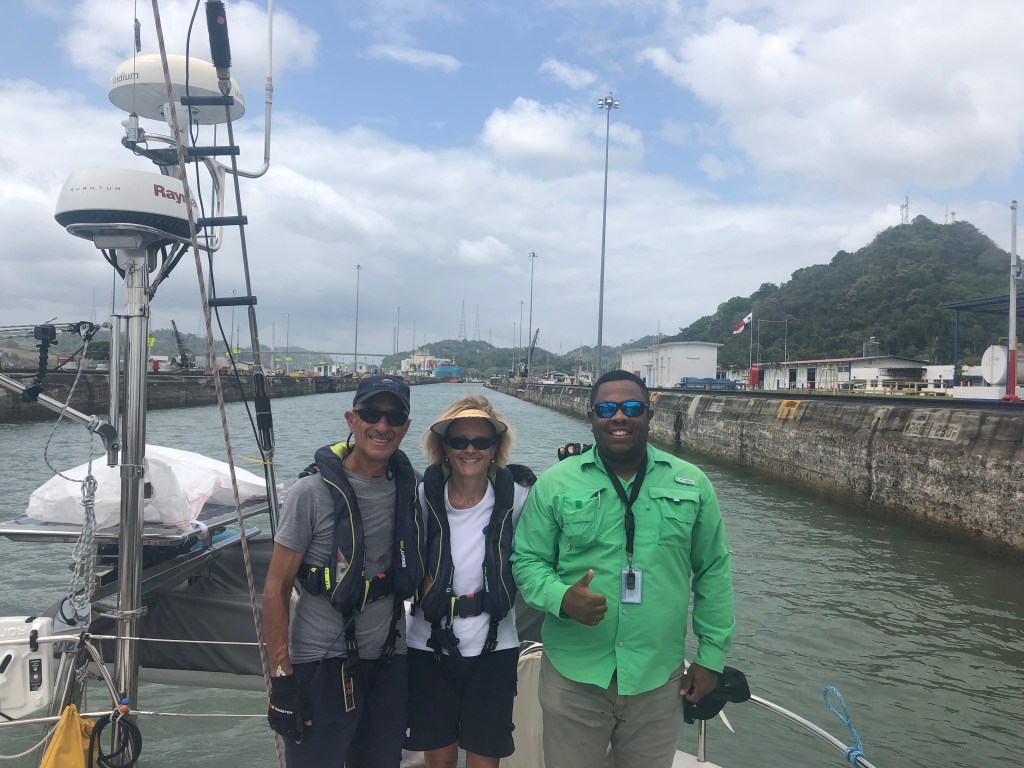
Our Panama Canal Authority advisor (left) on the first day up to the Gatún Lake. Matt one of our line handlers is in the yellow shirt on the right.
Ricardo, our advisor from the Panama Canal Authority, working with us on the second day
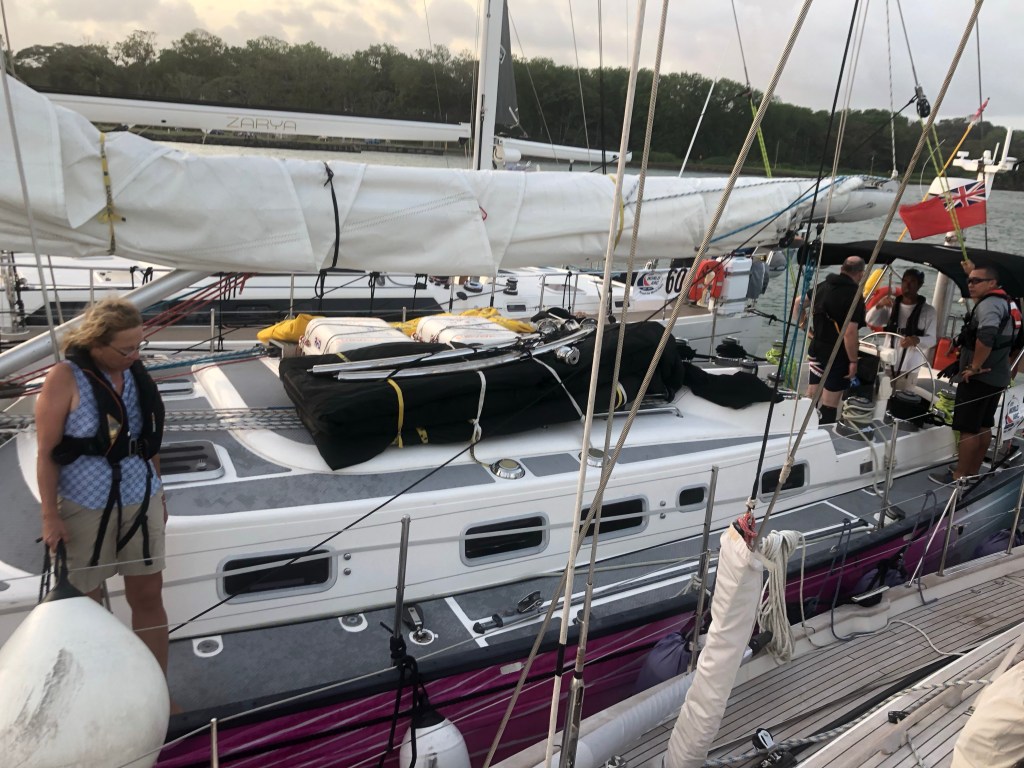
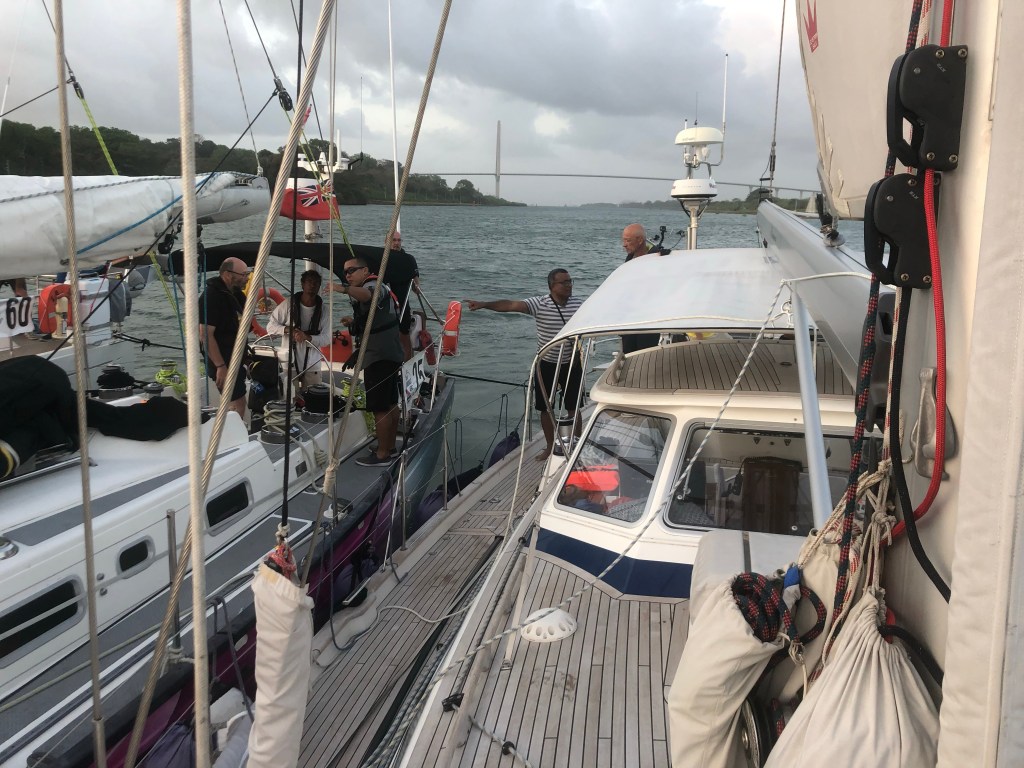
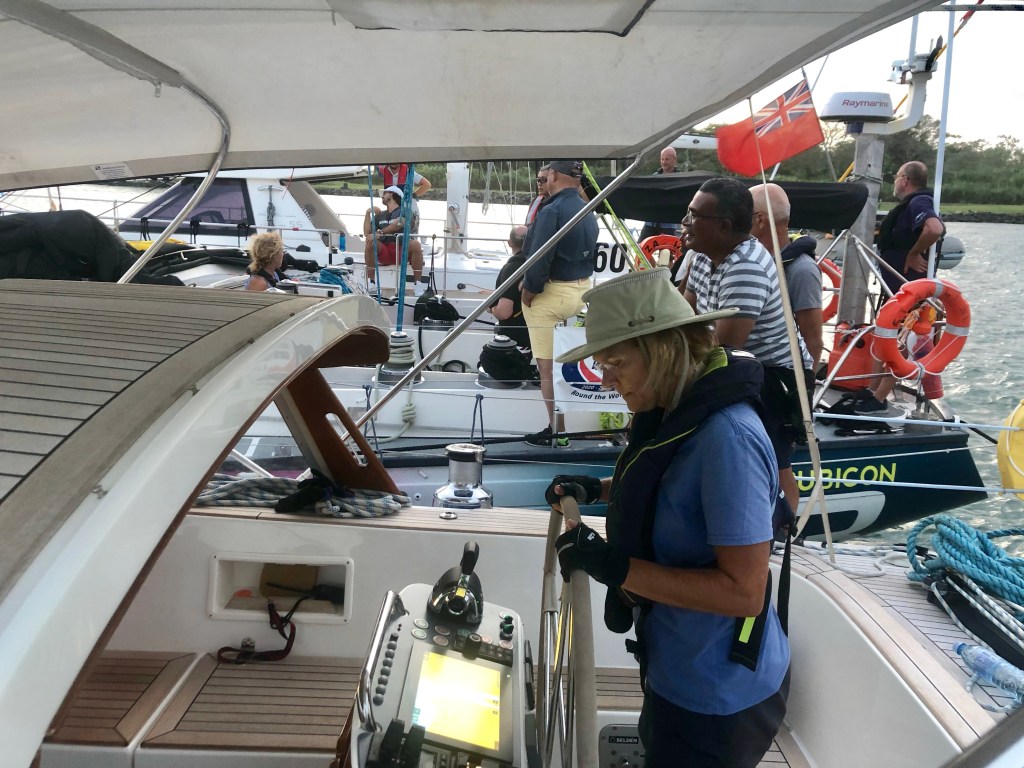
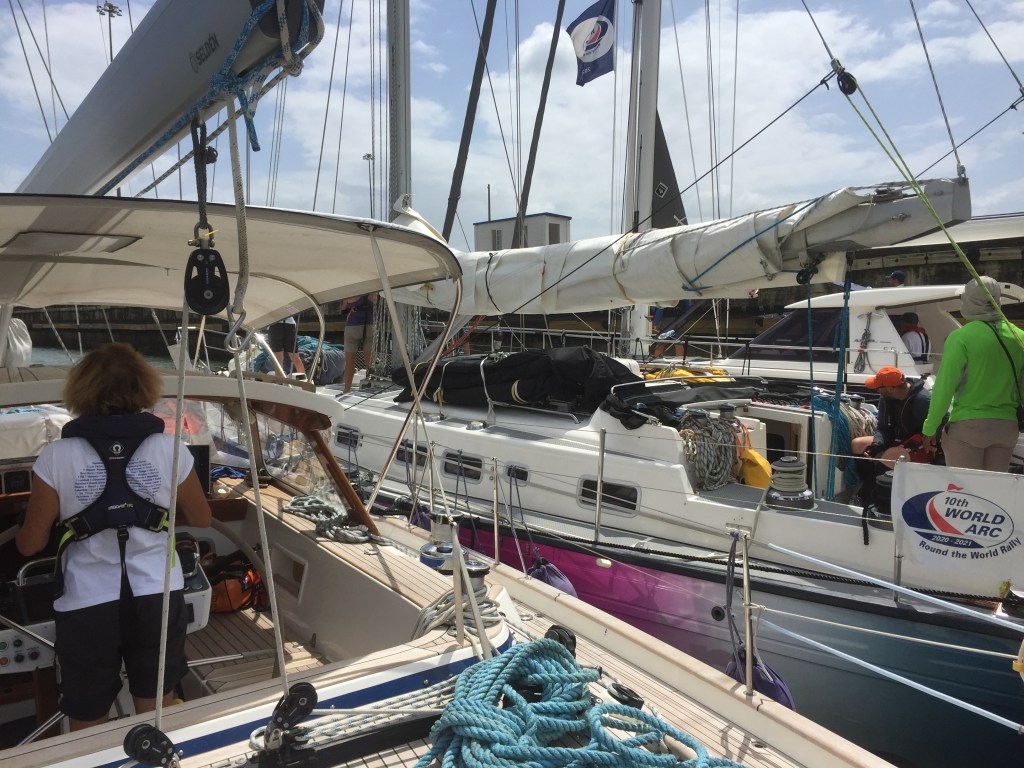
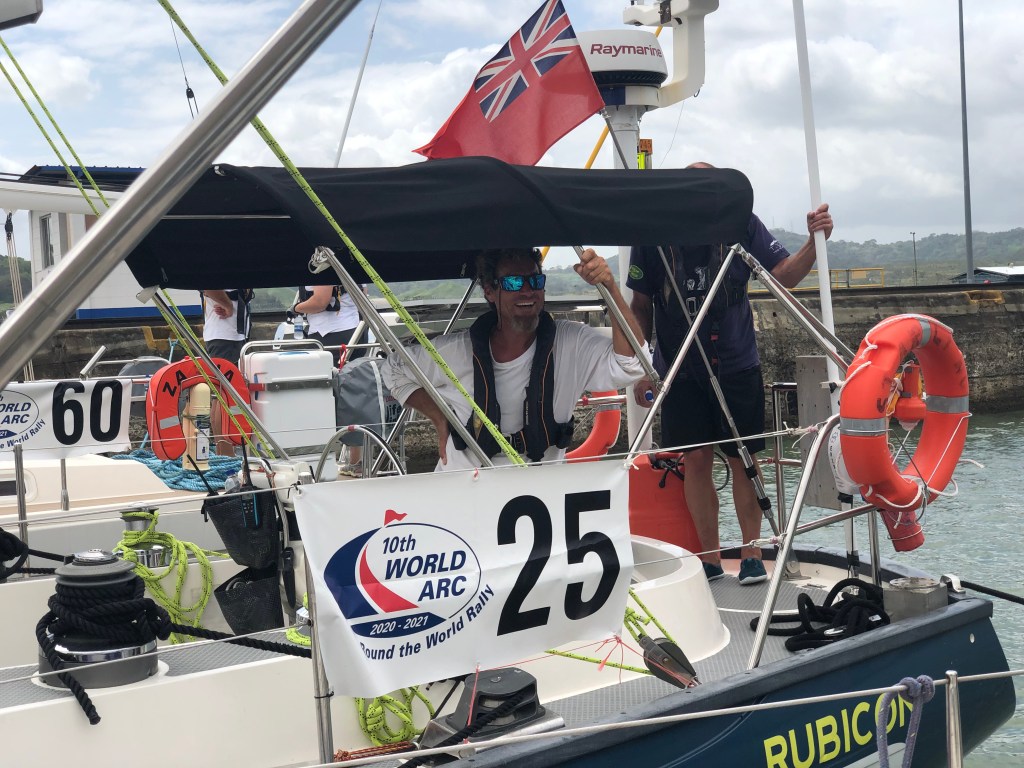
Before each lock, we ‘nested’ up to two other World ARC sailboats with lines connecting our cleats and then we secured to the sides of the lock. It was a challenge at times to stay straight, especially when the wind was blowing. The middle boat (Starling) was the main controller but the side boats often had to use the engine in reverse or forward to keep the group in the center of the canal.
We ‘nested’ together for each lock with 2 other sailboats, Starling is the pink boat in the center.
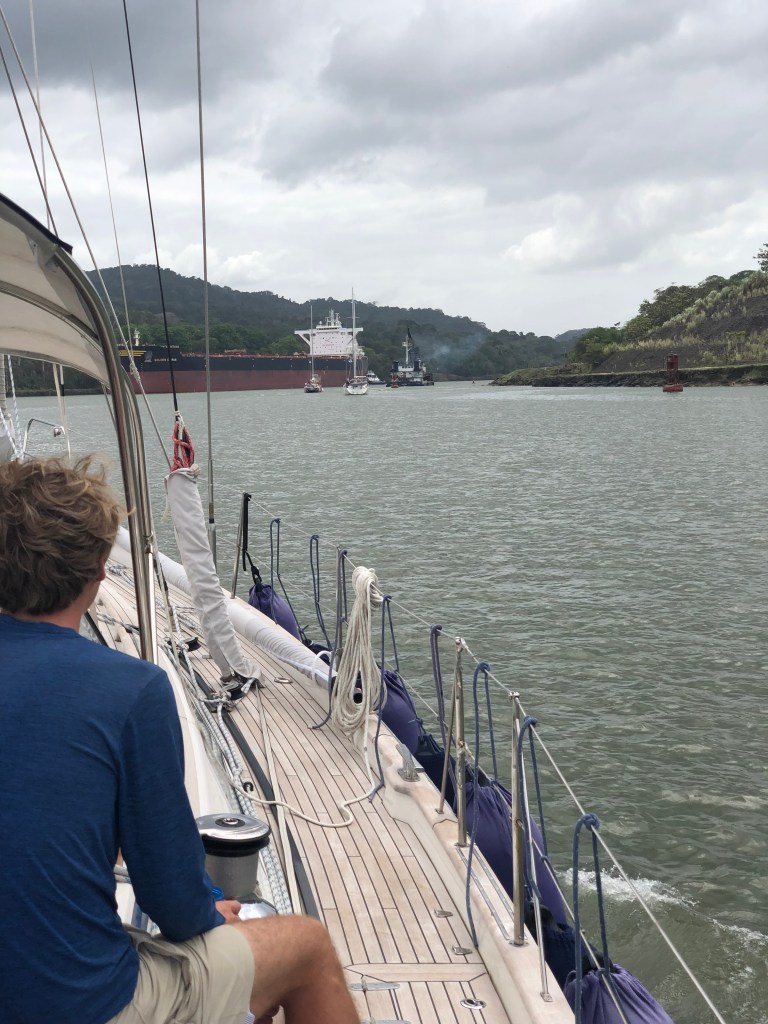
Driving carefully up the canal to the lock in the nest of 3 sailboats. This was a challenge! Giorgio told me to relax and “just drive like you were driving your car!!”
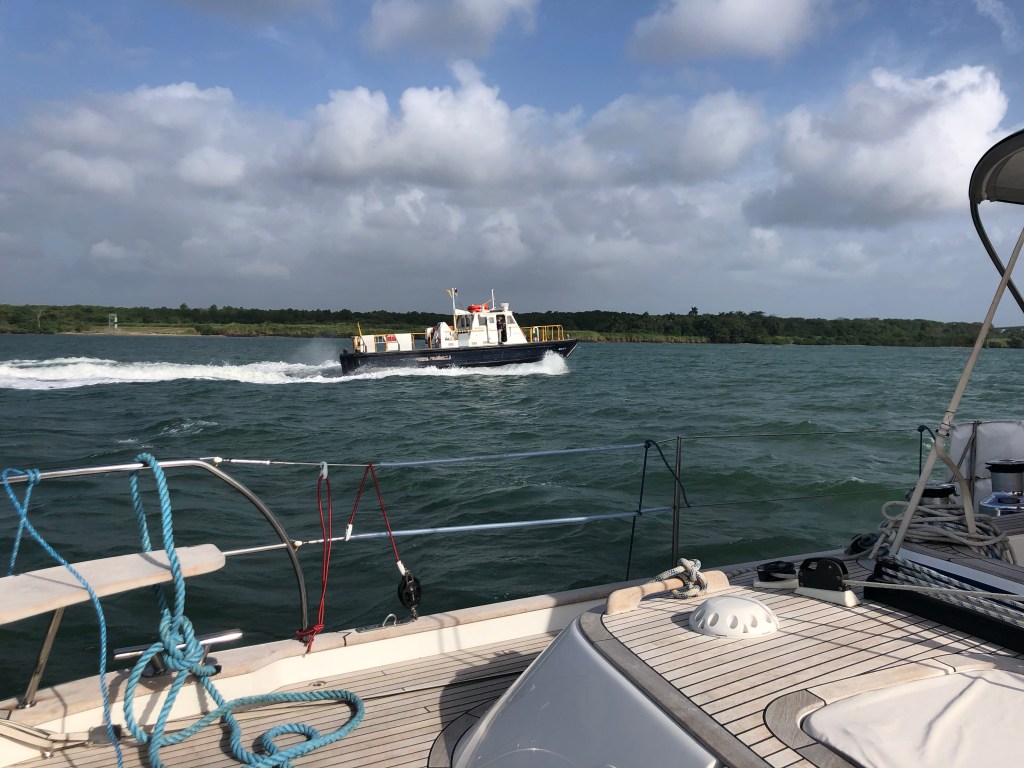
One of the many Pilot boats. The canal zones are only transited by official traffic.
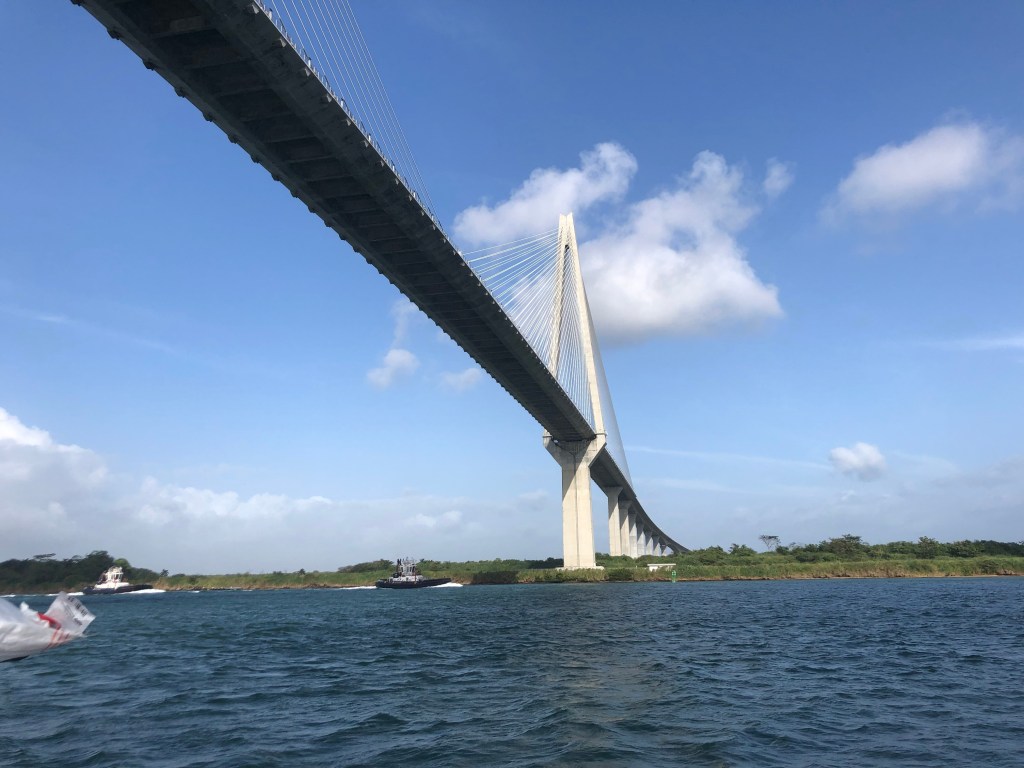
Passing under the Centennial Bridge (2004) on our way to the Gatún Locks
The whole trip took around 24 hours. We transited the Gatún Locks in the evening, spent the night rafted up to a buoy for the night with our other 2 sailboats and then transited locks down to the Pacific the next morning and afternoon.
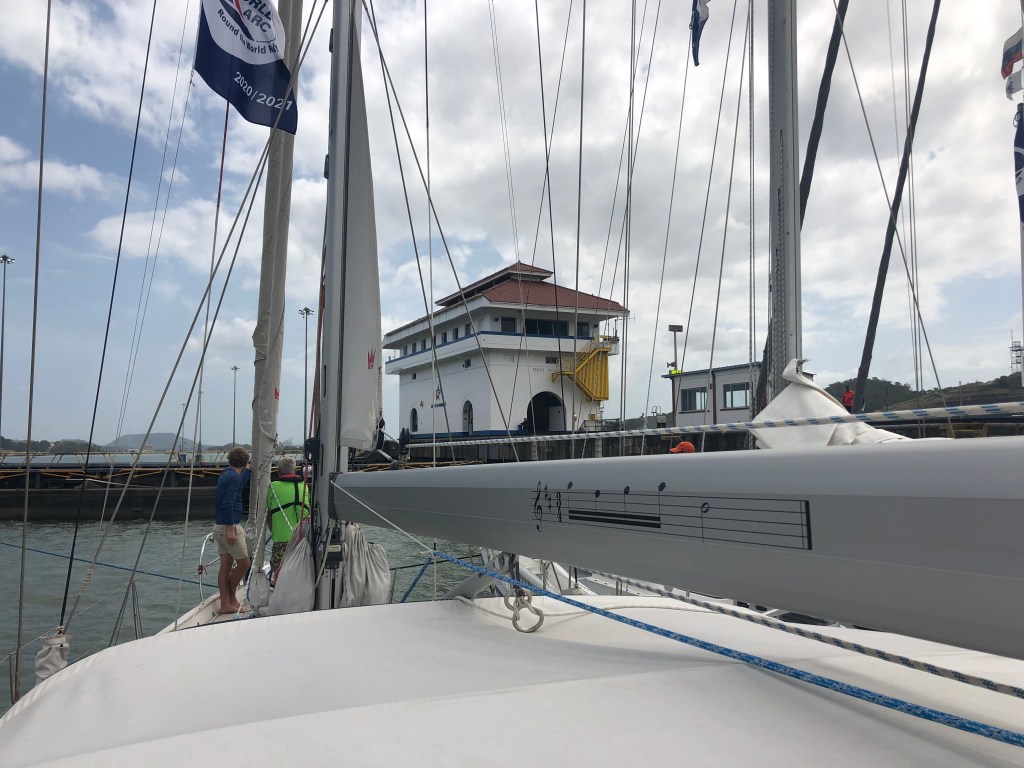
In the Gatún Locks, we aligned our nested boats behind the Atlantic Reefer. We also had lines from the bow and stern to the port (left) side of the lock which had to be regulated up or down to hold us in place.
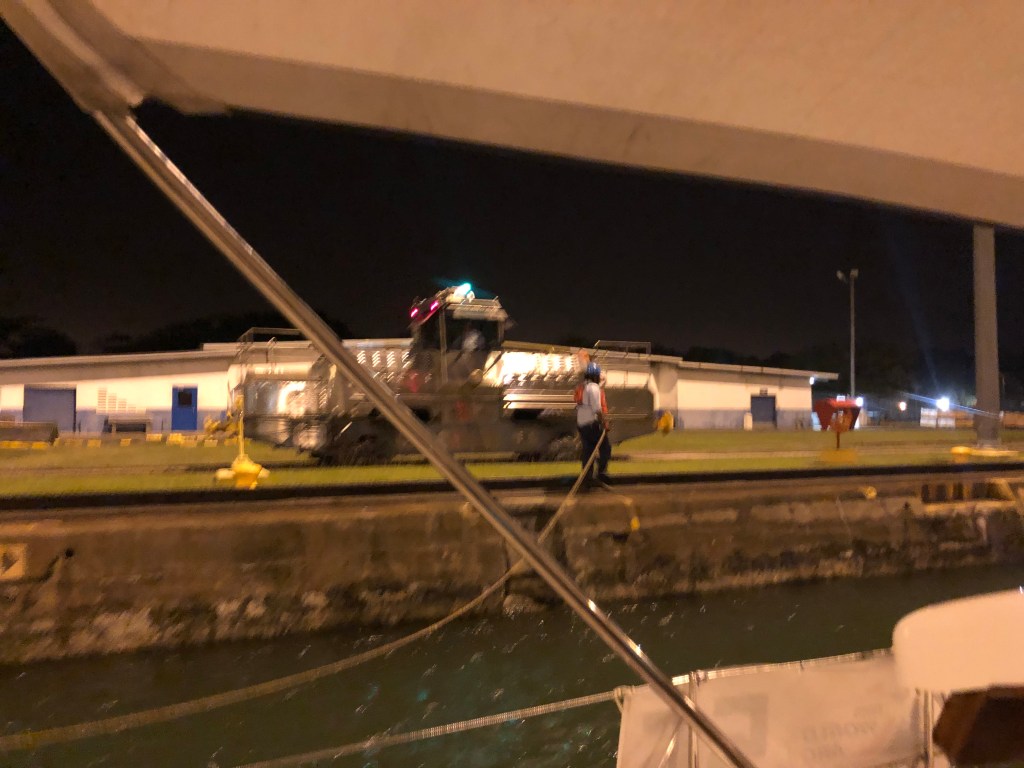
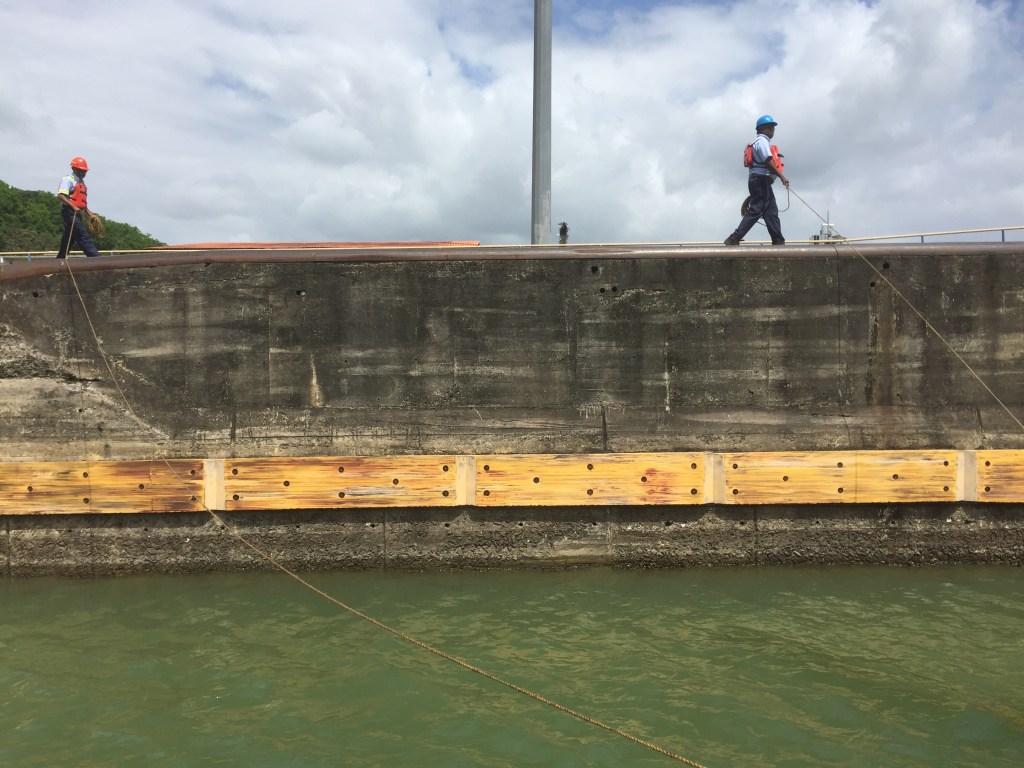
The dockside lineman walking with our stern line to the next lock.
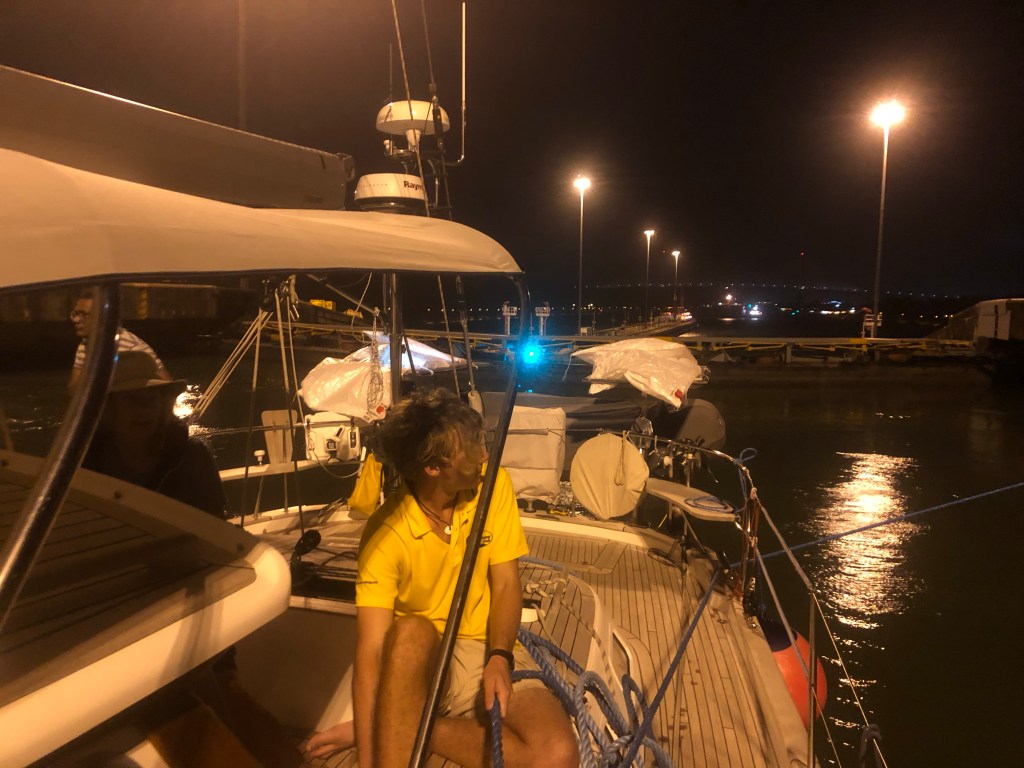
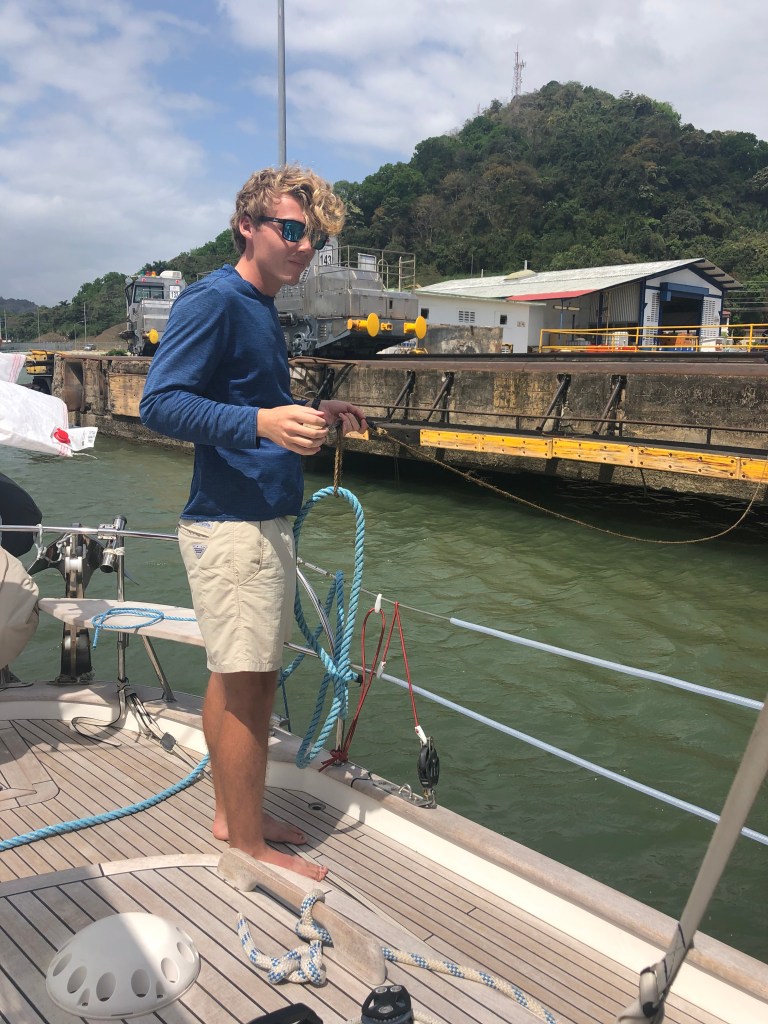
Matt bringing in the stern line as the water line goes up.
Going up!
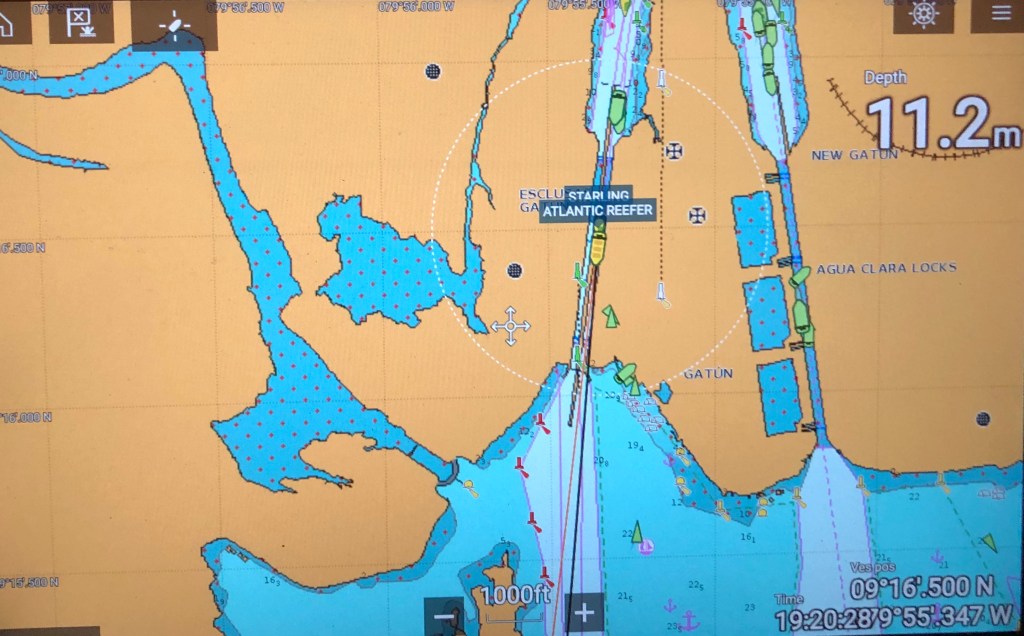
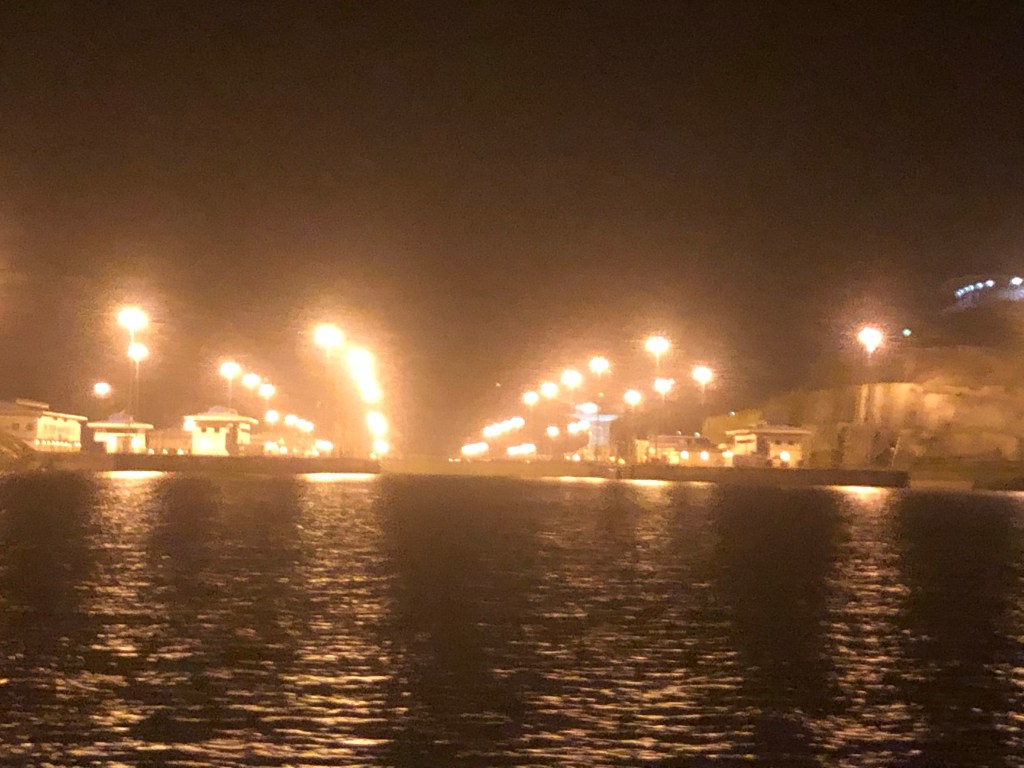
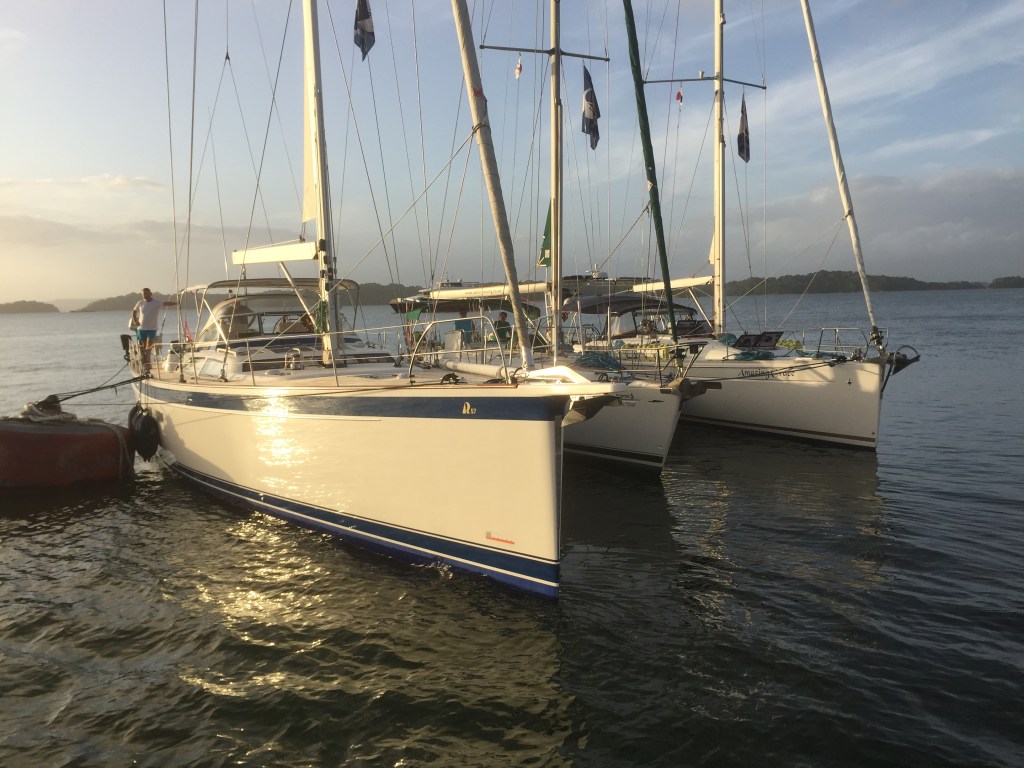
Photo of our chart plotter showing our exit from the last chamber of the Gatún Locks as we enter the Lakes. We are behind Atlantic Reefer and next to Starling.The Gatún Locks at night. Early morning on Lake Gatún: three other World Arc boats nested to a buoy after finishing the Gatún locks late evening the night before. On the left, Hanna (HR 57) owned by our friend Vasyl, from Ukraine-Germany.
Crossing Lake Gatún in the morning on the way to the next locks. Traffic in the distance heading to the Atlantic.
Tied to a buoy near the Chagres River in order to avoid oncoming traffic with hazardous material.
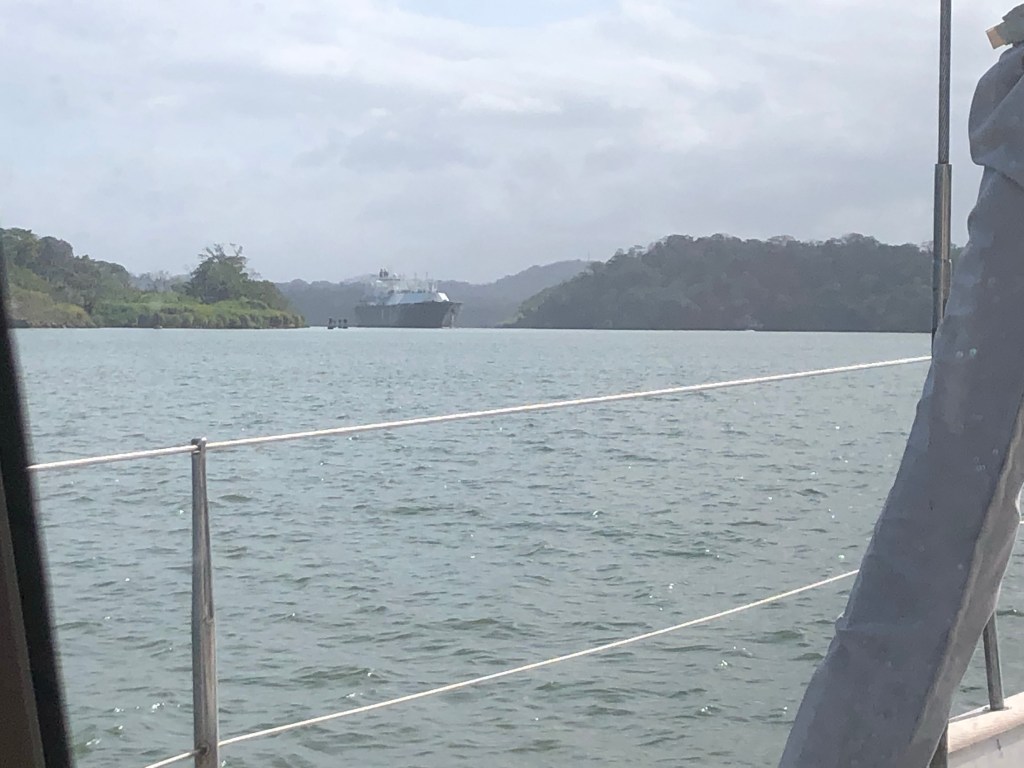
The hazardous material: Liquid Natural Gas heading to the Atlantic.
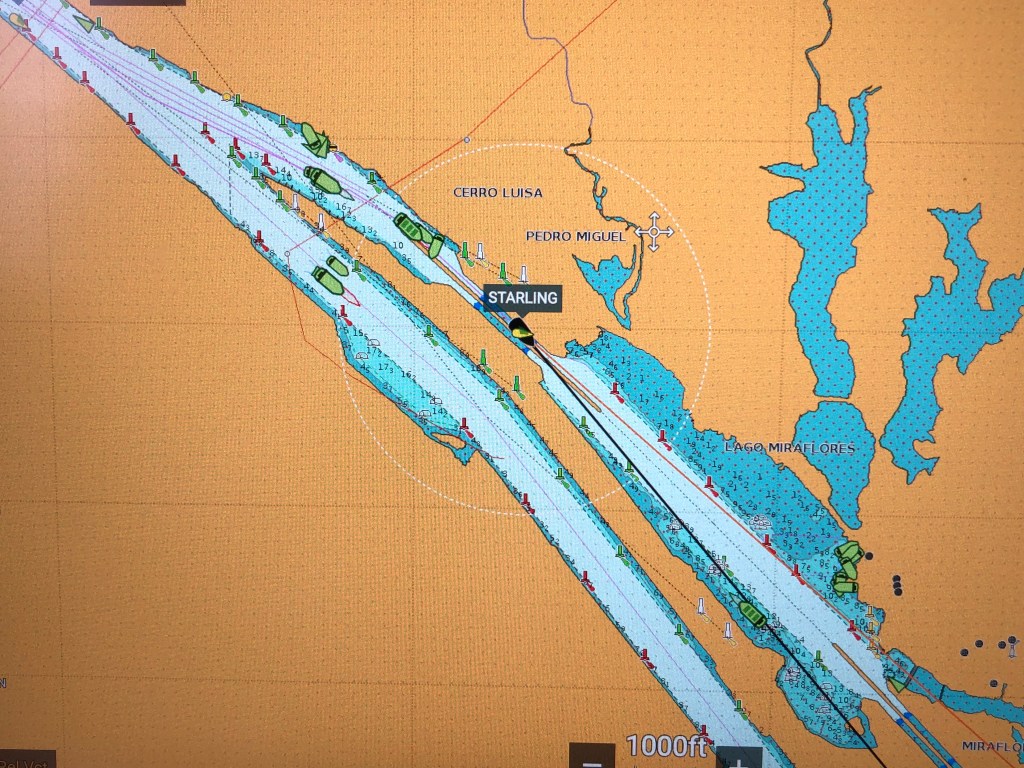
Going through the Culebra Cut, known as ‘The Cut’, an artificial canal which was excavated through the rock of the Continental Divide. This 8.75 mile waterway connects the Chagres River to the Pedro Miguel Lock. A closer look at ‘The Cut’.
The Centennial Bridge, built in 2004, crosses the Canal near The Cut.
Entering the Pedro Miguel Locks nested up with our 2 other sailboats.
The Pedro Miguel Locks
Patrick, captain of Starling, a former Challenger boat.
Matt passing the stern line back to the dock line handler.
The dock line handlers pulling our lines to shore in order to secure them.
Each canal transit through all the locks uses approximately 52 million gallons of water! Lately there have been around 35 transits a day, however, that number will probably decrease to 25 due to the persistent drought. Water conservation is the main reason that sailboats are put together with the big ships in the lock.
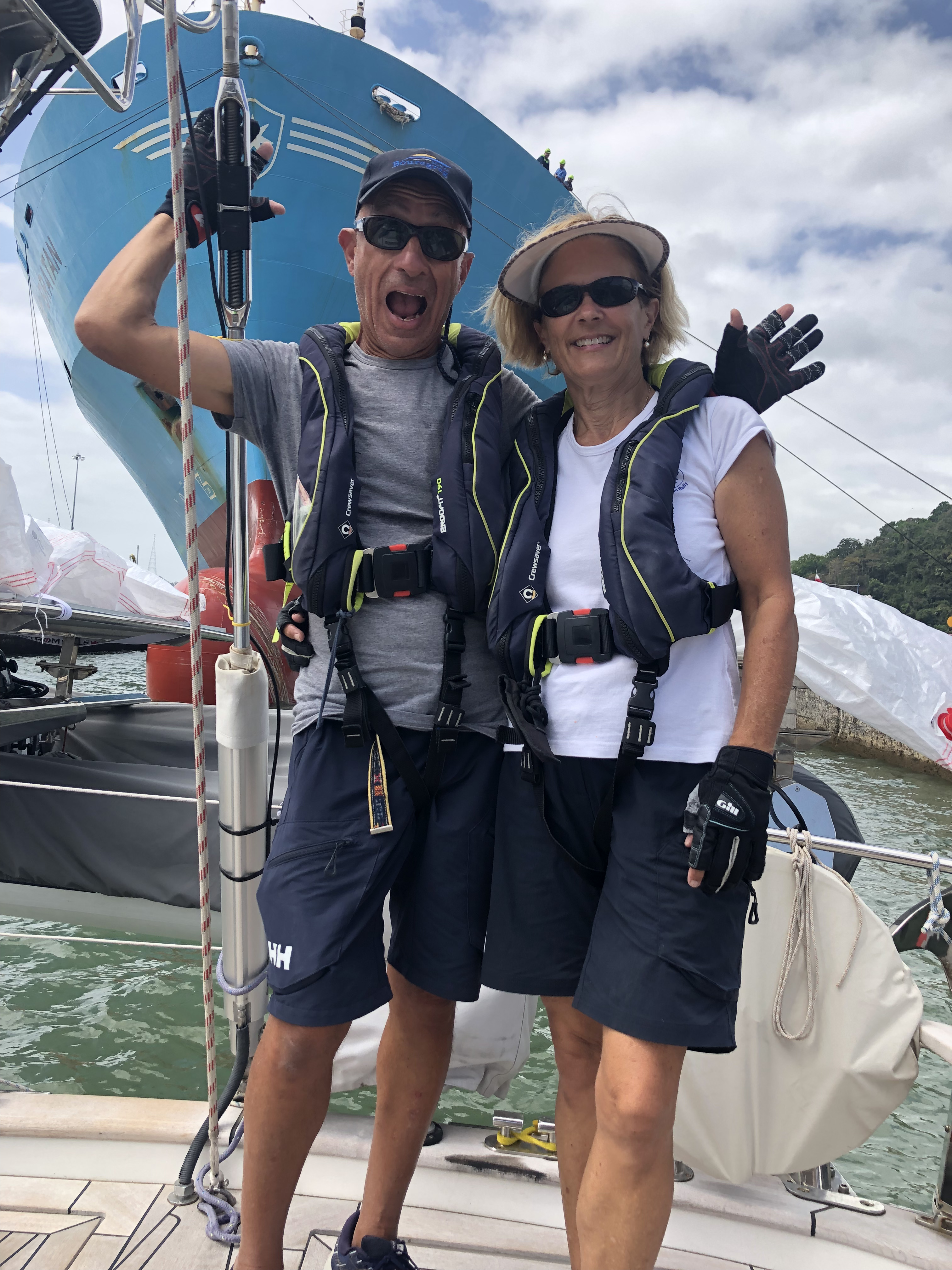
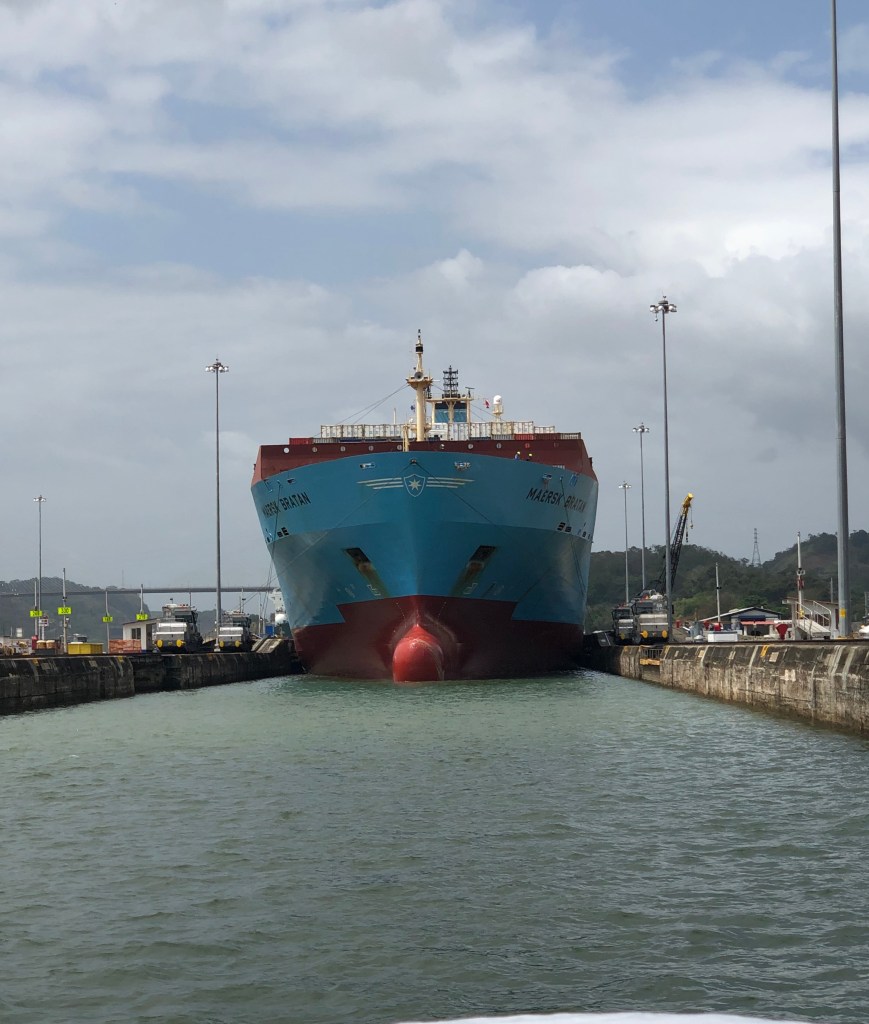
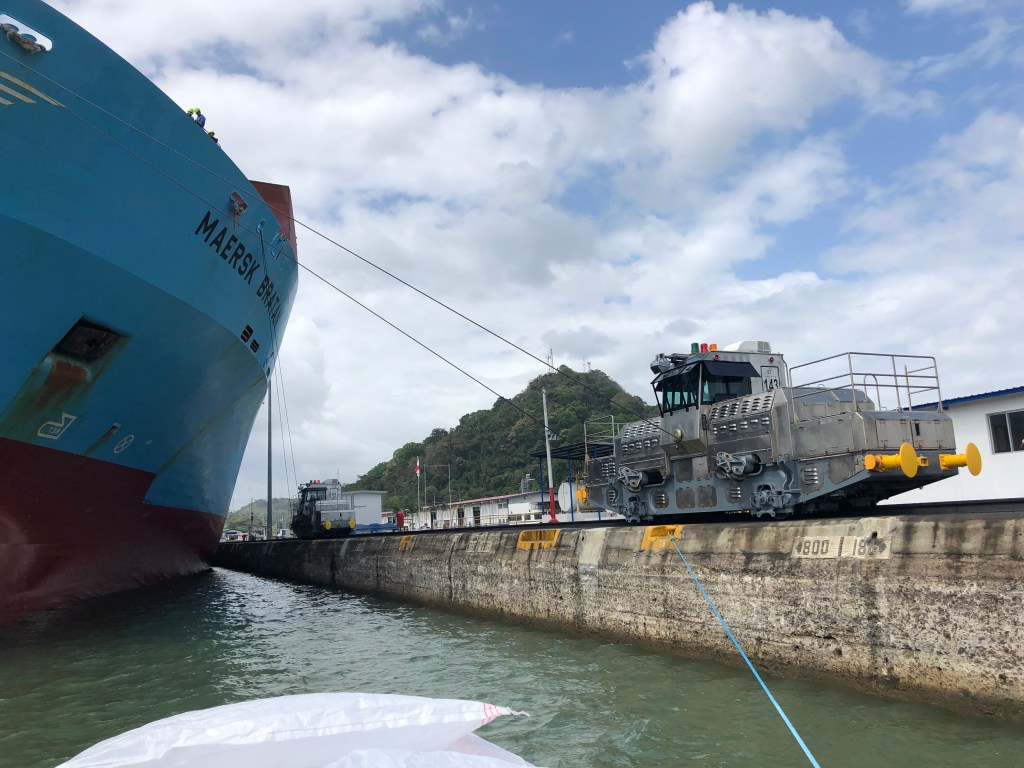
The Maersk Bratan, our lock companion going down from the Gatún lake toward the Pacific, was a giant container ship of 223 meters (732 feet) in length and 32 meters (104 feet) in width. The chamber was wider than the ship only 2 feet on each side!!
The bow and stern on each side of the ship are held by cables attached to railroad cars.
As the water level goes down, the cables and lines are released.
The Chart Plotter shows us in the Pedro Miguel Lock next to Starling as we wait for the Maersk to enter.
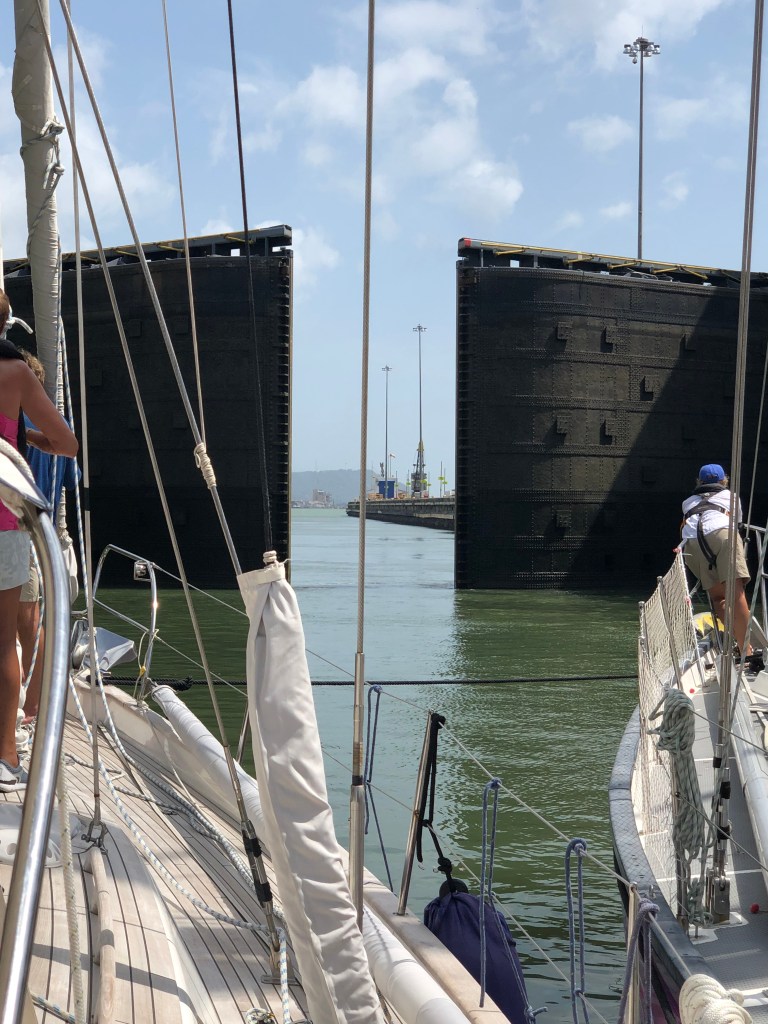
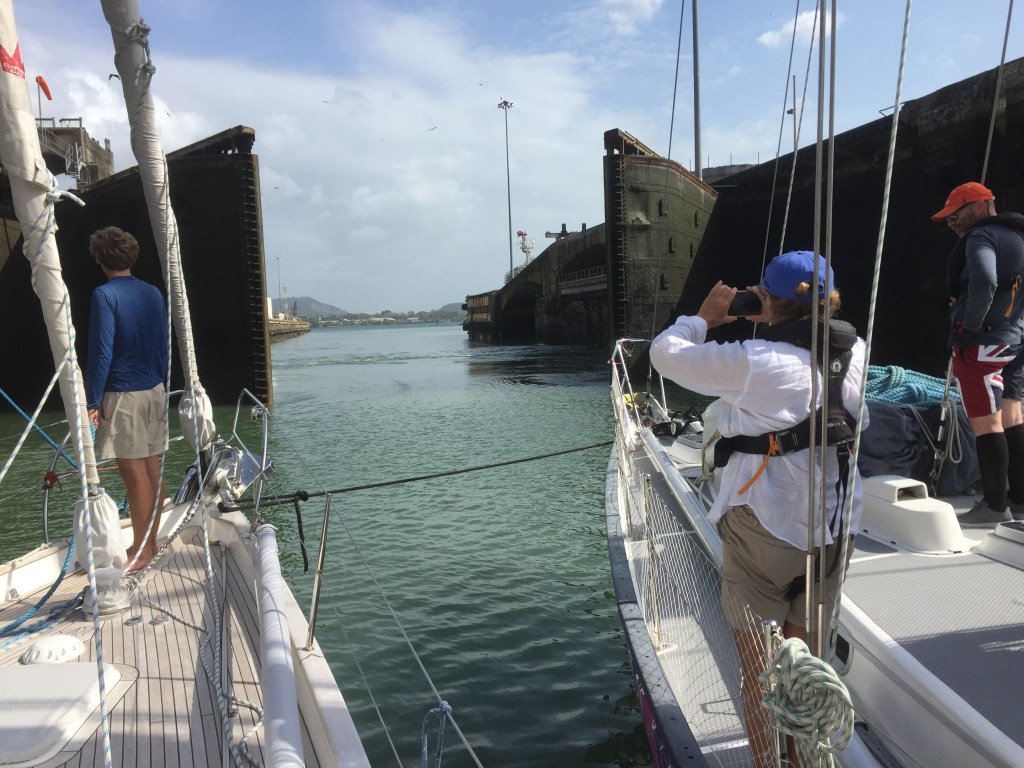
The doors opening so that we can move on the Miraflores Lake and the Miraflores Locks.
Ready in the Miraflores Locks. The waters of the Pacific on the other side of the doors!
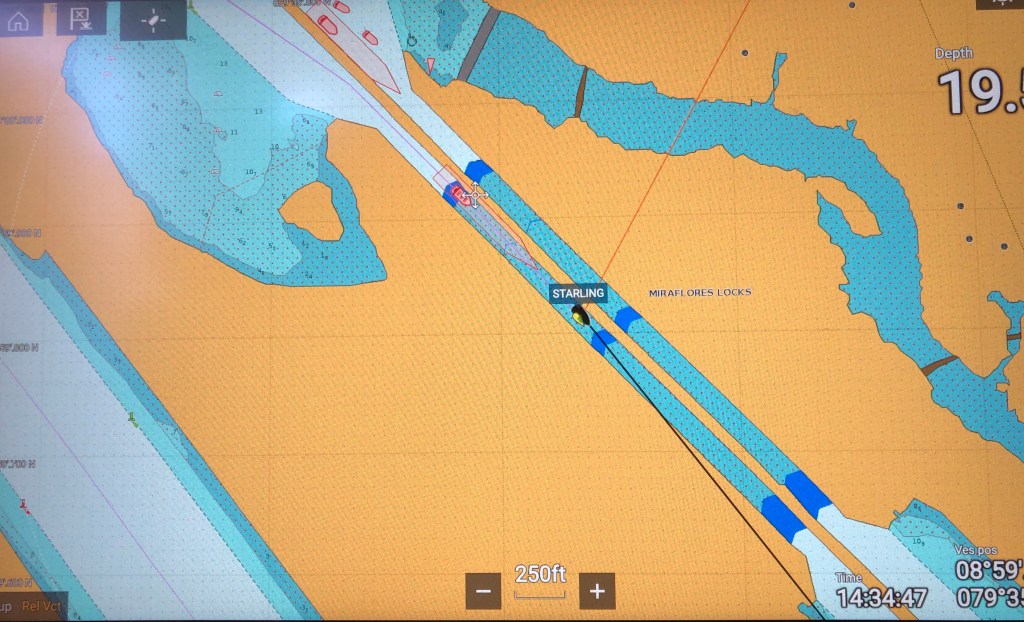
The chart plotter showing Starling and us in position with the big container ship entering the lock.The doors to the Pacific finally open!
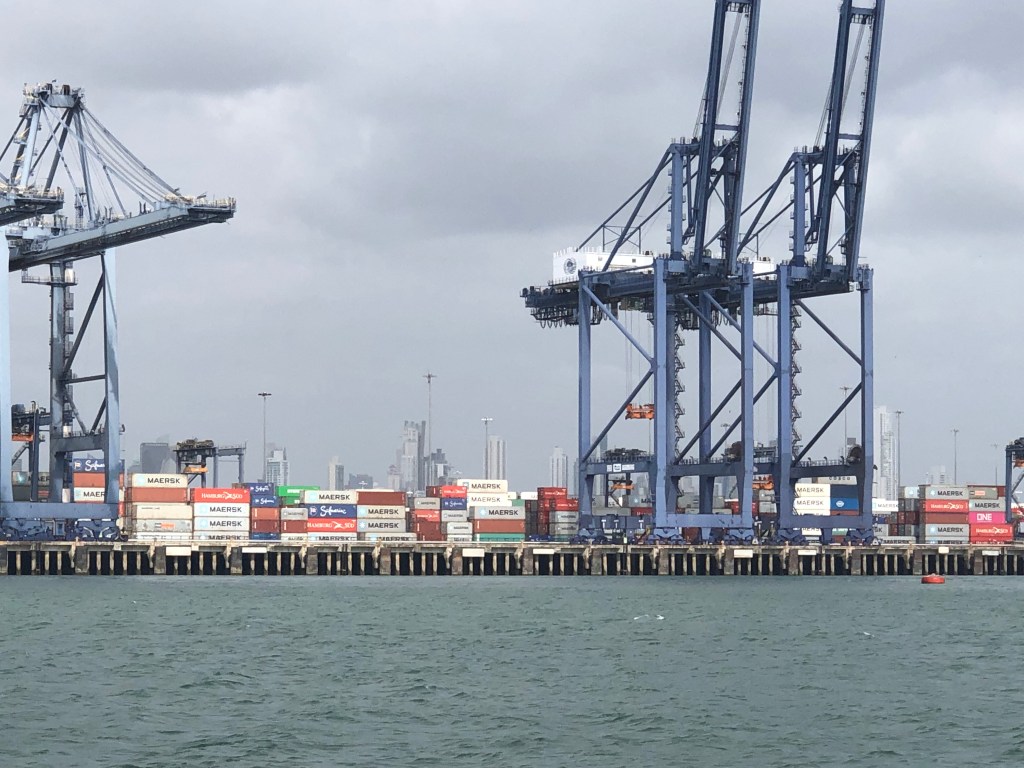
The docks near the Panama City for loading and unloading containers, since many also transit Panama by rail.
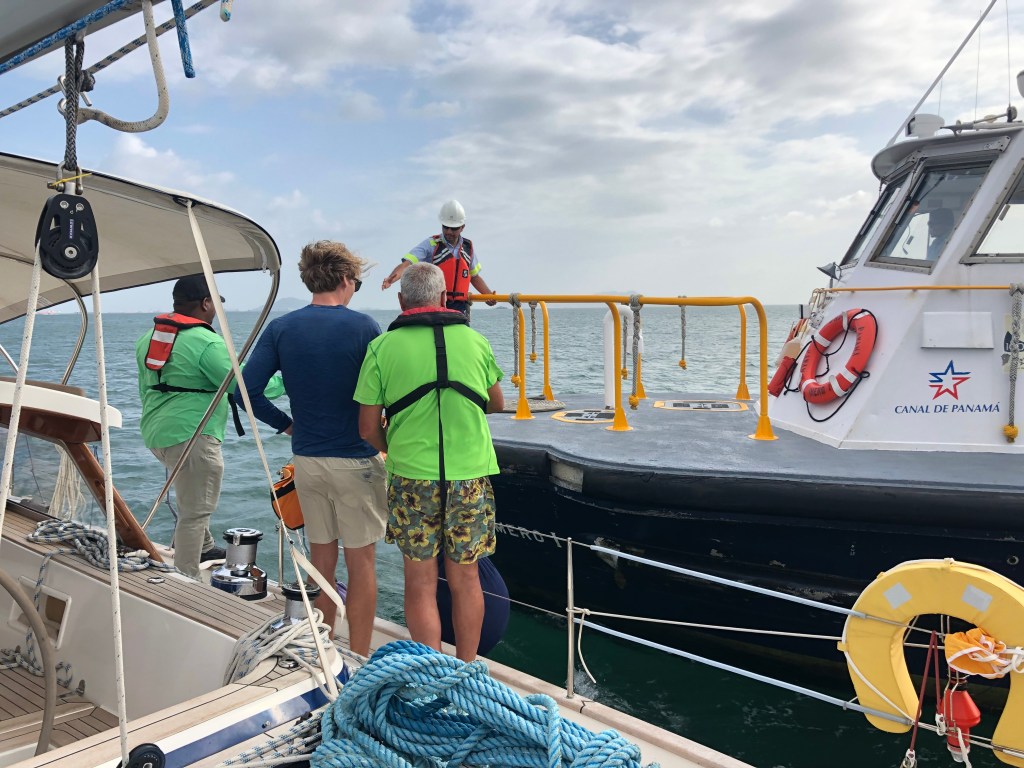
We bid goodbye to Ricardo as he returned to shore with the Panama Canal Authority Pilot boat.
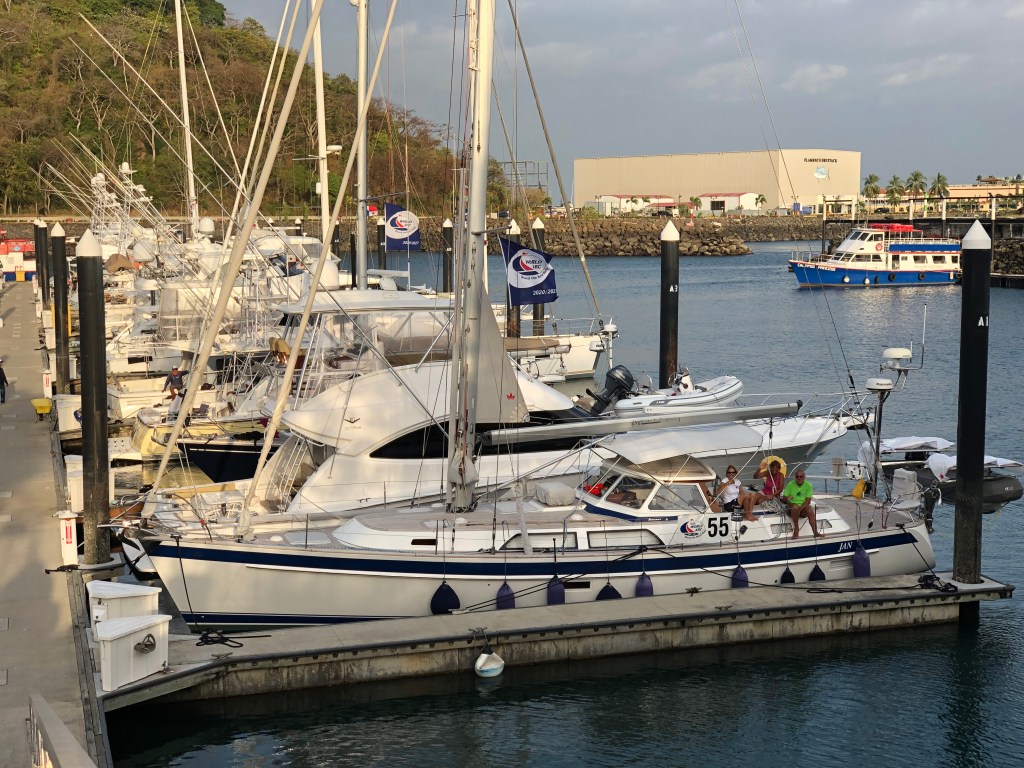
The Panama Canal looking North at the Bridge of the Americas (built 1962). In addition, note the white bags protecting our two solar panels from the “monkey balls” attached to the lines that the dock lines handlers threw to us. After our arrival, SV JAN happily docked in La Palyita Marina in Panama City, Panama.
It was a fascinating experience of a lifetime to transit first up then down such an historic body of water by sailboat while traveling from one great ocean to another.
We are two circumnavigating sailors who are grateful and passionate for the opportunity to visit this fascinating world. Our "home away from home" is a Hallberg Rassy 48 MK II, a fantastic bluewater sailboat.
View all posts by The Adventures of SV JAN















 The Adventures of SV JAN