
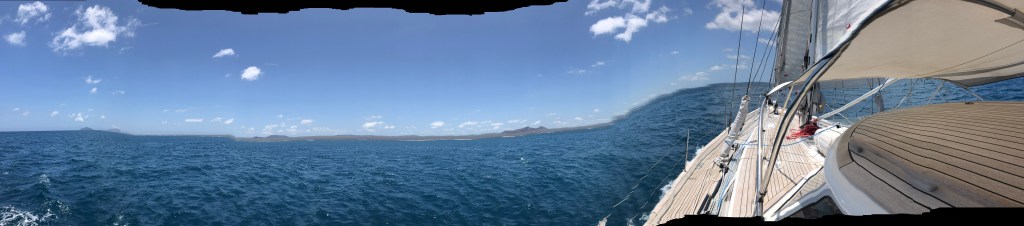
We departed on February 12, 2020 from Las Perlas Island in the Gulf of Panama and arrived in San Cristobal Island, Galápagos on February 18th. The distance was 850 nm of mostly downwind sailing using the BWR (Blue Water Runner), although we used the engine one day because the wind was below 5 knots. Since the crew was only Giorgio and me, our daily routine consisted of alternating 3 hour watches at the helm while looking forward to mealtime and radio transmissions. We were pretty tired by the time we made landfall!
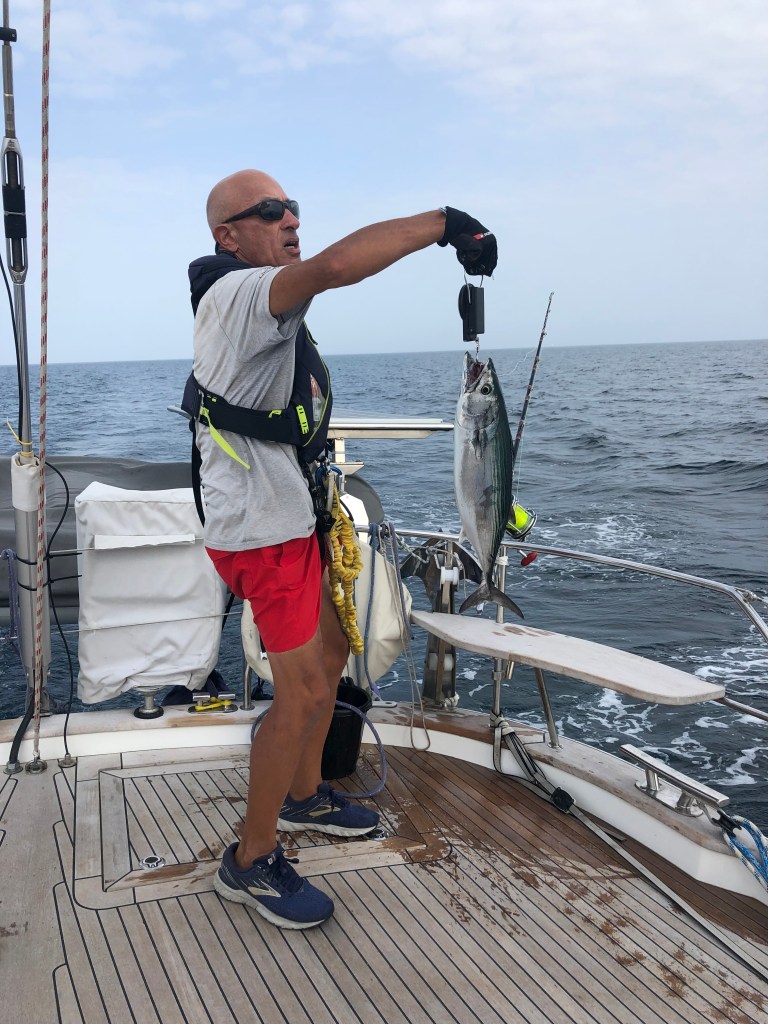

Fishing is one of Giorgio’s favorite pastimes!


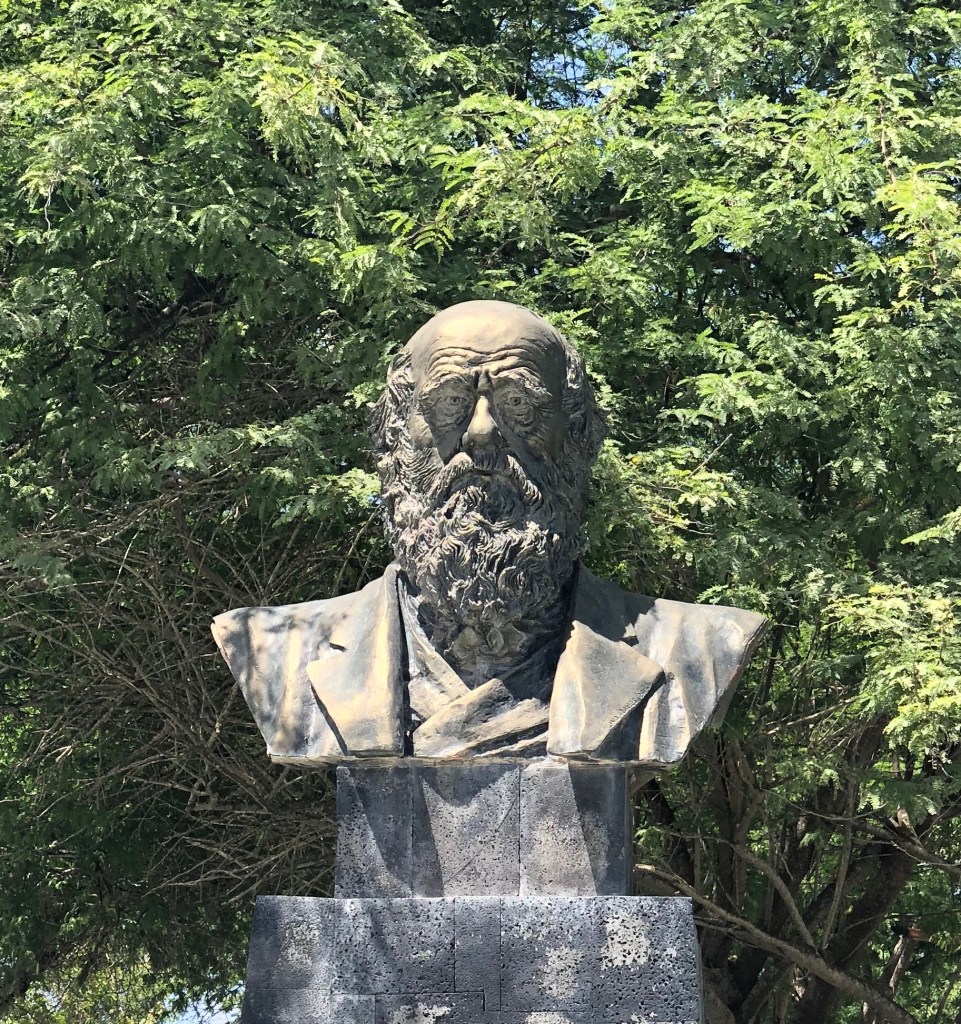
I had always held a certain fascination for the Galápagos Islands. When I think of the Galápagos, the first person who comes to mind, of course, is the great Charles Darwin. After visiting the Galápagos in 1835 on the HMS Beagle, Darwin was so inspired by the wildlife and the diversity of species he observed, that he developed his Theory of Evolution. This group of volcanic islands is estimated to be about 5 million years old and is so isolated that many of its plant and animal species are found nowhere else in the world. Furthermore, some land tortoises in the southern part of the same island are slightly different from those in the northern part because the extended lava fields prevented them from intermingling.
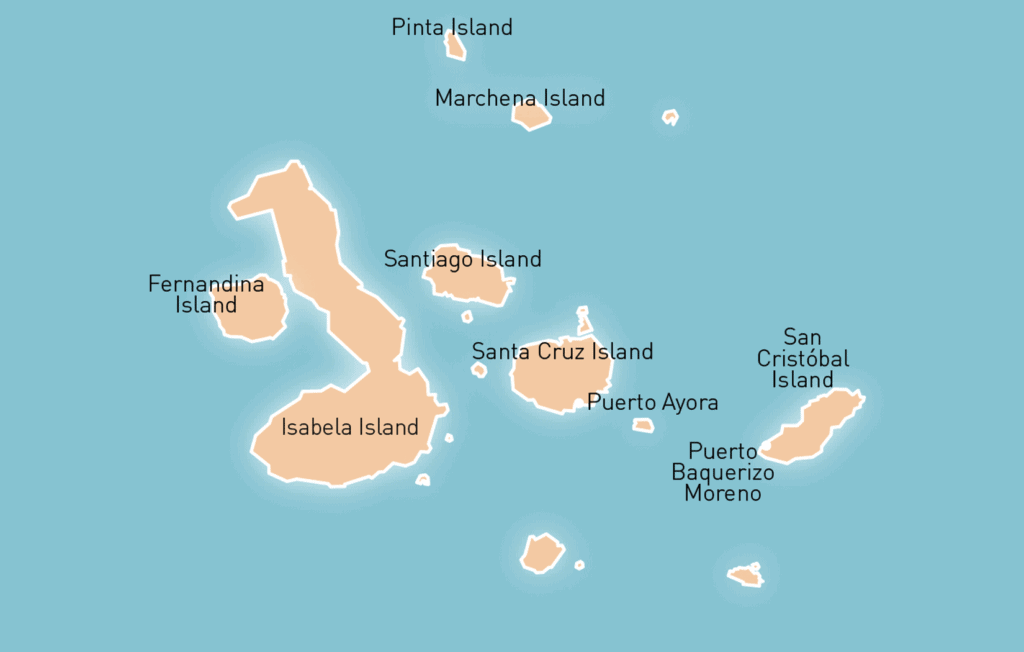
The islands are a province of Ecuador and are a protected nature reserve. There are 13 major islands but we visited and were able to anchor at only 3 of the main islands. The remoteness and isolation of the islands allowed the flora and fauna develop in a unique way, enabling the existence of giant tortoises, marina iguanas, and many other endemic species of plants and animals. There are two major currents that flow through the islands: the Equatorial Current and the Humboldt Current from the south.

San Cristobal Island: Our first stop!
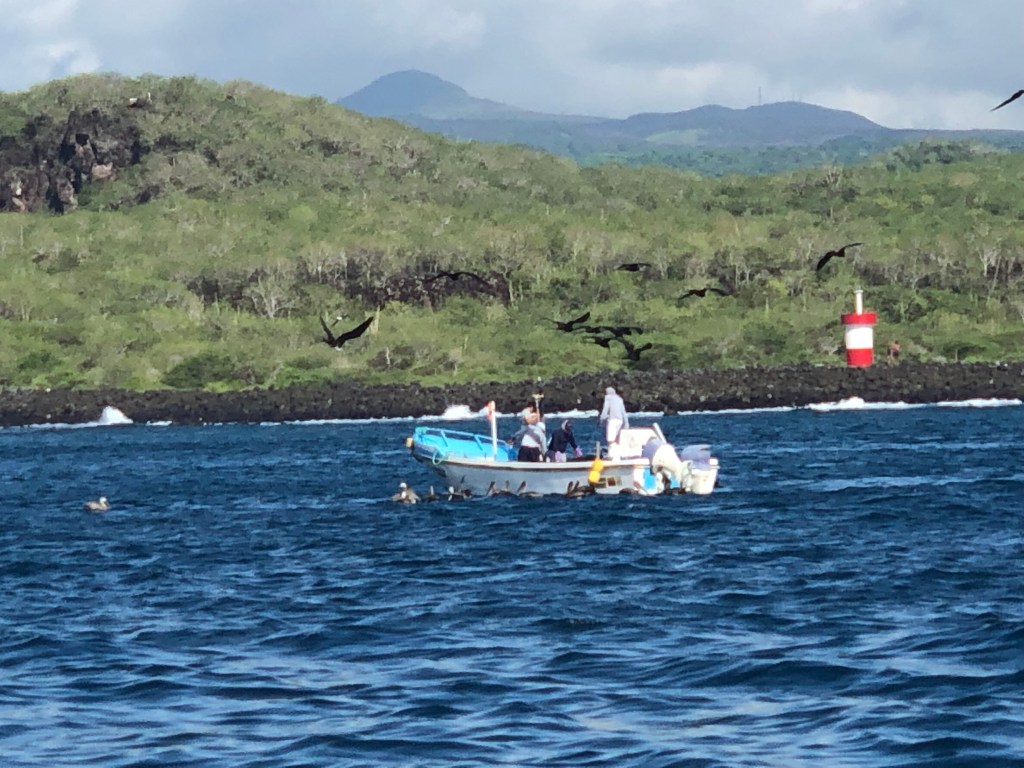
The Galapágos border patrol
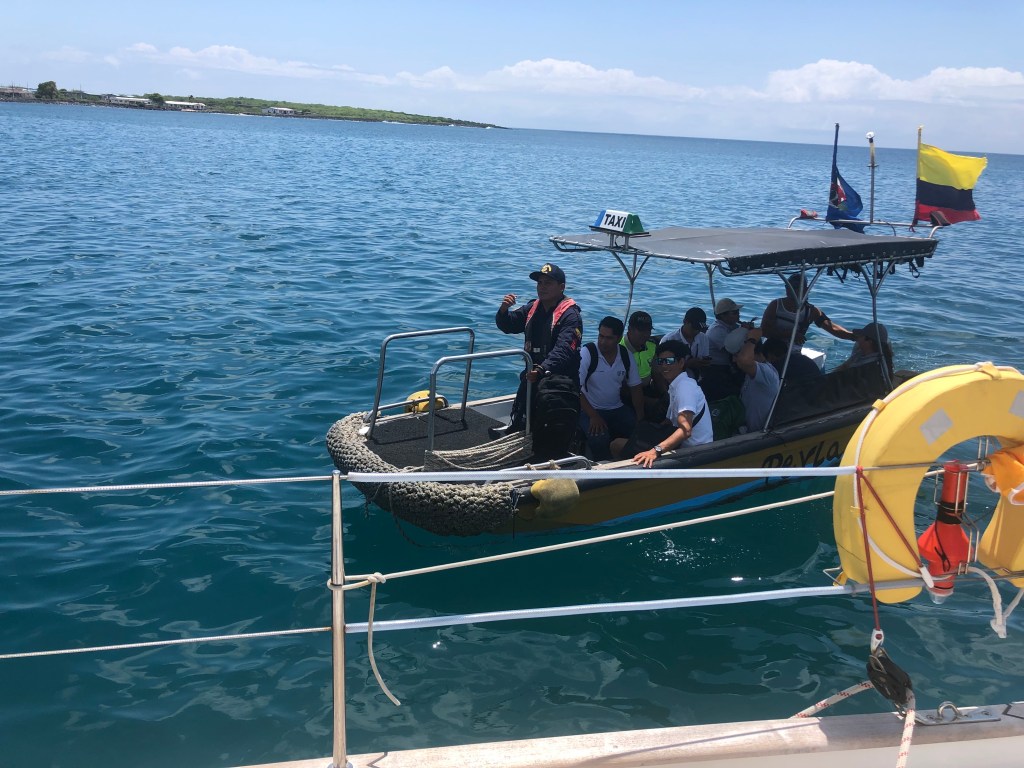
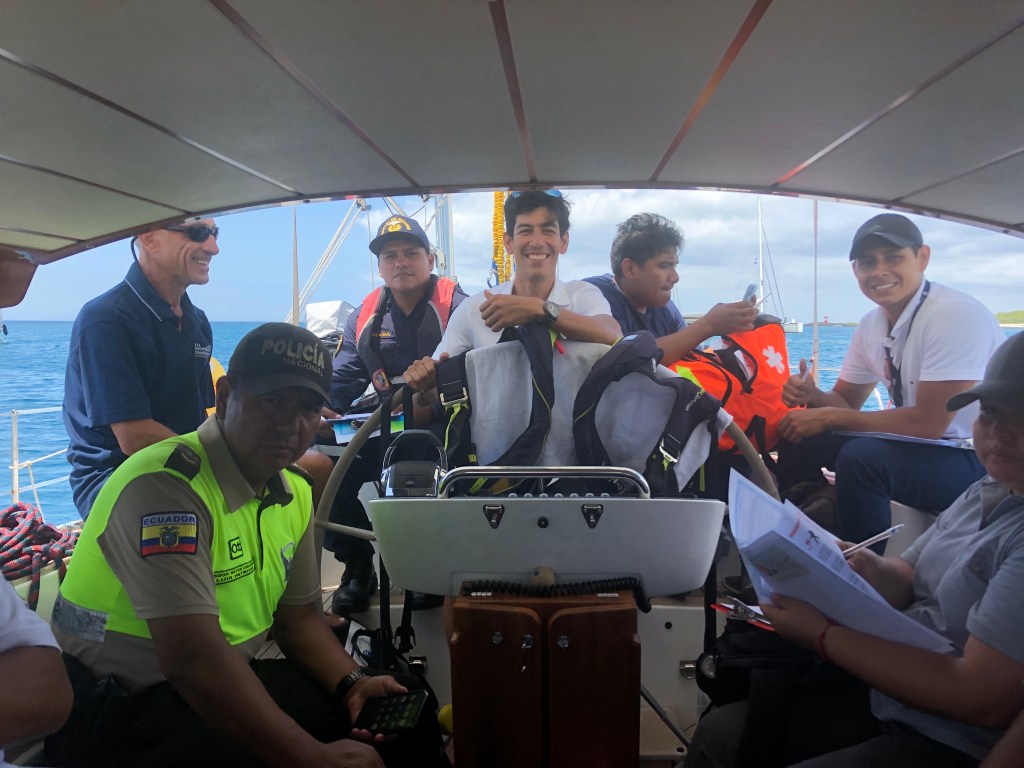

Entering the Galápagos by sailboat carries with it some stringent rules. The World ARC had prepared us by explaining these rules and providing information before we left Colombia. The Galápagos customs officials expect the boat to be free of imported fresh fruit and vegetables and, especially, the hull of the boat must be free of any barnacles or growth of vegetation. If the inspecting divers find any evidence of growth, you have to take the boat 40 miles offshore and clean it, and then apply again, and pay, for re-inspection. This is why we had the boat hauled out of the water in Panama and professionally cleaned. The morning after our arrival in San Cristobal, Galápagos, we were boarded by about 10 agents who made sure we were also following all their rules of garbage separation and recycling. A separate group showed up to dive and check the hull of the boat. Fortunately, we passed all inspections!
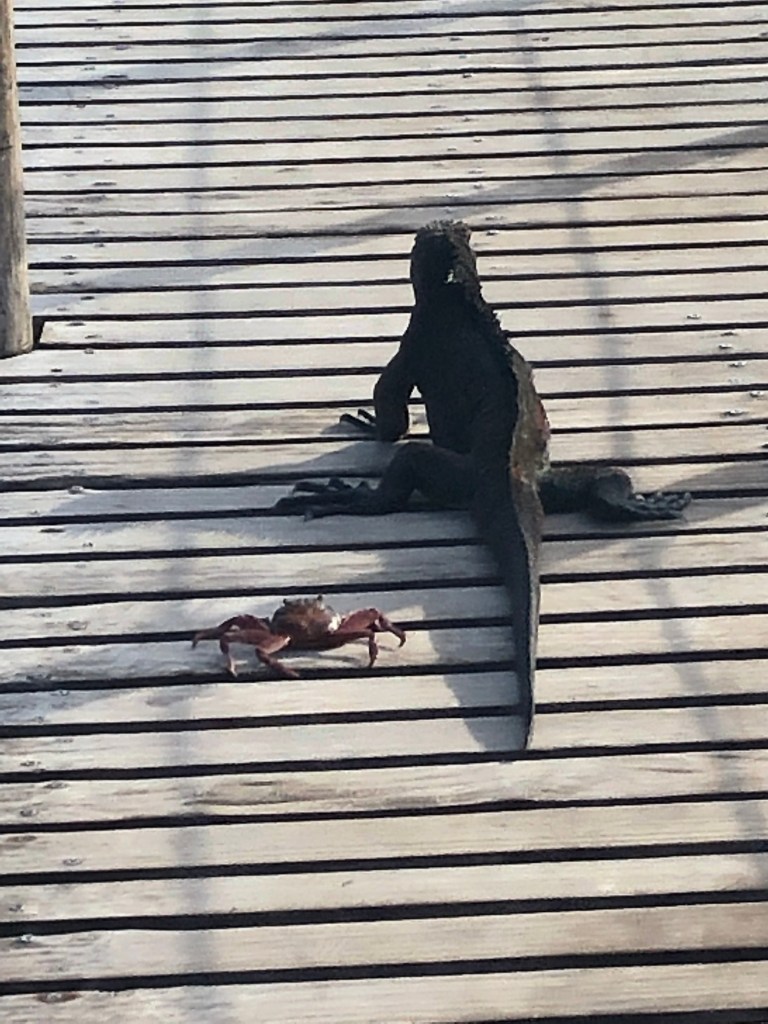
The Galápagos Islands are exploding with life. In the water and on the land, there is always something to see. I had expected the islands to be totally wild. But in fact, each of the 3 islands we visited had small towns with shops, hotels and restaurants.
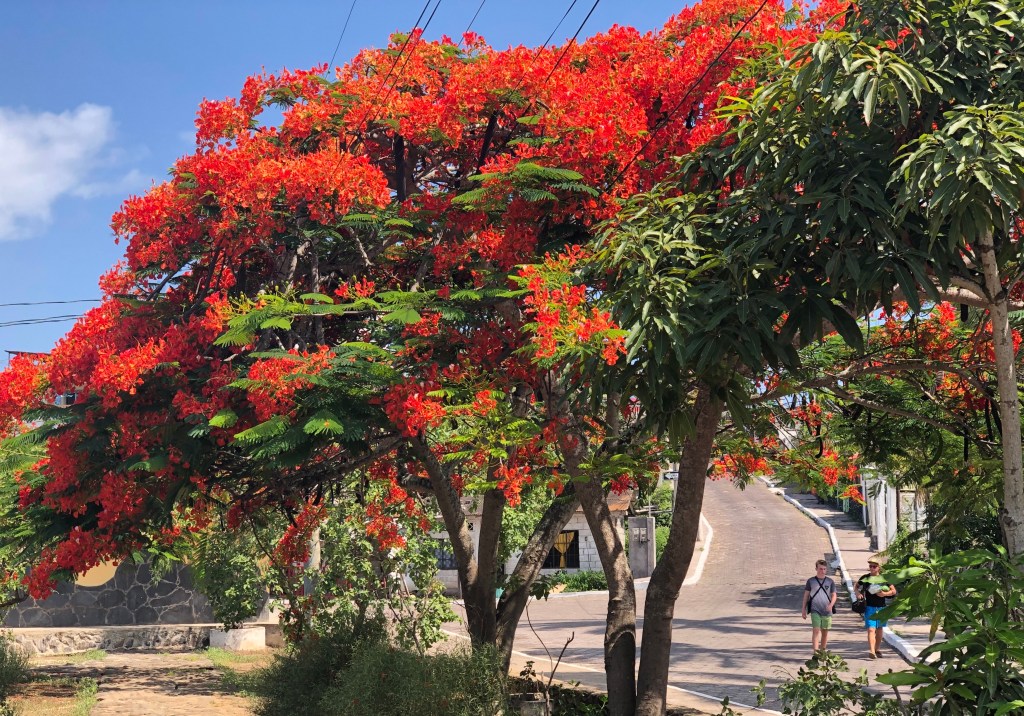

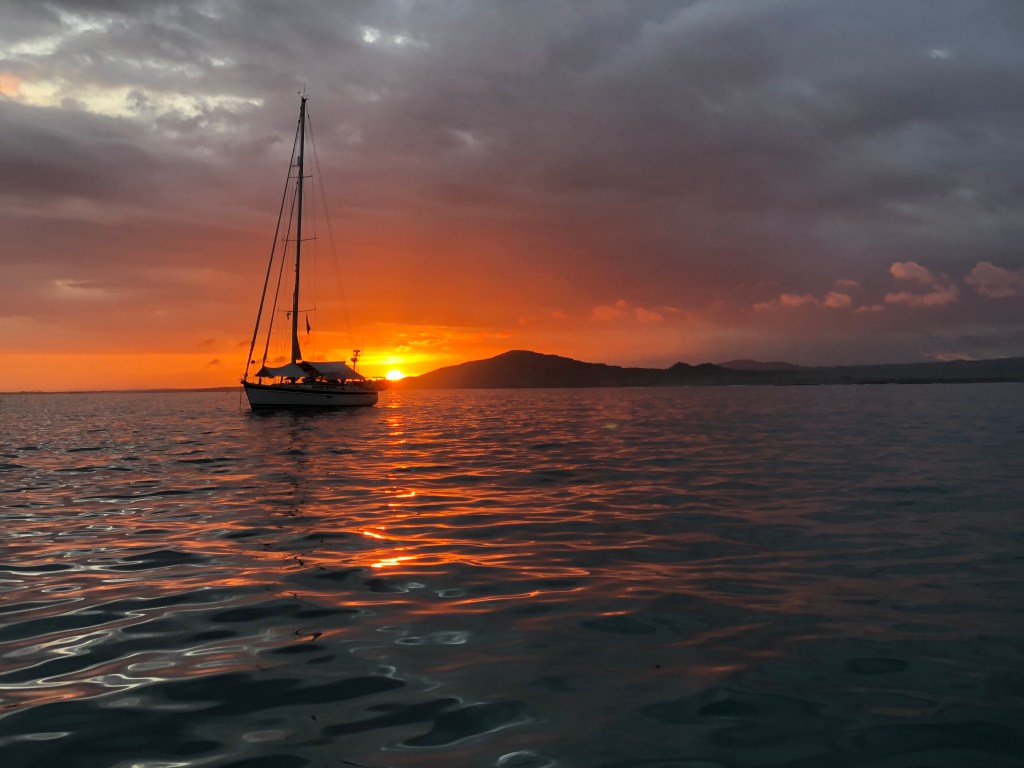
We anchored along with other boats of the World ARC Fleet in Puerto Baquerizo Moreno. We traveled to and from shore by the local water taxis for $1.00 each way. The town is small but there are several shops and grocery stores.
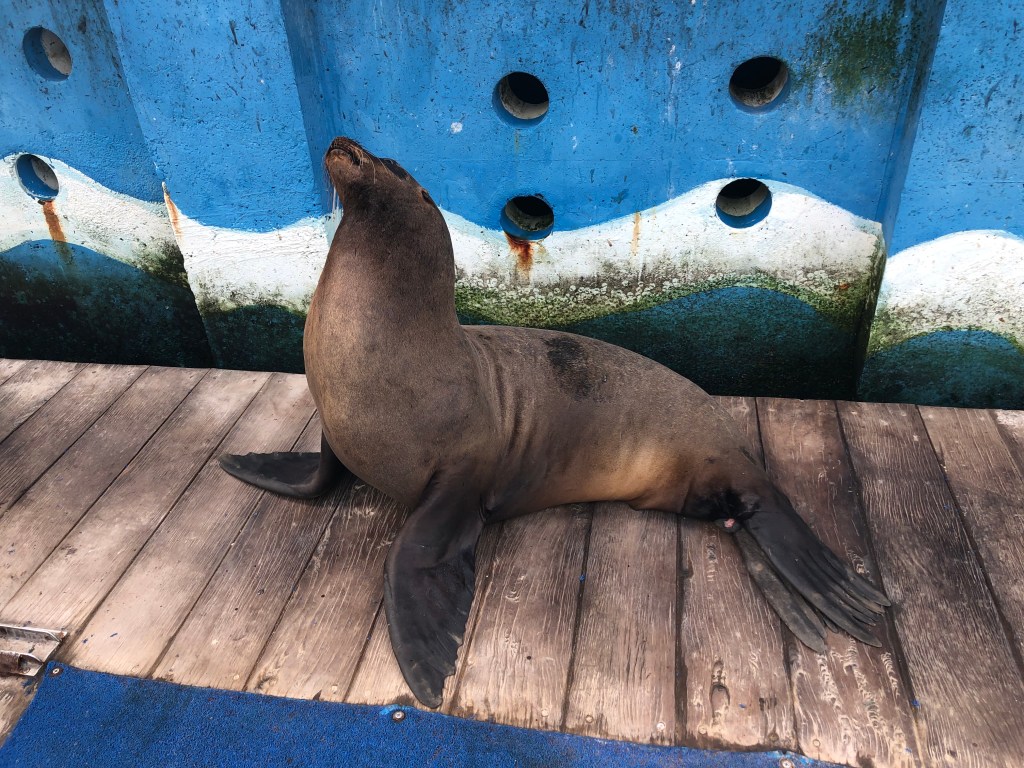

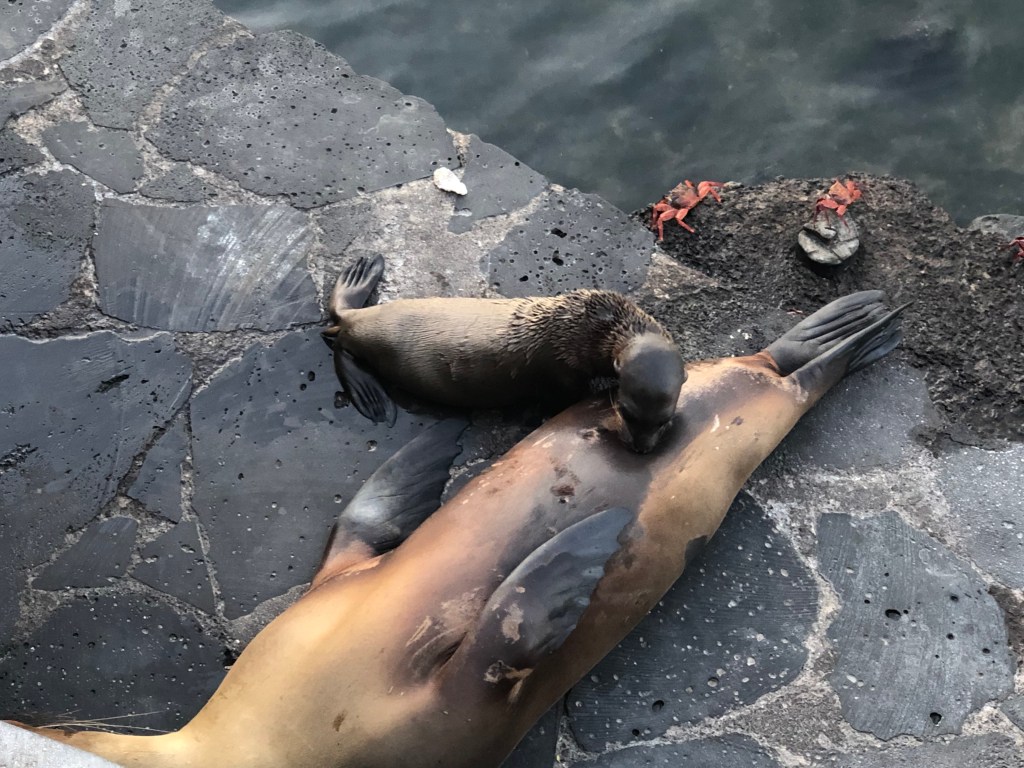
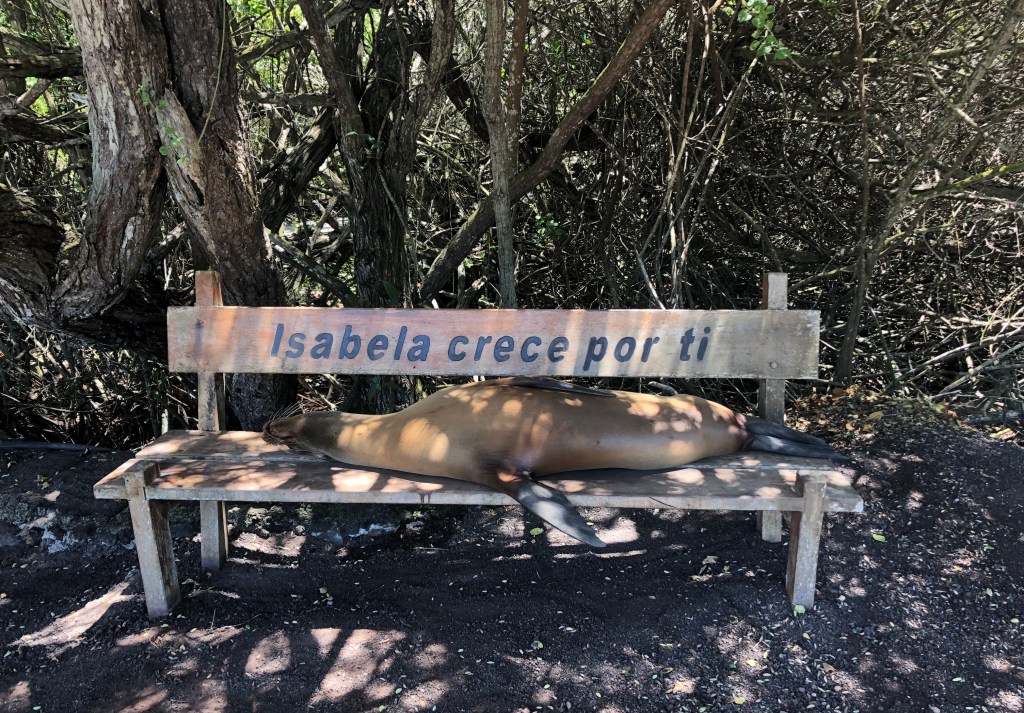
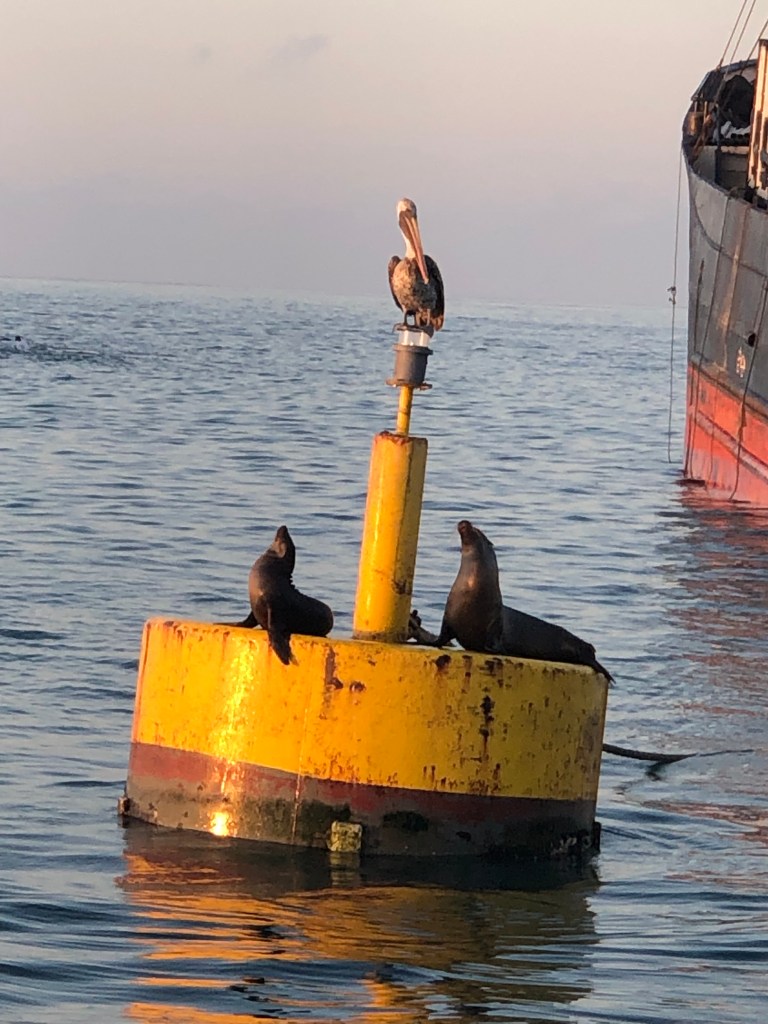
The port is literally overtaken by dozens of smelly, lazy sea lions that lounge on the piers, benches and sidewalks. They will invade the boat cockpits, so it is wise to barricade all entrances to the cockpit with extra fenders.
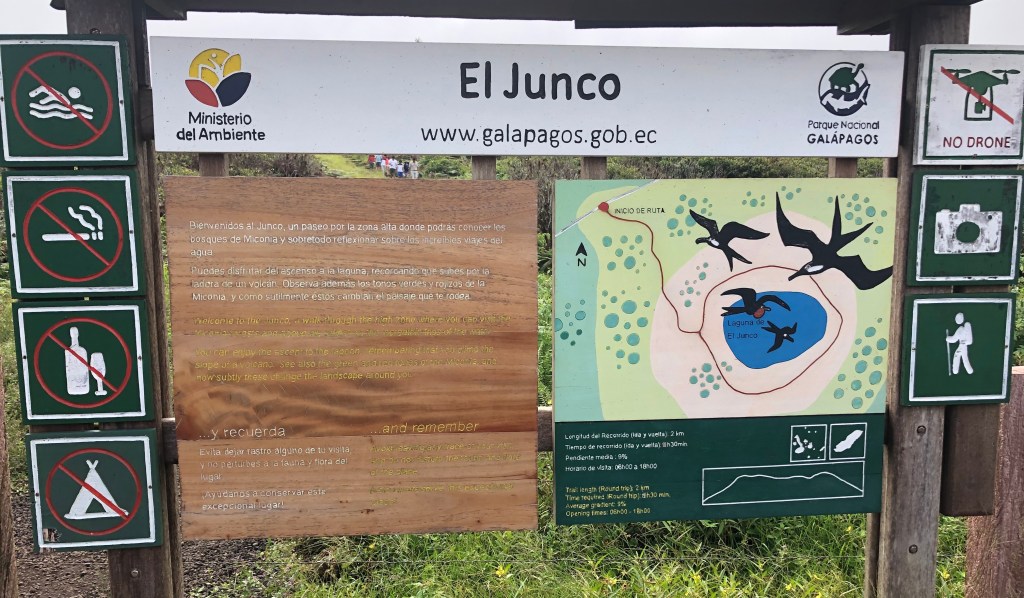
El Junco- Frigate Bird Paradise
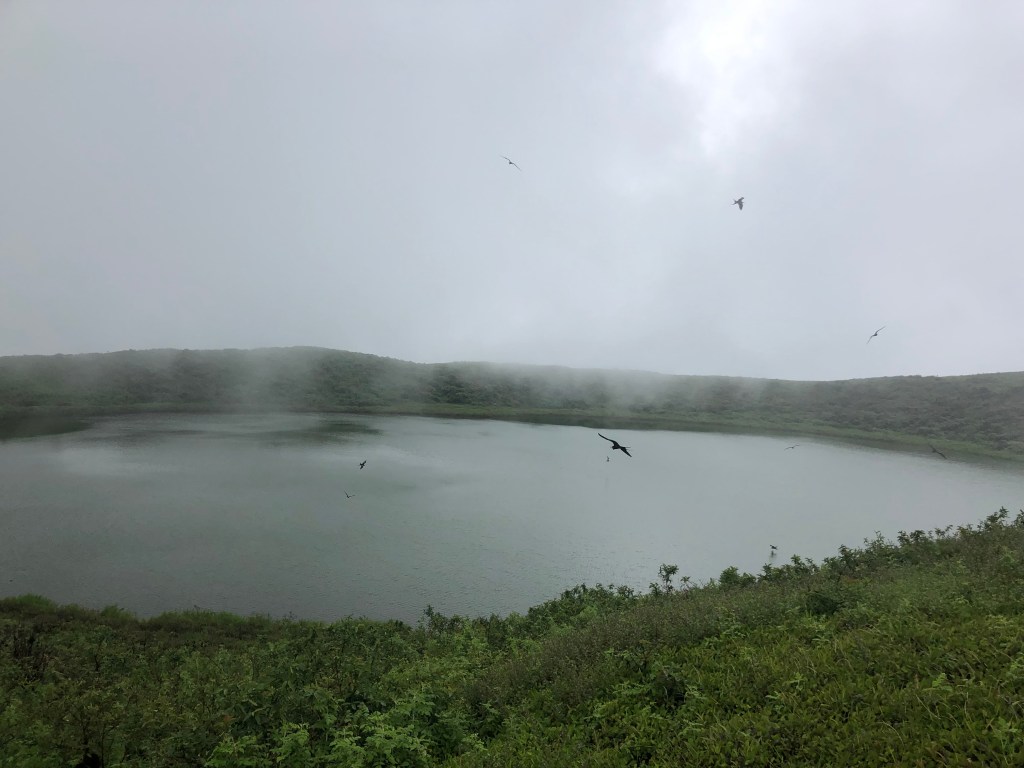
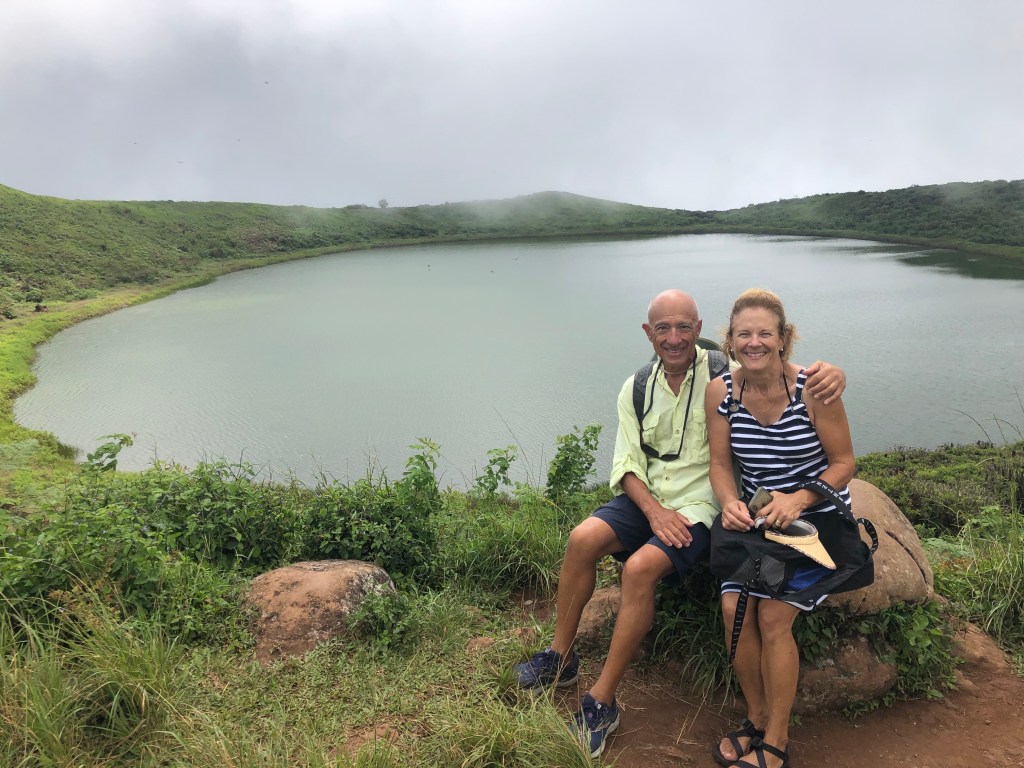
The World ARC provided a tour of the San Cristobal island and we were accompanied by crew members from other boats in the fleet. We visited El Junco, a lagoon situated in an ancient crater, where the Frigate birds come to nest and bathe.
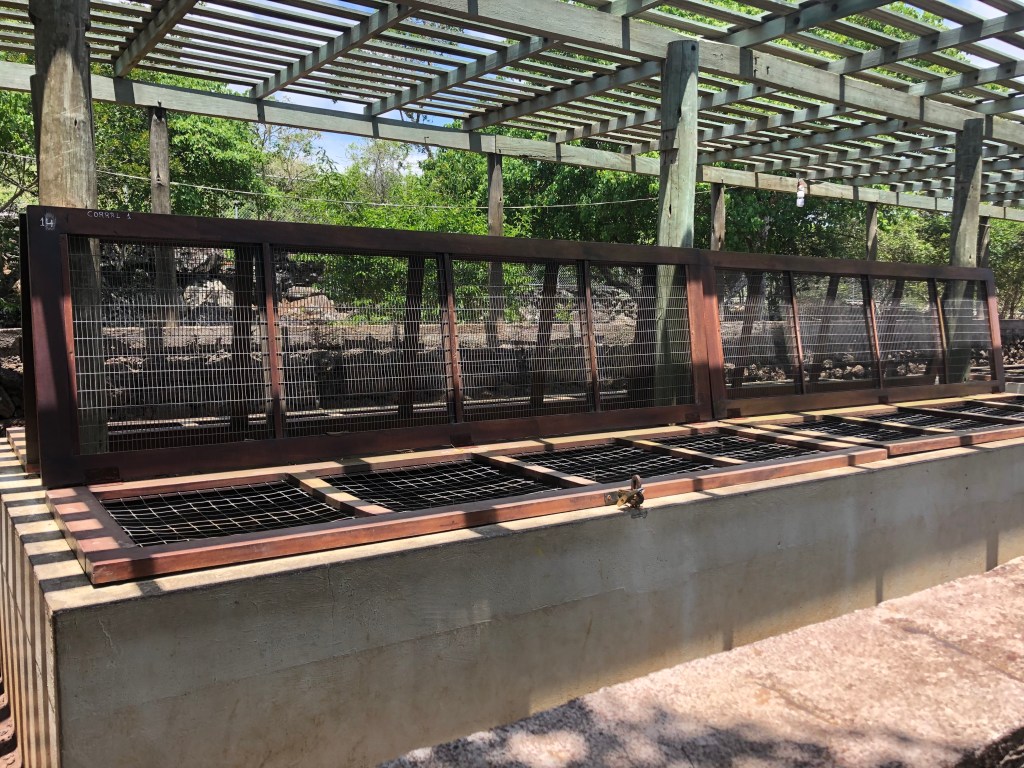
Land Tortoises on the island

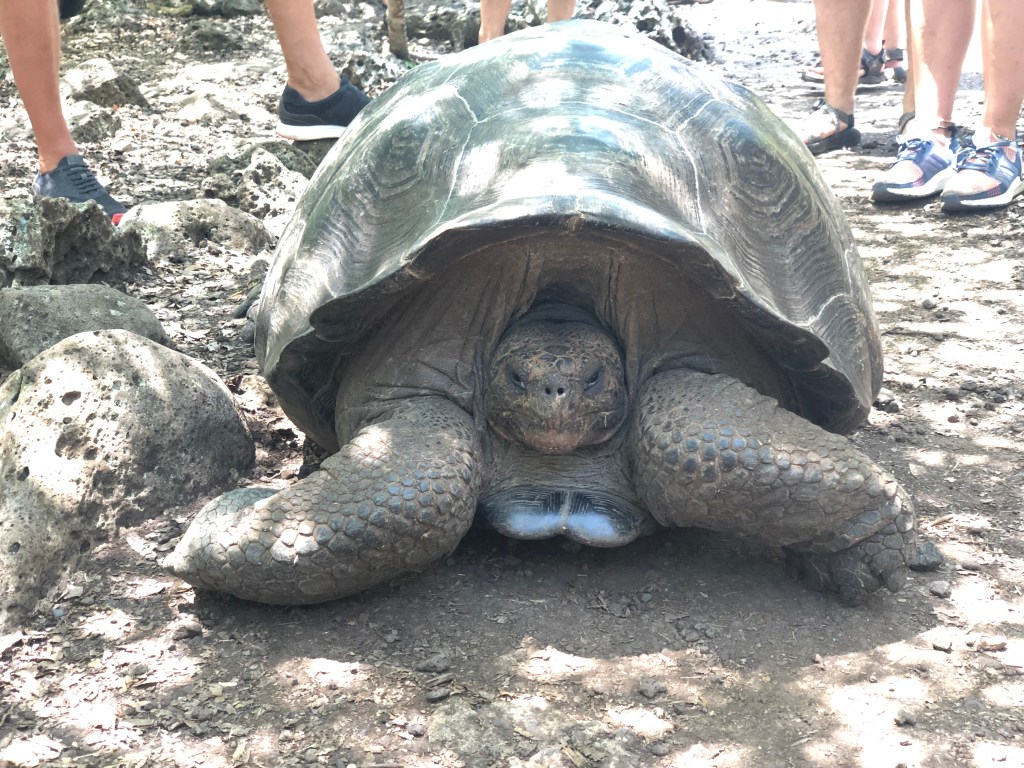
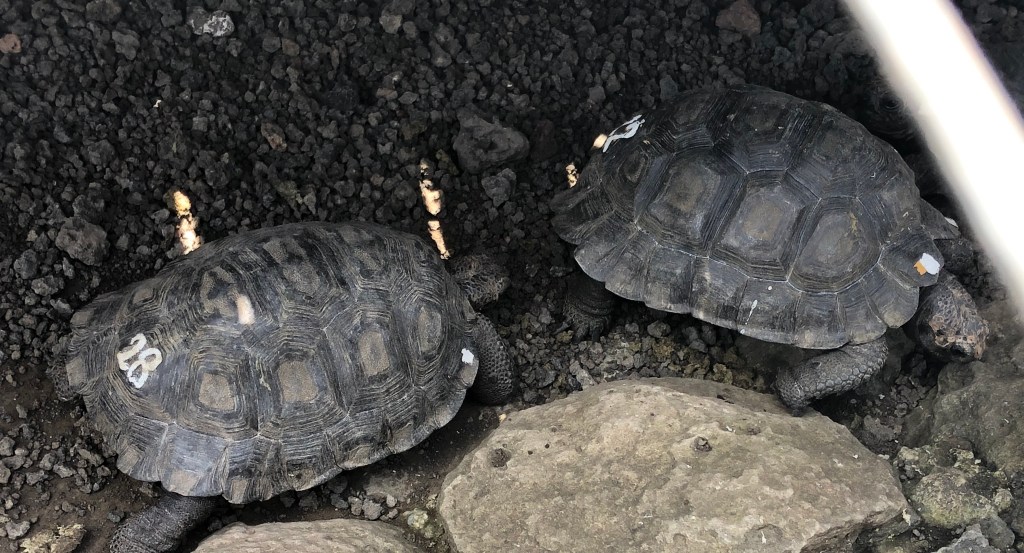
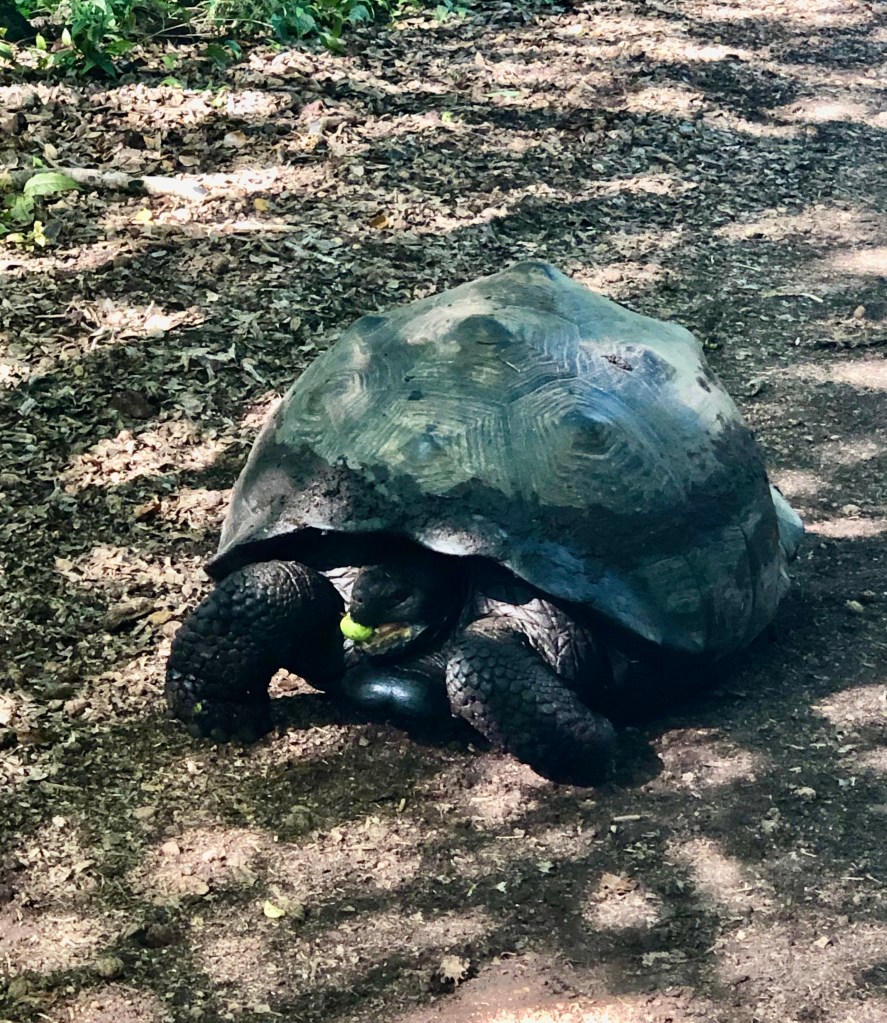
Later we visited a breeding laboratory and land tortoise sanctuary. Historically the population of land tortoises was critically depleted when humans arrived on the islands. The meat was popular among sailors also because the turtles could be taken aboard and survive on the ships without any care, food or water for months, ready to be eaten when desired . Today the tortoises are protected and are thriving in the many sanctuaries around the islands.

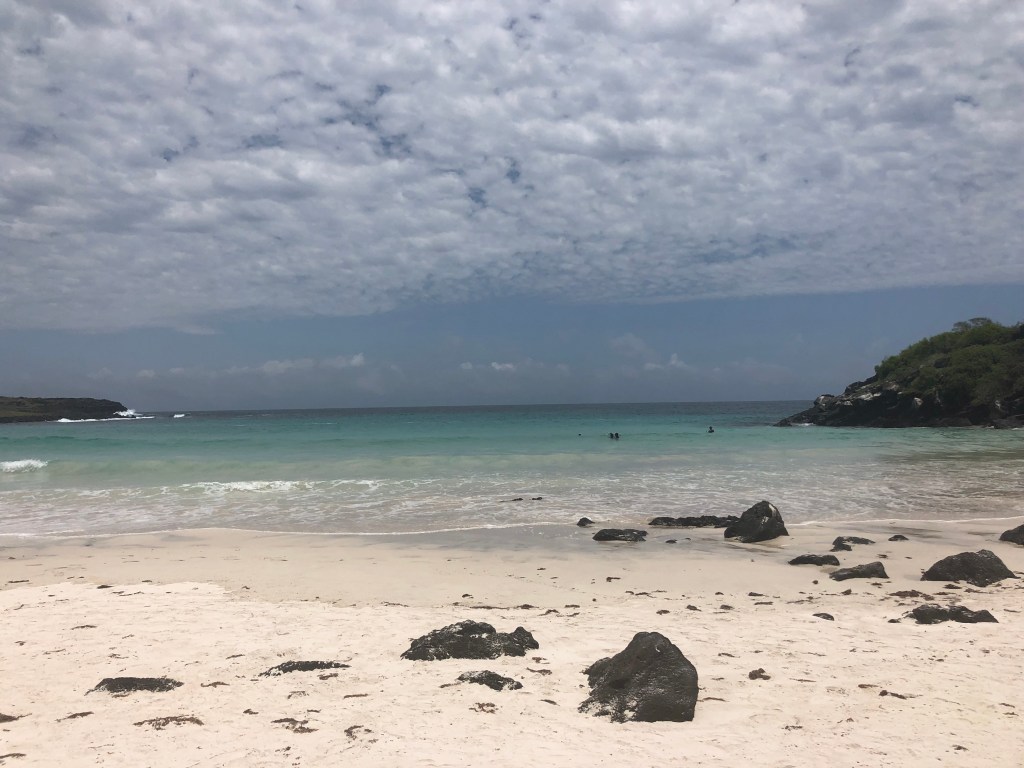
Lastly, we had a lovely swim at this beautiful beach where we body surfed the waves.
Kicker Rock
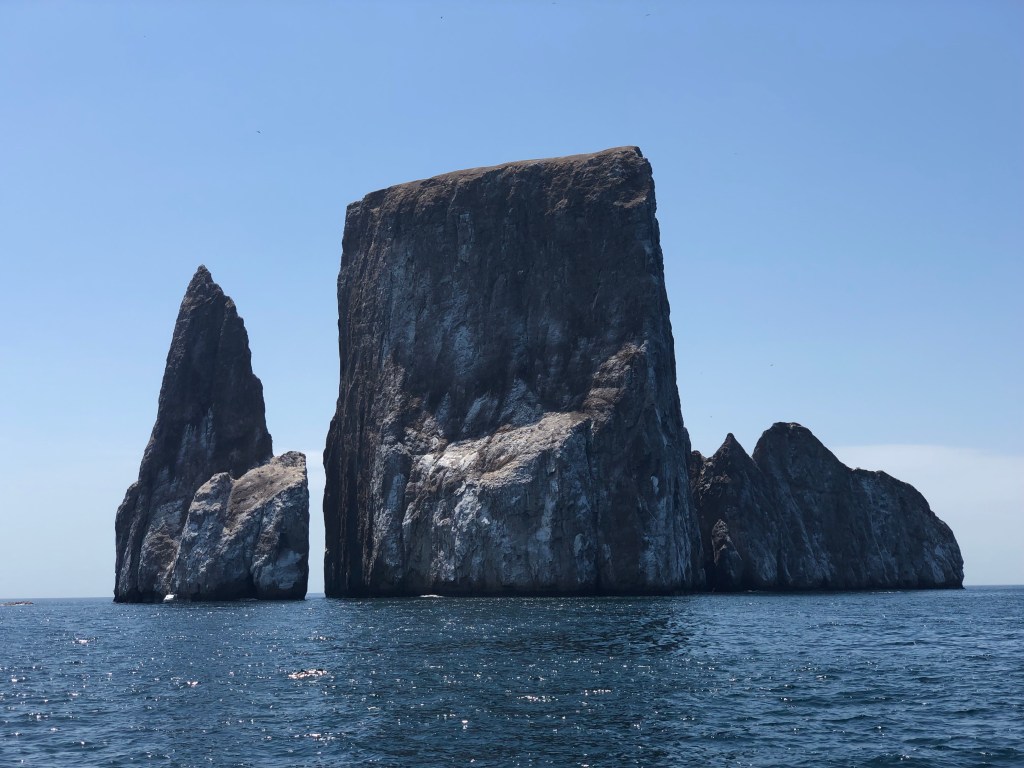
We also went scuba diving twice at Kicker Rock to swim around hammerhead sharks and white-tipped sharks, in addition to several very large manta rays, a sea lion, a marine turtle and clouds of literally thousand and thousands of small beautiful fish. We also could see and feel the different currents in that area. One very chilly and the other quite warm.
Isabela : the largest island
Los Tuneles
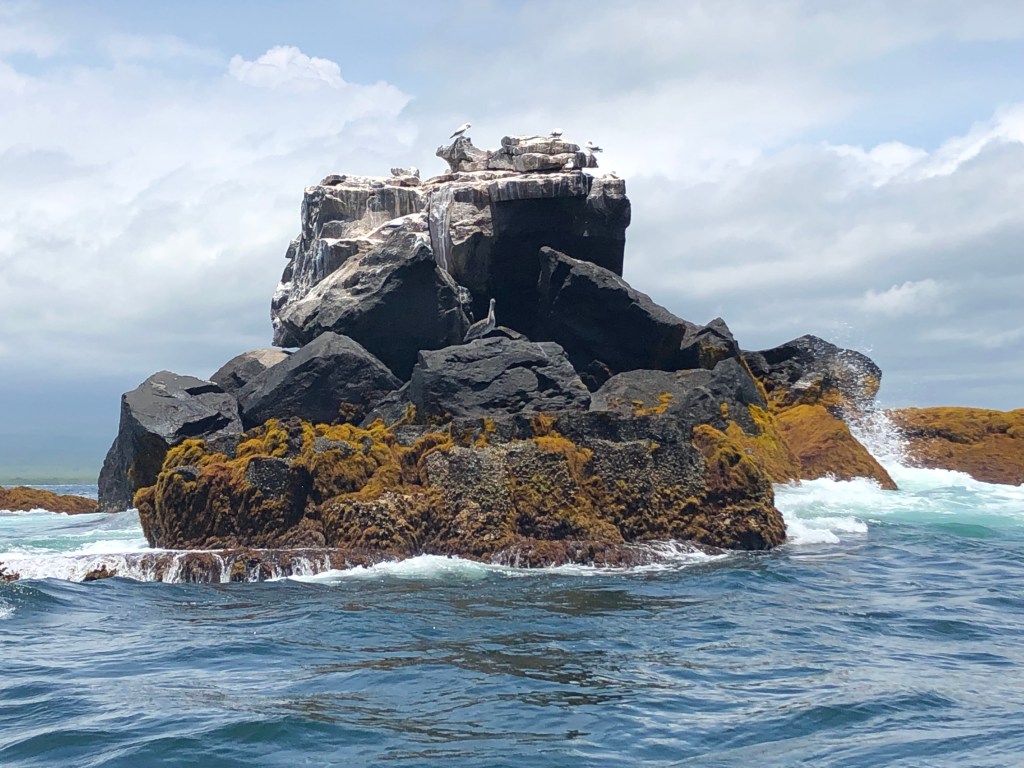


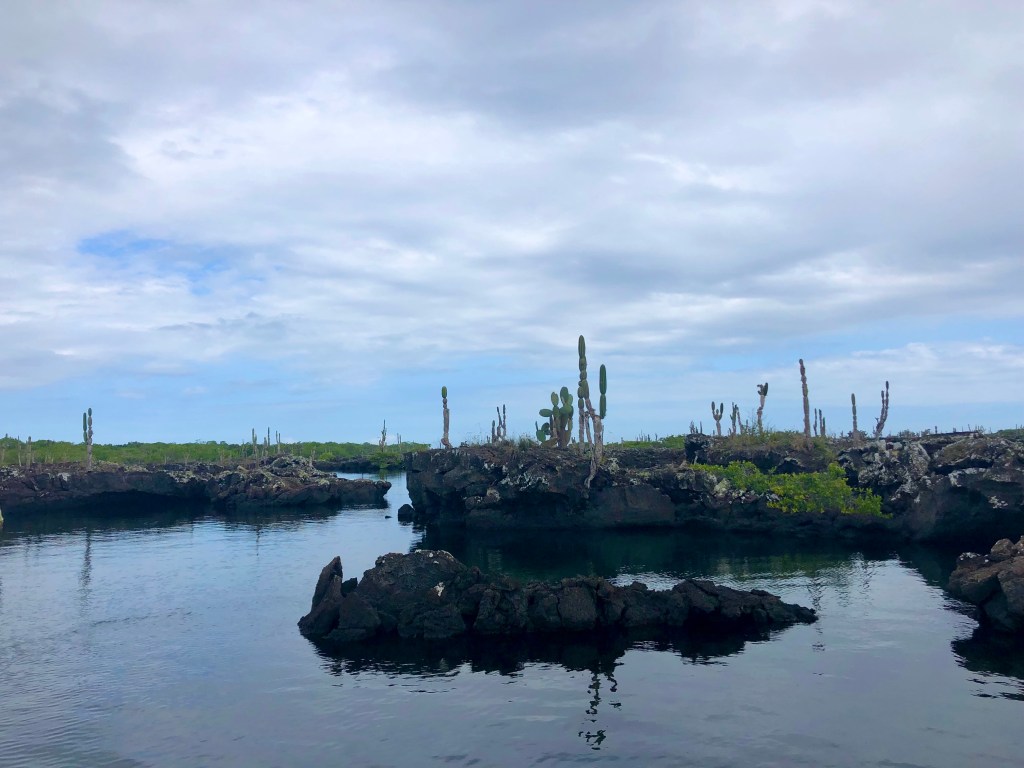
We went with a group by boat to visit an islet on the north of the island where there are lava formations that look like tunnels. ‘Los Tuneles’ is a marine paradise!
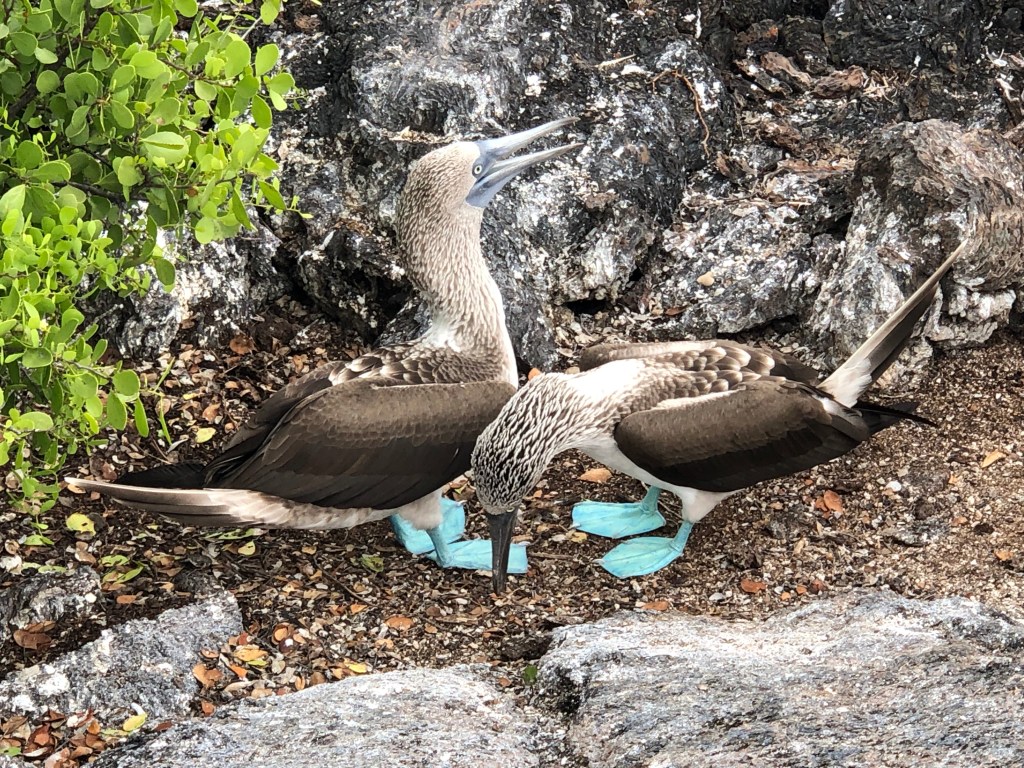
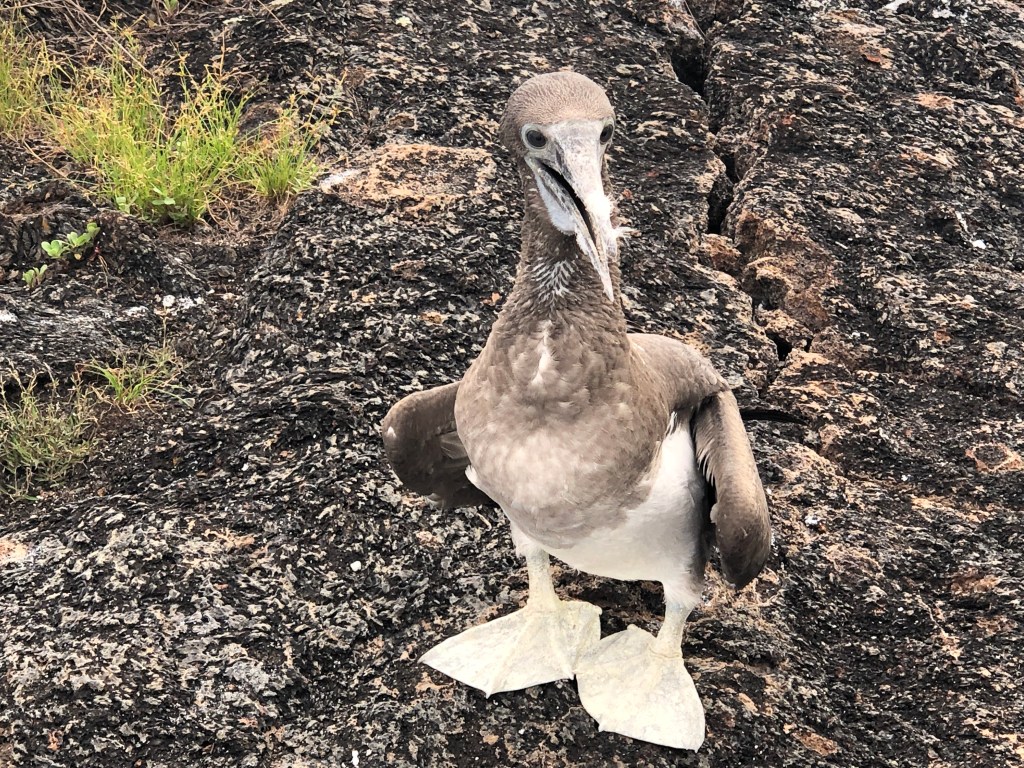
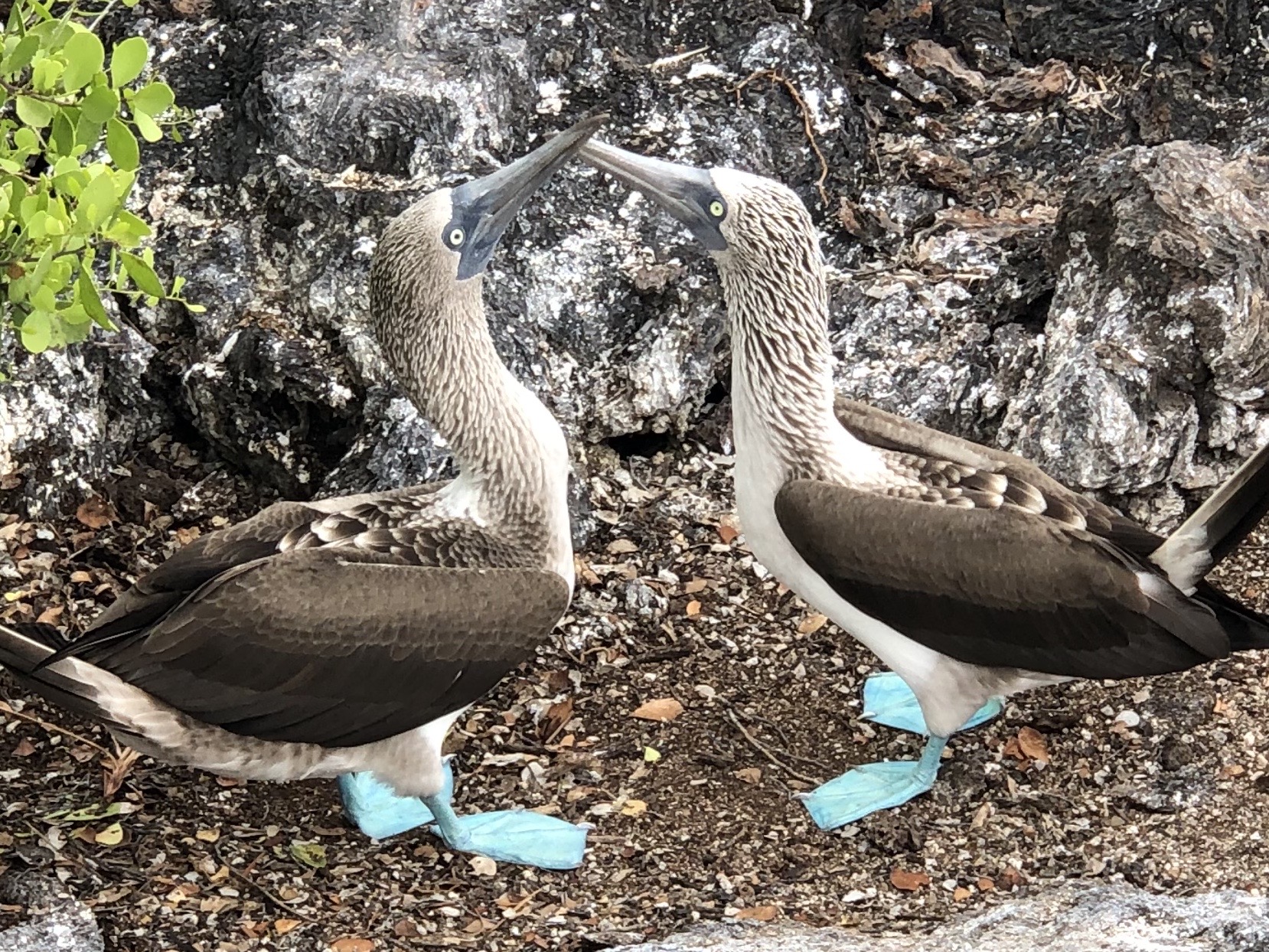
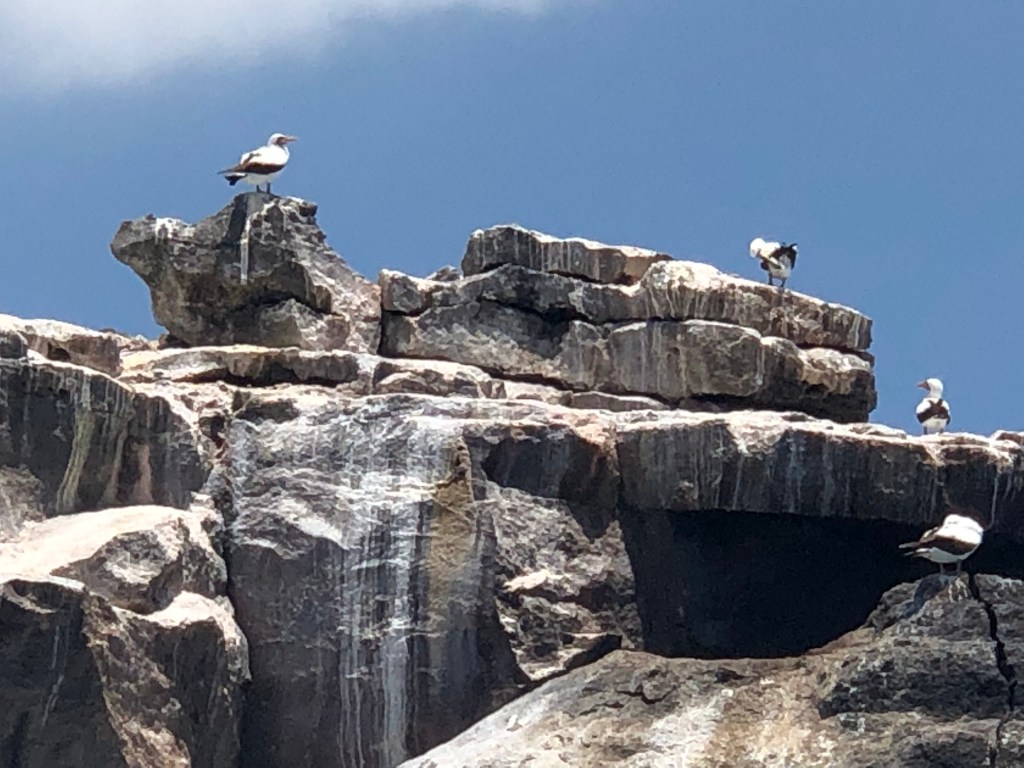
We watched the blue footed Boobies dancing and then mating. There were many very large sea turtles and sea lions.

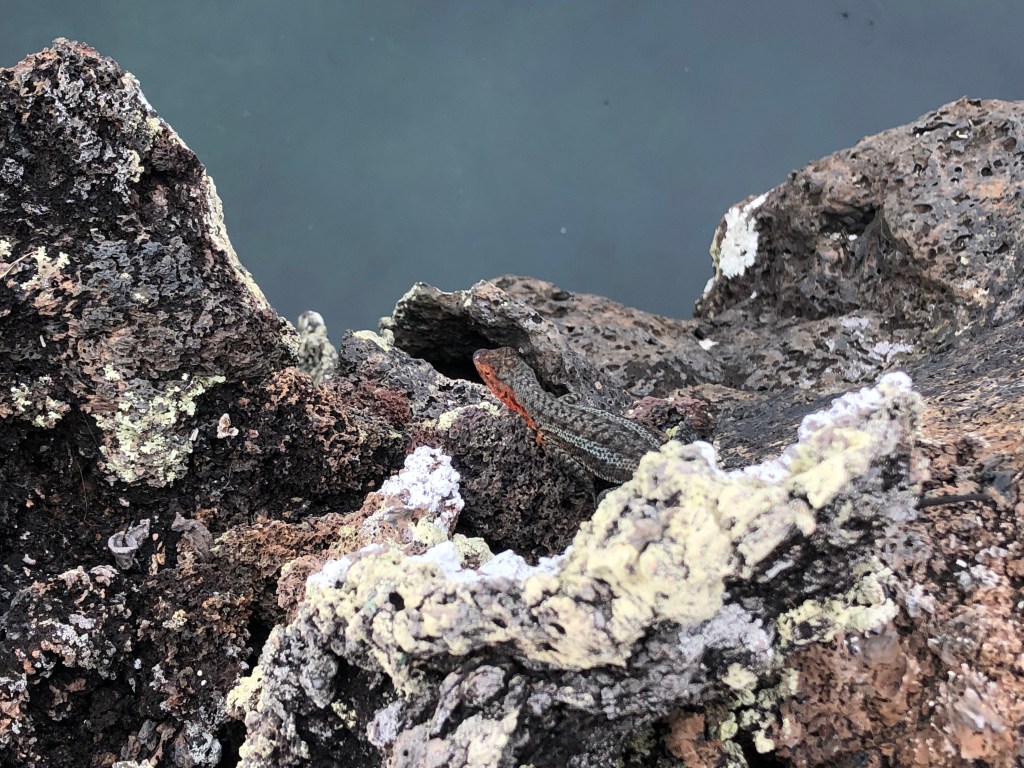
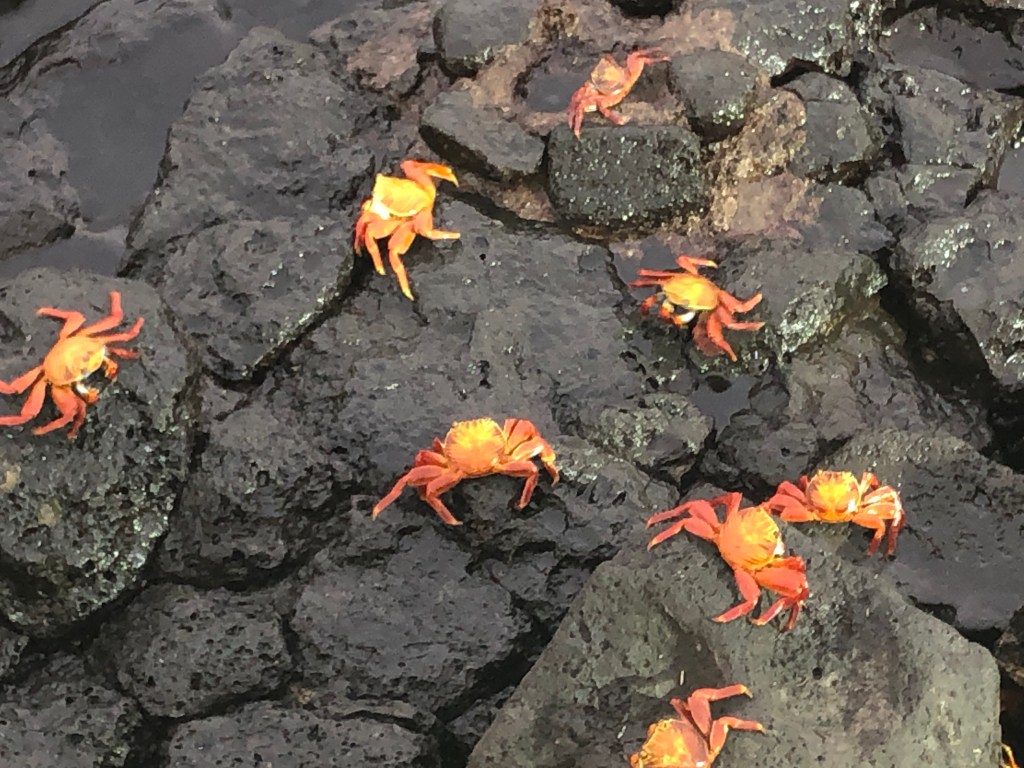
Boobies, Frigate birds, brown pelicans and sea lions were everywhere. We also saw several Darwin’s finches- of which there are at least 12-18 different variations. We found strikingly beautiful the vibrant colors of the red-orange crabs scampering on black basalt rocks.
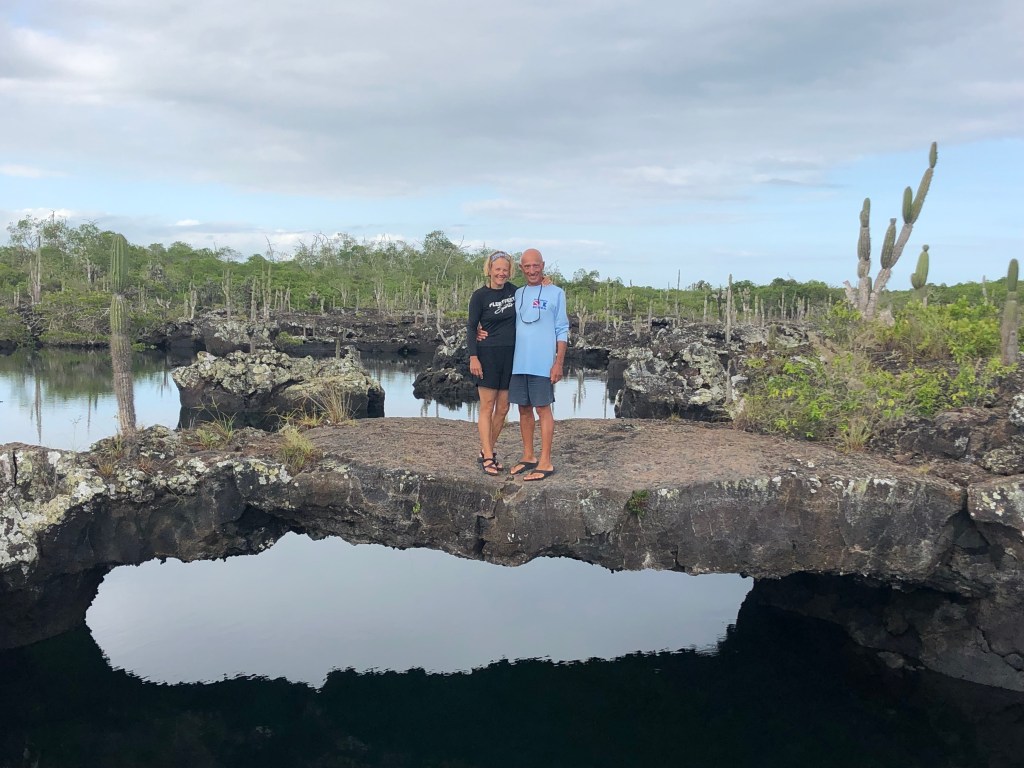
We also got together with the crew of ‘Amazing Grace’ and rode bikes to the Wall of Tears along the beautiful white sand beaches.

The Wall of Tears is one of the most important historical sites in the Islands. This primitive and crude looking wall was built in the 1940s and 50s by criminal and political prisoners who were sent to the Island’s penal colony. The prisoners endured torture, harsh working conditions and even death. After several violent protests by the prisoners and corruption among the guards, the penal colony was closed down in the 50s by the Ecuadorian government.


Sierra Negra Volcano
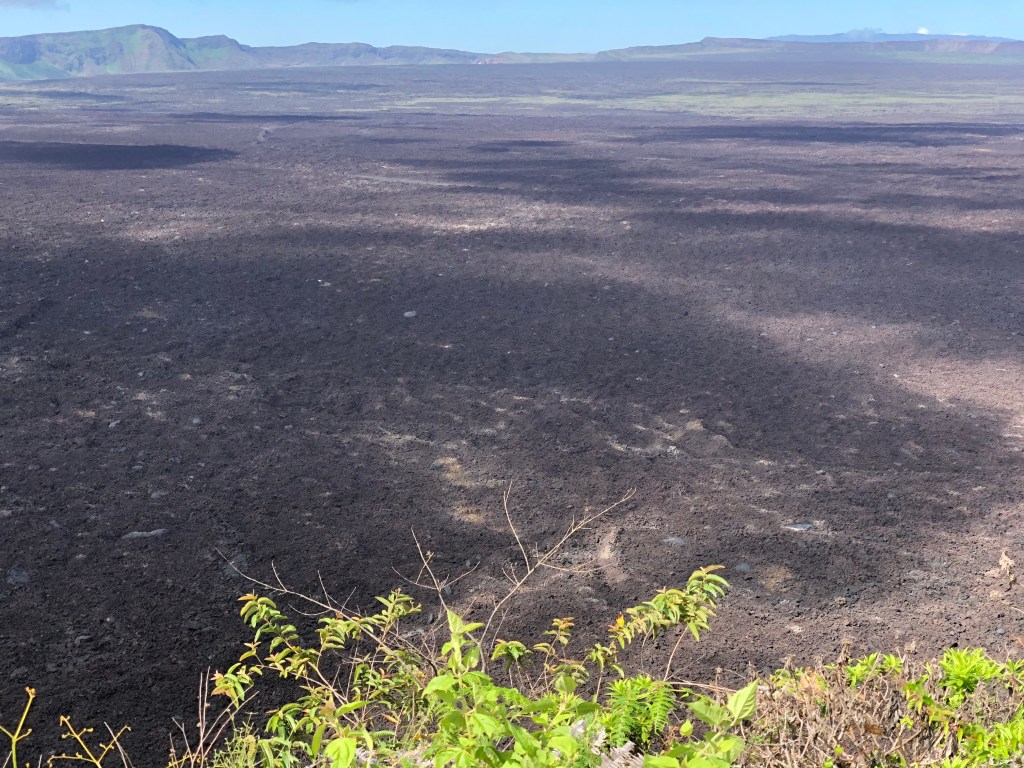
Sierra Negra is the second largest volcano/caldera in the world that last erupted 2 years ago. It rises to an altitude of 1124 meters. We joined a group and hiked the 8 km up and 8 km back to the base.

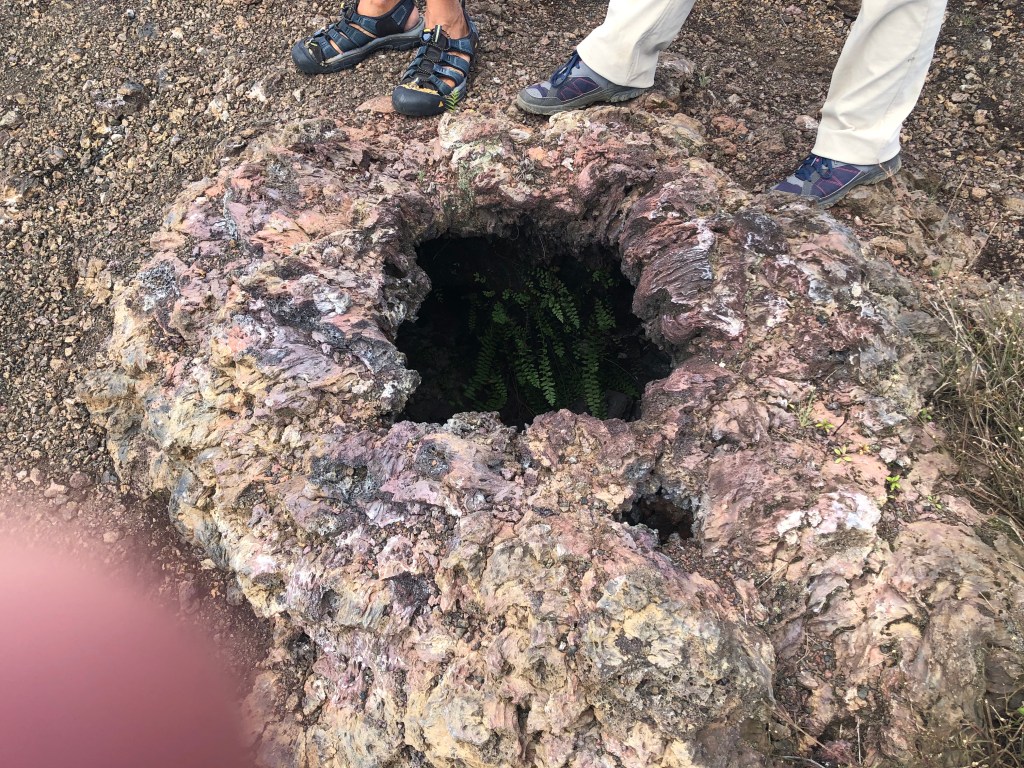
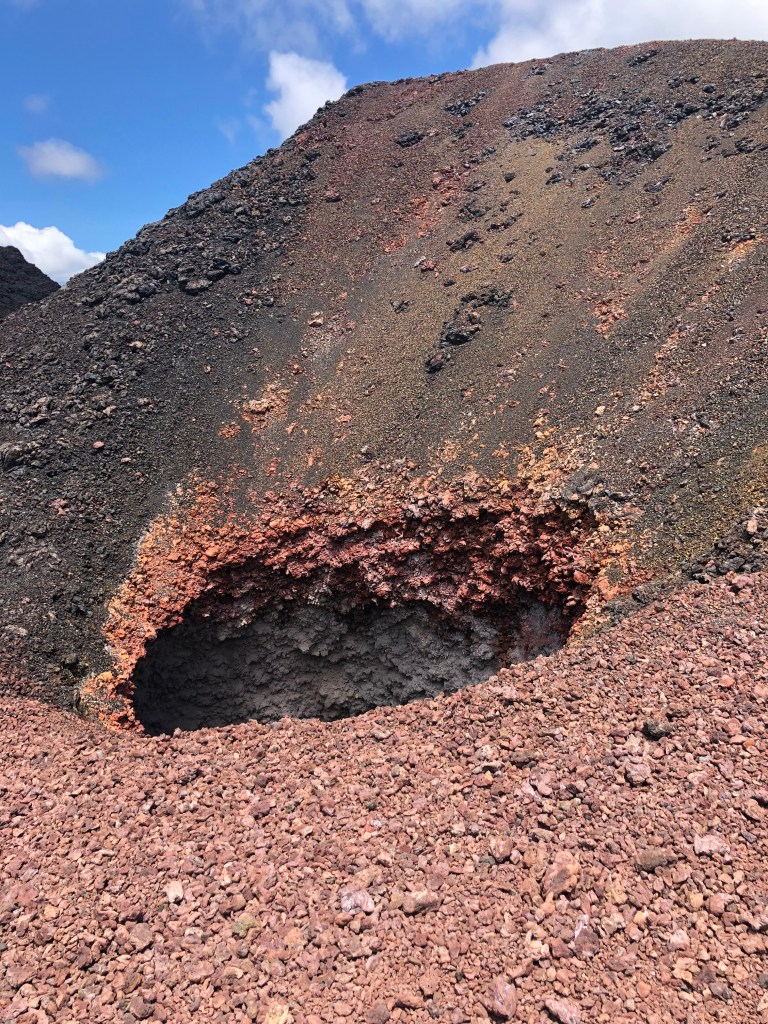

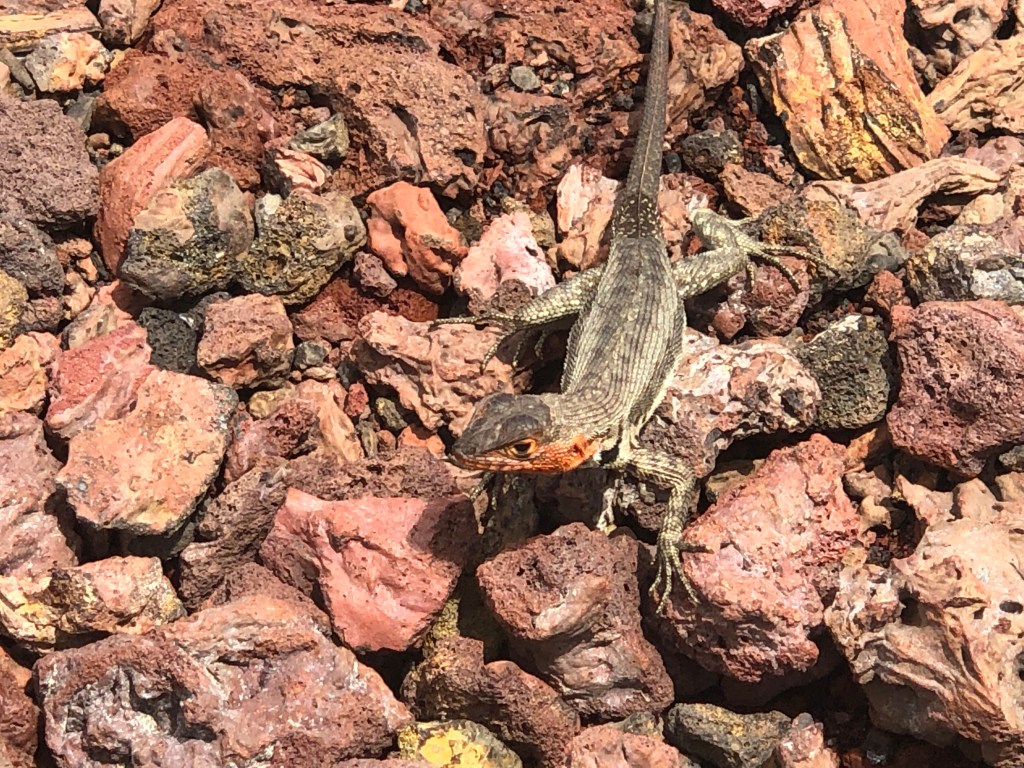
The Island of Santa Cruz

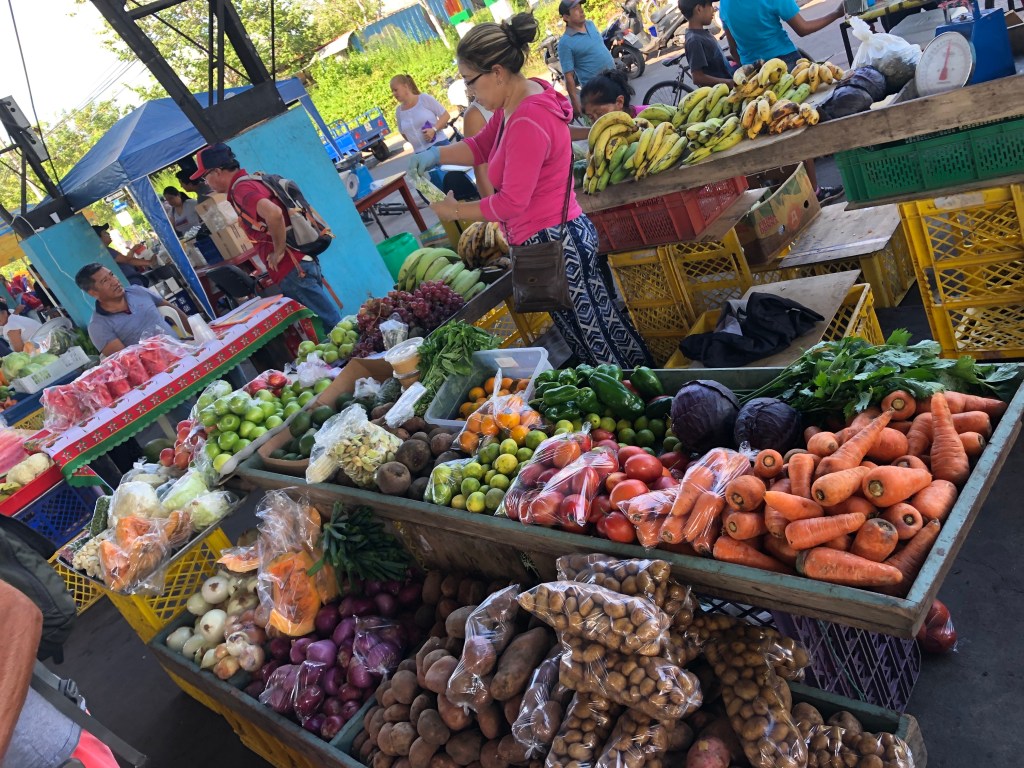
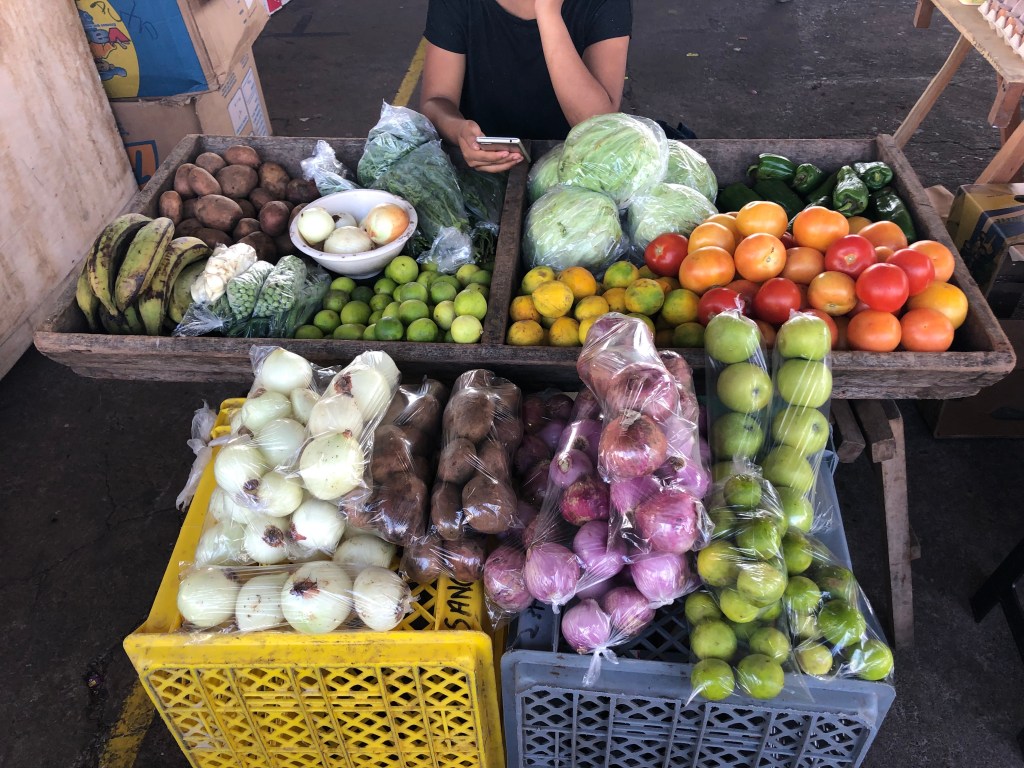
We had only a few days in Santa Cruz. We had to provision the boat for the 3 week passage to the Marquesas Islands. We also had to pick up Tim, our friend-crew member who had sailed with us from the Canary Islands to St. Lucia and who had planned to join us again. It was such a busy time that we were not able to visit the famous Charles Darwin Research Station which has a breeding program for endangered giant tortoises.



Diving with sharks…again!
We again had the opportunity to scuba dive with the sharks in Santa Cruz. The water was crystal clear and the temperature was nearly perfect. For those who are skeptical: the sharks did not even bother to look at us. They really don’t care!


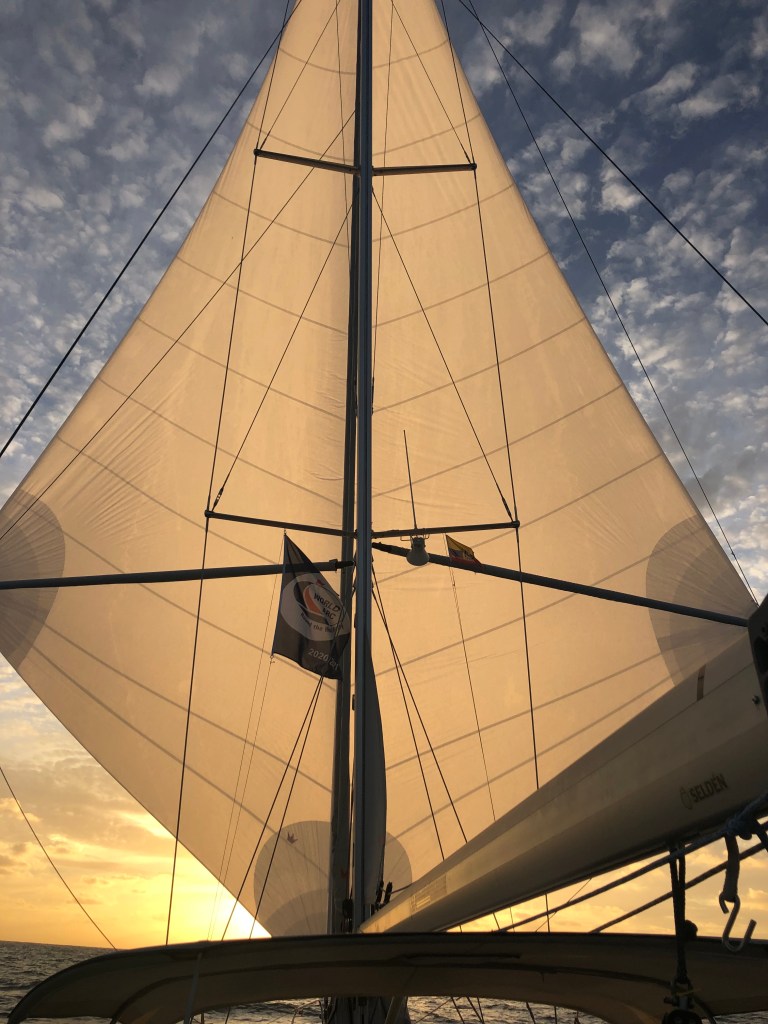
BWR with two poles! Makes easy to jibe!!
The Galápagos Islands are simply magnificent and well worth the visit. The people are happy and grateful to have visitors. The nature is unique and well cared for. I hope to return again one day to see all the things I missed!

 The Adventures of SV JAN
Jan and Giorgio, Maureen and Dan are asking about you so I’m adding them to this email.
Maureen and Dan, Scroll down – I hope you receive all of the wonderful photos and fun adventure news from Jan and Giorgio.
We love and miss being with all 4 of you!! Lesly
LikeLike