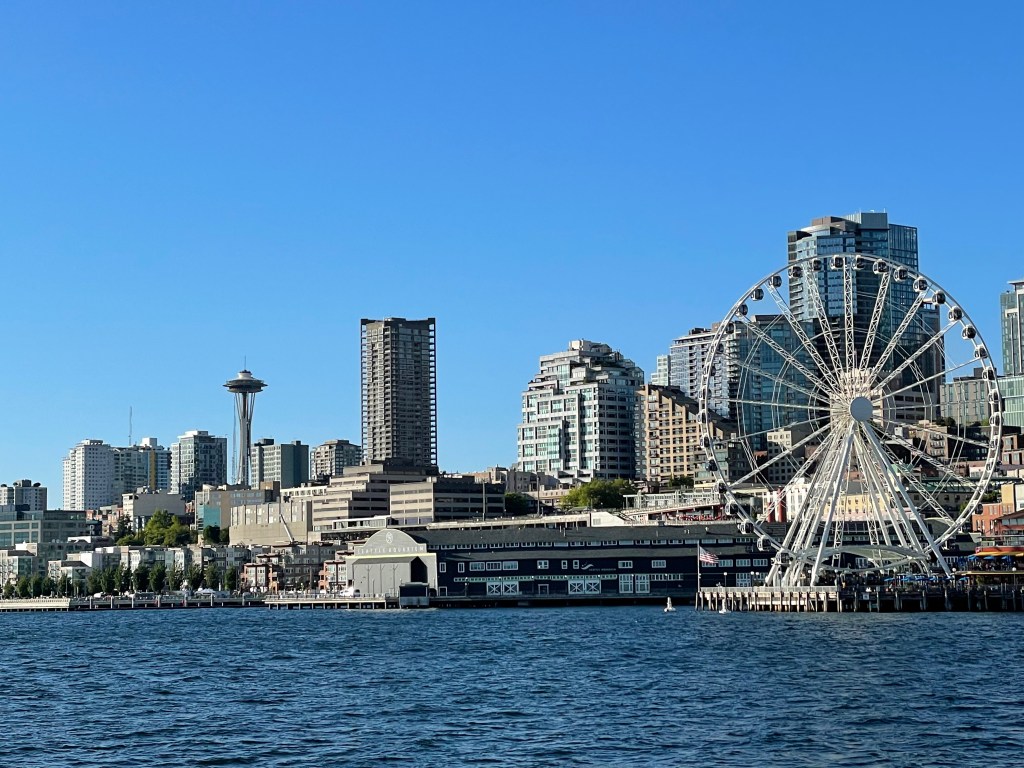
Seattle is a magical place with its surrounding waters and mountains, especially on a sunny day! We were happy to spend a few weeks getting the boat ready to go.

Boat Work Is Never-ending!
You can imagine how many things there are to keep up with on a boat as complex as ours. When one thing goes wrong, another one is sure to go wrong very soon, if not before. Here are a few of the problems we had to deal with:
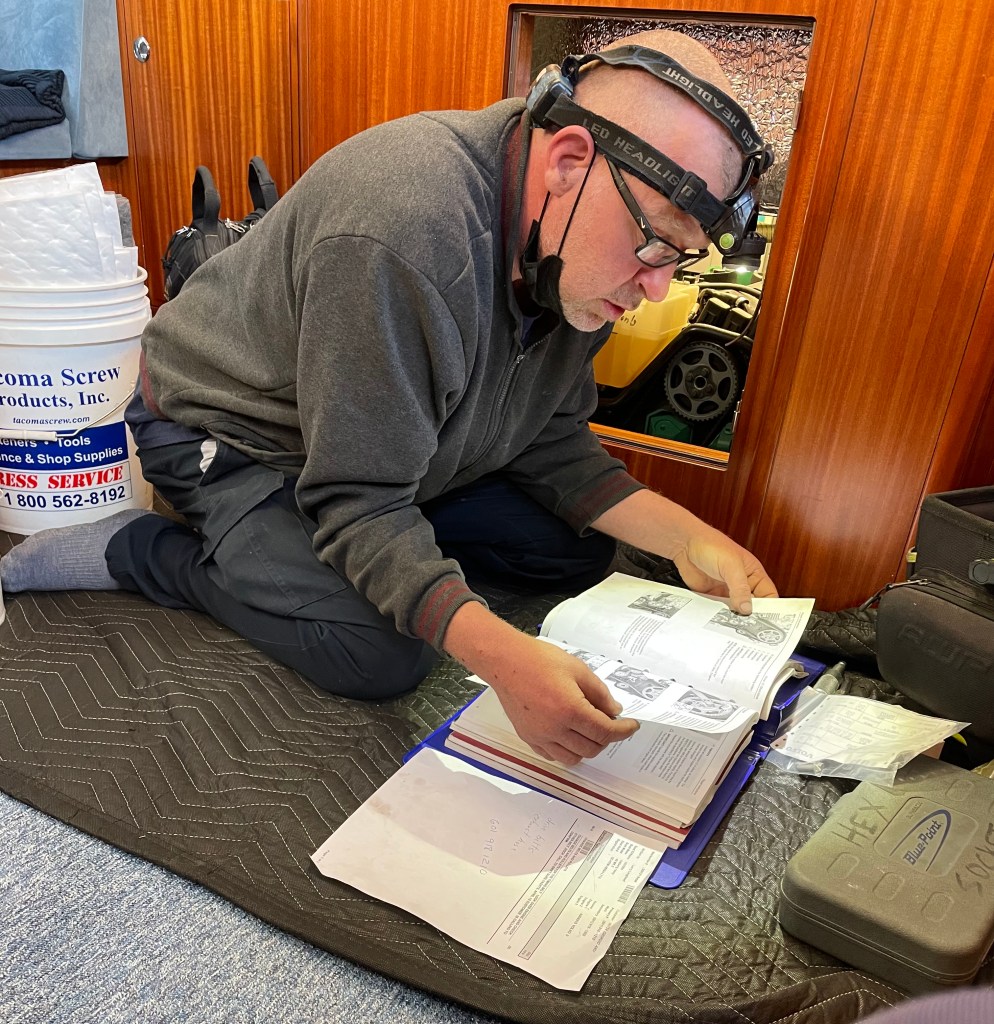
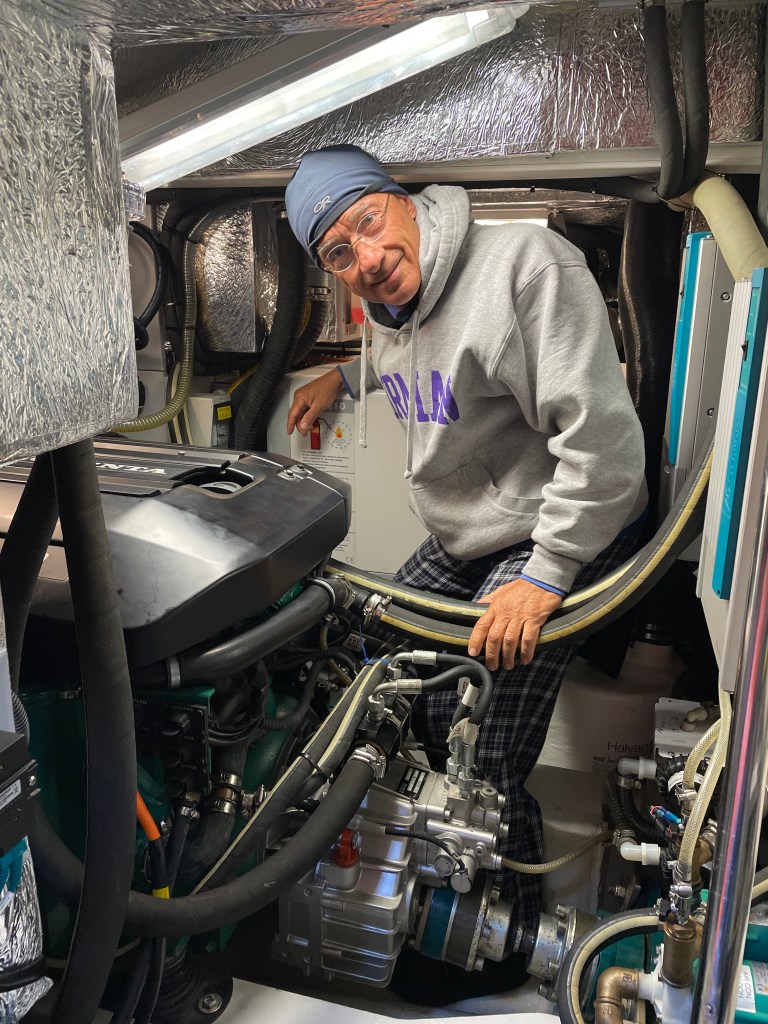
- Who can do the job? Our main problem, wherever we go, is finding competent people to work on the boat. For example, Giorgio had been in contact with the main Volvo Repair Center in Seattle, since October 2020, about changing the main belts and the timing belt on our D3-110 Volvo Penta main engine, which are due at 1,400 hours. Here is a photo of the person who arrived, after having had five months to prepare for this job, as he reads his instruction manual. After 30 minutes of reading, fussing and fuming, Giorgio sent him on his way. We will have to find someone in Canada (if it opens) or in San Francisco to do the job.
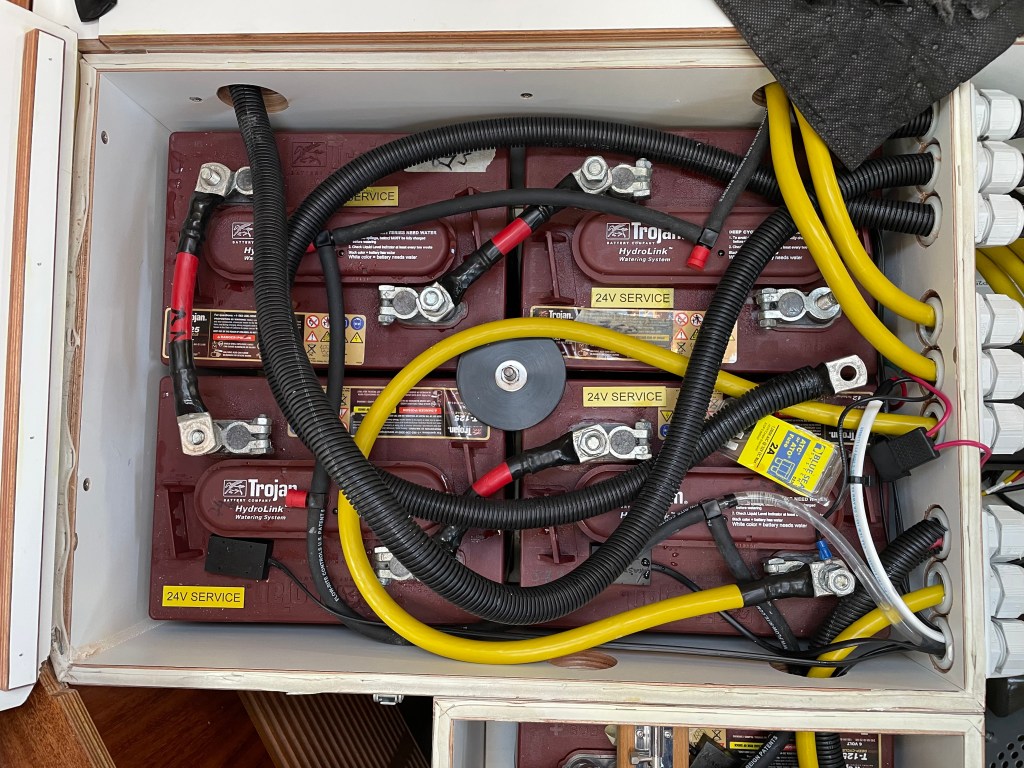
2. Battery Bank. During our five-month absence, Pete McGonagle, the U.S. West Coast Hallberg-Rassy Dealer, took care of the boat, faithfully checking the dehumidifiers and heaters once a week and starting the engine and the generator once a month. Unfortunately, Giorgio forgot to tell him to add distilled water to our acid-lead batteries and he didn’t investigate what type of batteries we had.
So, one of the first jobs was to have the guys from the S3 Maritime come and check all of our batteries. Unfortunately, we had to replace 12 of them (there groups of four) in the house bank of 720 ampere! All the batteries are supposed to have the same age and performance: once one is bad, all need to be changed.
3. Generator. The generator, which stopped working while we were back at home, was working again after Andrew from S3 Maritime came on board in March to replace the capacitors.

4. Watermaker The Spectra watermaker also stopped working! The diagnosis involved locating the blown fuse on the watermaker’s computer motherboard and, after calling the manufacturer in California, the problem was found right away. Fortunately the Spectra Watermaker dealer in Seattle had the required booster pump and Giorgio successfully installed it!
5. Anchor Locker. Our anchor locker was not ever leveled by the factory and we had a pool of sea water in the back of the locker. This eventually created corrosion in the stainless steel chain and the stainless steel bracket to which the line holding the chain’s bitter end is connected. Steve, who works at West Marine, kindly came aboard and helped Giorgio prepare and pour a good amount of epoxy in order to level the floor of the chain locker. He would not let us pay him! So we invited him and his wife on the boat for lunch and here is a photo of Giorgio giving him a very good bottle of wine.

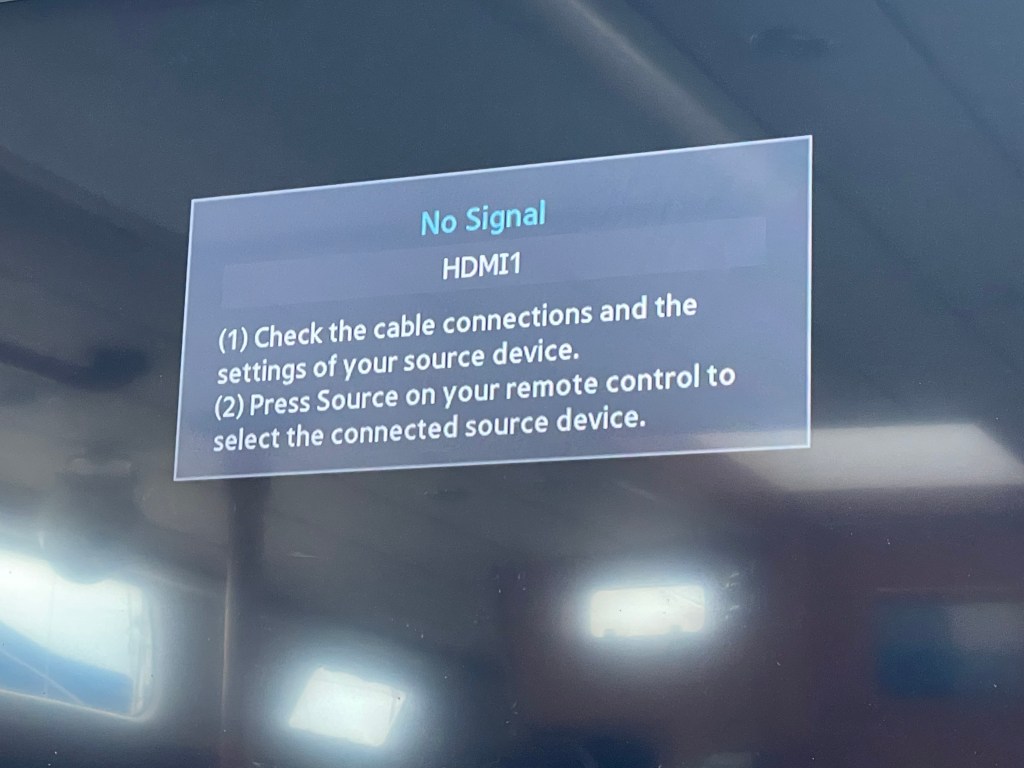
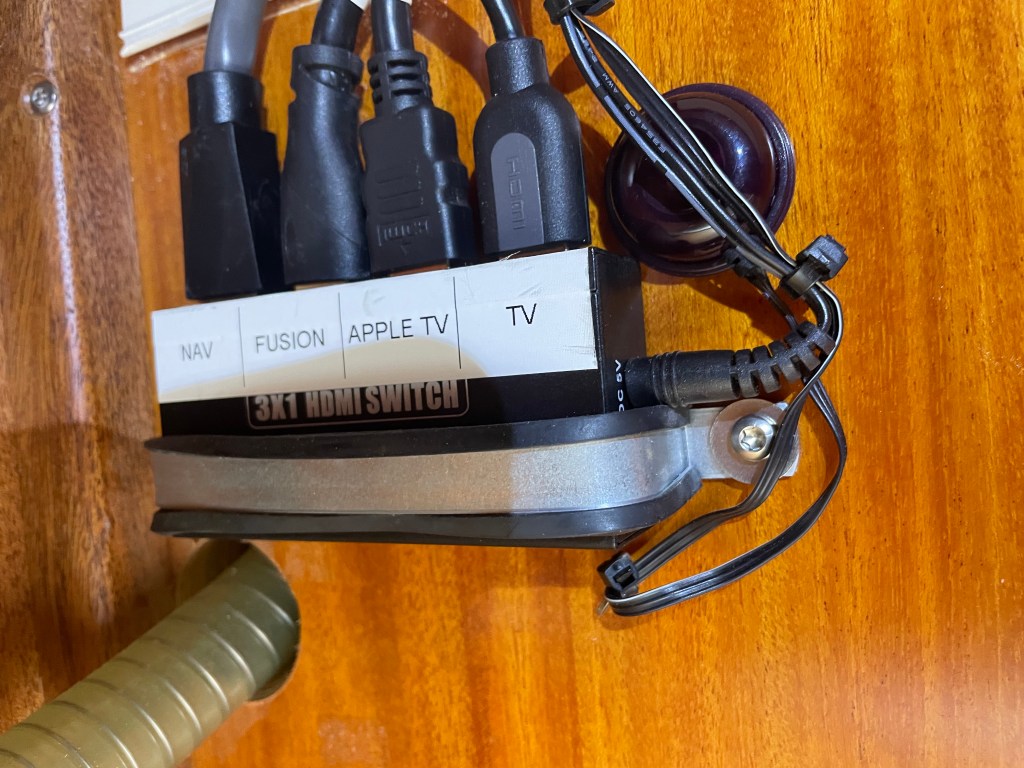
6. Bad HDMI Cord. We always had very a inconsistent signal from our Apple TV when plugged to the iPhone from the beginning. The only way we could watch our downloaded movies on the iPhone was to plug and unplug the iPhone to reset the signal- over and over again. I had a hard time believing that it could be that brand new HDMI cable installed by the factory! Once I began to entertain that idea, I decided to bite the bullet and we replaced the cable. This involved running a new cable from the Apple TV, under the saloon floor, to the portside chairs. When we tested the new cable, the signal was perfect and the problem was solved immediately. Now, I don’t need to stand up anymore!

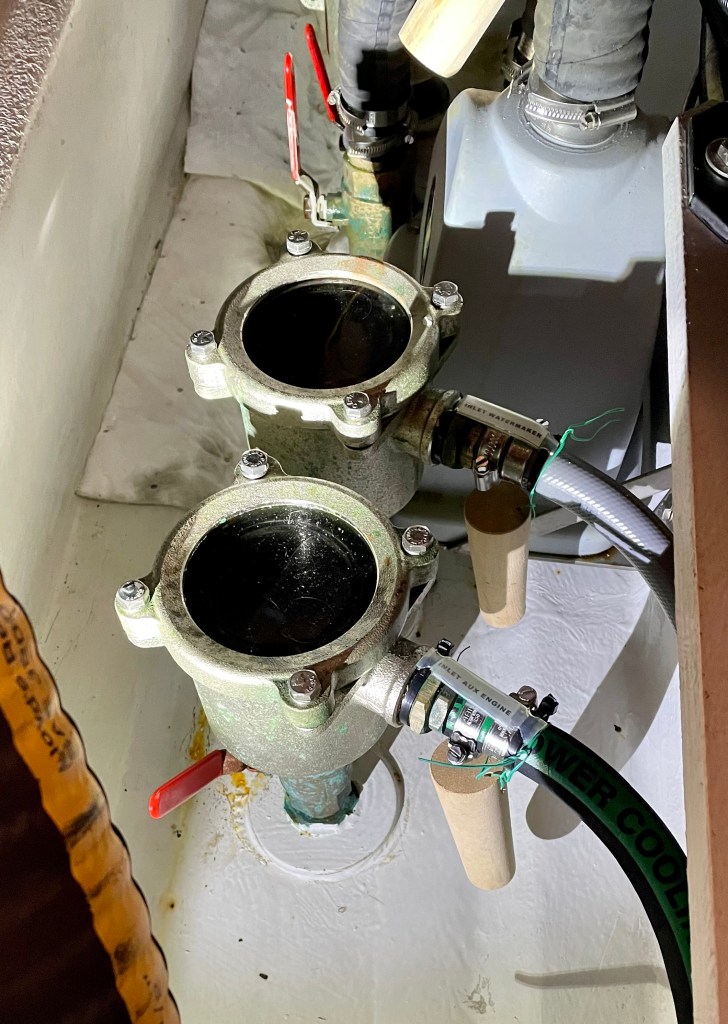
8. Broken Generator Seacock. Giorgio sadly discovered that the seacock for the generator raw water intake was broken and stuck in a half closed position. Both Pete McGonagle and Andrew from S3 denied having problems opening or closing it in our absence. This was worrisome because either the seacock was broken due to unknown trauma or because of corrosion.
Boats have one or more “communications with the sea”, or valves, which serve one of two purposes: they either take water from the sea or discharge water into the sea. A boat may need to take water from the sea to cool down the main engine or the generator, to make fresh drinking water with the desalinator or to exchange heat with the air conditioning. A boat may need to return water or other liquids to the sea: cooling water from the main engine or generator, water from the kitchen/bathroom sinks, brine water from the desalinator, sea water that flows on deck or in the cockpit from waves boarding the boat and finally waste “grey” water from the toilets. (This last one should be discharged only when offshore.)
We determined that we would still be able to use the generator because the seacock was partially open, but this problem would need to be addressed as soon as possible! We decided to wait until we could cross the border into Canada so that we could service this problem at the best boatyard in the Pacific Northwest, Blackline Marine in Canoe Cove, British Columbia.
Houseboats on Lake Union
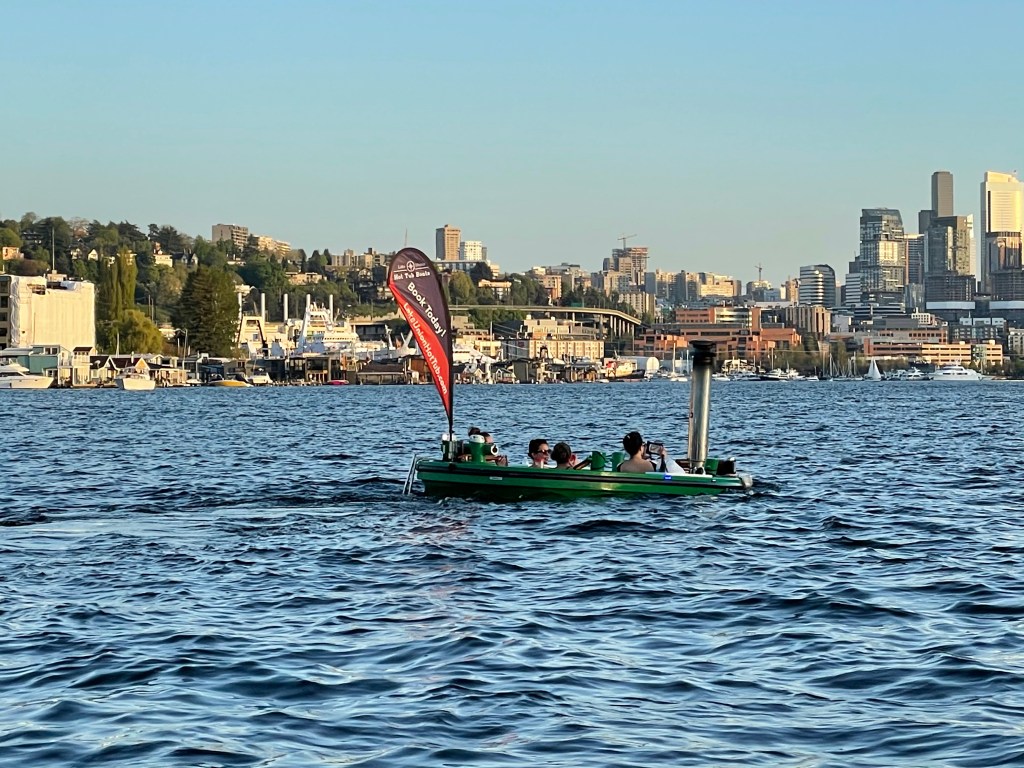
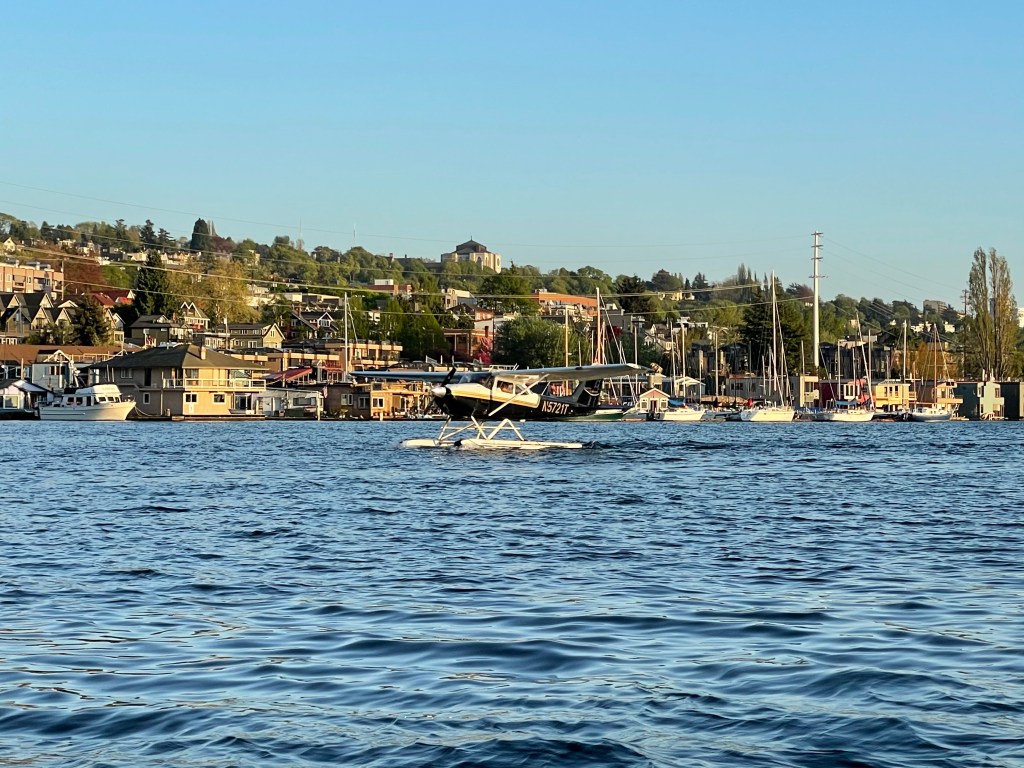
Lake Union has many activities and is filled with life. People rent floating hot-tubs that have warm water inside and an electric engine to propel them. The water is kept warm by a diesel heater and everybody wears a bathing suit. Meanwhile float planes take off and land: what a spectacular view!
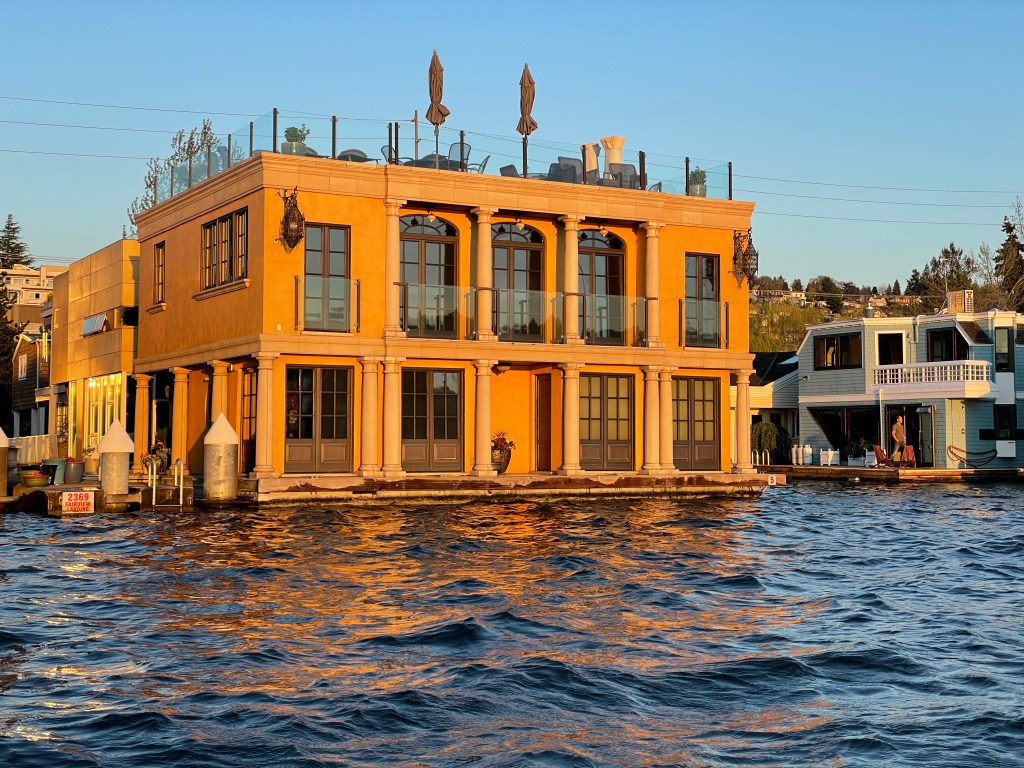
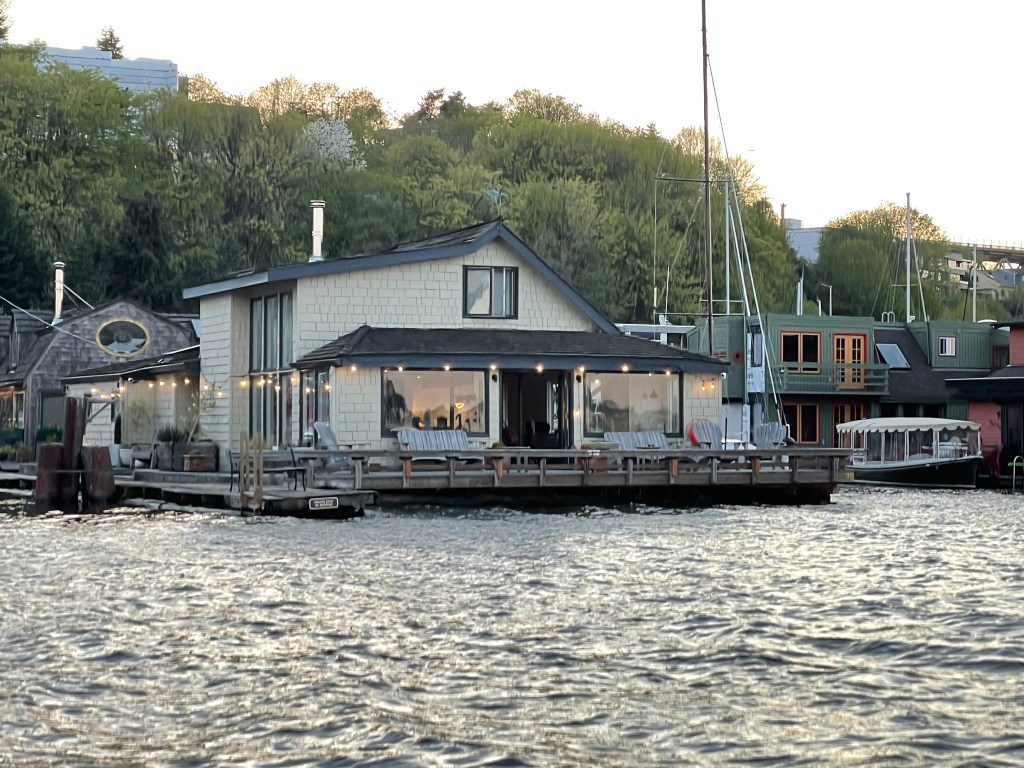
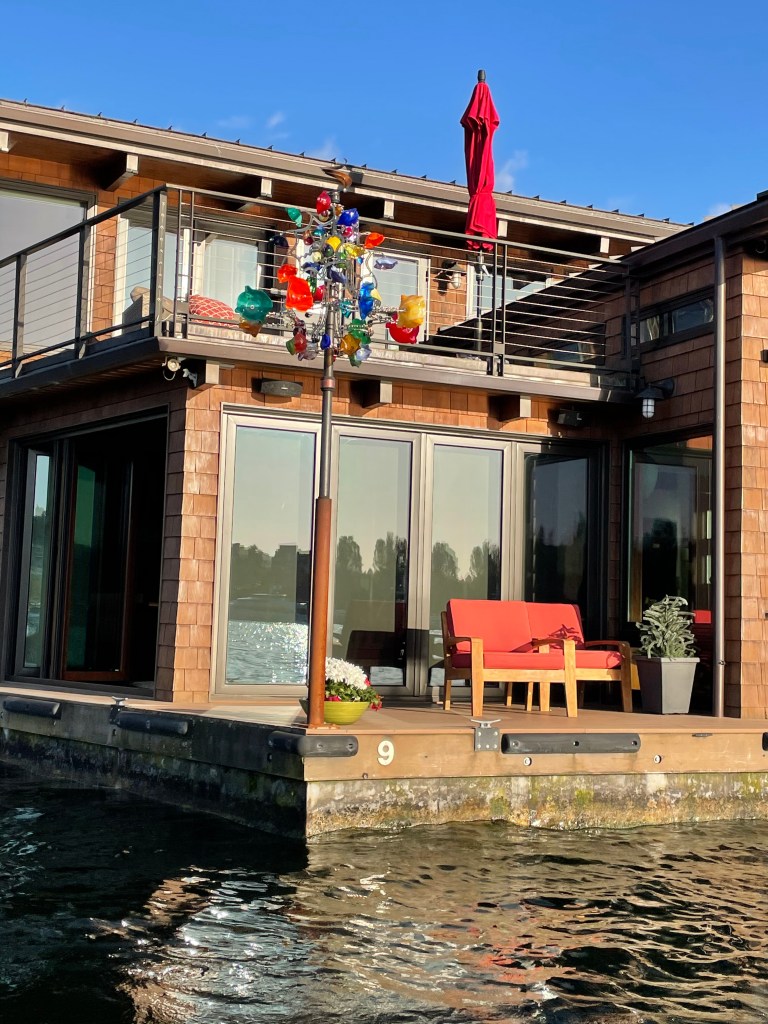
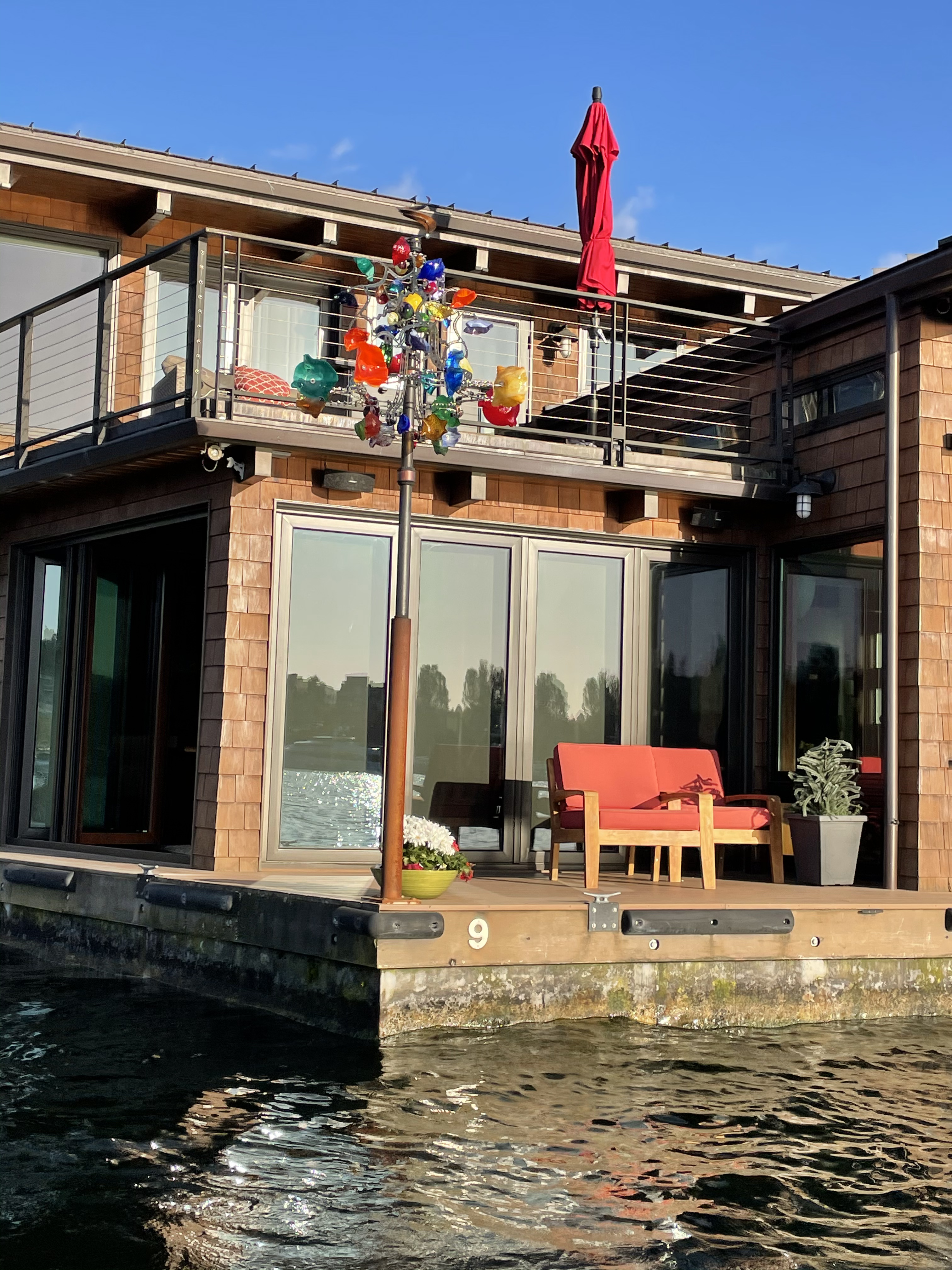
In Seattle’s Lake Union there are many boat houses. Some are old, some very new. Some are very picturesque. The one on the right has a colored “glass wind sculpture”. Each level turns around in different directions and the patterns are beautiful. We chatted with the owner, a biotech inventor. Many of these boat houses are valued at more than 4 million dollars! Most of the cost is related to the position, being in the front row or in the back: location, location, location.


More boathouses.
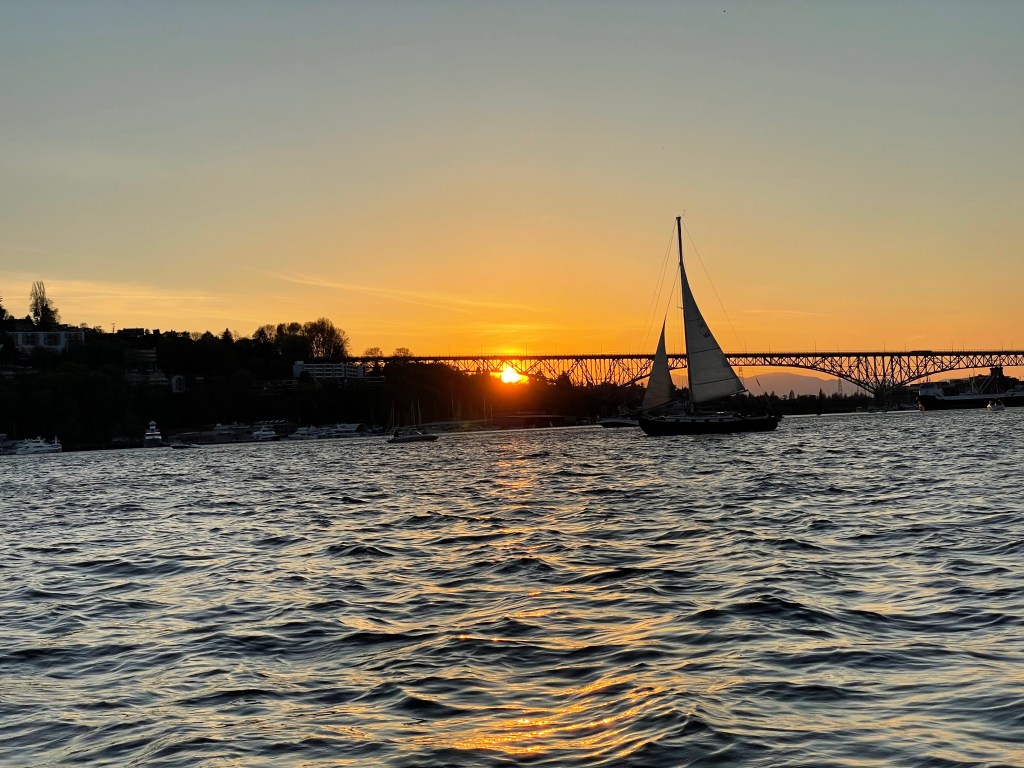
Sailing in the sunset.

 The Adventures of SV JAN