
The white sand beaches and coral reefs of Fiji beckoned us for just one more season, and New Zealand’s late autumn was the time to leave. We headed north out of New Zealand early May 2025, as soon as the winds were blowing from the south, and the waves were reasonable.


Fiji is an archipelago of more than 330 islands—of which about 110 are permanently inhabited. It’s known for its rugged landscapes, palm-lined beaches, and coral reefs with clear lagoons, not to mention some of the richest underwater life on the planet.
Over the next several months, we planned to circumnavigate these islands by first going to Viti Levu, then northeast to Vanua Levu, next southbound through the Lau Group and Yagasa Cluster, and finally closing the circle northwest back to Viti Levu.

North Minerva Reef
Giorgio was hoping to make a brief stop and anchor at Minerva Reef North since he had read and heard about it from other sailors. Minerva North and Minerva South are two coral reefs=atolls=spent volcanoes in the middle of the Pacific, about 800 miles from Whangarei, NZ and 400 miles from Vuda, Fiji. They are part of a long and deep oceanic ridge of volcanoes formed by the collision of two tectonic plates: the Australian and the Pacific. It is called the Colville ridge.
The north segment of this ridge includes the Lau group of islands, also of volcanic origin, which are part of Fiji.
In the picture below, the parallel and wider Kermadec-Tonga ridge is also evident.

If you arrive at Minerva North at high tide, the reef is submerged and it’s a spectacular scene to see boats suspended in the middle of nowhere (actually anchored in 20 feet depth inside the 4.2-mile diameter reef) and surrounded by an ocean of about 6,000 feet deep.
The Reef Entrance: Deep and Wide
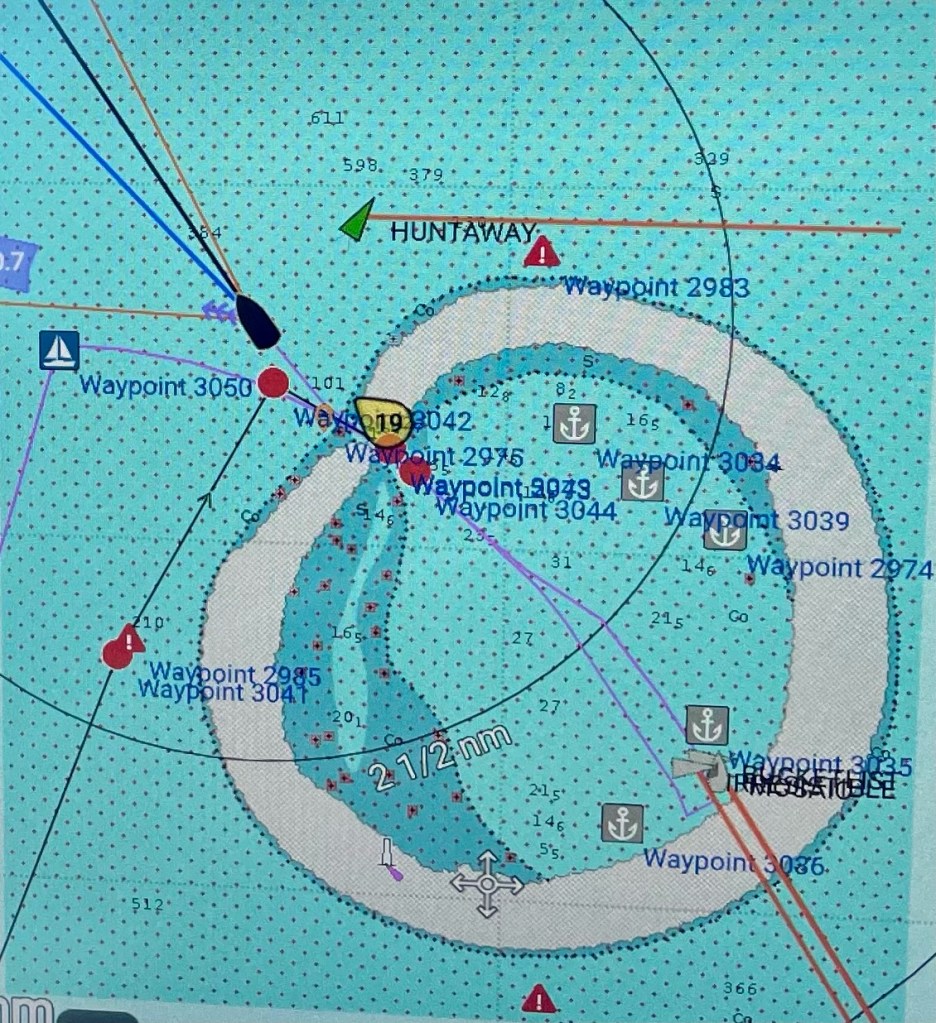
The reef entrance is deep and wide. In addition to the Navionics maps on our chart plotter, Giorgio uses a Windows computer with a program called Open CPN featuring downloaded satellite maps and real-time GPS tracking. A combination of the Navionics charts, Open CPN, Google maps and NoForeignLand maps on our iPhones, would faithfully guide us through each and every pass.

At low tide, a few feet of the reef are exposed. Waves that come over the top of the outer reef form a waterfall over the inner reef and into the lagoon.
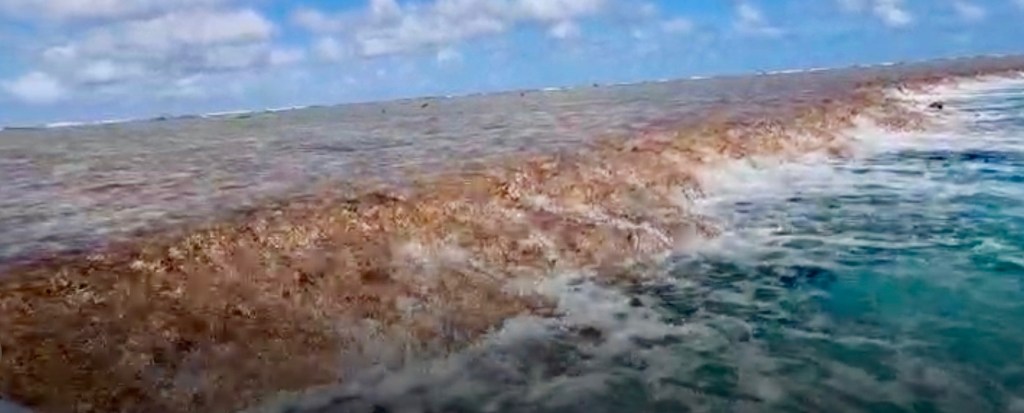
In certain areas you can walk on the reef at low tide, and after sunset grab lobsters.
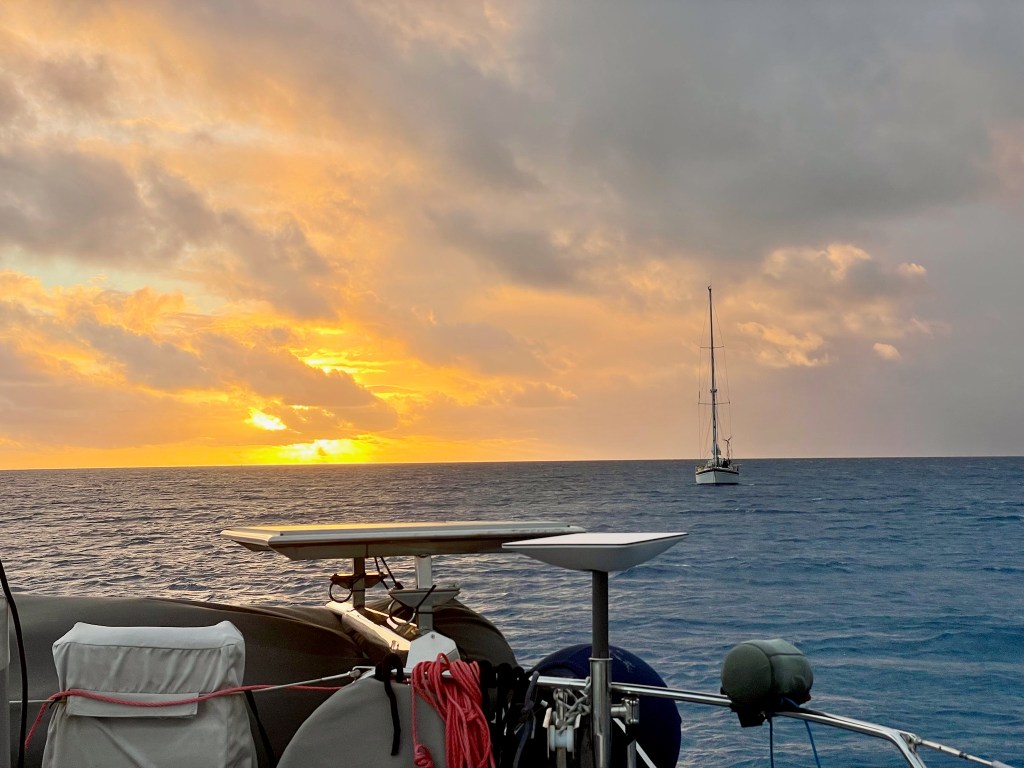
Giorgio explored the reef during the day and, unfortunately, didn’t see any lobsters, only several unique blue fish and a few black tipped sharks.
We were lucky the favoring winds allowed us to break up the 1,300 nautical mile trip and stop there, which gave us the opportunity to sleep for a couple of nights in an amazing and peaceful anchorage.
Bula Fiji! Vuda Marina in Viti Levu Island
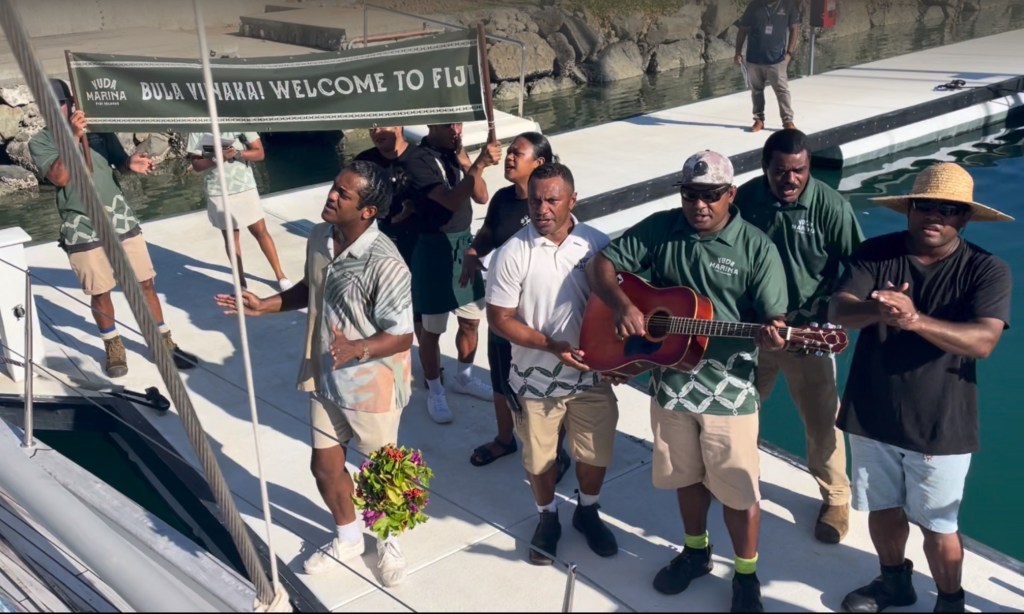
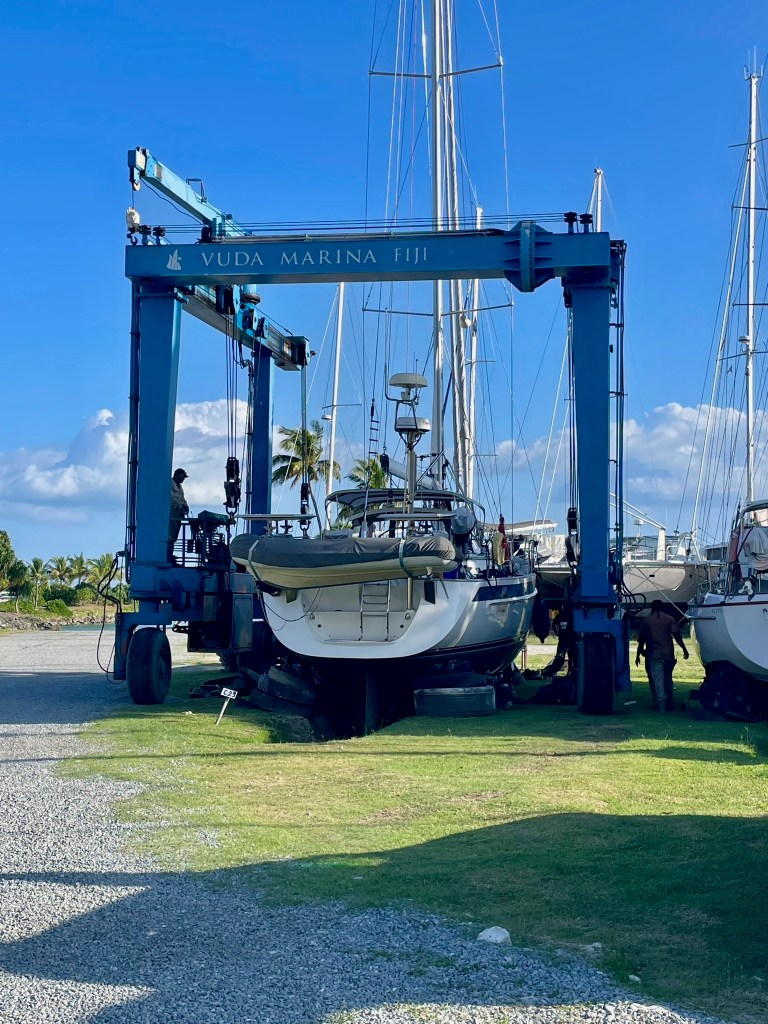
We landed in Vuda Marina (pronounced Vunda) on the main island of Viti Levu since we planned to leave the boat out of the water and in a pit for a couple of months to go home to see our family and check on our house. Our passage from New Zealand took a total of 8 days, including our stop in Minerva. Our best 24 hour run was 190 nm!
In the Pit!

Some Interesting Facts About Fiji:

* Most of the islands were formed by volcanic activity starting around 150 million years ago.
*The first inhabitants were Austronesians, and later Melanesians with some Polynesian influences. (After a measles epidemic killer over 40,000 Fijians in 1875-76, over 60,000 indentured workers from India were imported to work the sugarcane fields, which still today is the second largest source of national income after tourism.)
*The population of Fiji is around 900,000 today. Ethnic groups include 56% Indigenous Fijians, 38% Indo-Fijians, and 6% other ethnicities.
*Today, about 90% of the population live on the coasts of the two largest islands: Viti Levu and Vanua Levu.
*The government is a Unitary Parliamentary Republic. Independence from the United Kingdom was achieved in 1970, and the Republic of Fiji was formed in 1987.
*The most common religion is Christianity, followed by Hindu and Islam.
*Languages: Fijian, English, Fiji Hindi
* Fiji has one of the most developed economies in the Pacific with its abundant forest, mineral, and fish resources. The currency is the Fijian dollar which has a value of 0.44 to one USD.
**Notes to Cruisers:
Kava Root and Cultural Expectations: In Fiji, when anchoring in a harbor next to a village, a gift of Kava root is expected to be presented to the village chief. Before visiting the village and its surroundings, visitors must wear proper attire (sulu or sarong to hide the legs, and a shirt that cover the shoulders, plus no sunglasses, hats, or backpacks) and find the chief of the village to offer the Kava root.
Local kids roaming the shore usually spot any newcomers and take them to the village headman, or Turaga ni Koro, who takes them to the chief’s house. Most of the villagers speak some English. This ceremony is called Sevusevu and is a formal ritual performed when visiting a village in Fiji. It is understood that the visitors are seeking permission to anchor, go ashore and enter the village community, and the gift is an expression of gratitude for this hospitality. Sometimes the visitors may be offered to take part in drinking the prepared Kava root in a more complete ceremony.
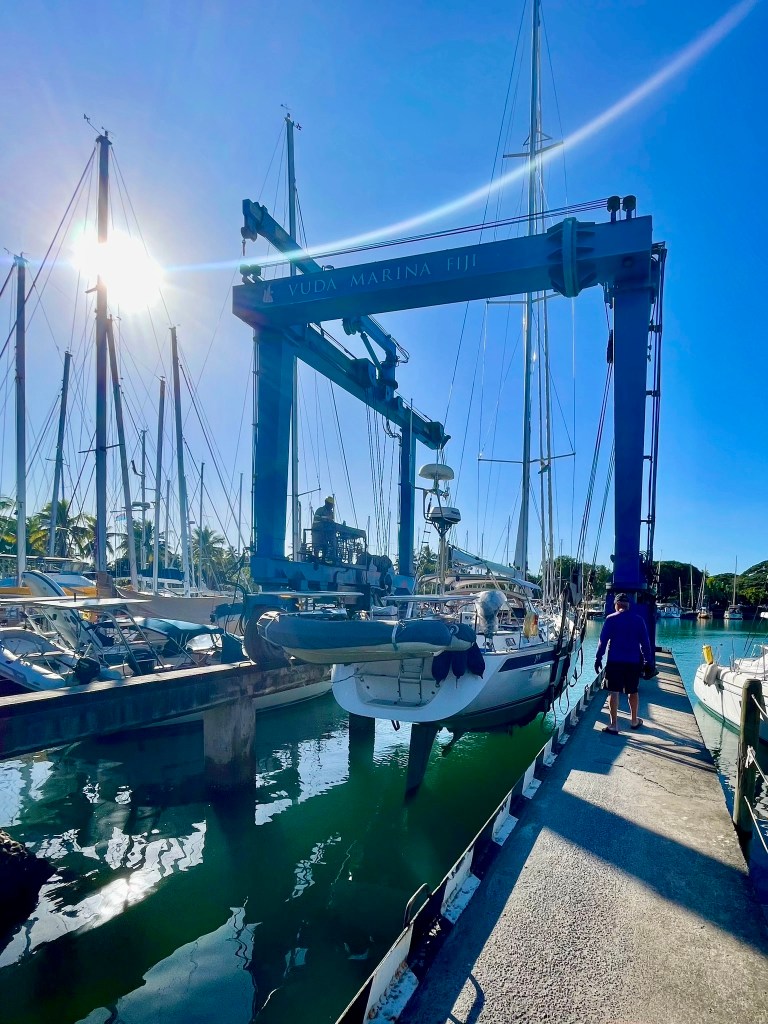
Back in the Water!
Upon returning to Fiji in July, we put the boat back in the water and headed northeast to the town of Savusavu, in Vanua Levu Island.
Vanua Levu Island: Nawi Marina


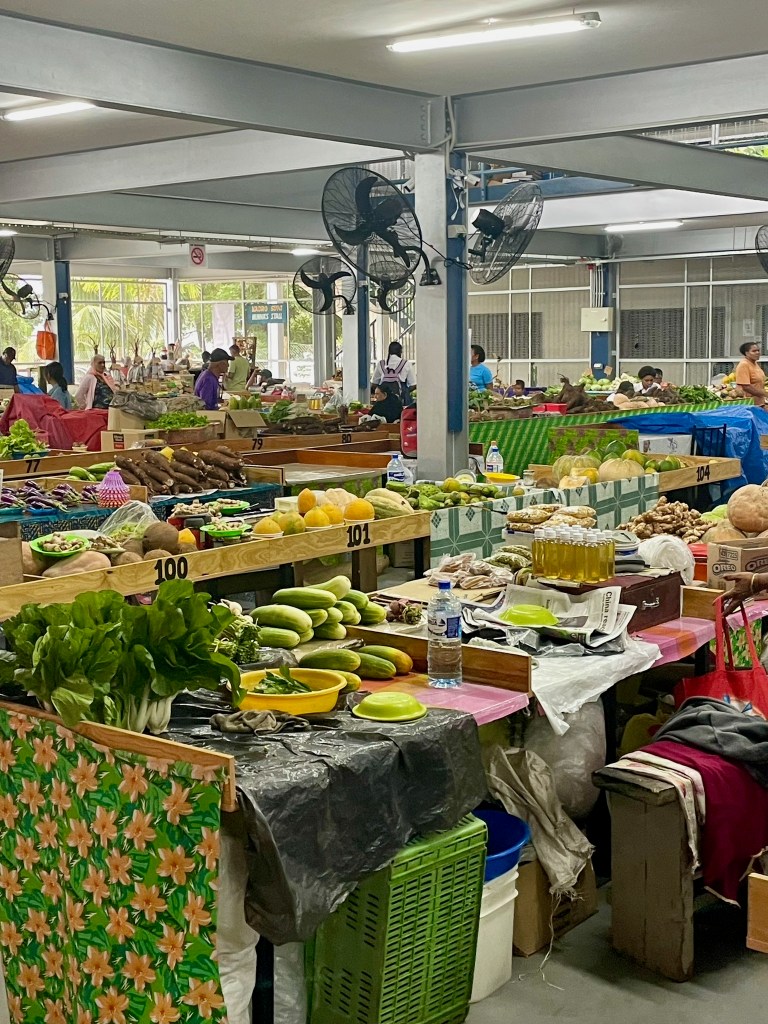
Provisioning in Savusavu
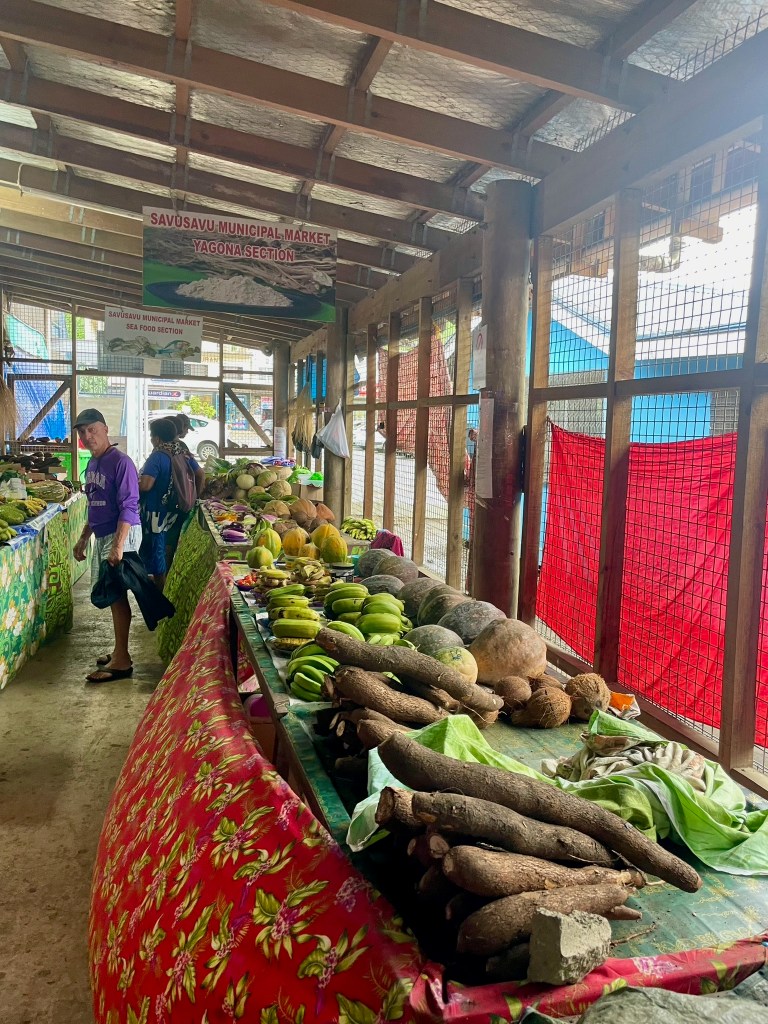
Since we were leaving for two months, we had to stock the boat with fruit, vegetables, and staples. We would not find many, if any, grocery stores for several weeks! We went to the local market, and a few supermarkets along the main road to buy supplies.
Savusavu: Wonderful market with local fruits, vegetables, and Kava root!
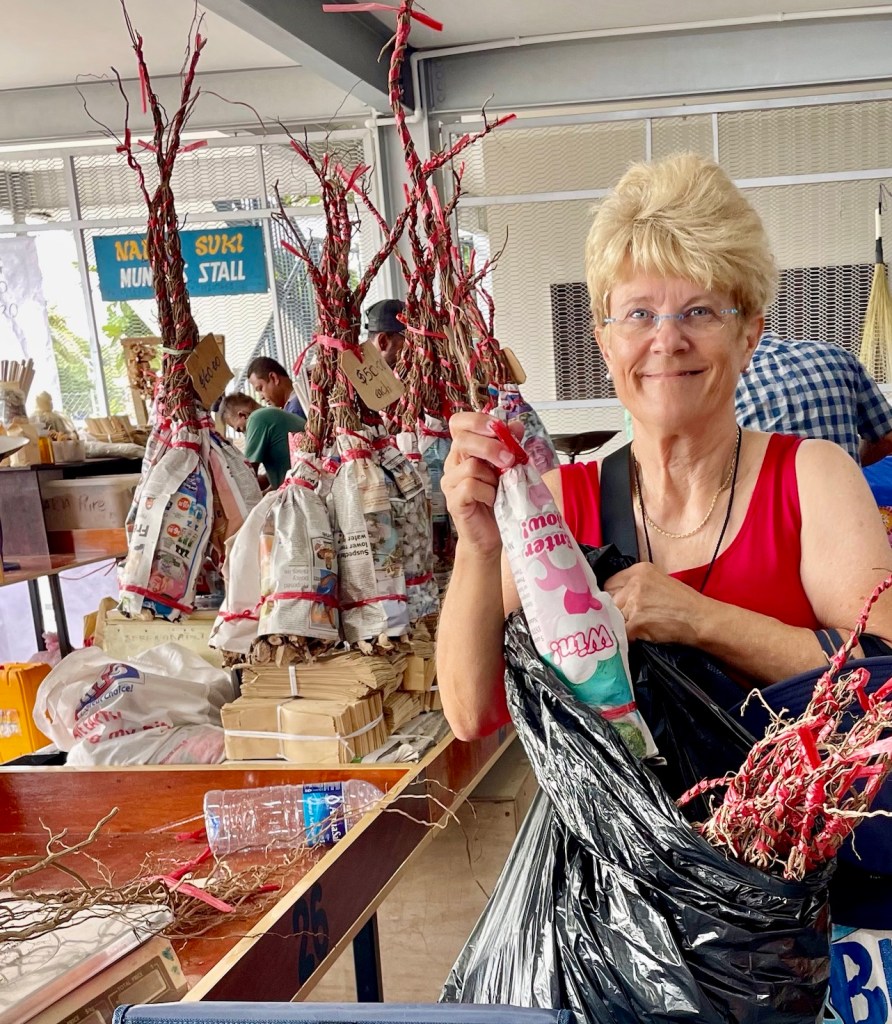
Provisioning for Sevusevu: Kava Root
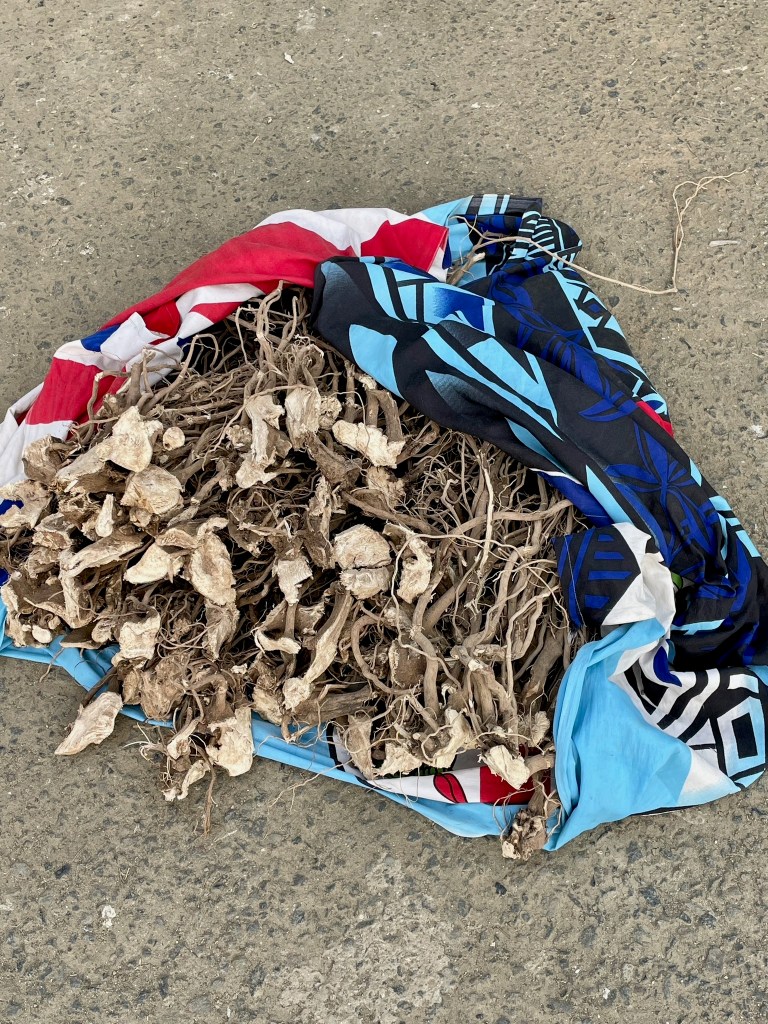
As mentioned above, visitors to villages in Fiji are expected to bring a gift of Kava root to the village chief during the Sevusevu ceremony. He will then grant permission to visit the village and anchor locally.
Having a supply of Kava is very important for the villagers since preparing and drinking Kava is an important part of their celebrations and traditions. The root is crushed in water (often by hand) and filtered with a tea towel. The drink is known for “promoting calm and relaxation.”
We were not sure how much Kava root to buy, since we would be visiting many remote villages in the Lau Group, so we bought 15 bundles.
Namena Marine Reserve
After shopping in Savusavu, we headed south and made a brief stop in an atoll called Namena Marine Reserve, where we dove with a local scuba group on a beautiful coral head.

Viani Bay and Diving the Rainbow Reef
After visiting Namena Marine Reserve, we headed northeast to Viani, a deep bay protected by the famous Rainbow reef where we did two dives.
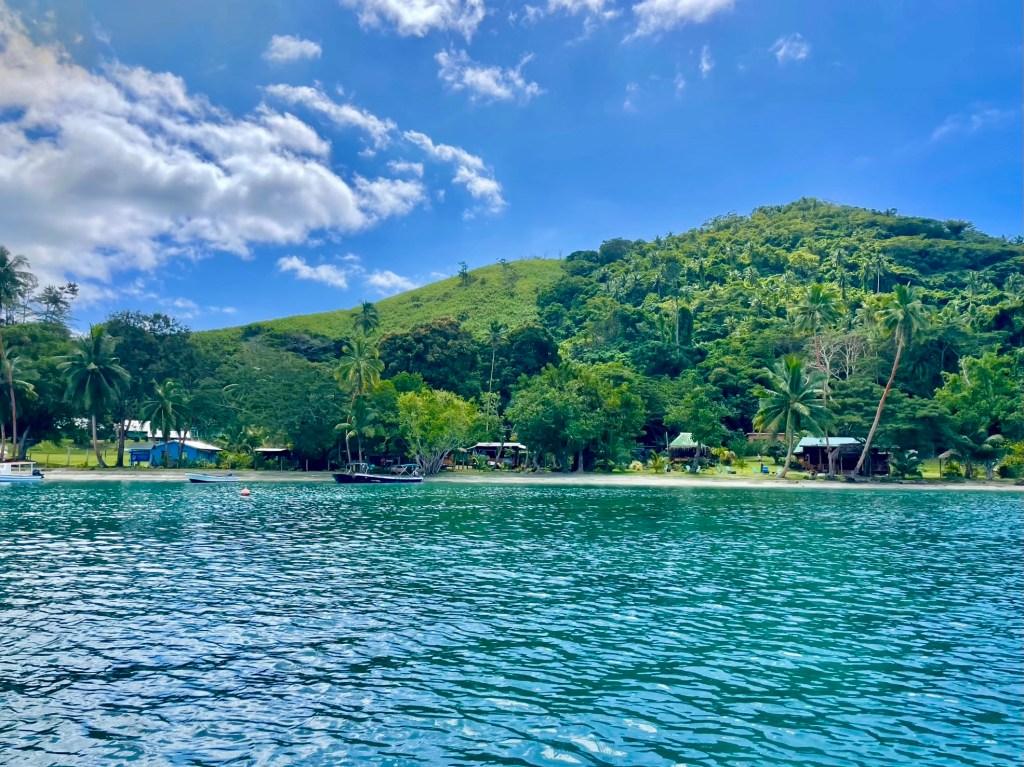
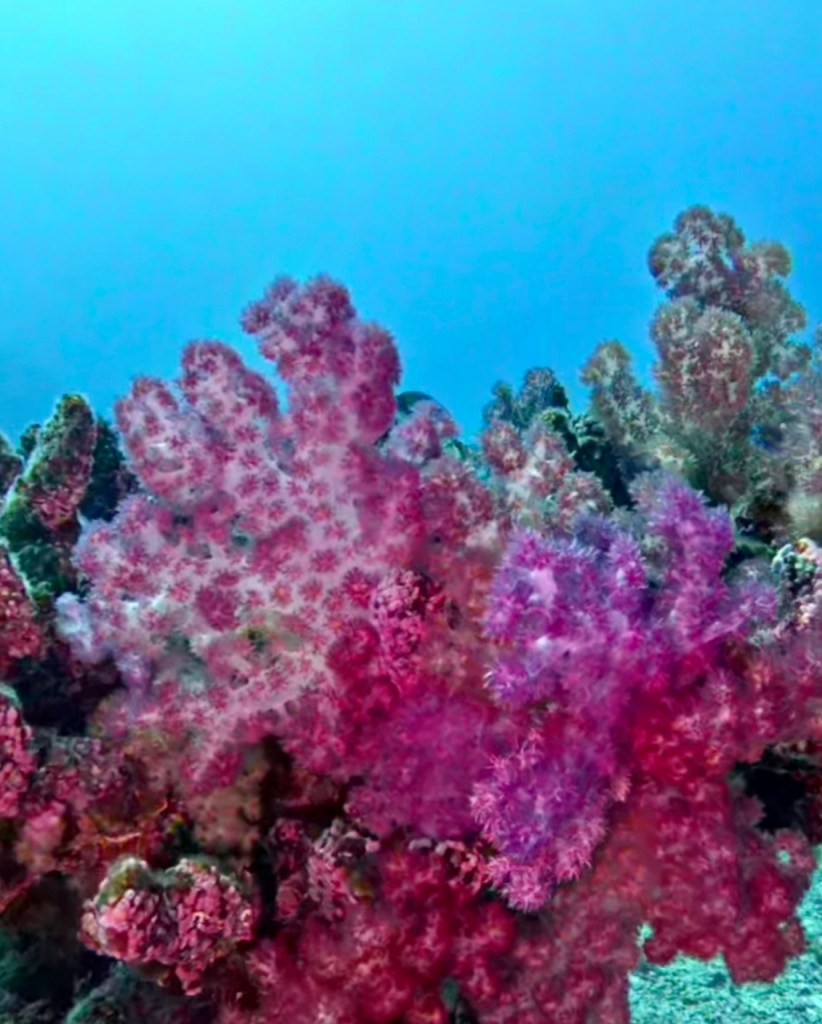
One of these dives was at The Purple Wall, where among different coral formations, we admired many purple soft coral fans.

 The Adventures of SV JAN