
Kadavu Island
*Vunisea
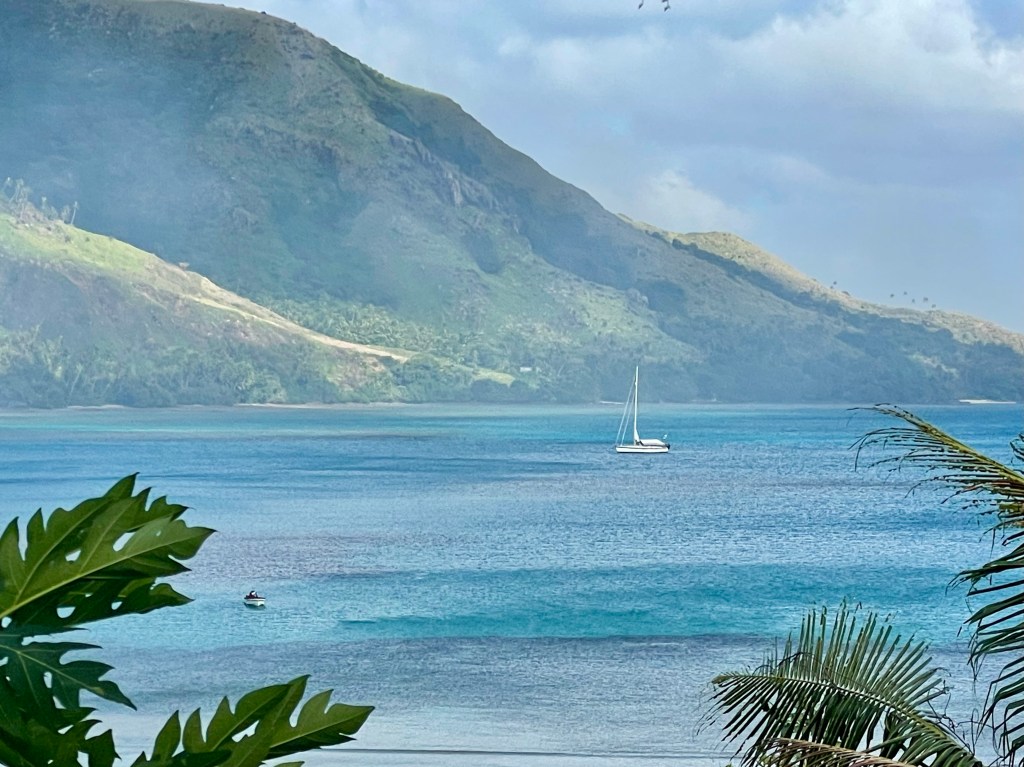
Leaving the beauty of Fulaga made us reflect on how much we had enjoyed our trip in the Lau Group. Our main incentive to leave was that we were out of beer, coffee, fruit, and vegetables (in “relative” alphabetic order of importance). We decided it was time to move on: a trip to a well- stocked market was imperative!
A good easterly wind took us overnight to the island of Kadavu (pronounced Kandavu). Our passage was uneventful until Giorgio started the generator the next morning, and it quit after 1 minute with an alarm on the display which read “Warning: High Exhaust Temperature.” Our hearts sank! We would have to assess the situation near land.
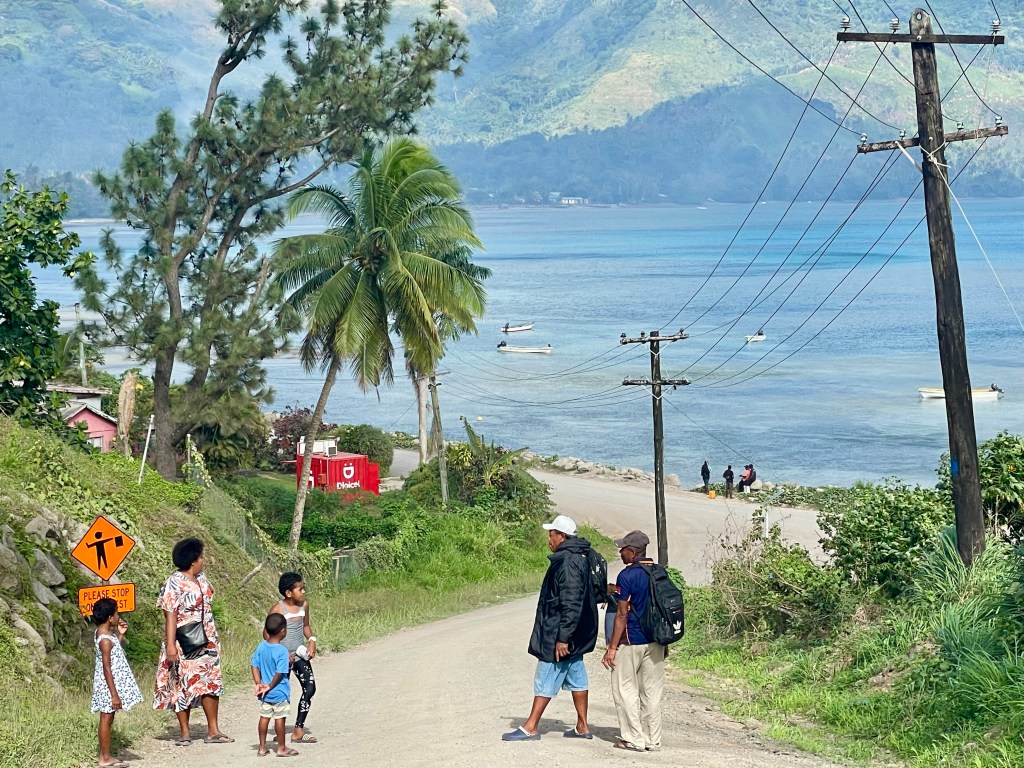
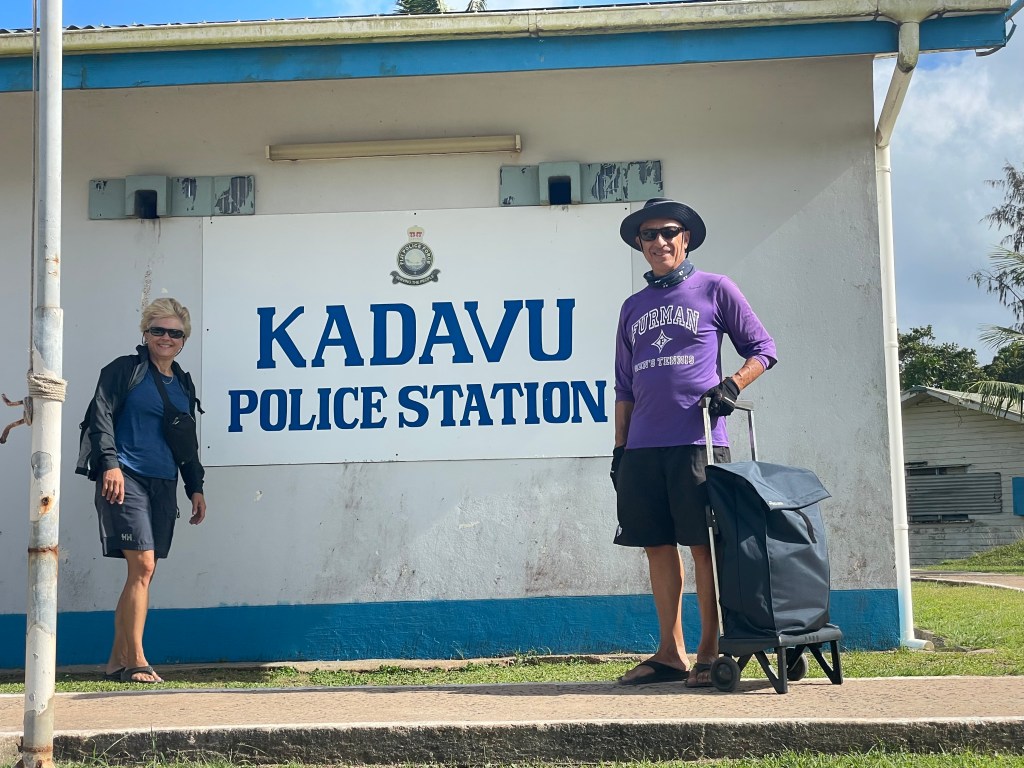
We entered the reef on the east side of Kadavu, and the next day, after crossing the lagoon, we sailed down the west coast to Vunisea, which is the main town on the island. We anchored in the bay in front of the airport and main road. It was an easy dinghy ride to the town, which has a market, several small stores, and primary and secondary schools. We walked around the village and visited the police station to show them our cruising permit. We also had a long walk to the airport and the other side of the island.
First Task on Arrival—Visit the Police Station!

Slim pickings at the local market!
The choices in the market were very limited, but eggplants and tomatoes made a tasty ratatouille!



Lots of activity along the beach at high and low tide.

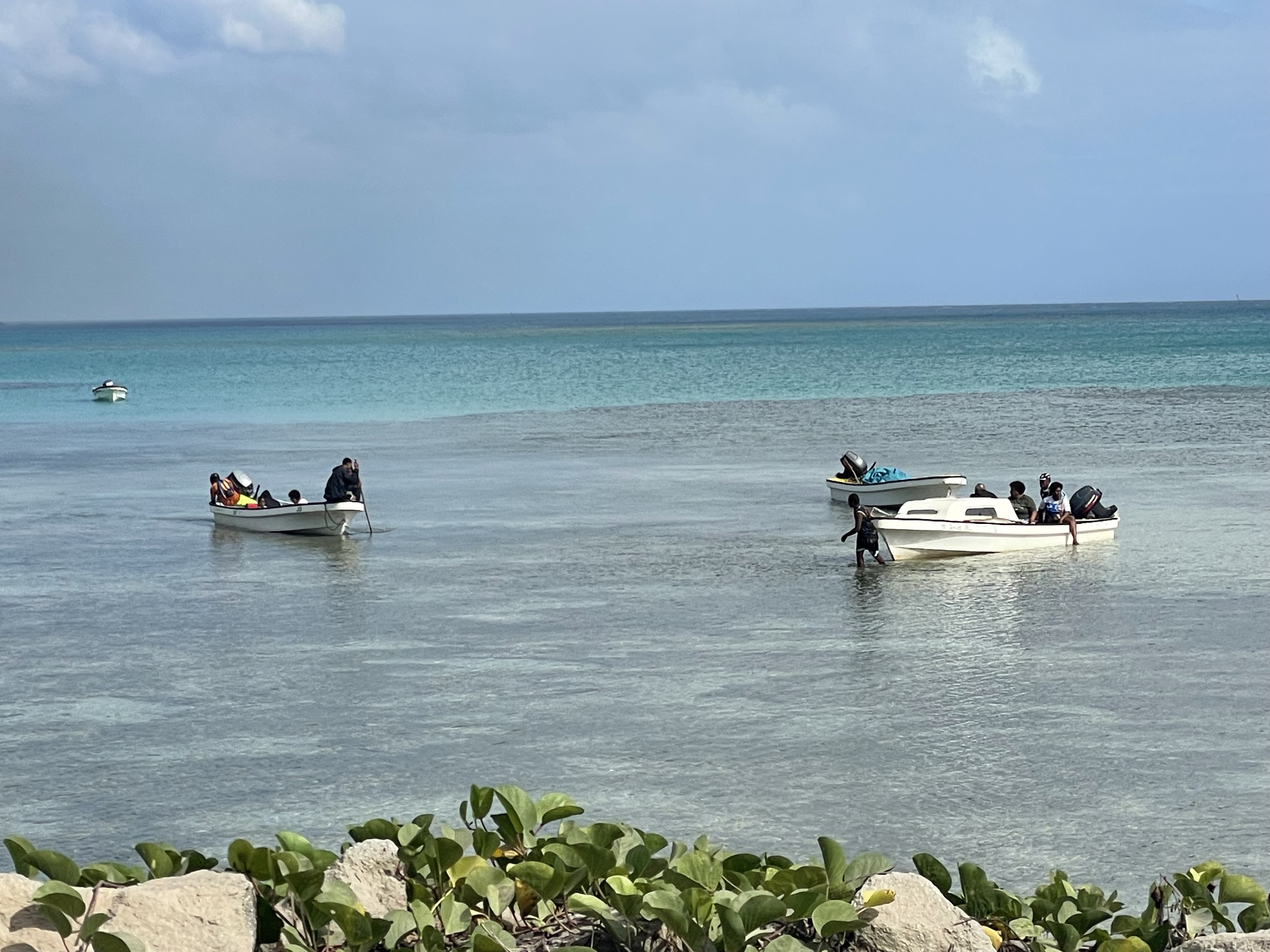

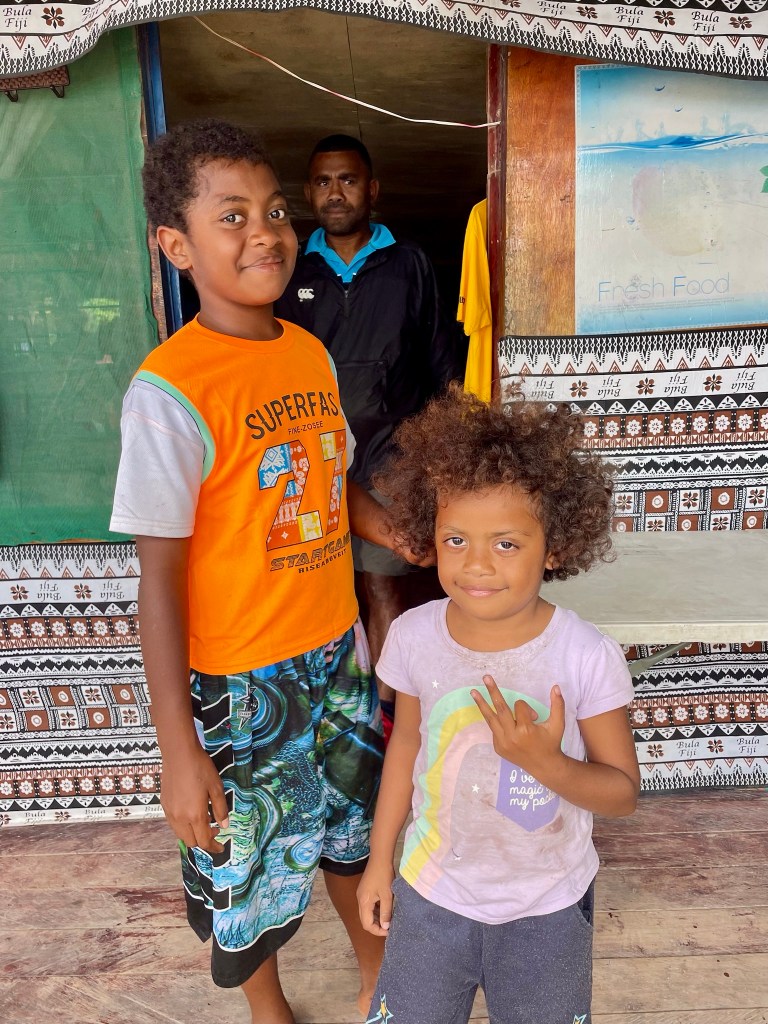
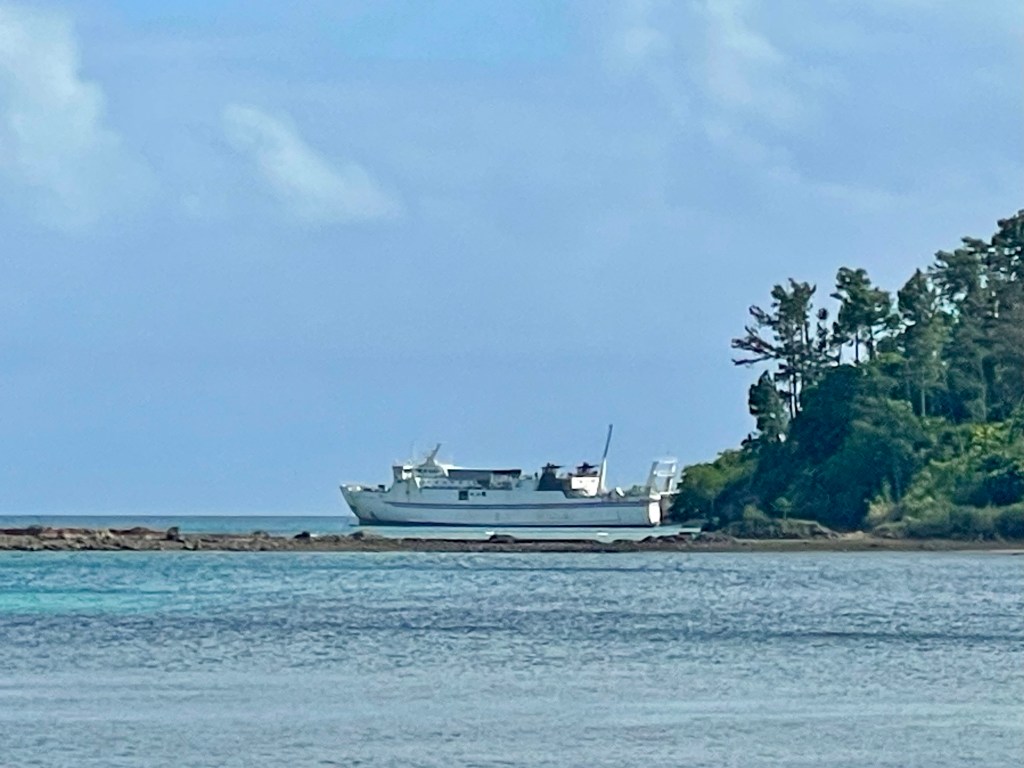
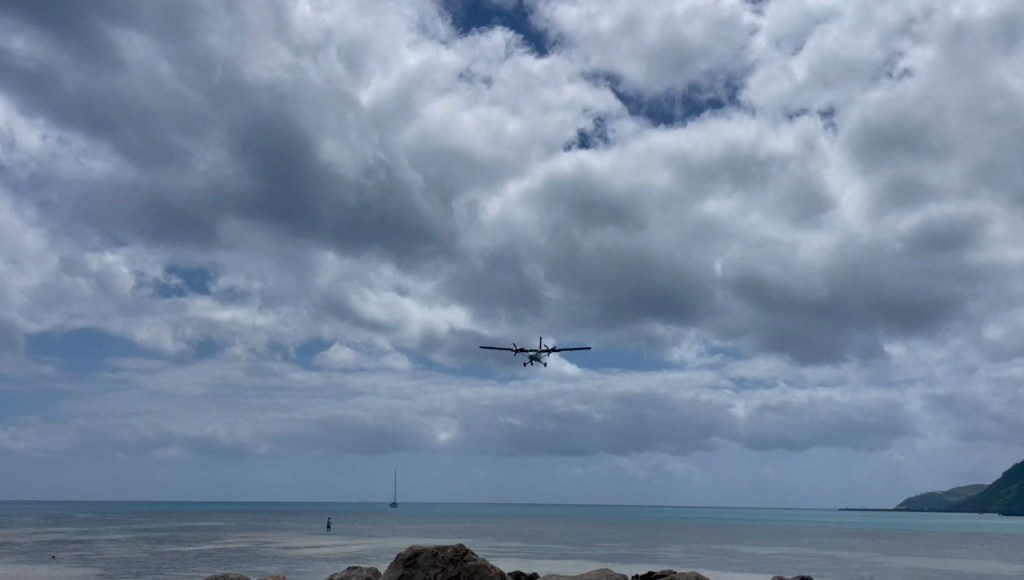

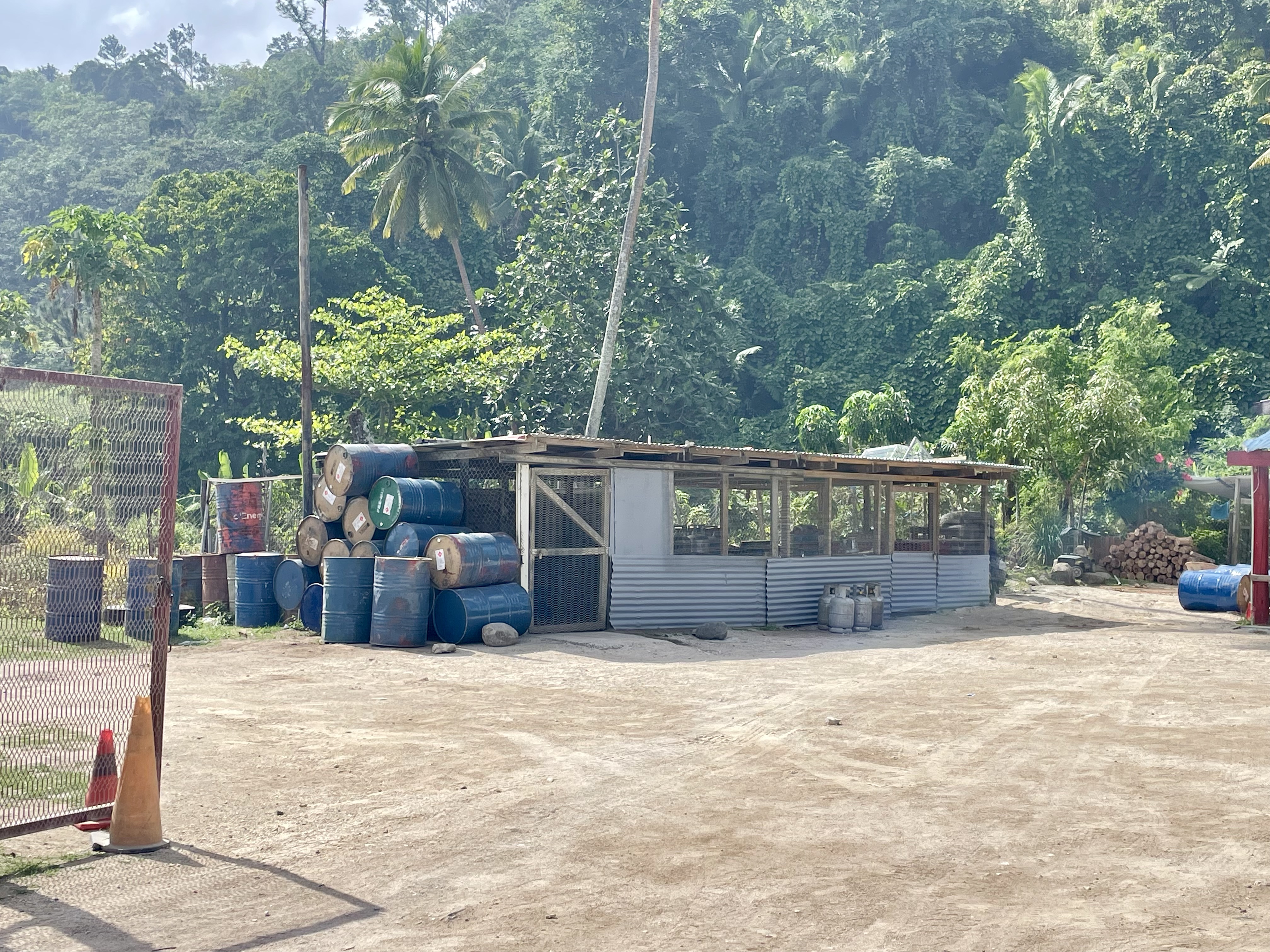
On the back roads… the ugly, dirty truth of civilization: fires, dust, and lots of garbage.
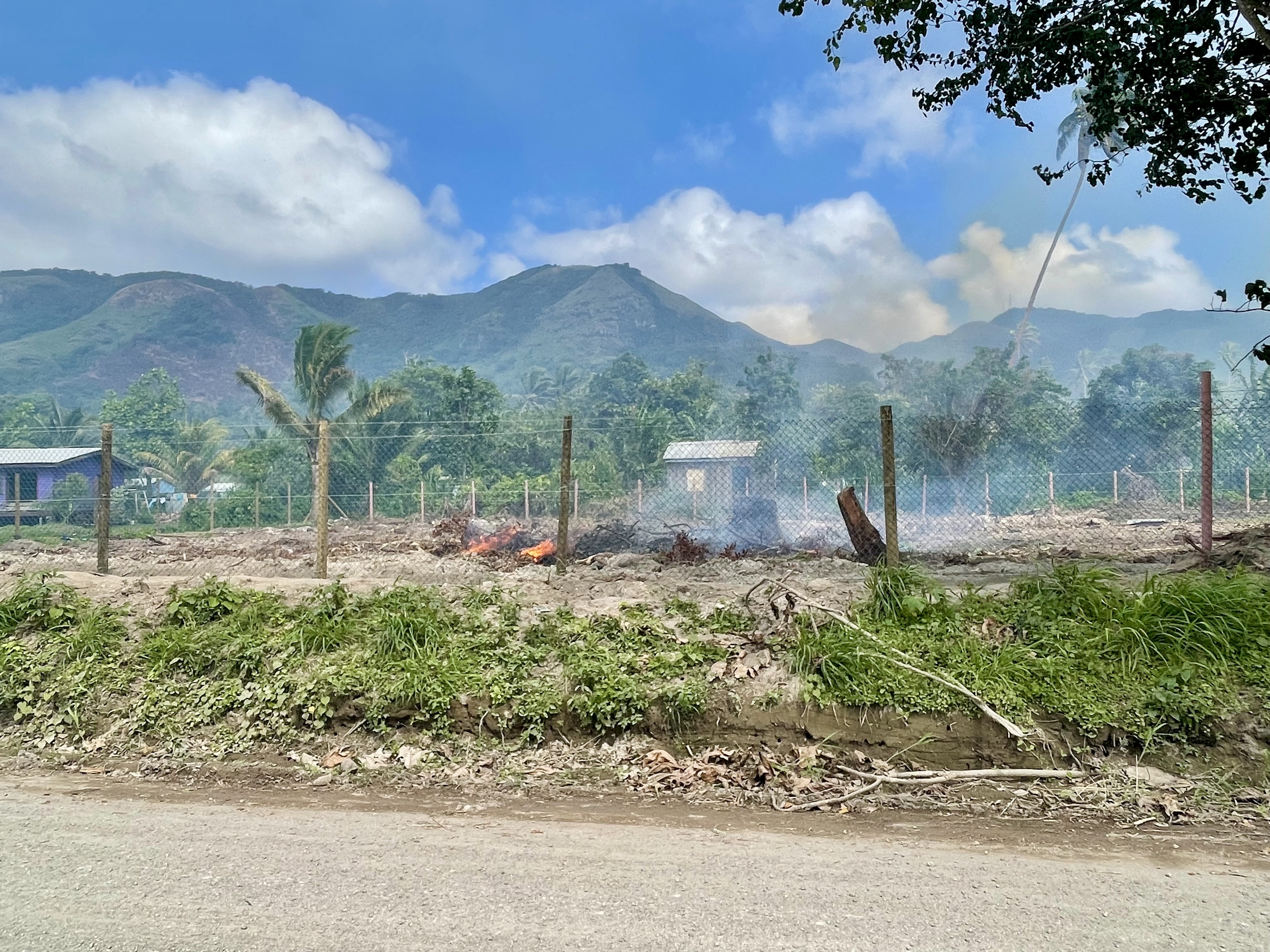


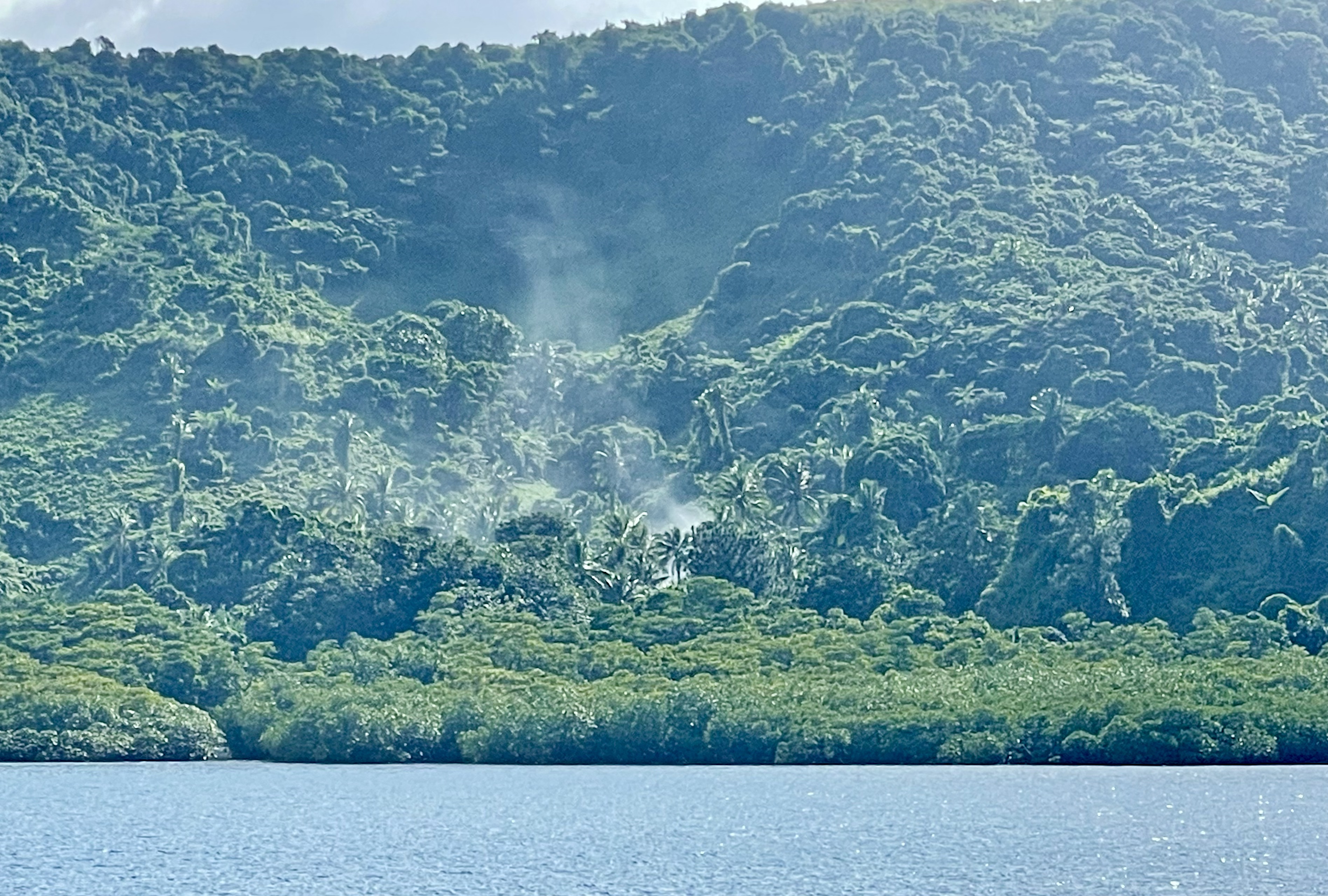
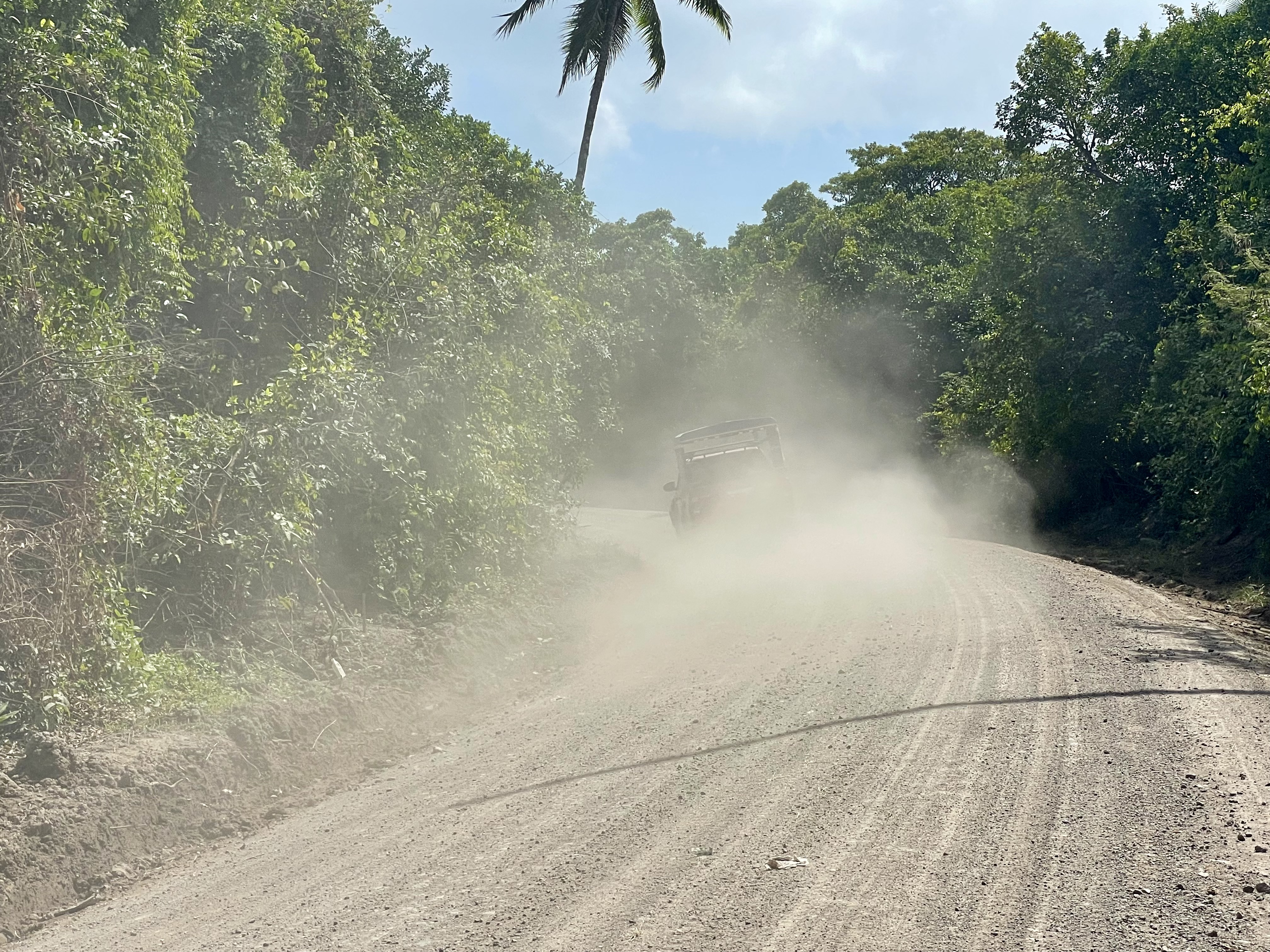
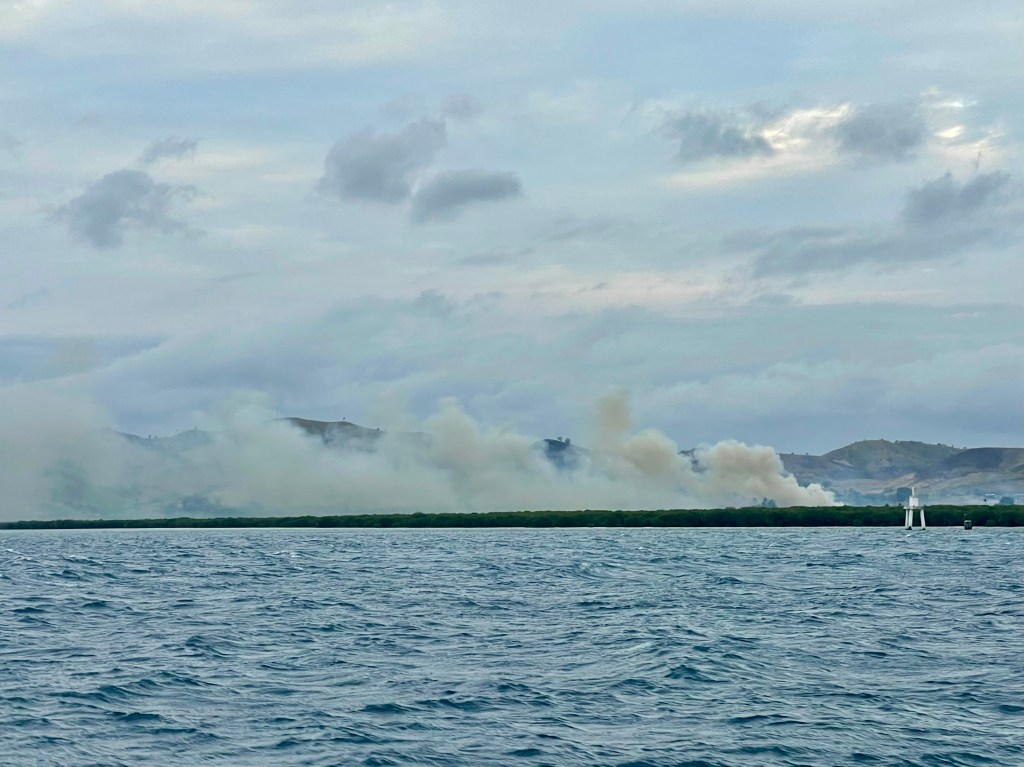
Fires everywhere! Unfortunately, there is no way to properly dispose of garbage on the islands, so the locals burn wherever, whenever, and whatever they can. Fires pop up all day, every day, and spread smoke and debris all around. Not only did Vunisea have several fires going every day, but the dusty roads were unbearable. By the end of our walk around the town, we were covered in dust!
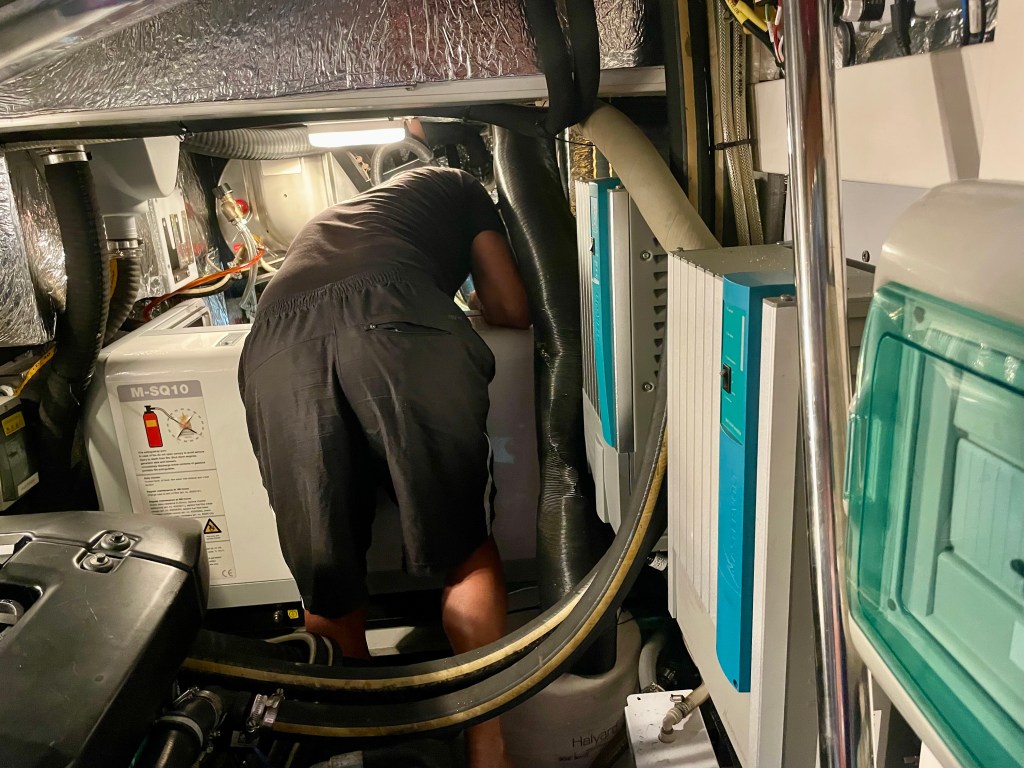
Quick Fix on the Generator!
After much thought about why the generator was not working (and after reading the “Troubleshooting” section in the Owner’s Manual), Giorgio decided that it might have an airlock in the raw-water cooling system. We had been in big rolly seas on our overnight passage from Fulaga, and maybe that had caused the airlock. Fortunately, the fix was fairly simple. The most difficult and time-consuming task was removing part of the outer shell to expose the generator. Once that was done, Giorgio partially unscrewed the impeller cover and released the airlock. Problem solved! We were so relieved!
*Matava Resort
After replenishing our supplies in Vunisea, we returned to the east coast of the island and went to Matava, a well-known dive resort.

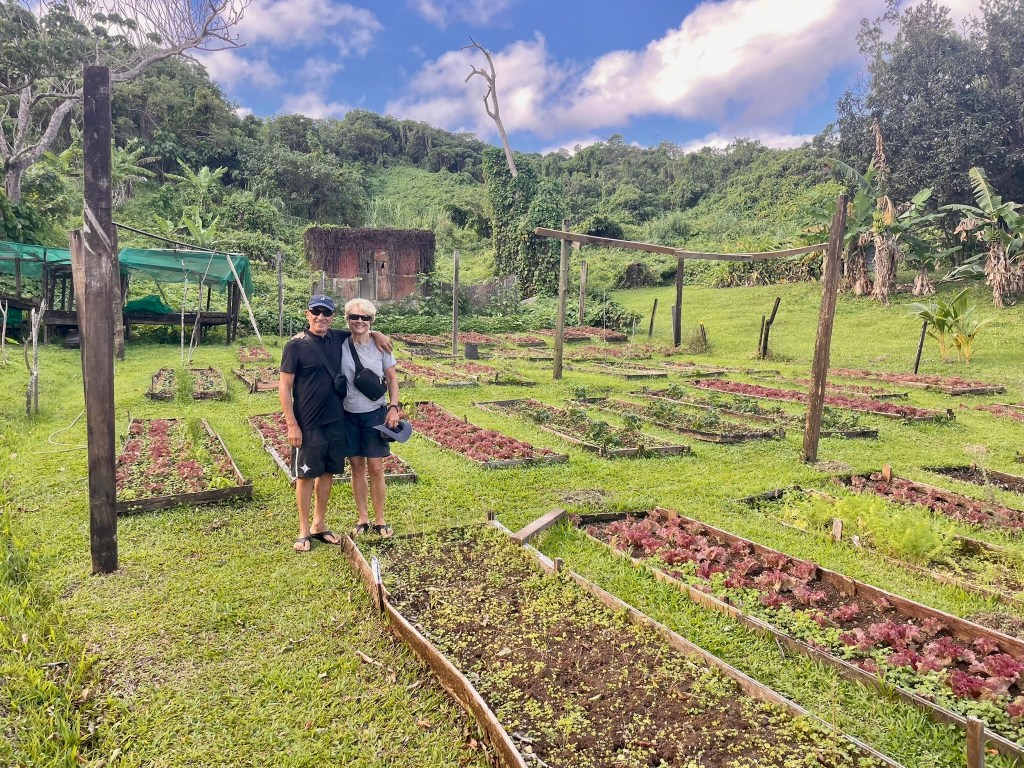
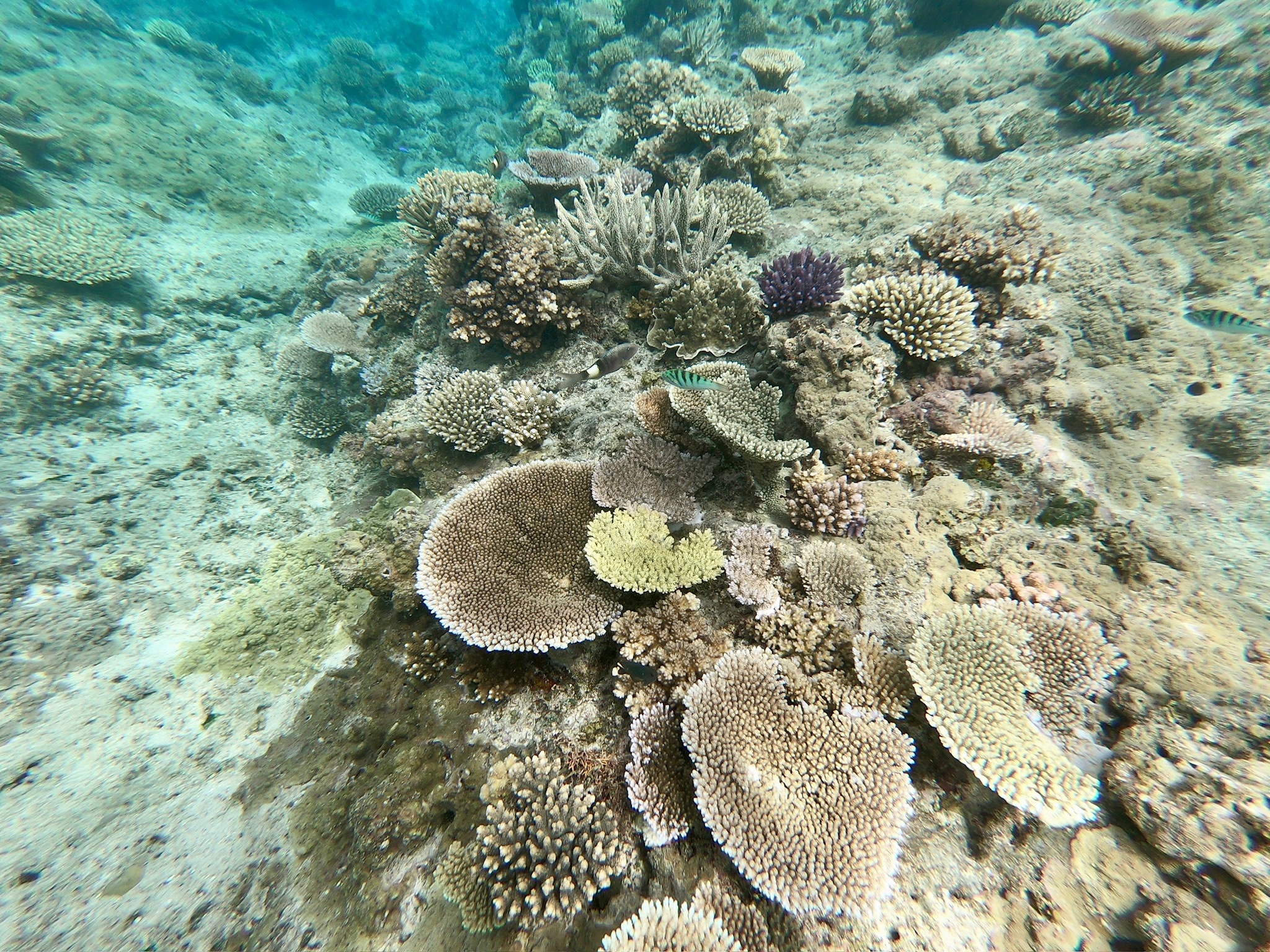
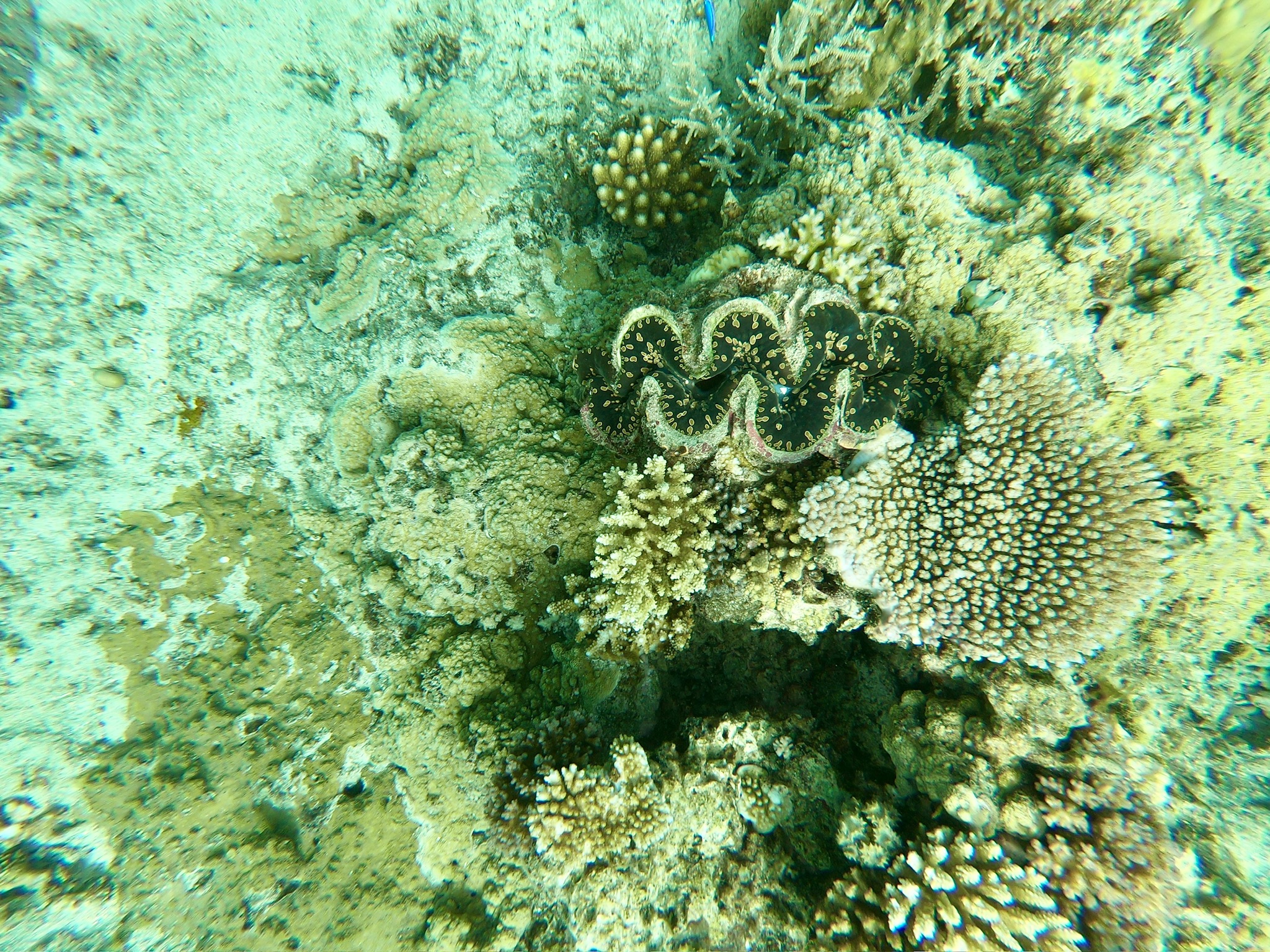
Diving along the reef
The resort boat took us diving on the outer reef of the east side of the island.

Below: Pristine hard coral (left) and a giant clam (right).
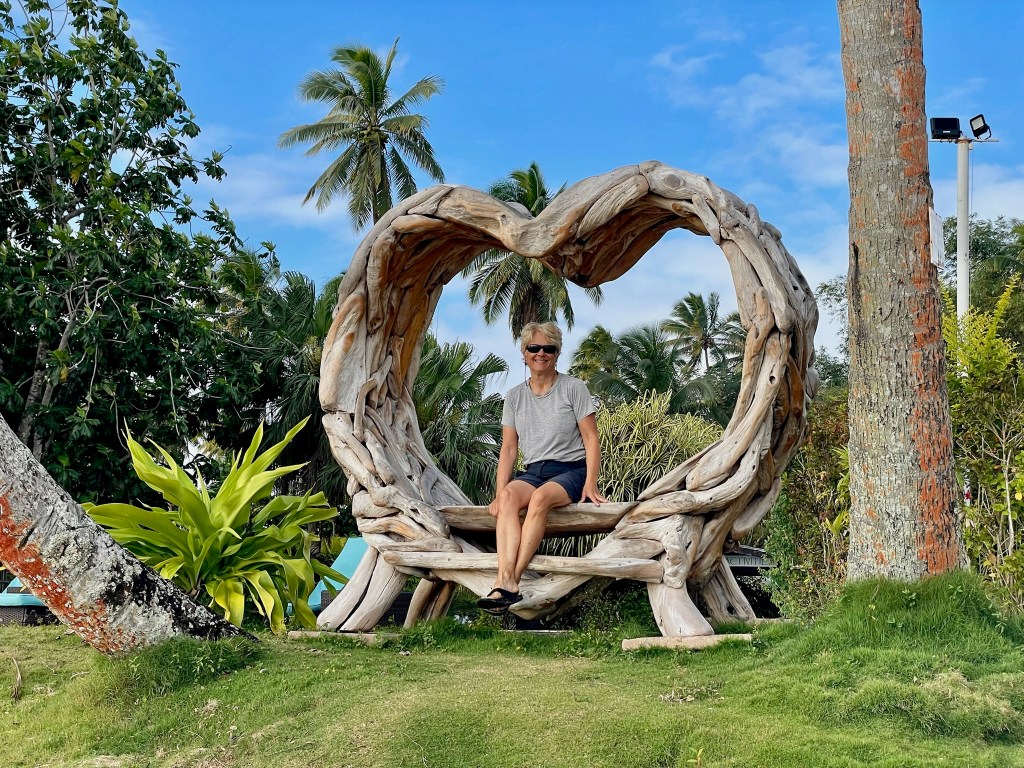
Beqa (Mbennga) Island and Resort
After exploring Kadavu, we sailed north-west to Beqa (pronounced Benga) exclusively to see the Shark Reef Marine Reserve and to swim with sharks.
The Beqa Lagoon Resort Hotel was welcoming and well-organized.
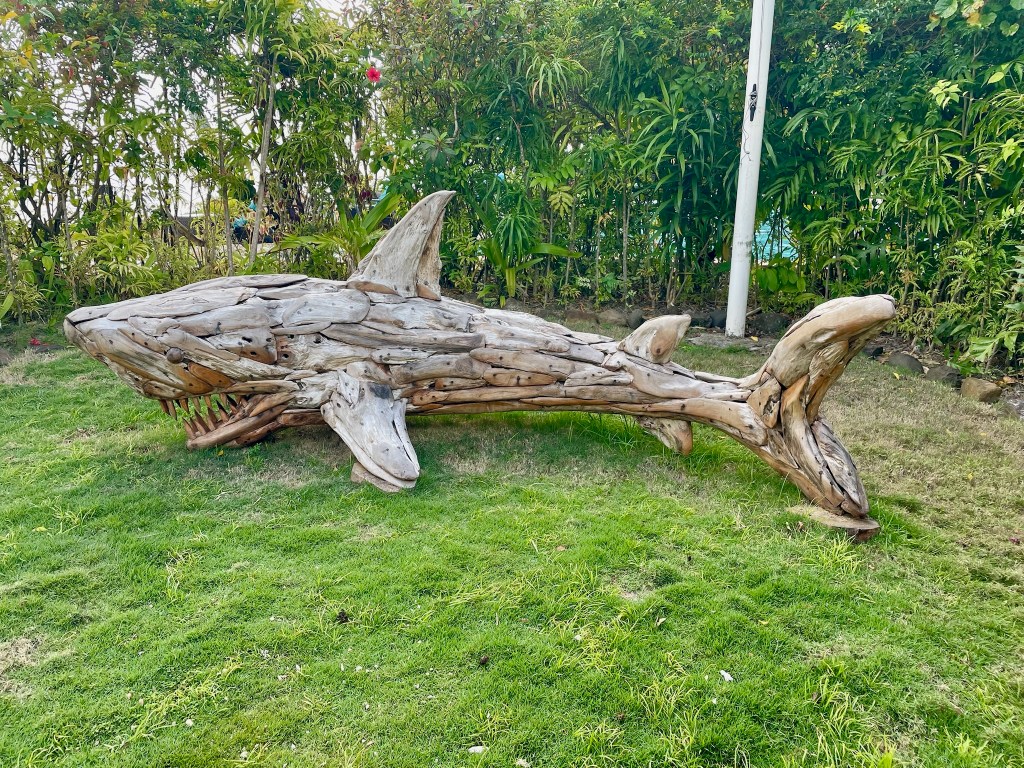

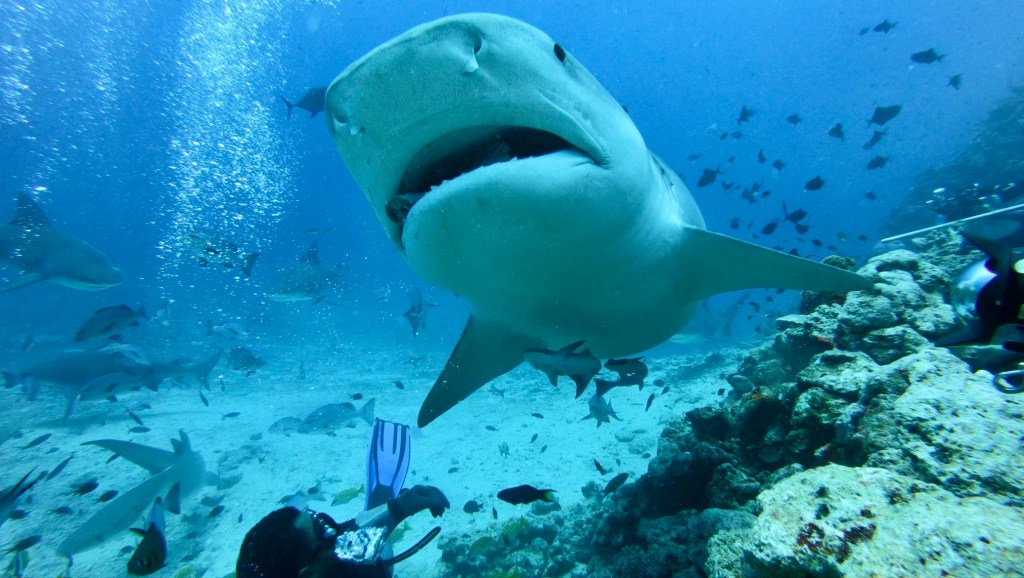
I had been skeptical about taking part in an activity that I suspected was more for tourism than for the benefit of the sharks. After listening to the dive master, I understood that the philosophy of the resort’s dive school was that regularly feeding the sharks protects the fish population and, indirectly, the health of the coral reef. Satisfying the sharks’ appetites with the (otherwise discarded) tuna heads all made sense to me.
In addition, observations at these dive sites enable researchers to closely monitor shark behavior in a controlled setting, providing insights that would be difficult to obtain in the open ocean.
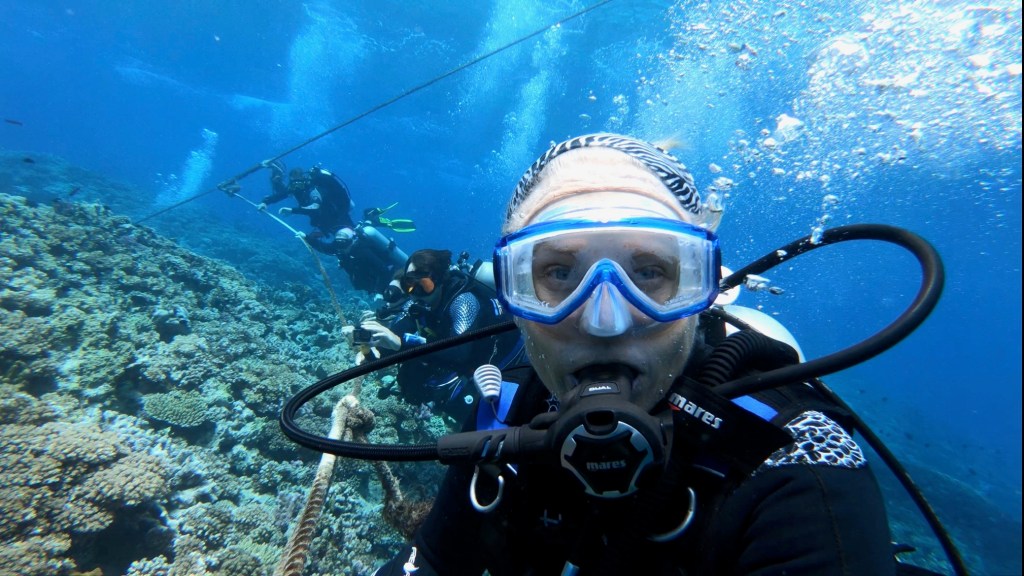
Watching these majestic creatures up close was a spectacular experience! We did two dives to watch the sharks feeding at a depth of ~69 feet (21 meters). These were two of the most memorable dives of our lives! The resort divers, who fed them the tuna heads from a large metal crate, were very familiar with the sharks, their personalities, and even knew that one was pregnant. Other resort divers stayed behind us, equipped with long metal poles to prevent the sharks from coming too close to us.

Viti Levu Island
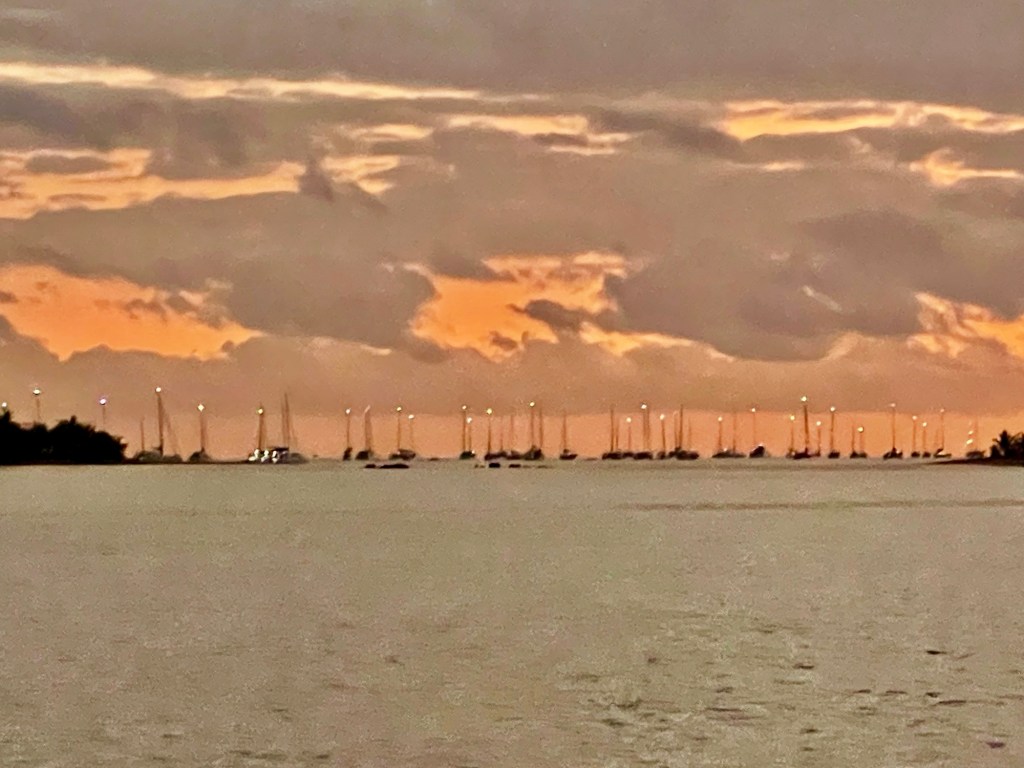
Back again in Vuda Marina
After a bit of shopping in Denarau (yes—we finally found coffee!!), we returned to Vuda Marina.
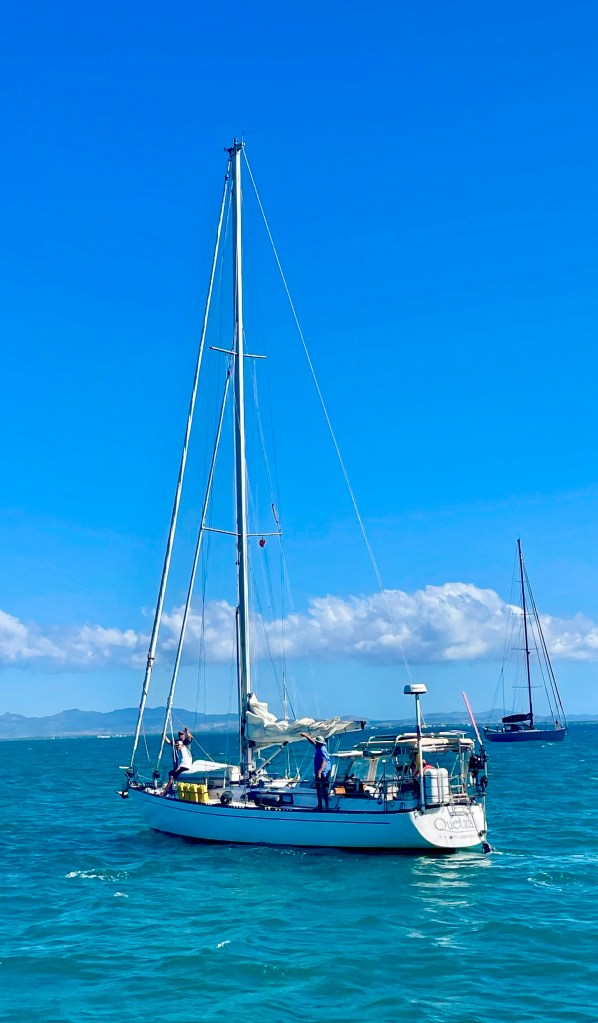
One of our sailing friends from the US, John Kretschmer, had just arrived with his sailboat Quetzal and came to our boat for dinner. John is well known in the blue water sailing community as a lecturer, writer (he has written several books), and organizer of “heavy weather sailing expeditions”. Most recently, he has been doing sailing workshops as he and Quetzal head west across the Pacific Ocean. Notably, several months ago, John and his crew sailed from Cape Horn to Antarctica, then up to Patagonia.
We had sailed with John on Quetzal for heavy weather sailing courses in the North Atlantic Ocean in the winter of 2009. Giorgio is even mentioned in one of his books! John is a fantastic sailor, teacher, and human being. It was great to spend time with him again.
SV Quetzal and Captain John

Heading south to New Zealand
Boats usually depart southbound from Fiji in October before the South Pacific cyclone season officially starts in November.
We headed back to New Zealand on October 7th, in the first weather window, which Giorgio had been monitoring closely, since the cyclone/hurricane seasons around the world are starting earlier and lasting longer!
Entering New Zealand—Biofouling requirements.
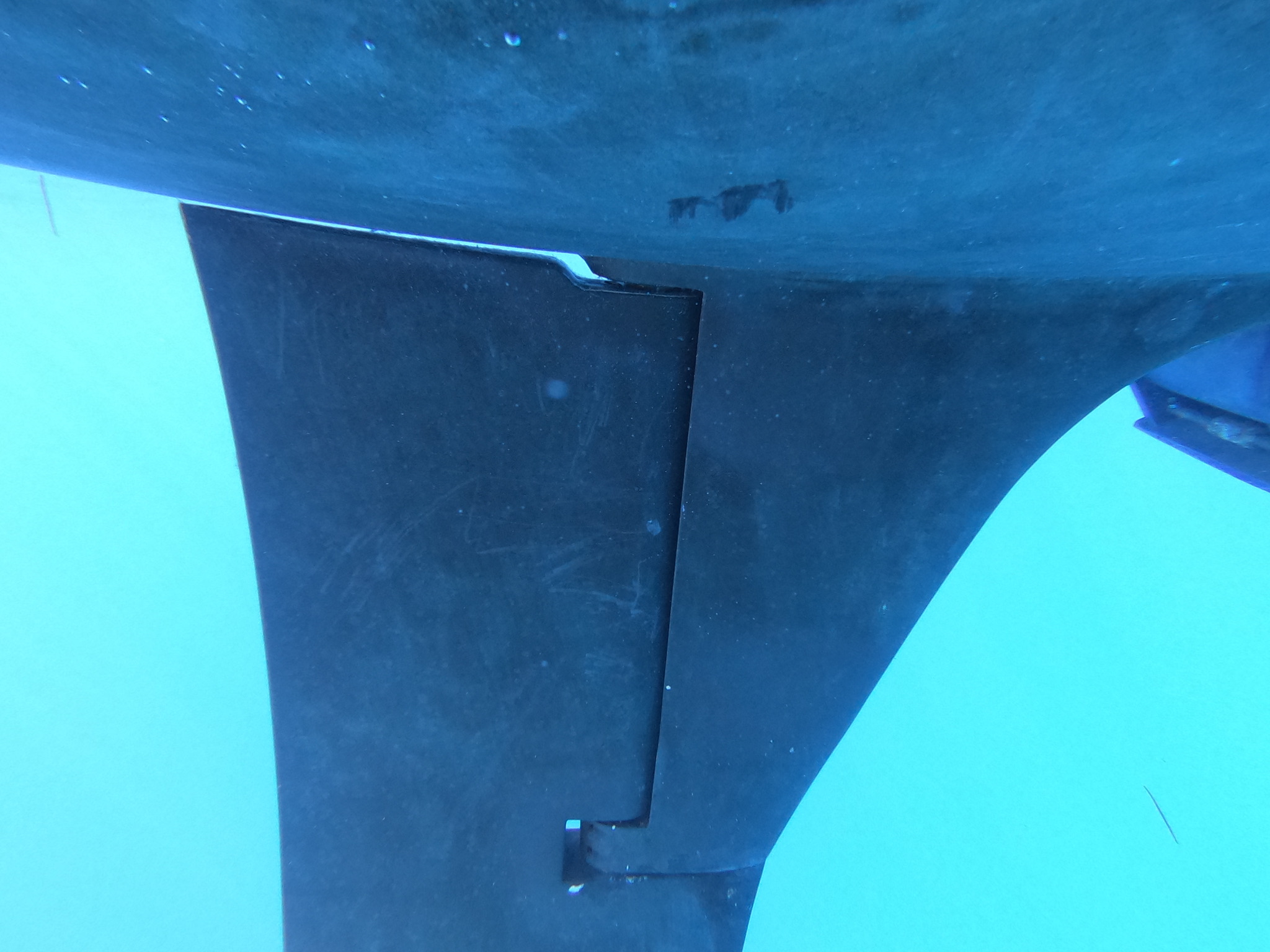
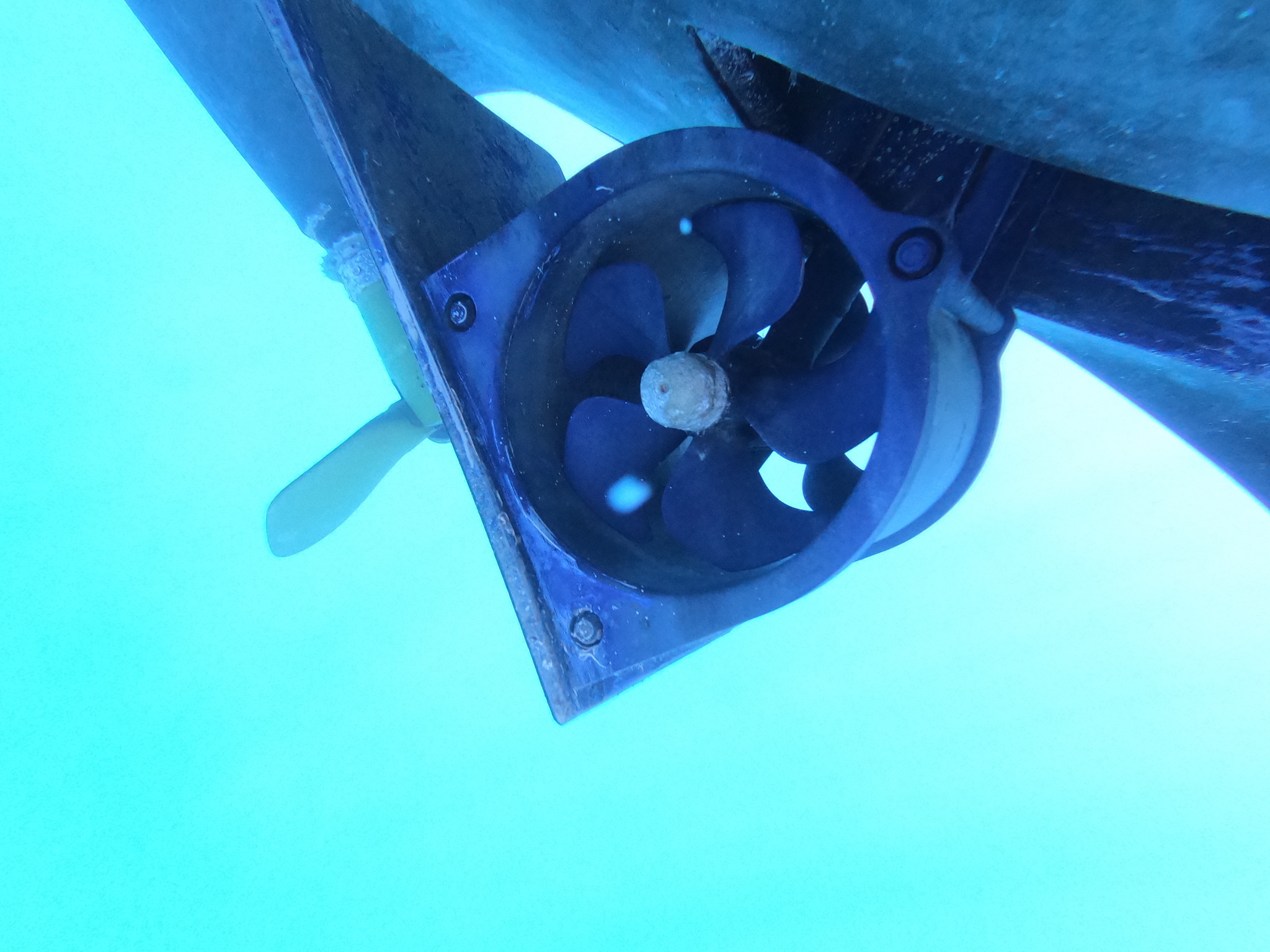
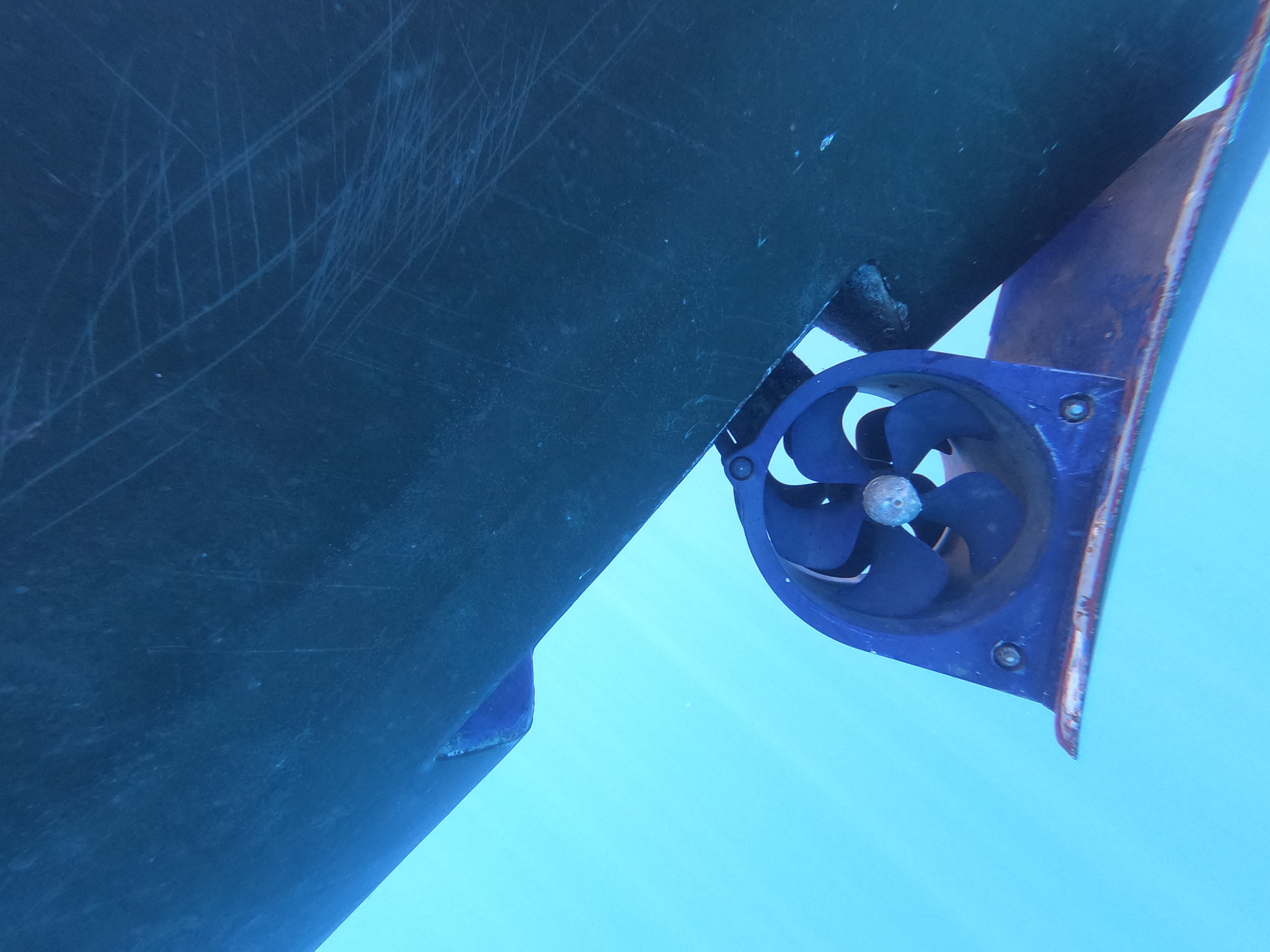
This year, New Zealand has stricter biofouling requirements: there must be no vegetation or barnacles on the hull, thru-hulls, and strainers. Giorgio and I spent three days scrubbing the bottom of the boat by snorkeling with brushes and metal scrapers. Finally, the hull was clean!
Since they required visual documentation of the hull before arriving in New Zealand, Giorgio dove several times with his GoPro, and took pictures and videos of the hull which he e-mailed to them. New Zealand Biofouling inspectors cleared our boat even before we left Fiji!
Below: folding propeller, rudder, stern and bow retractable thrusters.

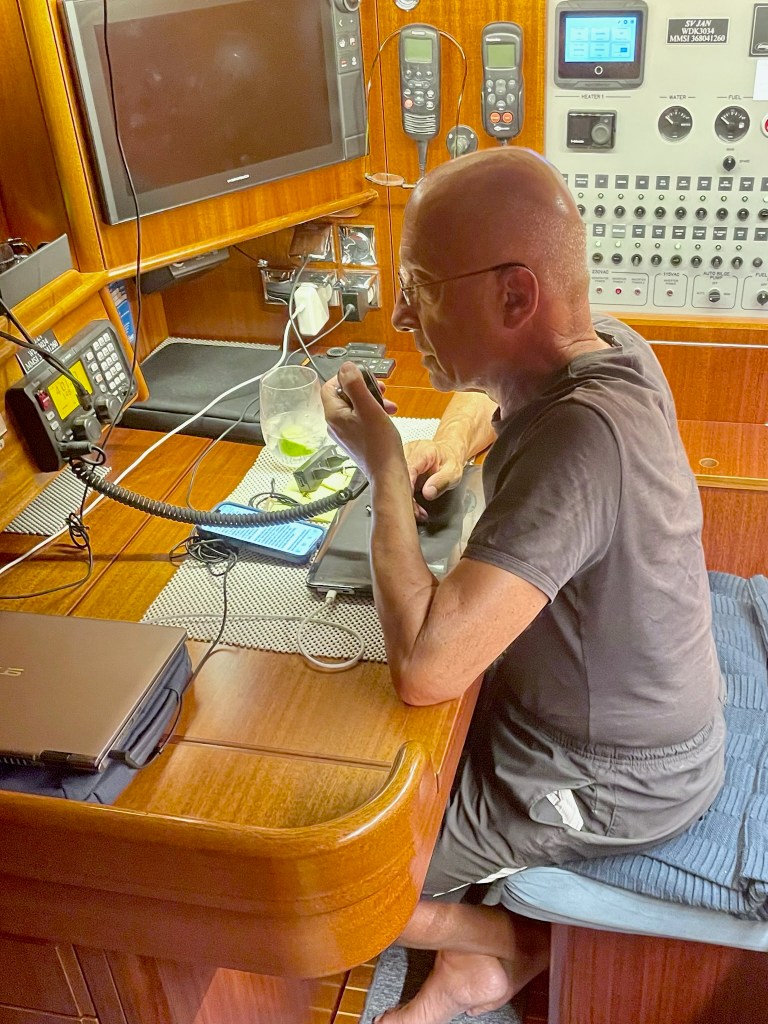
En route to New Zealand: SSB Radio—WhatsApp groups: daily communication with other groups of sailors
The SSB is still a valid and useful means of communication in the sailing community, especially during offshore passages. In preparation for our crossing of more than 1100 miles back to New Zealand, Giorgio and a group of other sailors heading south from Fiji, Vanuatu, and Tonga, made daily contact at 18:15 New Zealand time with Gulf Harbour Radio out of New Zealand, mainly on 8752 KHZ, reporting their position and local weather, which had been strong winds (>25 knots) from abeam and 2-3 meter confused seas the first couple of days. Talking on the radio creates a sense of community, fostering a sort of “Brotherhood of the Oceans.”

In addition to the SSB, we posted updates on a WhatsApp group called Fiji to New Zealand. Hearing and sharing real-time information can be very useful to us sailors as we make strategic decisions along the way.
These two means of communication were also an important safety adjunct. For example, a few days into our passage, we learned that WAIRIMA, a Lidgard 44 ahead of us, had dismasted and was now short of fuel. Another catamaran, MINTAKA, had already reached the disabled boat, and two young crew members swam to WAIRIMA, and helped cut the standing rigging (stainless steel wires) to free the broken mast into the ocean. They also transferred 100 liters of diesel fuel in jerry cans, but that fuel was not enough for WAIRIMA to reach New Zealand.
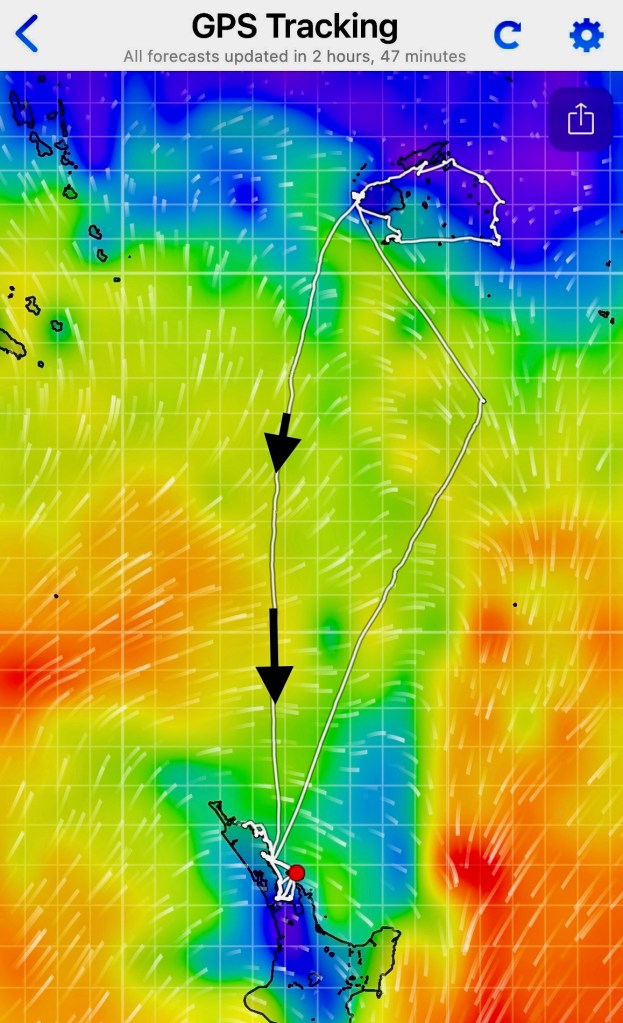
Observing the AIS map on the PredictWind website (one of our weather sources), Giorgio noticed that The Beast, a large motor yacht catamaran (and winner of the World Superyacht Awards 2020), on which our friend mechanic Kyle Taylor had been first officer, was north of the group and heading to New Zealand as well. Since The Beast was out of our VHF range and was not part of the SSB group, Giorgio called Kyle on WhatsApp and asked him to contact the captain of The Beast in order to get some extra fuel to the disabled boat. This was quickly achieved, and all boats arrived safely in New Zealand a few days later. This sequence of events happened successfully in less than 24 hours. We felt great relief for the disabled boat! Having the SSB and the Starlink made this all possible.

Back to Marsden Cove Marina, New Zealand
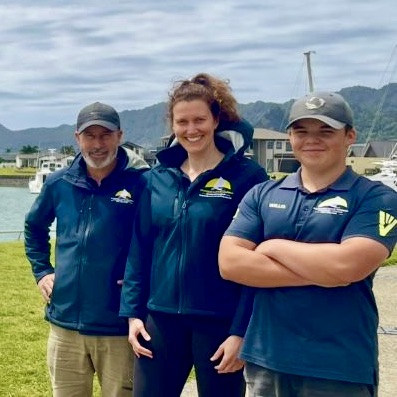
We have previously defined Marsden Cove Marina as “our home away from home.” We always feel welcomed by Gareth—the Manager, Susi—the Organizer, Willis—the Dock Man, and all the fantastic people who work in the boatyard.
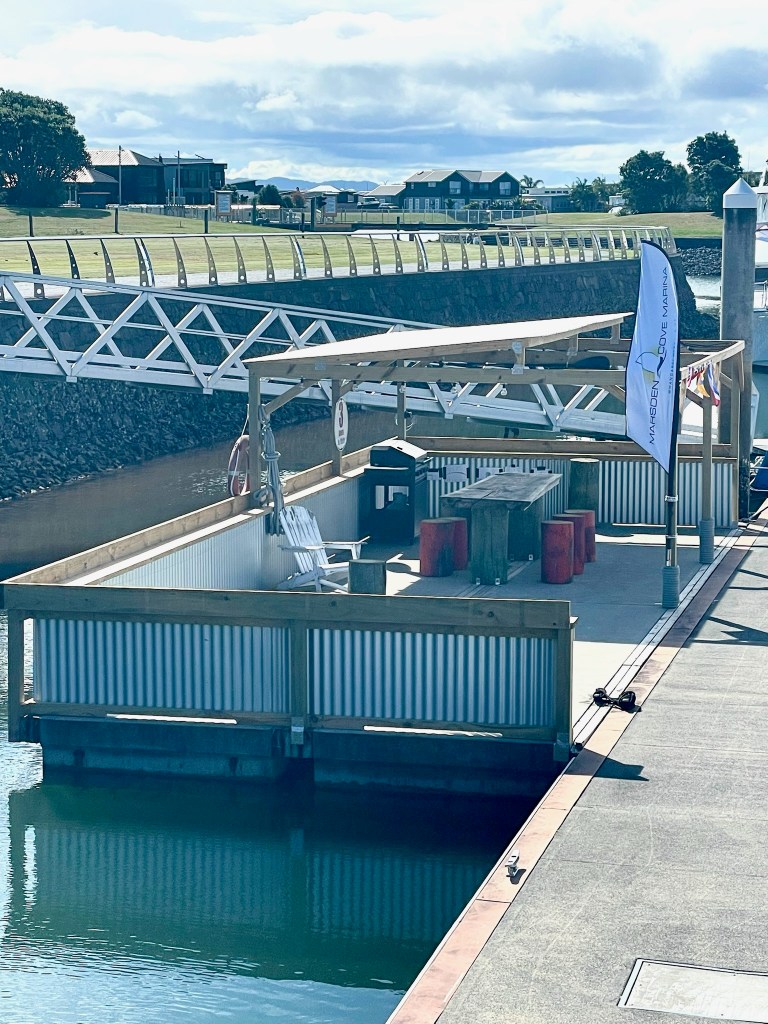
When we arrived, we found they had added a wonderful new area for the marina customers to congregate on the dock, a place complete with a beautiful BBQ gas grill, a large table, and chairs. We have already used it a few times to cook steaks and fish!
It’s a Small (Sailing) World
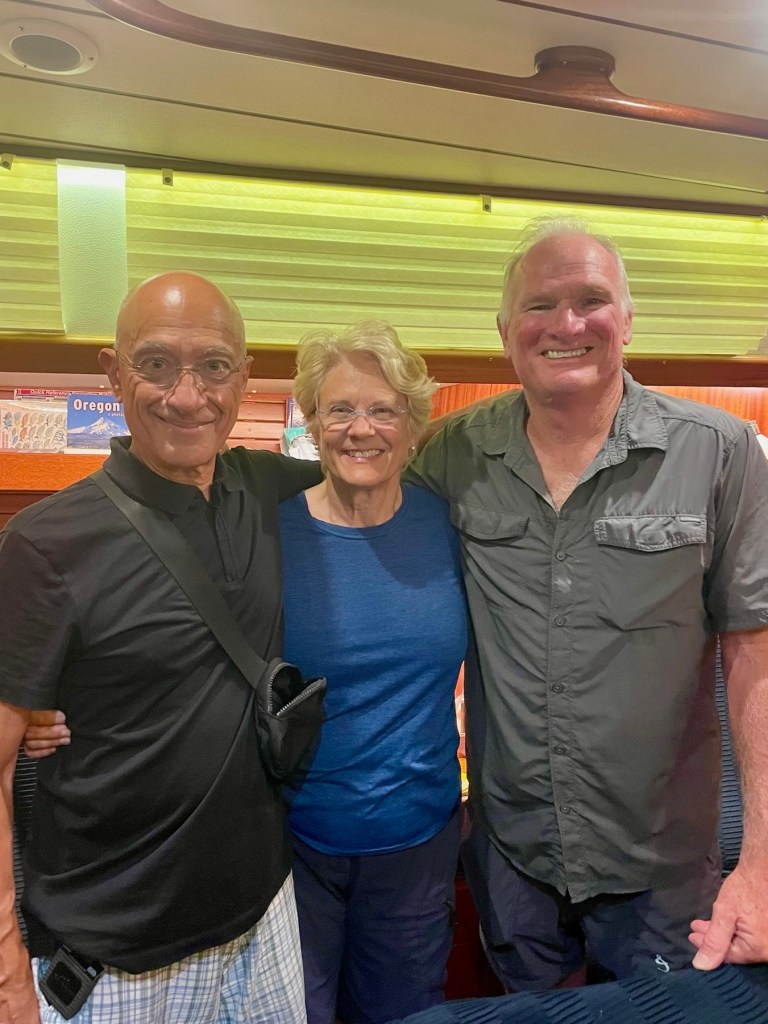
Last week, Gareth and Susi organized a gathering at 18:00. Giorgio went there with large snapper filets— marinated in oil, herbs, and spices, and wrapped in aluminum foil—to cook on the grill. When he arrived, there was already a crowd of about twenty people. Someone called: “Giorgio!!” He turned and saw Ralf and Wiebke Gerking, German sailors we had met in 2019, first in La Linea, Gibraltar, and later in Isla La Graçiosa, Canaries. Their sailboat, SY FLORA, is a Hallberg-Rassy 43. We were happy to see each other again after six long years!

Two other people approached Giorgio and recalled, “You were on SV JAN in Canoe Cove, British Columbia, in 2021, and you were getting CopperCoat antifouling on the bottom of your hull!” Anne and Michael Hartshorn, who sail NIMUE, a Contest 44, also remembered Giorgio from four years ago! Apparently, Giorgio makes a lasting impression!

A small group of old friends formed, and it seemed like the conversation, started years ago, continued now with updates on each other’s sea travels. Michael told us stories about his previous life as a British professional diver, working underwater on oil rigs at 650-feet deep (~200 meters!). Scott, an American statistician and retired professor at Auckland University, also joined us. He keeps his sailboat Vive Libre, permanently in Marsden Cove.
It became clear to everybody that the immense oceans are a small world— if you have a sailboat!

 The Adventures of SV JAN
Grazie per questo bellissimo messaggio e tutte le foto che illustrano le vostre impressioni davanti ai paesaggi e i belli incontri, umani e, perché no? anche animali. È veramente appassionante! Un abbraccio. Gabriella
LikeLike