
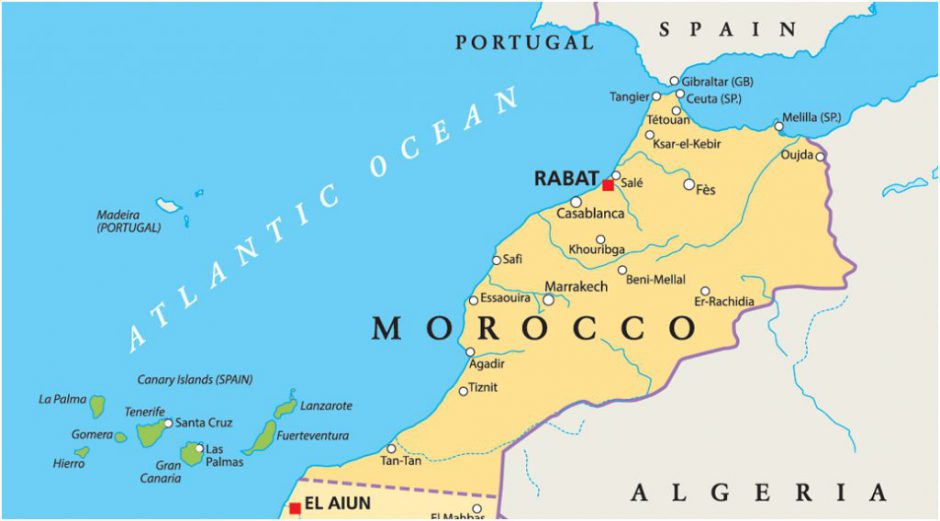
Our 4 day passage from Rabat, Morocco to the Canary Islands was uneventful except for one major setback when we were about halfway. For the first 50 miles of our journey, we had the wind from the right side of the boat, or abeam to starboard. The rest of the time, we had most of the wind from the stern, or behind us, and for that we usually use a special sail called the Blue Water Runner (BWR). This sail has become our favorite sail despite all the effort it takes to set it each time: hoist it, set the pole (to hold the windward sail out) and open it while pulling both sheets, sides lines, simultaneously. The white symmetrical sail is spectacular to see when open off the bow, and it is so efficient as seems to catch every bit of wind!
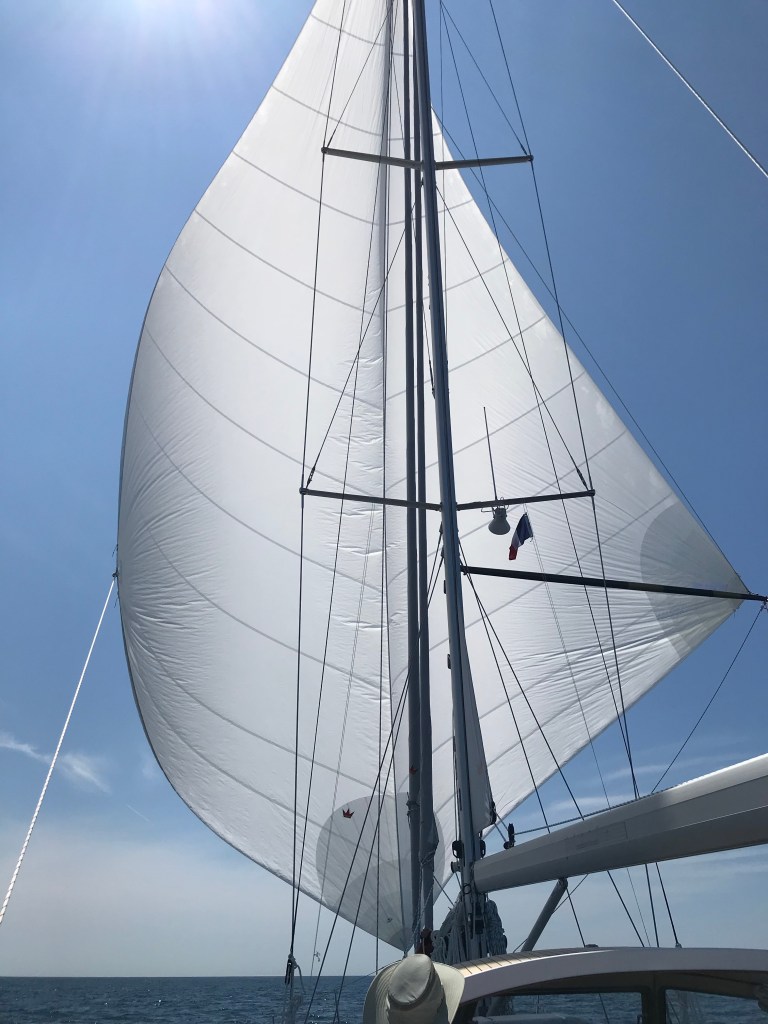
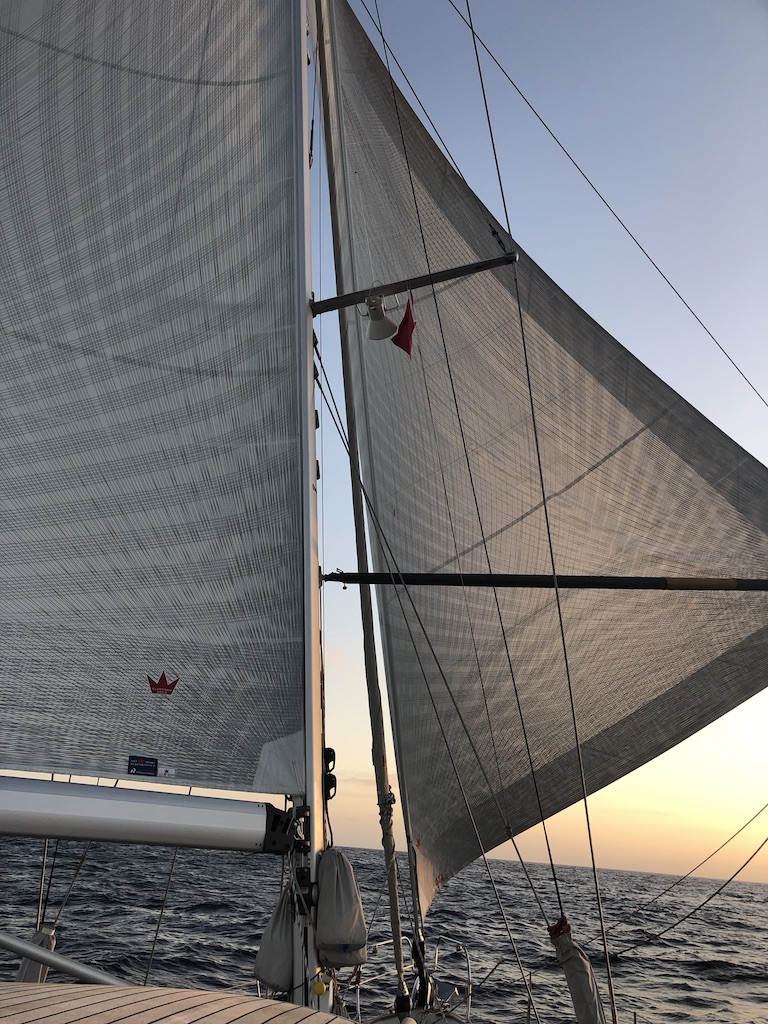
Two days into the passage, we had had the BWR up for a little less than 40 hours. At 0900 it was still my watch and Giorgio was making the first coffee of the day. I heard a gust of wind, looked up at the BWR and watched in disbelief as it tumbled down and fell in front of the deck and into the water. I immediately screamed at Giorgio to come out to help and we scrambled to pull 160 square meters of sail back into the boat. It took a whole hour to pull and tug, release lines and pull, and finally get the salty wet beast back on the boat! The main line (halyard) holding the sail had chafed clean through on top of the mast. We had expected some chafing, but not so soon or so quickly. Perhaps all the rolling we had been subjected to from the constant waves had hastened this. At least we did not lose the sail!
After setting the Genoa and the main sail ‘wing on wing’ we went down to find the coffee that Giorgio had been making all over the floor. It too had fallen, turned over in the sink, and tumbled to the floor! Never a dull moment!
LA GRACIOSA
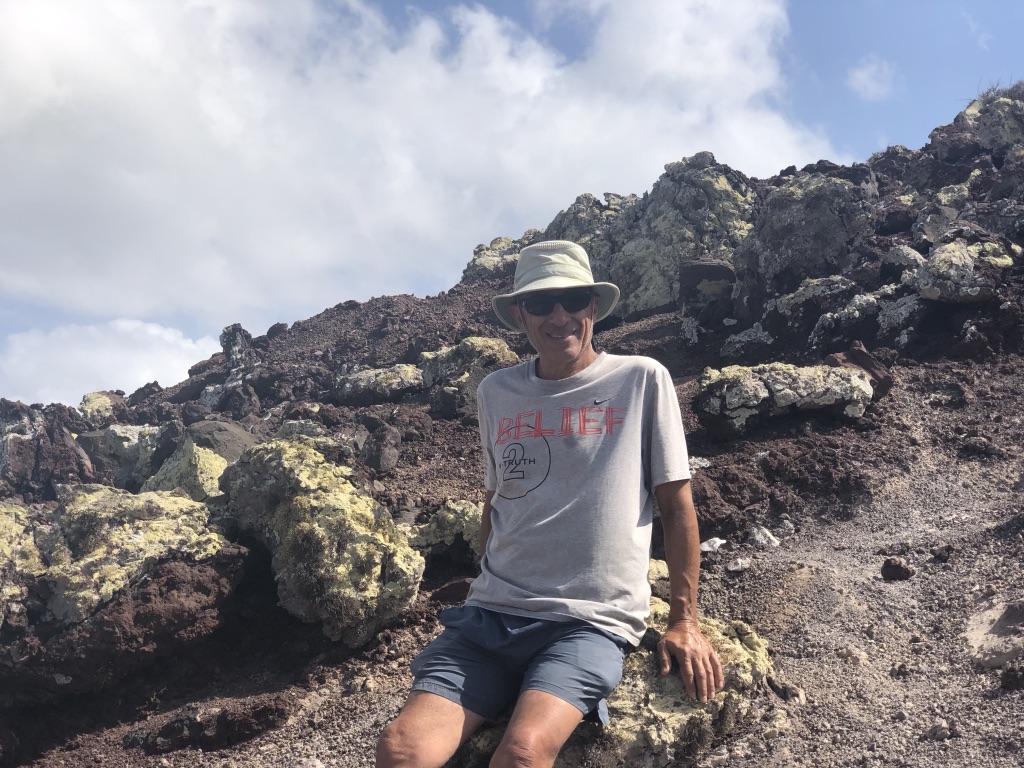
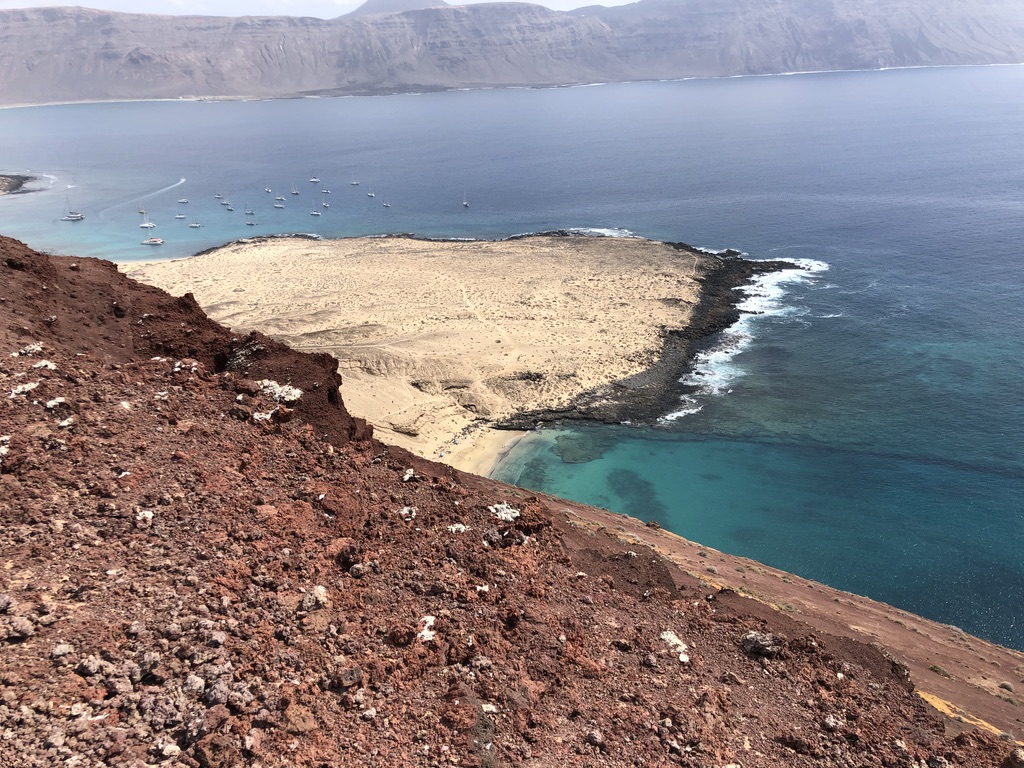
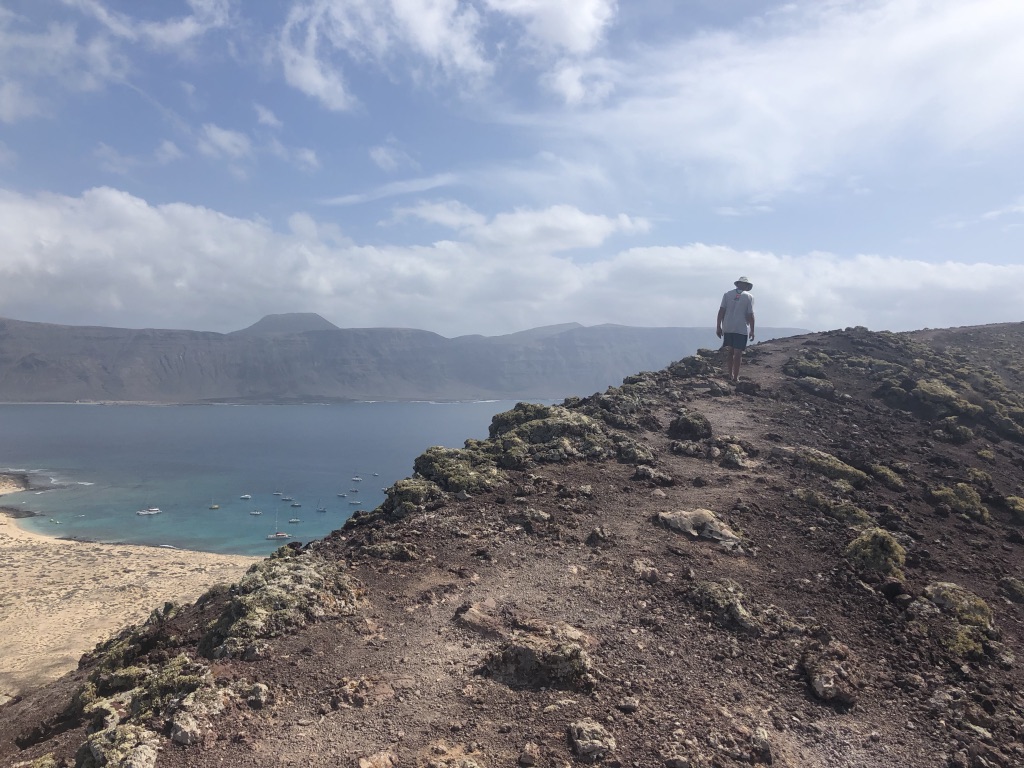
La Graciosa was our first landfall in the Canary islands. We arrived in the early morning and anchored in a lovely natural harbor under a big volcano crater. As we neared the island we were greeted by a lovely dove who came to rest on our solar panel.

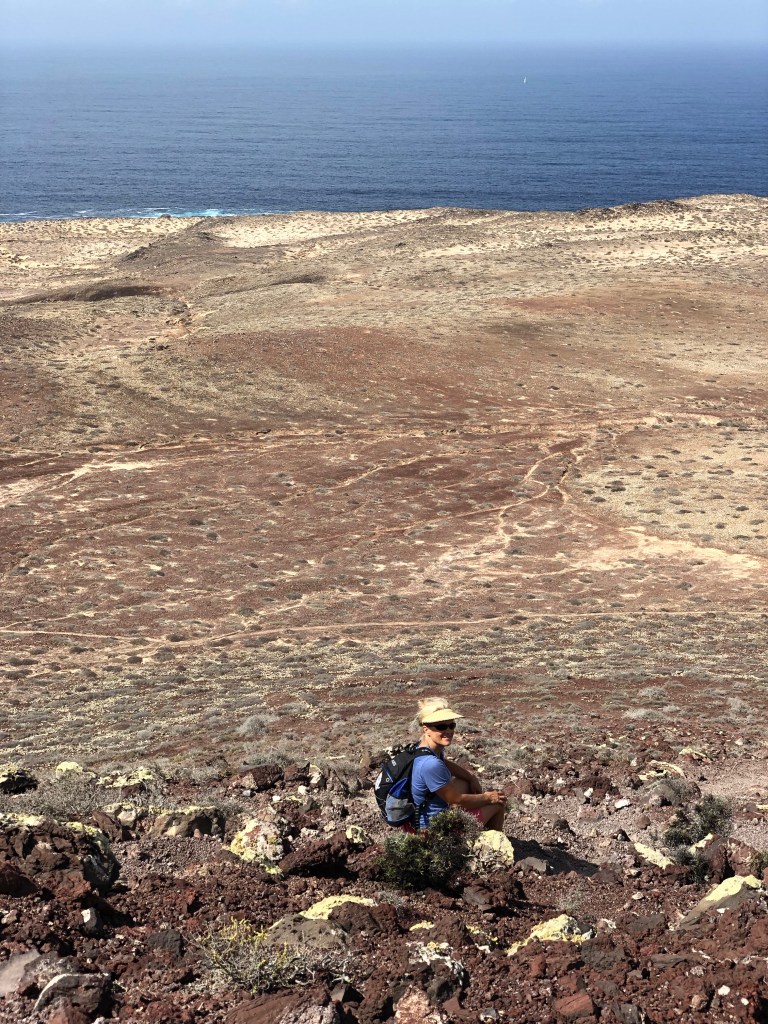
La Graciosa is a small island with several volcanic craters, and it can easily be walked in a few hours.
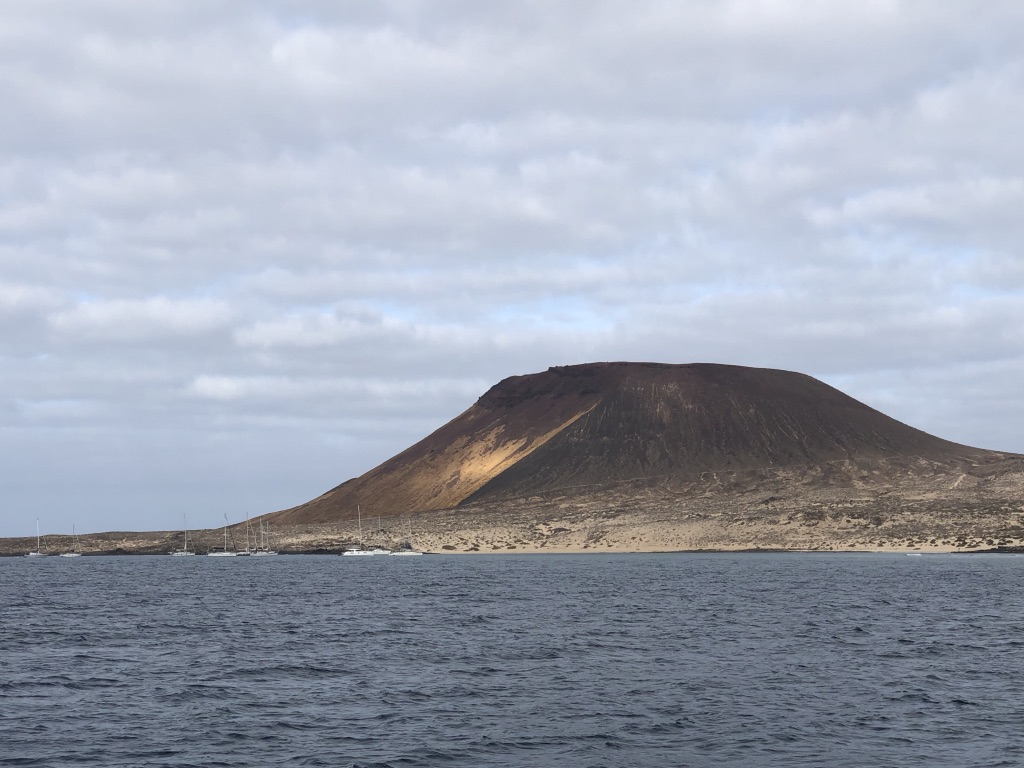

After a leisurely walk to the village, we walked to the top of the main crater and had a beautiful view of our anchorage from the top. One of our friends on Flora (another Hallber-Rassy) sent us this nice photo taken with his drone.

LANZAROTE
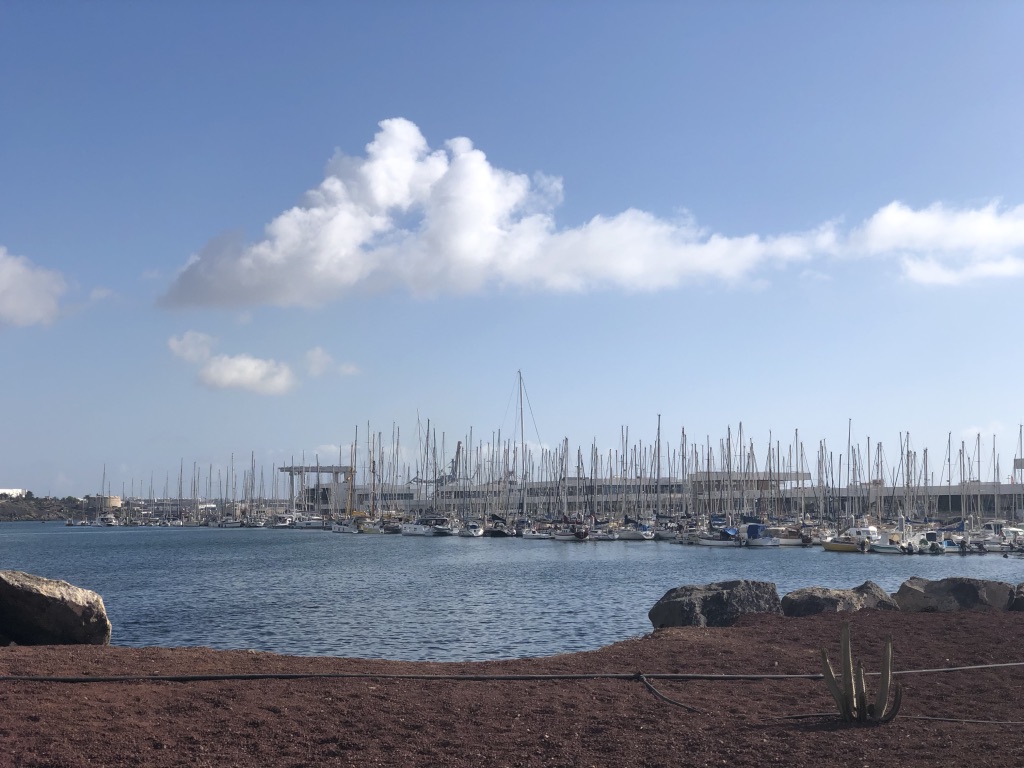
Lanzarote has a similar volcanic landscape. After an afternoon of sailing down the coast, we arrived at our marina. Marina Lanzarote is quite modern and full of blue water sailboats this time of year.
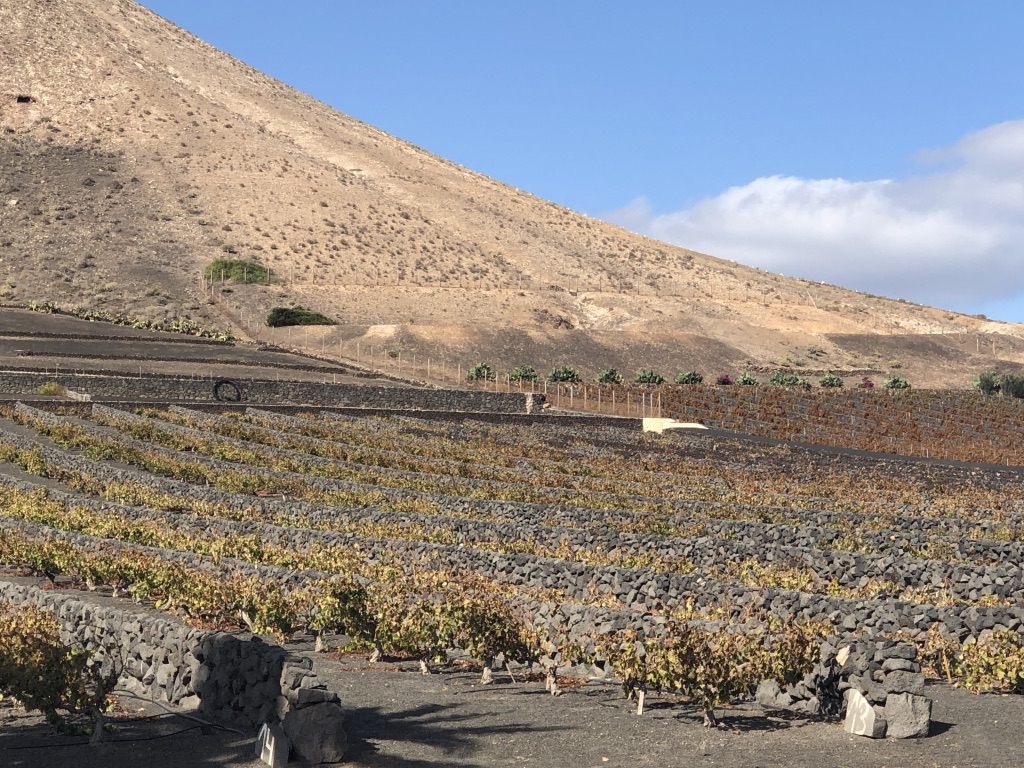
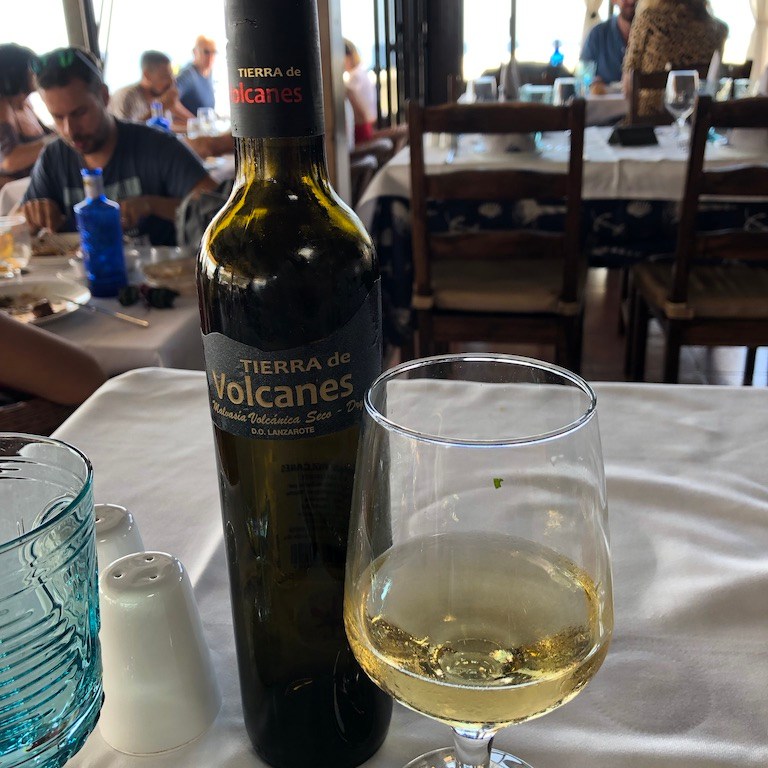
We spent a day driving around the island. The landscape is both rich and rocky as you can see by these photos of vineyards and palm trees. The wine is actually quite nice and has a “volcanic character”.


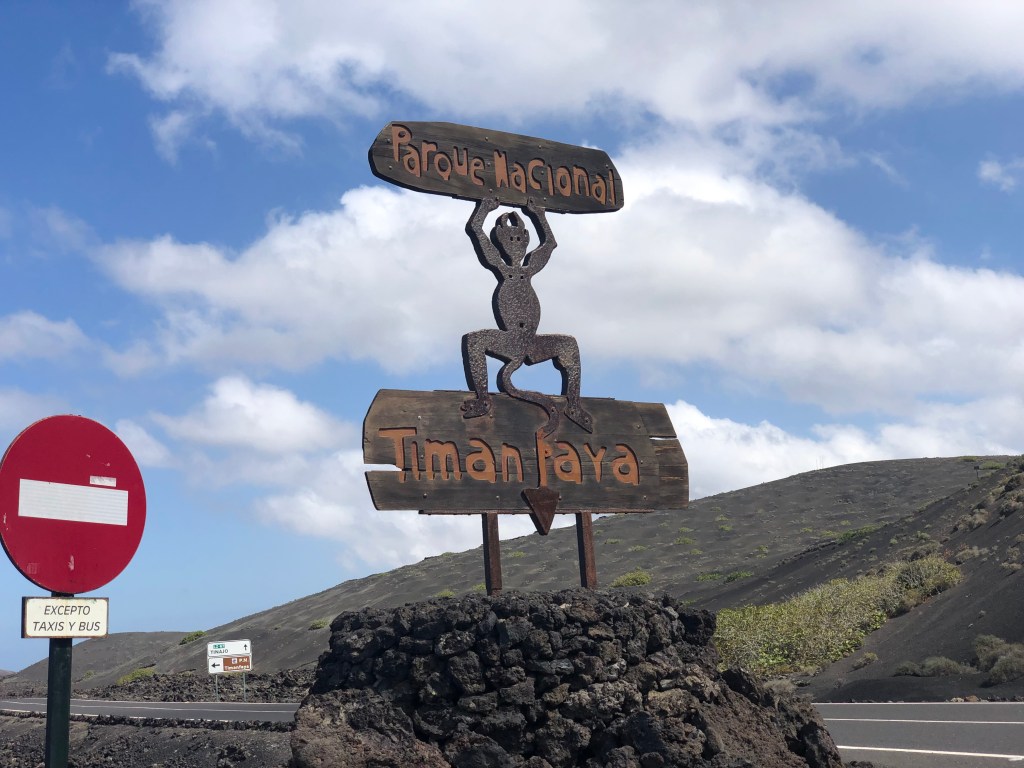
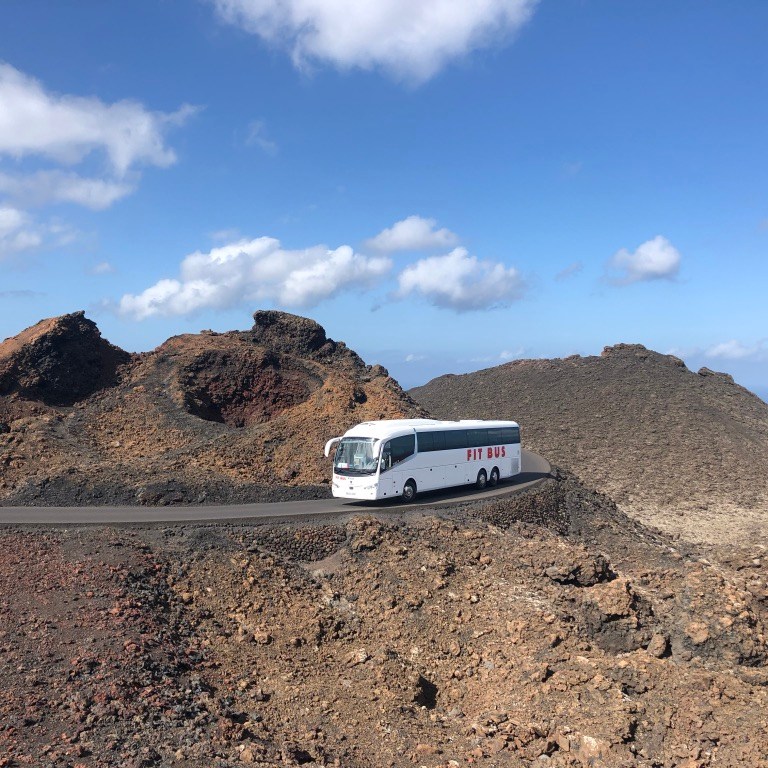
We first went to the Timanfaya National Park and took a tour bus around the park to see the rocky landscape created by eruptions in the early 1700s.
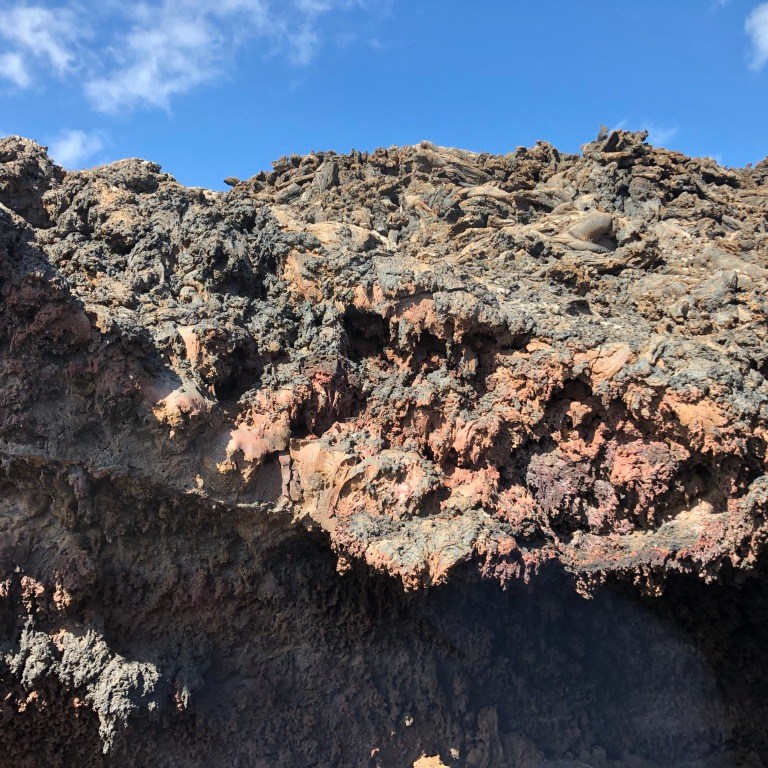
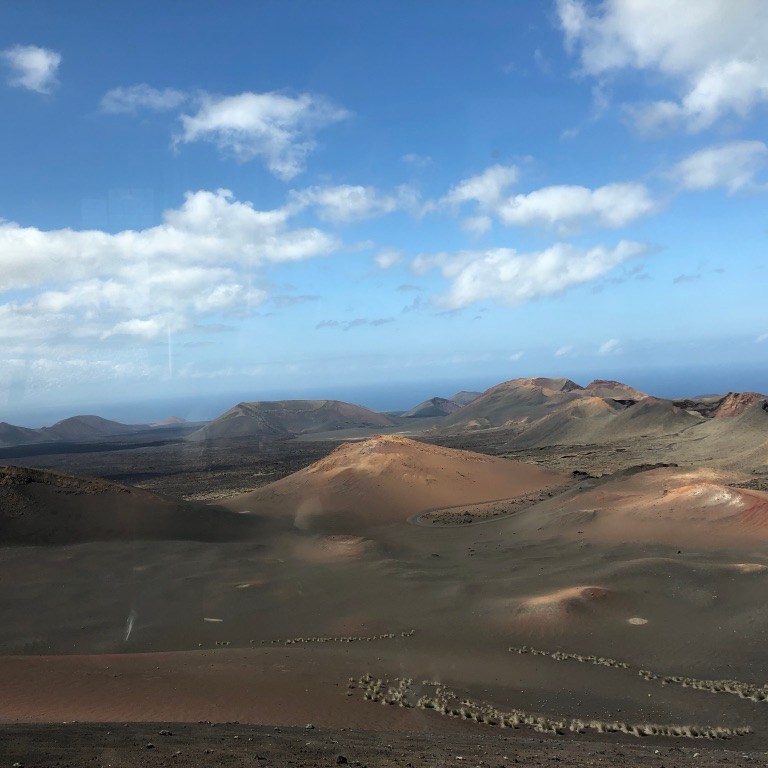

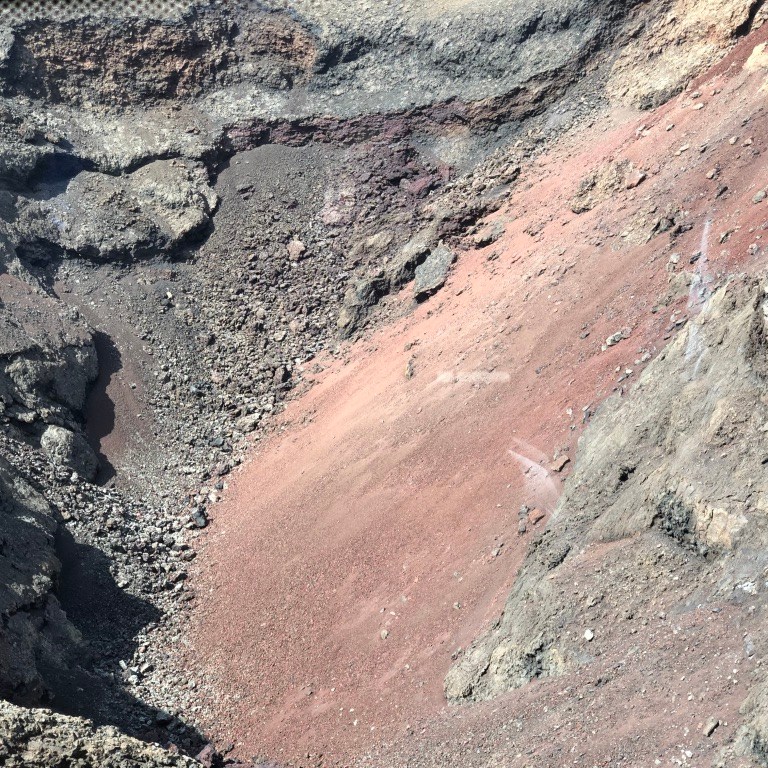
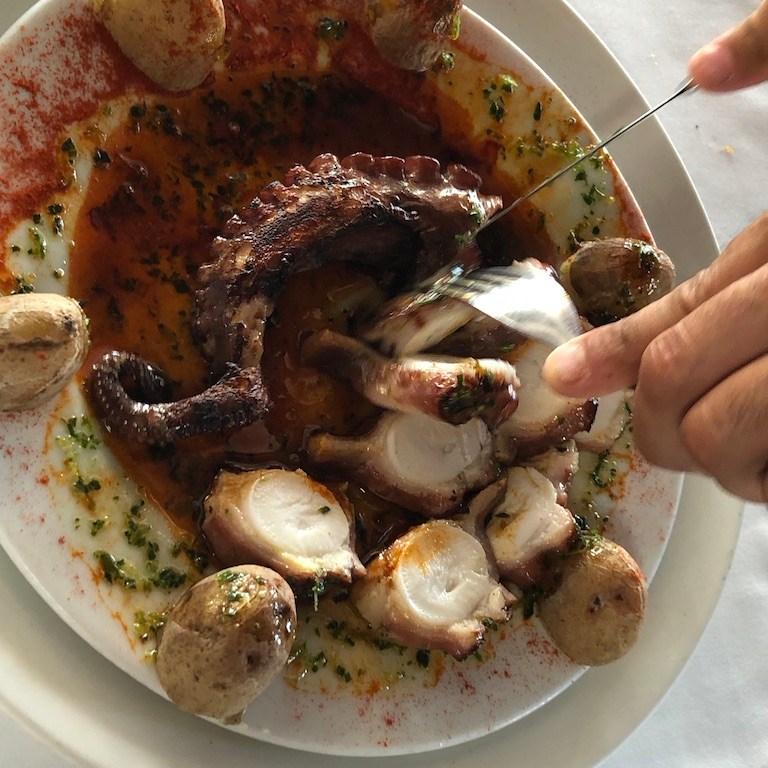
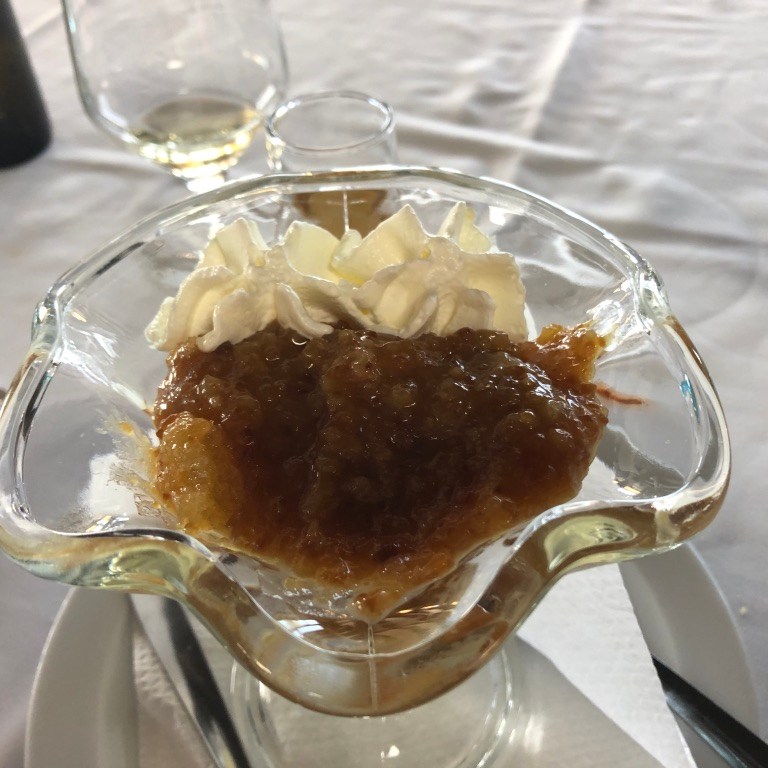
We stopped for lunch in a local restaurant along the coast and had octopus with typical island sauces, green peppers, local white wine, and a type of custard for dessert. Delicious!


A discussion of the island of Lanzarote would not be complete without mentioning César Manrique, local artist and architect who impacted the development of the architectural landscape of the island, preventing overbuilding while promoting the preservation of the beauty of the natural geological wonders.

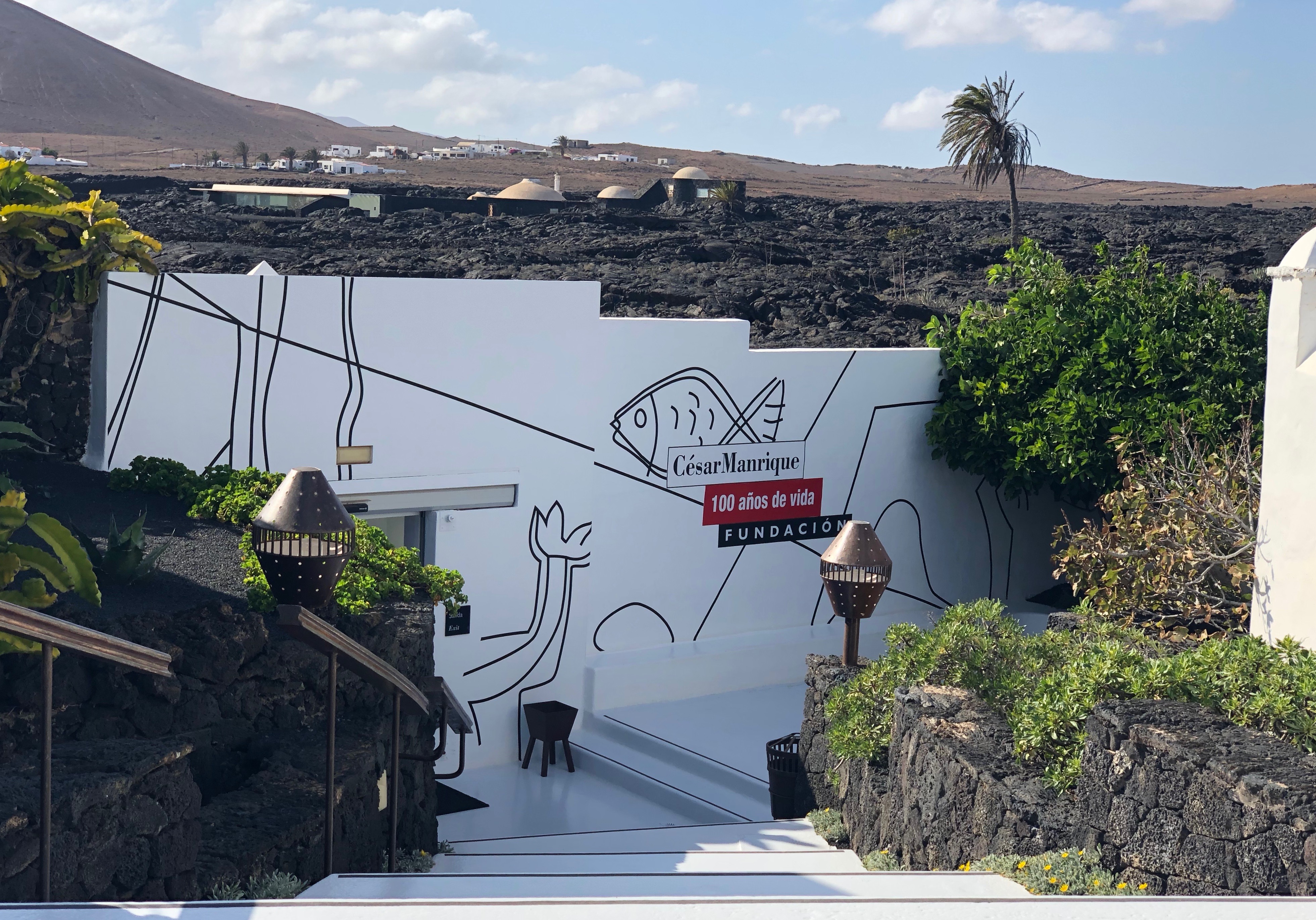
His legacy is preserved by the museums created in each of his two homes and other places such as the beautiful caves turned into a restaurant and auditorium.


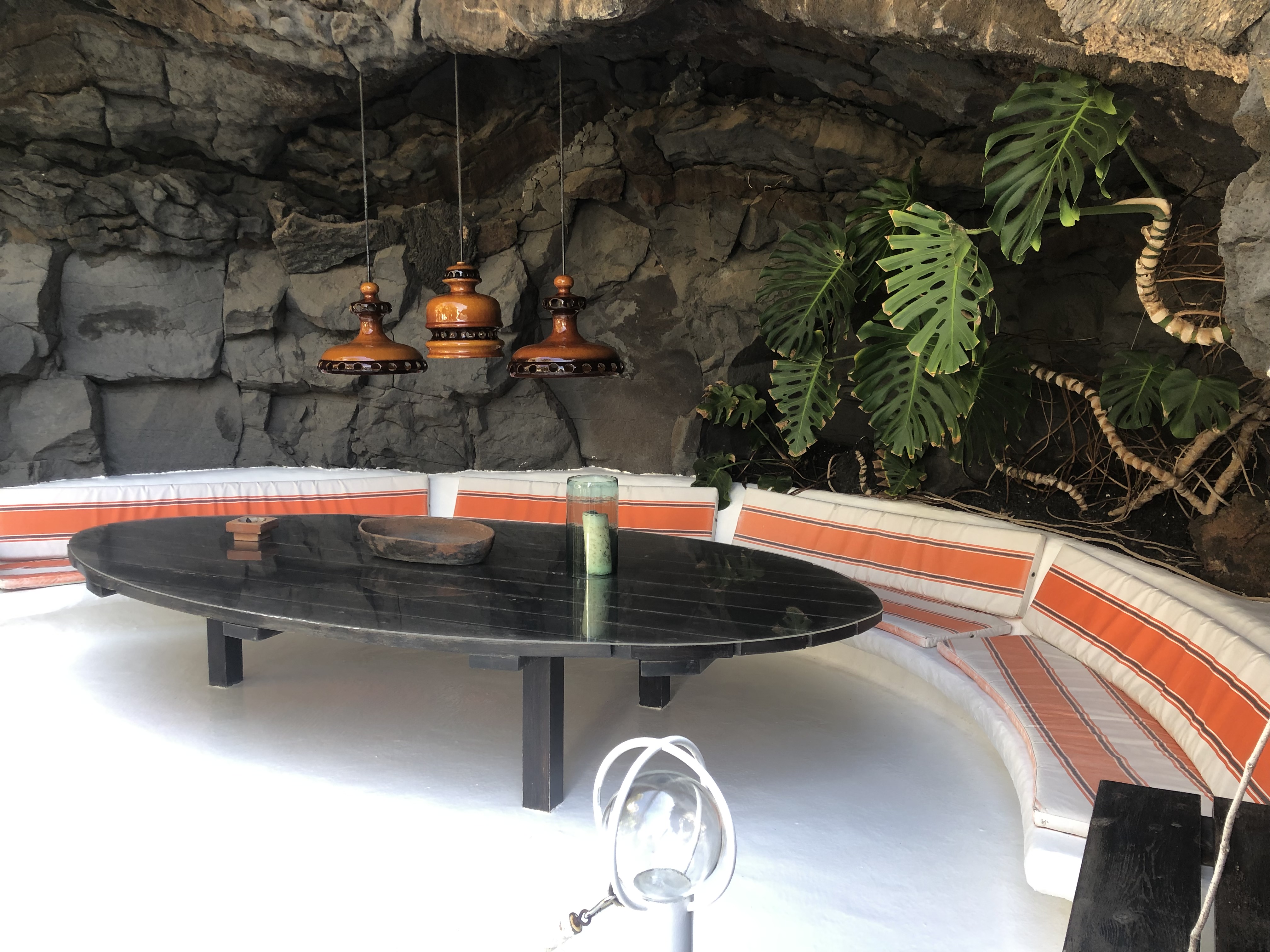
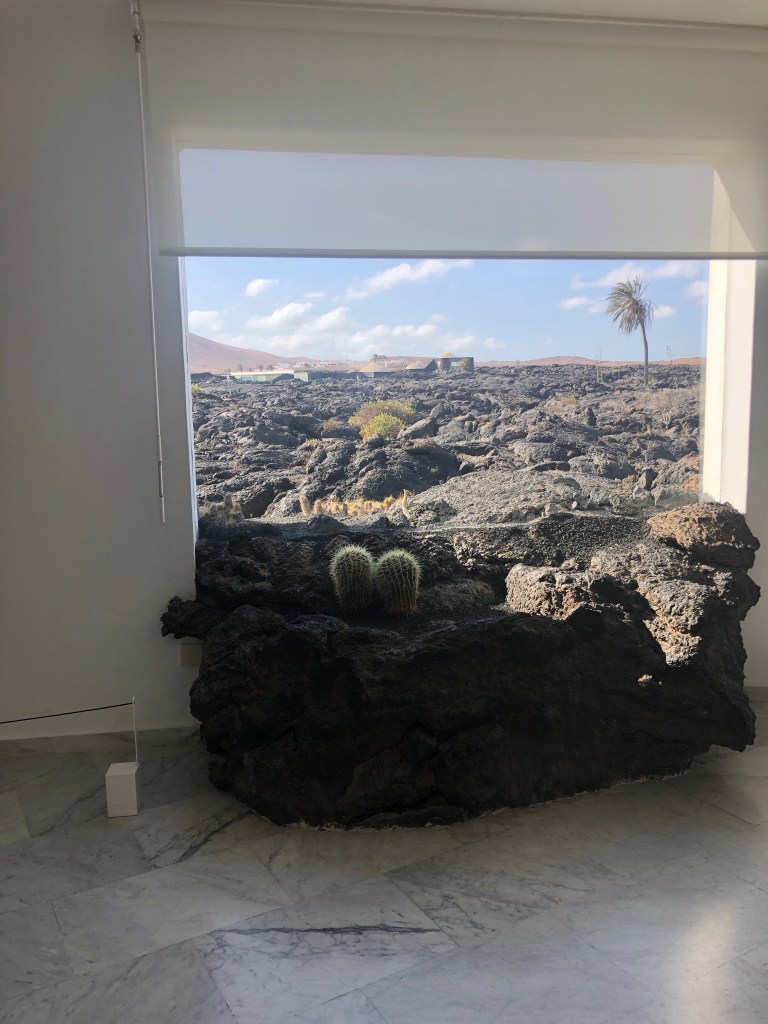
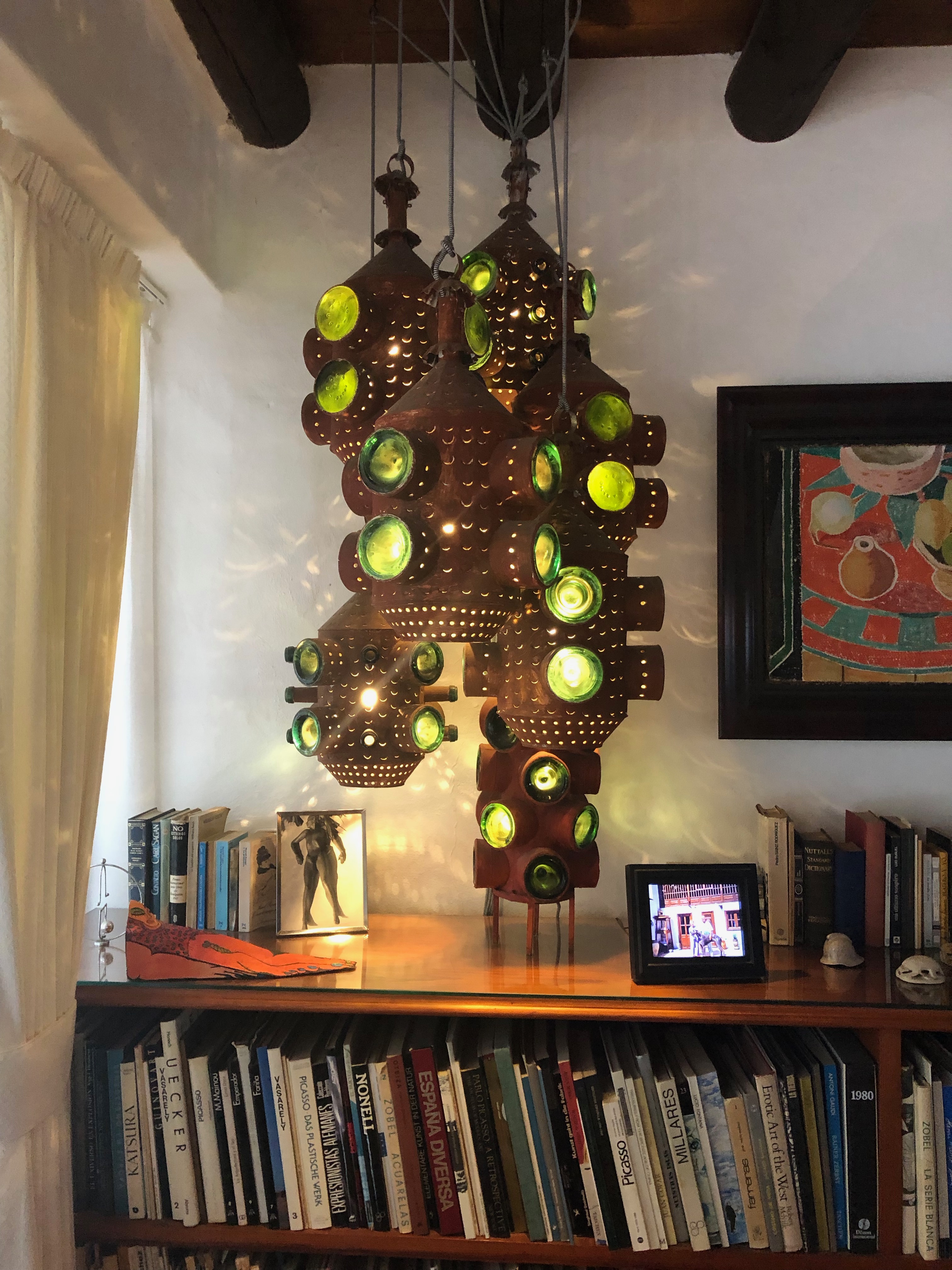
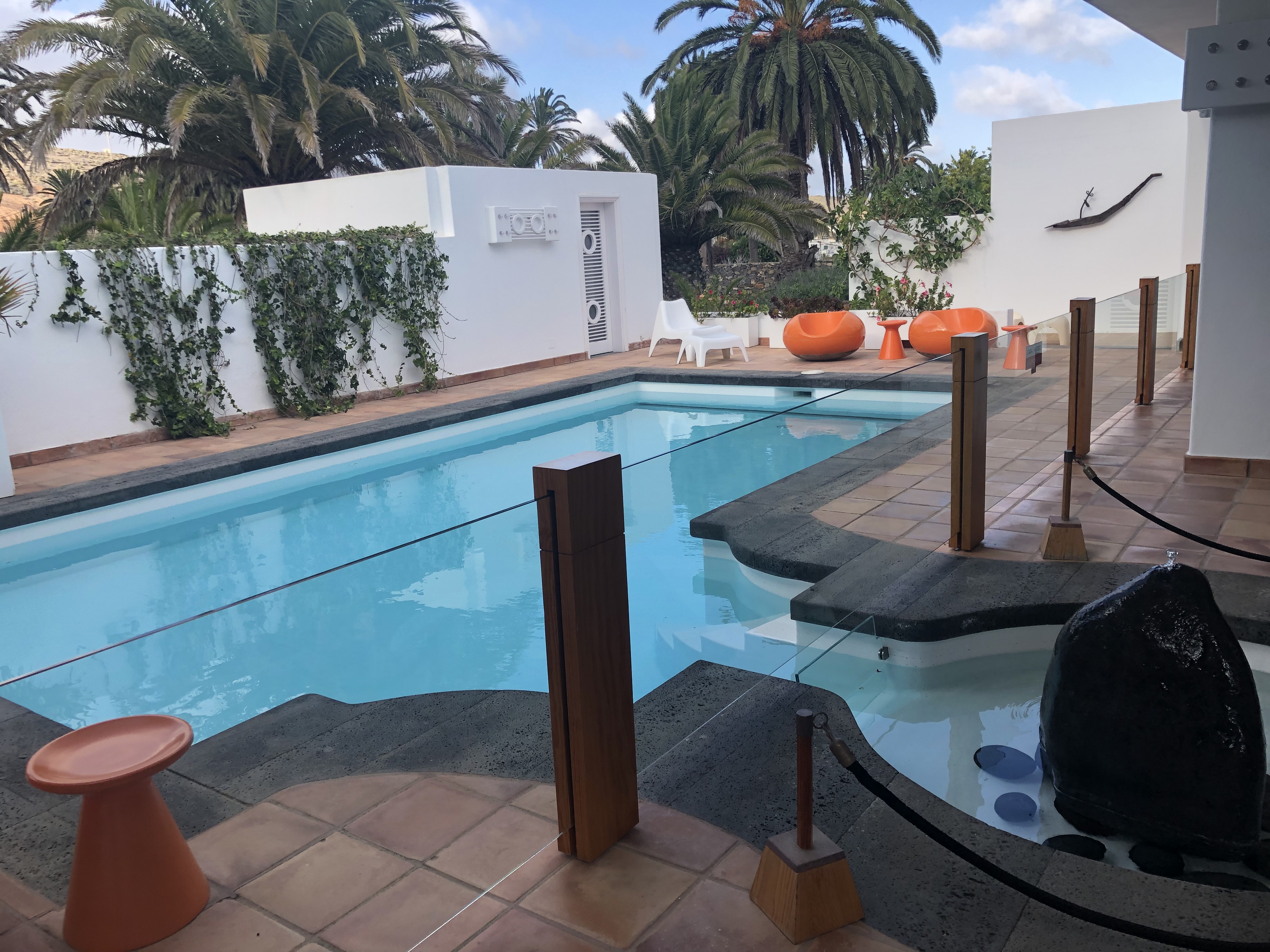

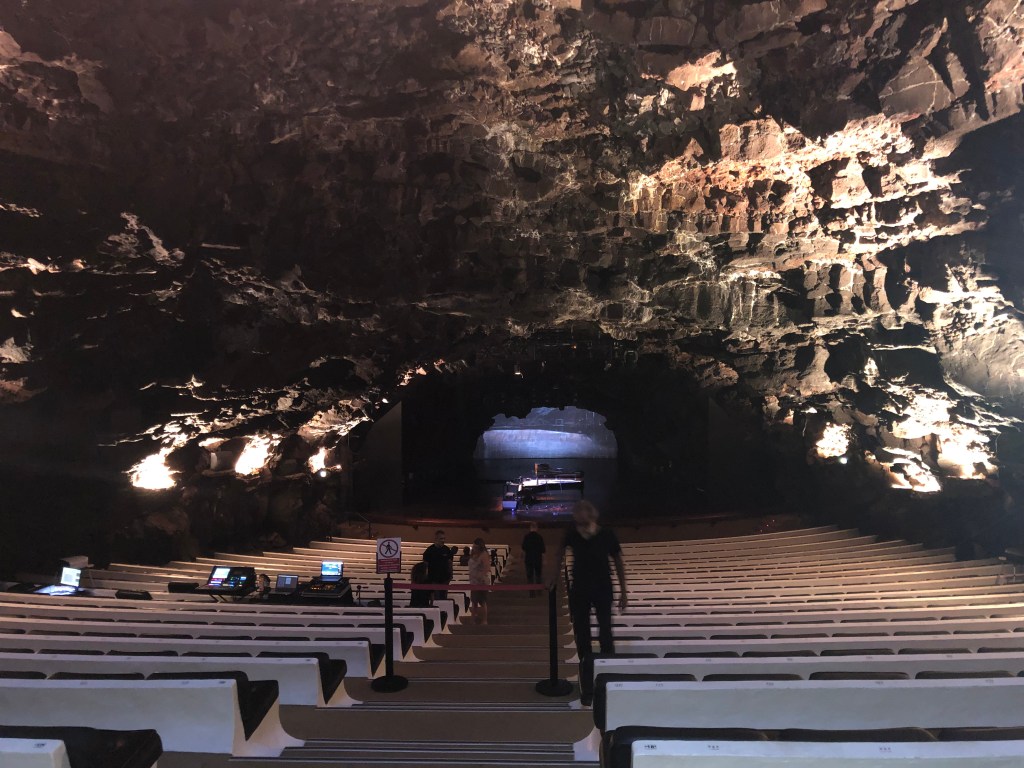
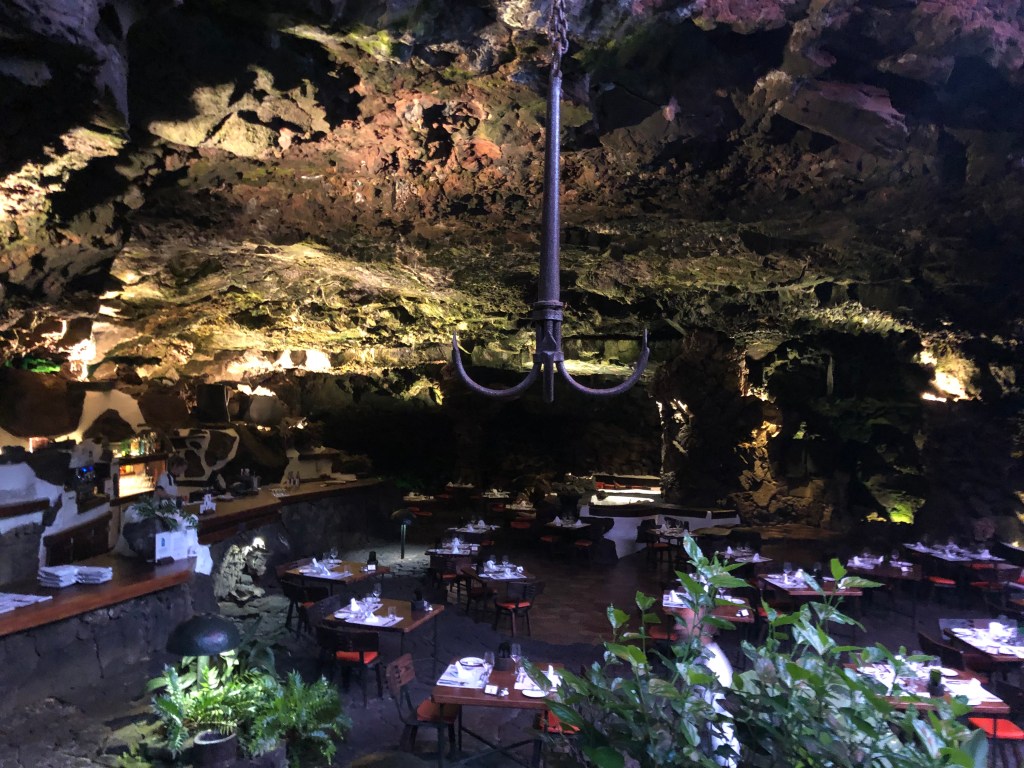
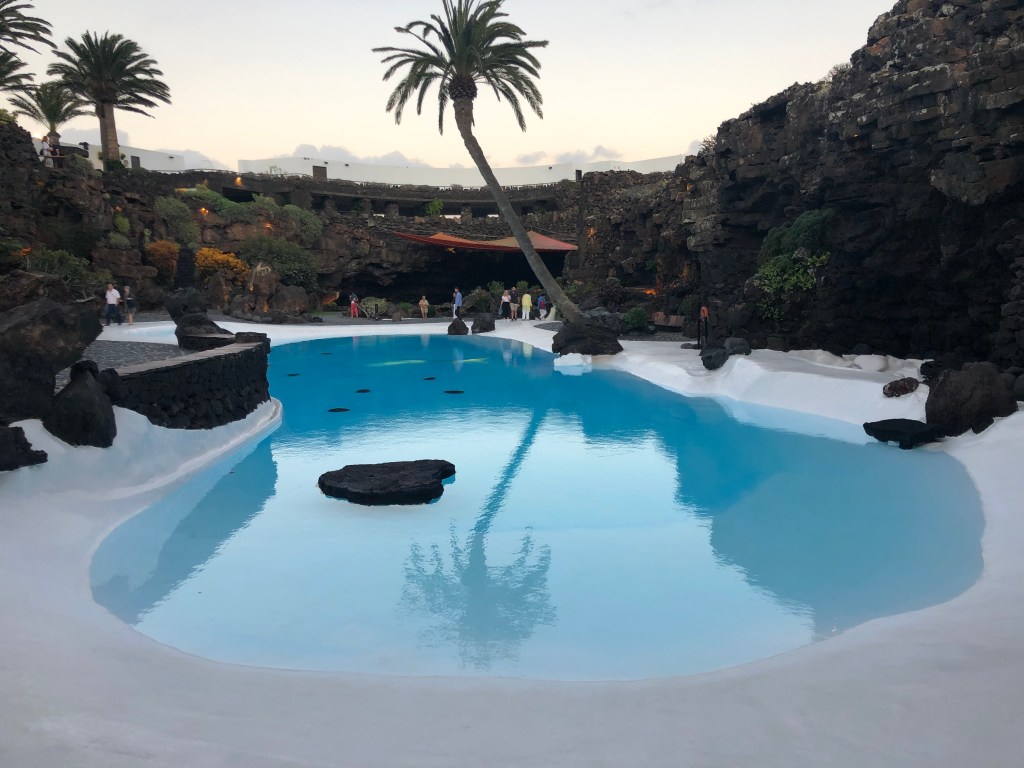
Jameos del Agua is a beautiful site designed by Manrique inside natural caves along the east coast of the island. It is a large space which includes an auditorium, two bars, a large dining area, and a large swimming pool. It is unique.

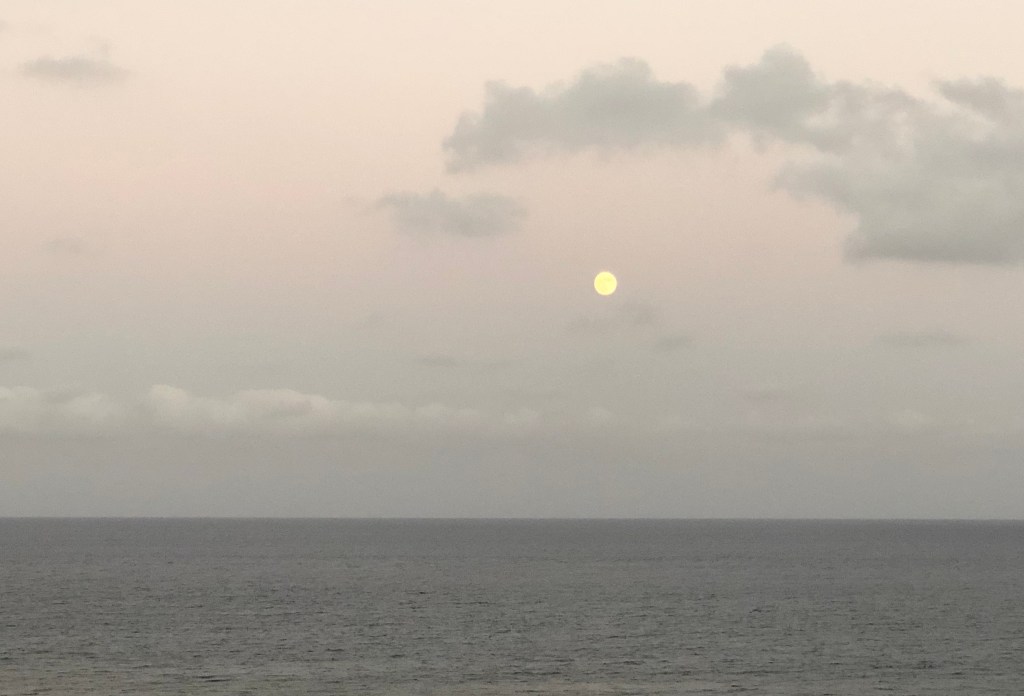
The next destination was Las Palmas on the island of Gran Canaria, which took less than 24 hours. Smooth sailing under a full moon!
GRAN CANARIA
Las Palmas Marina in Gran Canaria is the starting place of the ARC+ (Atlantic Rally for Cruisers), and in November we will sail away on our 2,700nm adventure with about 250 other sailboats. Those of us in the ARC+ will first head south to Cape Verde and then some of us will go to Saint Lucia, and others will land in Saint Vincent. We arrived a little early in Las Palmas so that we could begin all the necessary preparations while solving all the little last minute problems one by one!


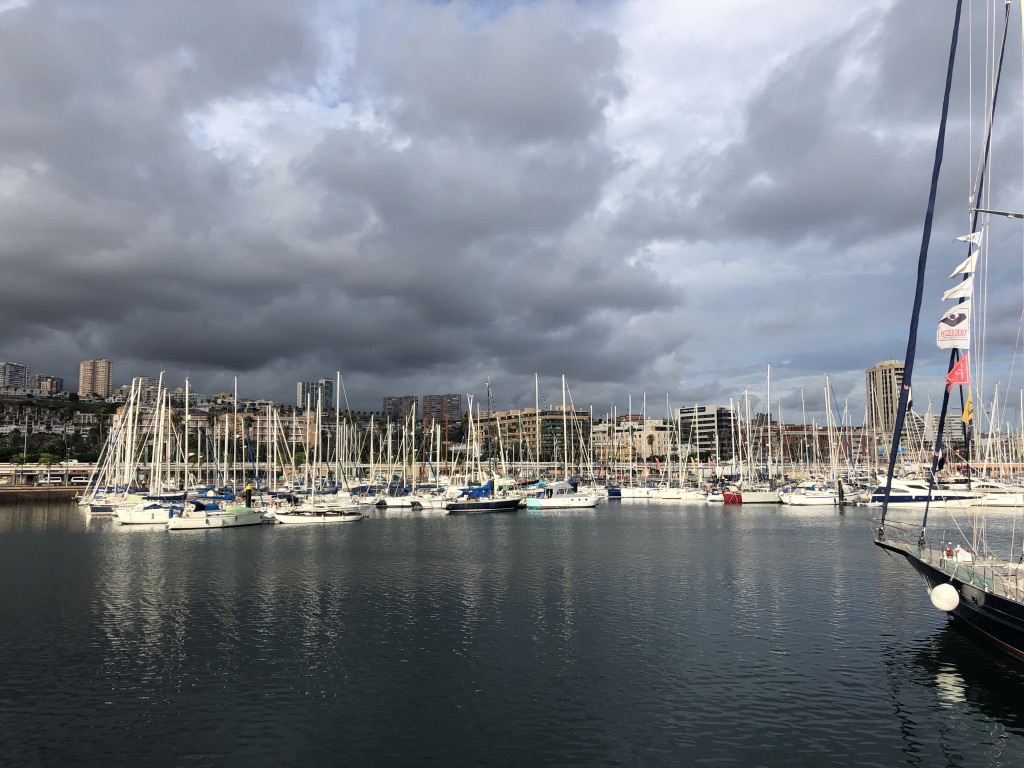
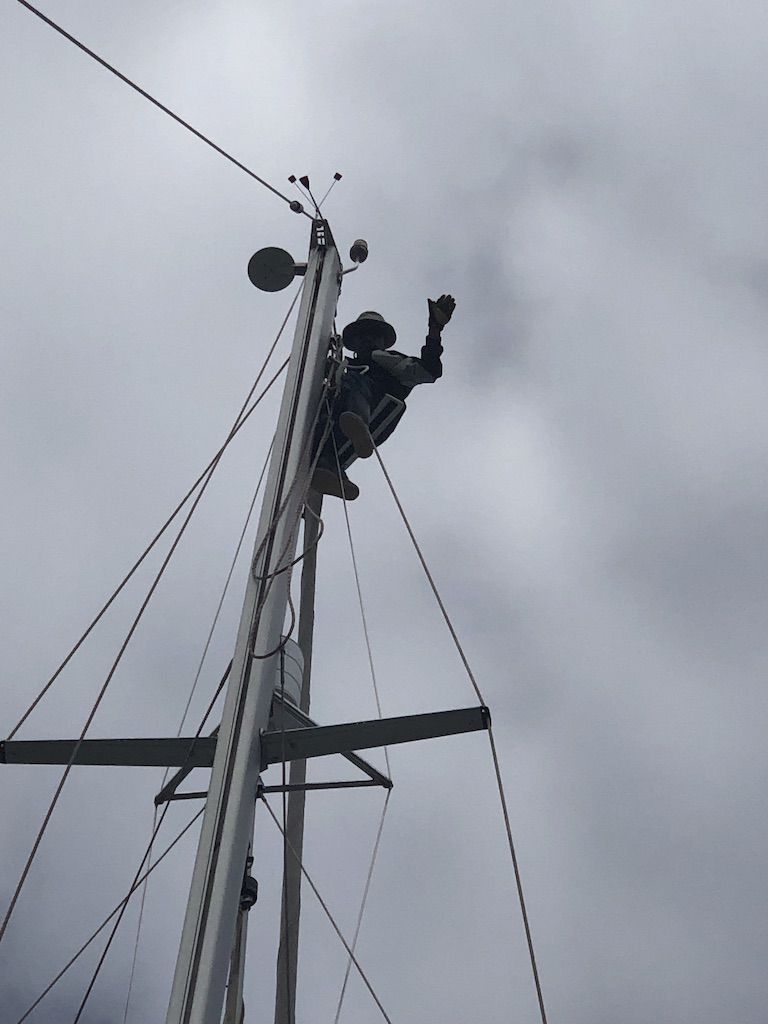
The first problem was to fix the halyard (main line holding the sail to the mast) for the BWR. We also had to change the oil in the main engine and the dinghy engine.
Las Palmas, Gran Canaria
Among the places to see in Vegueta (the old town) of Las Palmas, we especially enjoyed The Museum of the Canary Islands and the Columbus House which houses wonderful exhibits of the various voyages of Columbus including some of his drawings and journals.
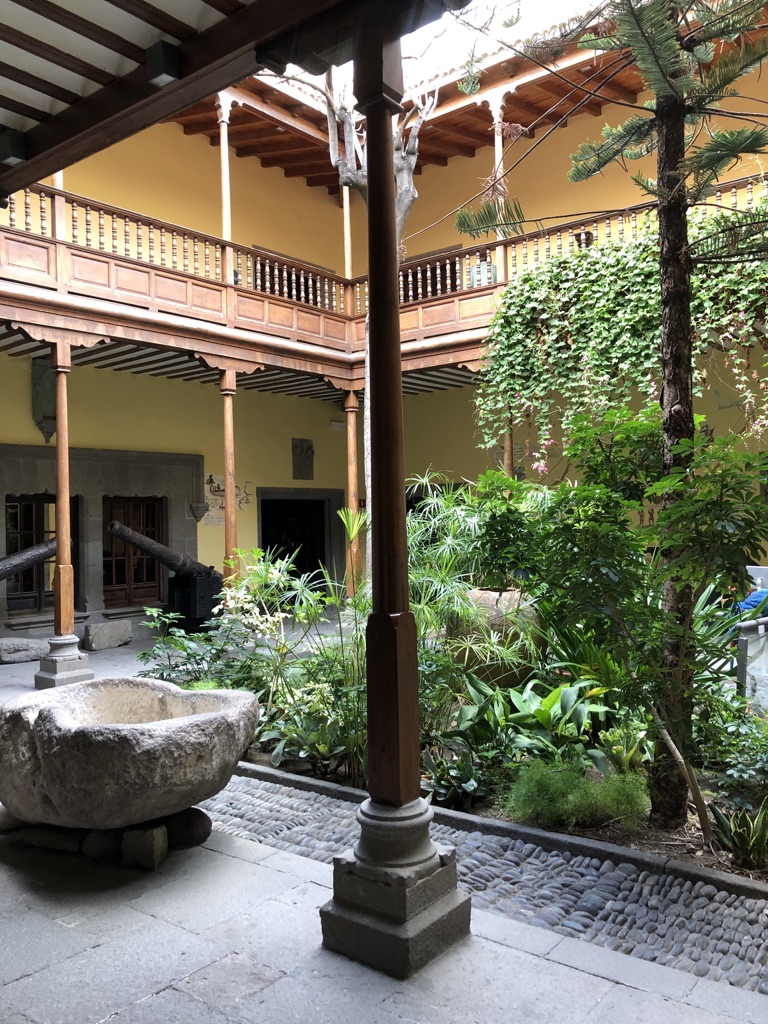
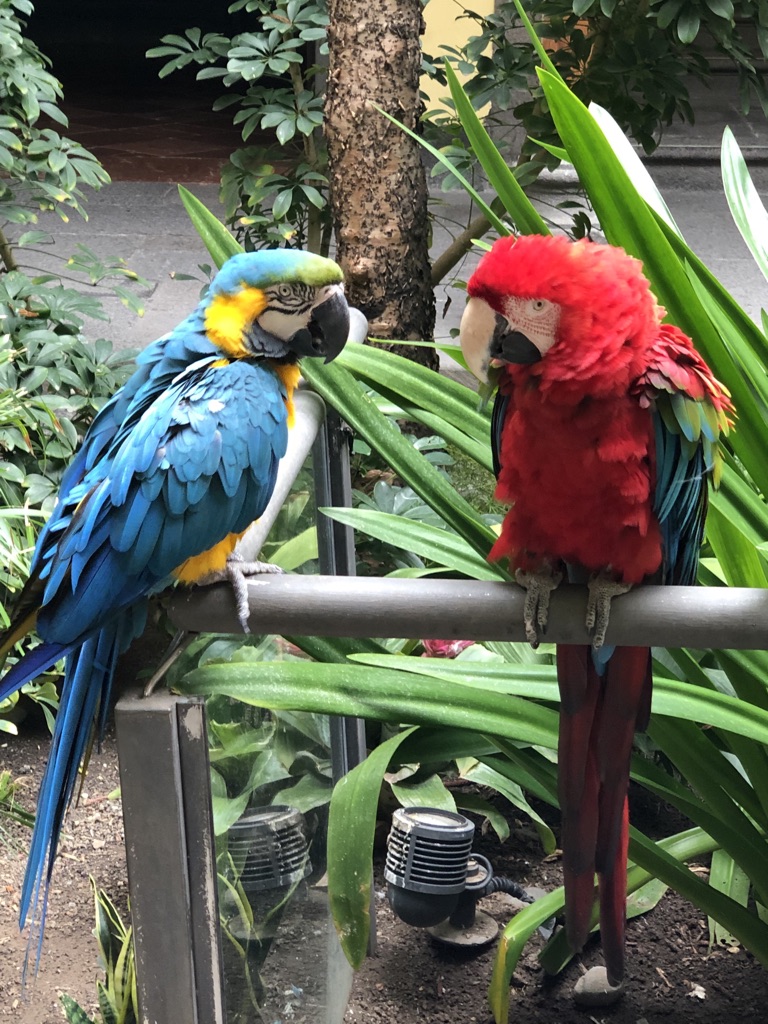
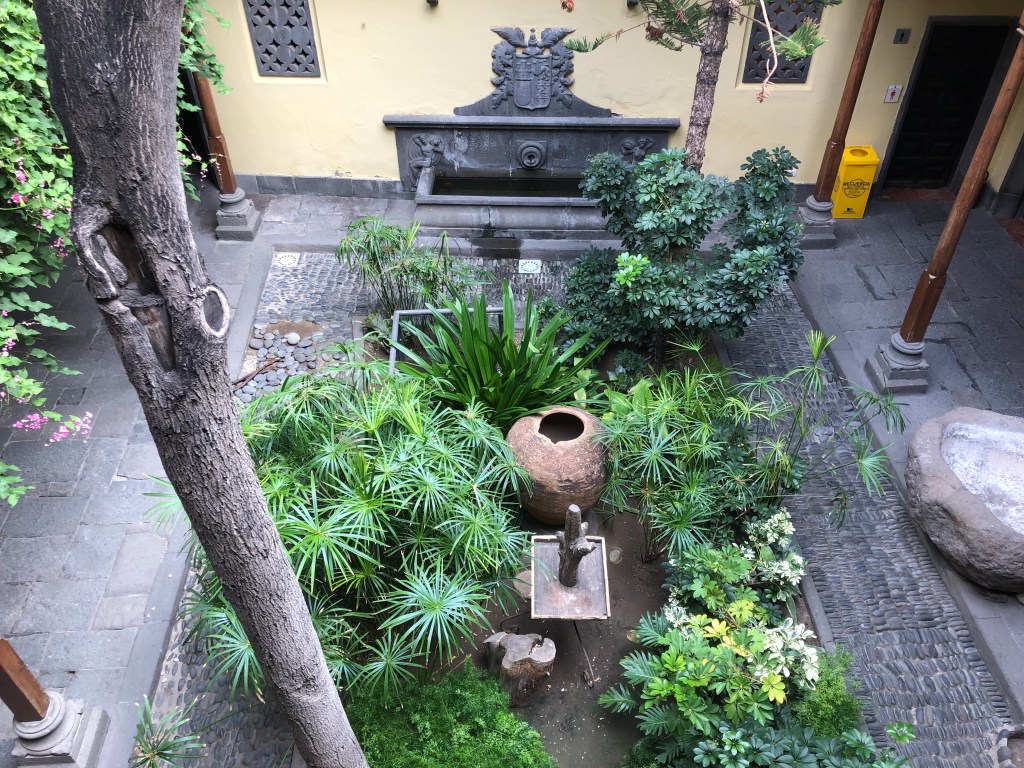

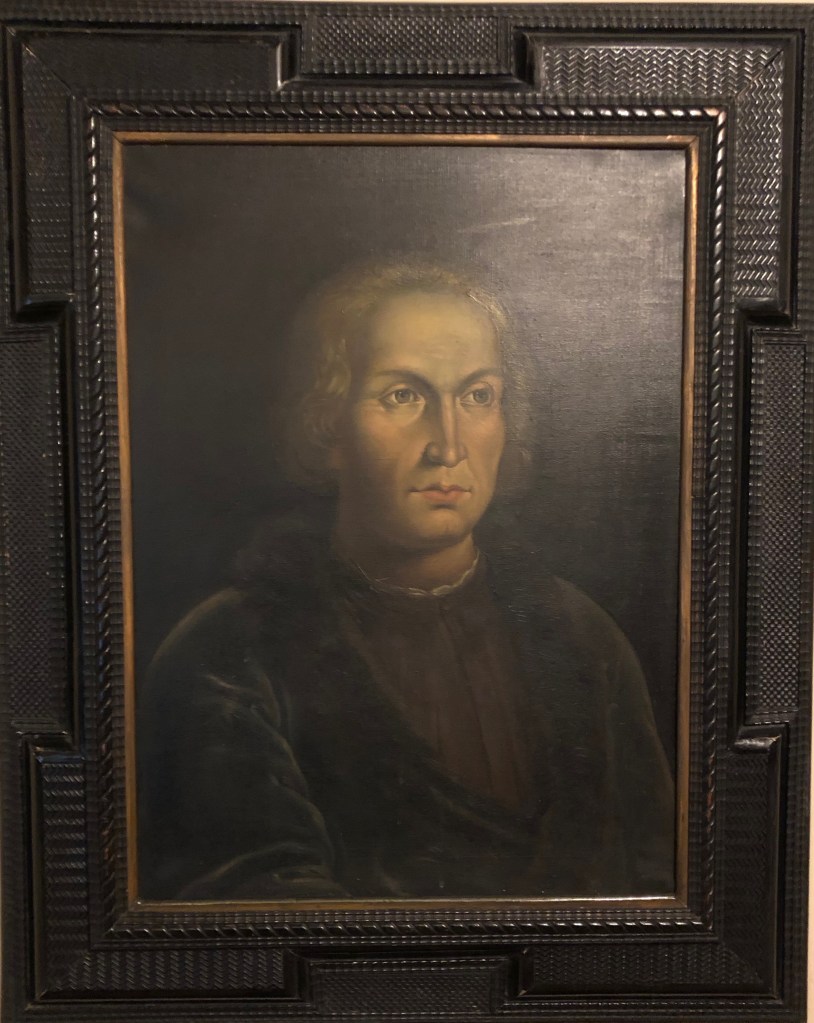
The Museum of the Canary Islands exhibits ethnographic and archaeologic exhibits of pre-hispanic culture. It has an amazing collection of skulls some of them with signs of healed trepanation.
We also visited the Cathedral of Santa Ana which is guarded by eight large dogs. According to Roman history, the island of Gran Canaria had ‘vast multitudes of very large dogs’. The square in front of the Cathedral is full of life: children playing, people walking and sitting on benches.
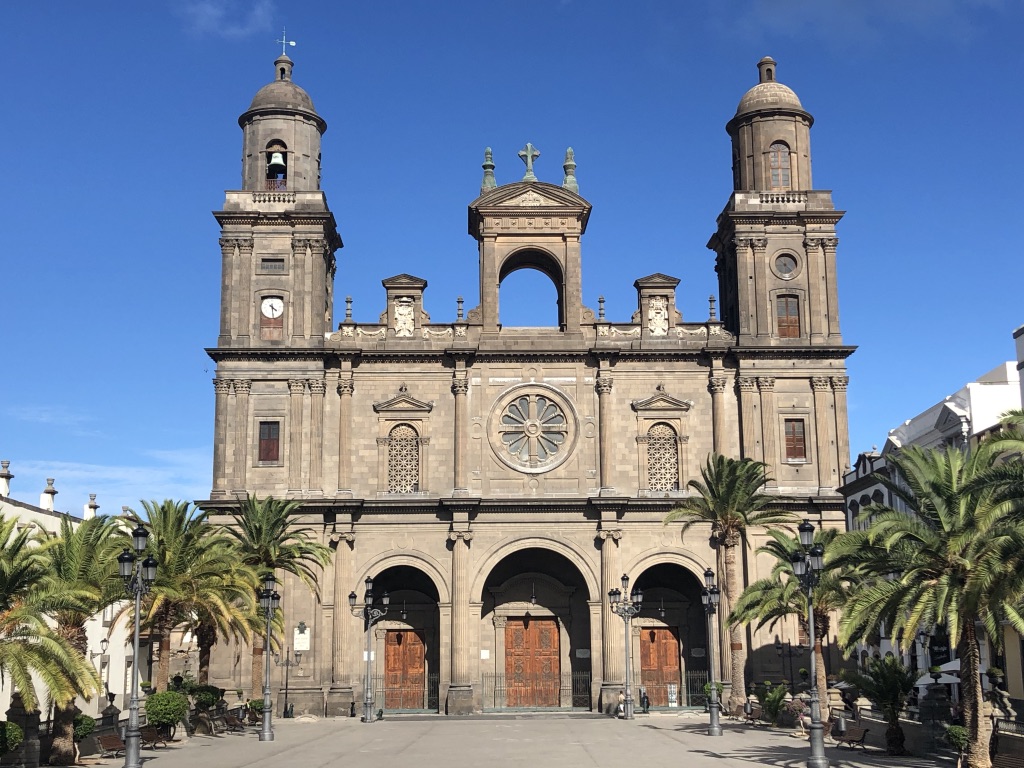
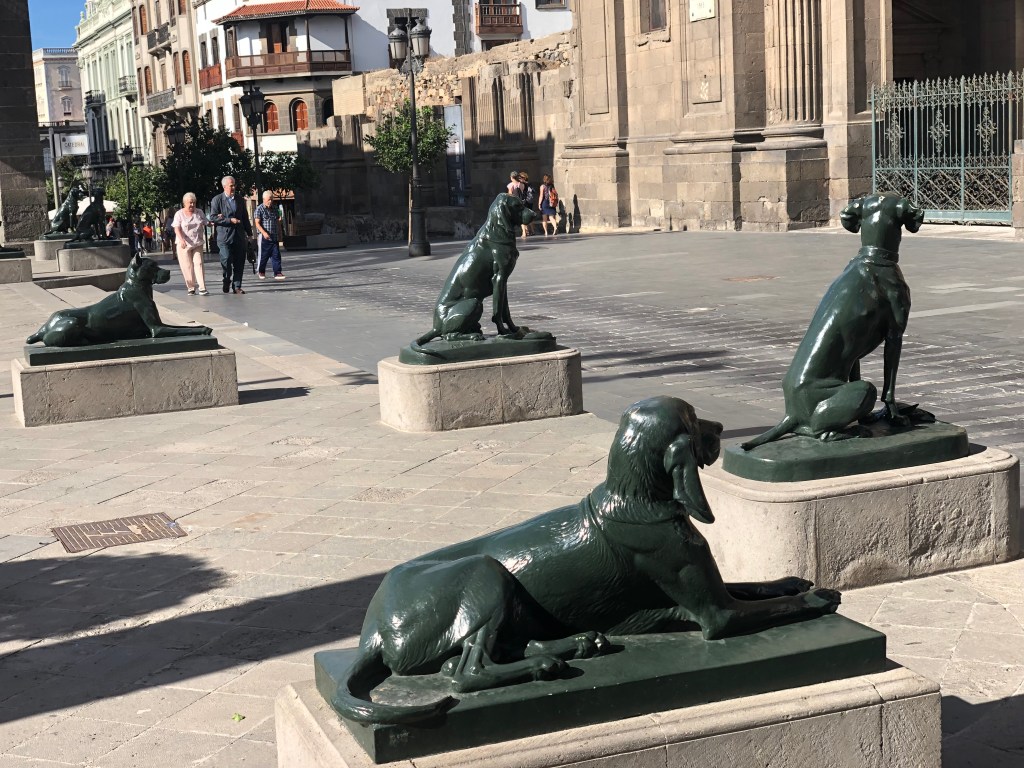
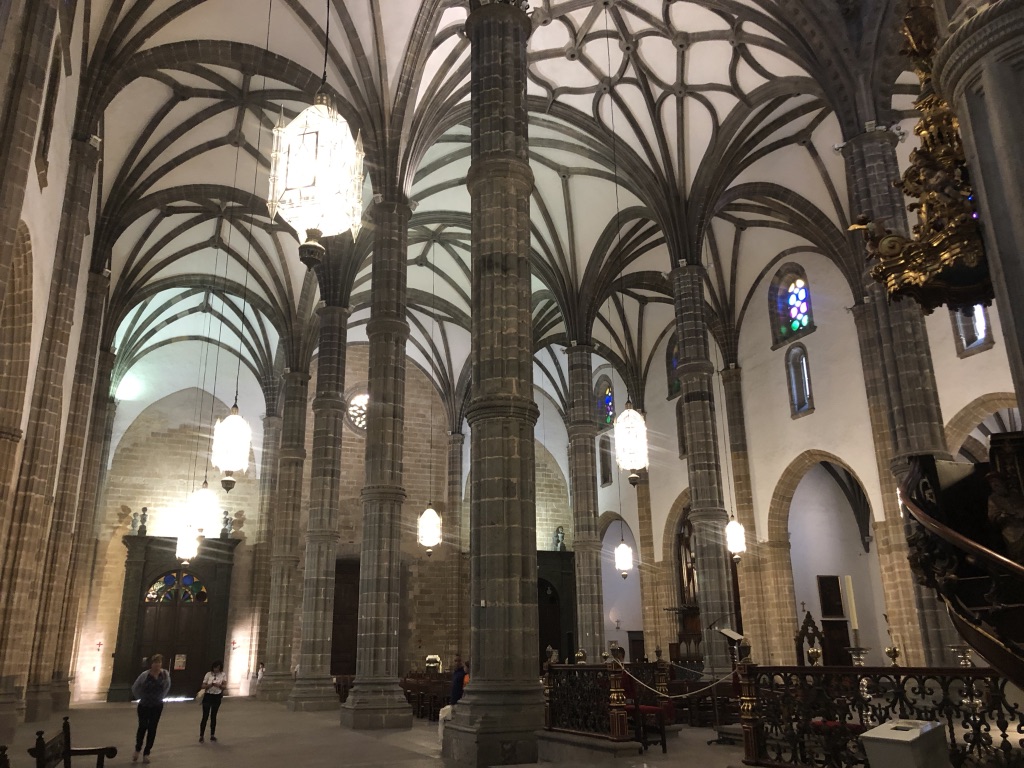
Around Las Palmas
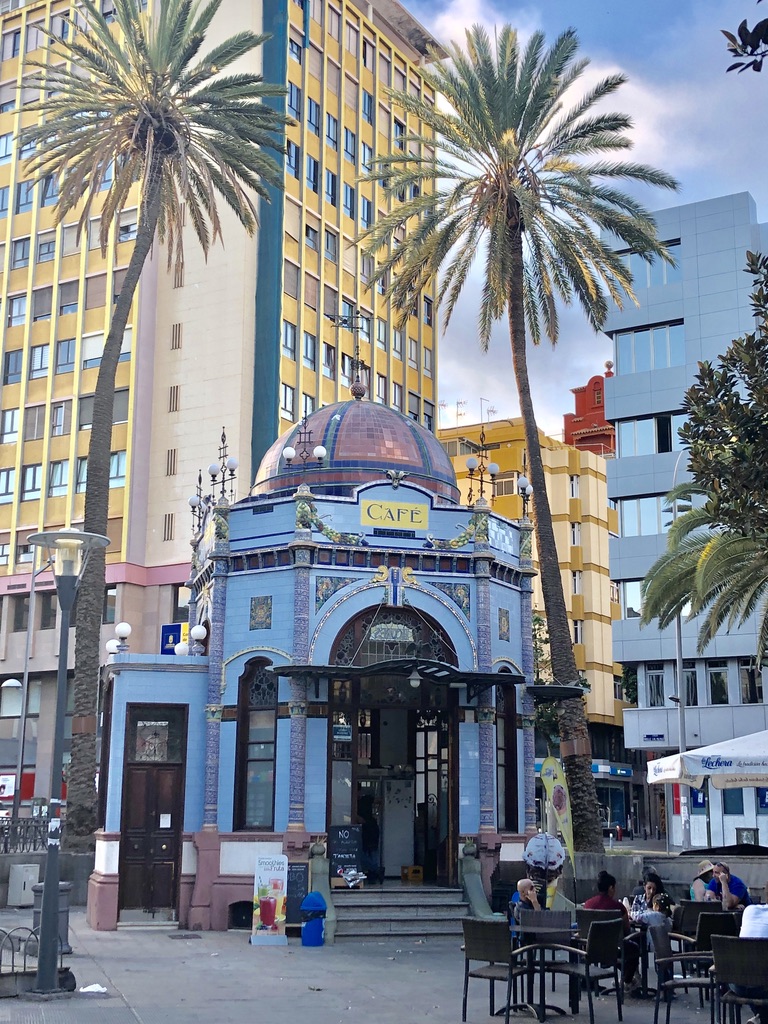
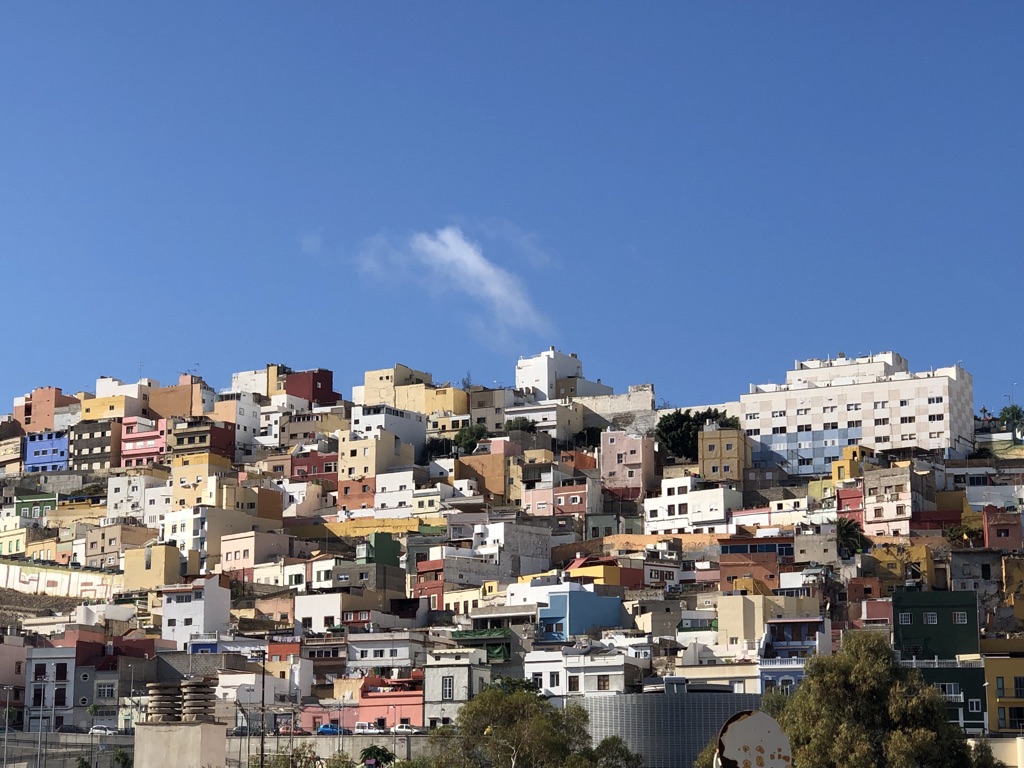
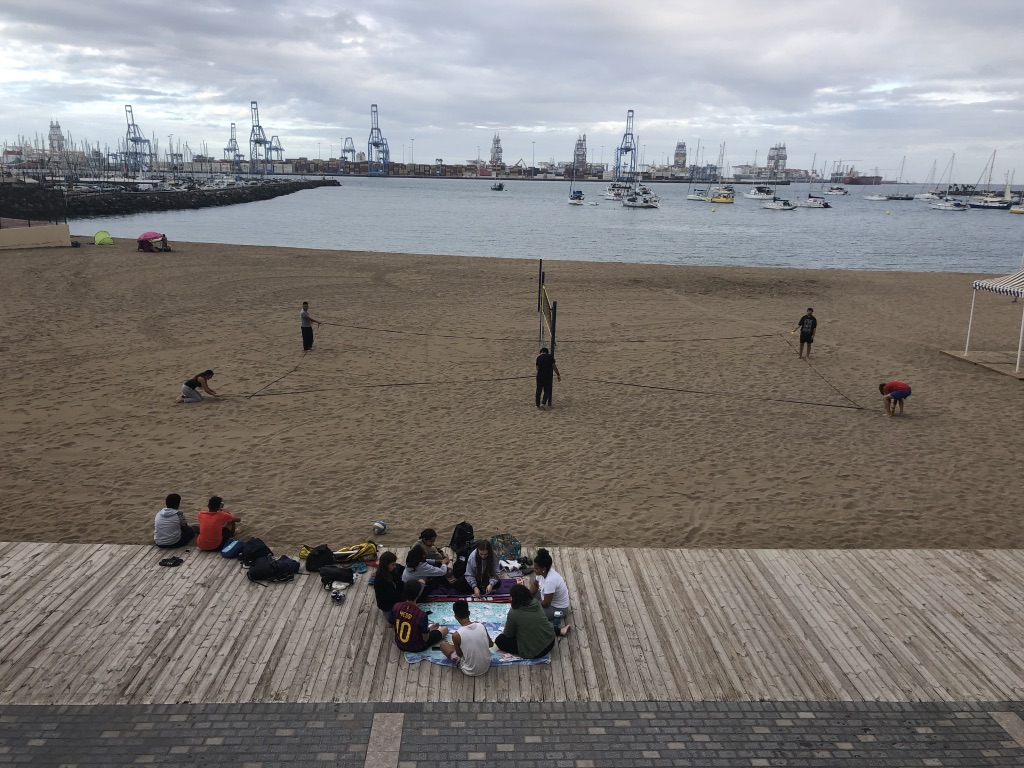
TENERIFE
Tenerife is the largest of the Canary Islands and was an easy 24 hour passage from Las Palmas. The volcano Mount Teide (last eruption was in the early 1900s) is also the highest point in Spain, and the highest point above sea level in the Atlantic. We had a lovely sail from Las Palmas and were able to test our newly replaced halyard and try out our new Code Zero sail which is used for light winds from the bow. Giorgio was very happy!
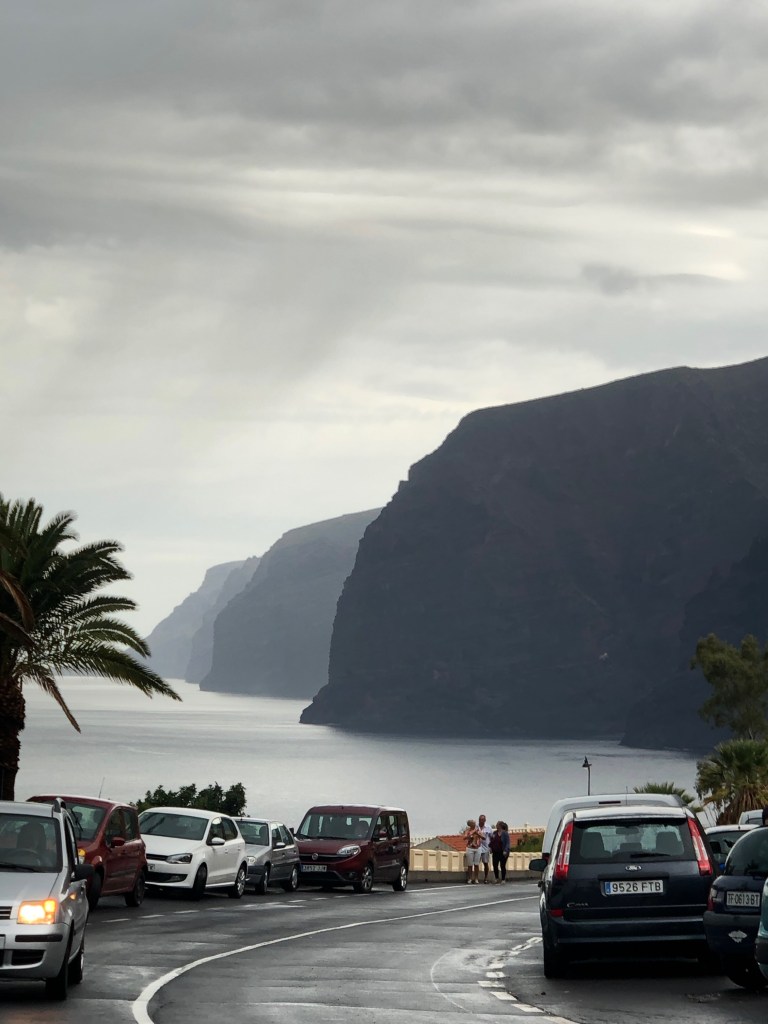
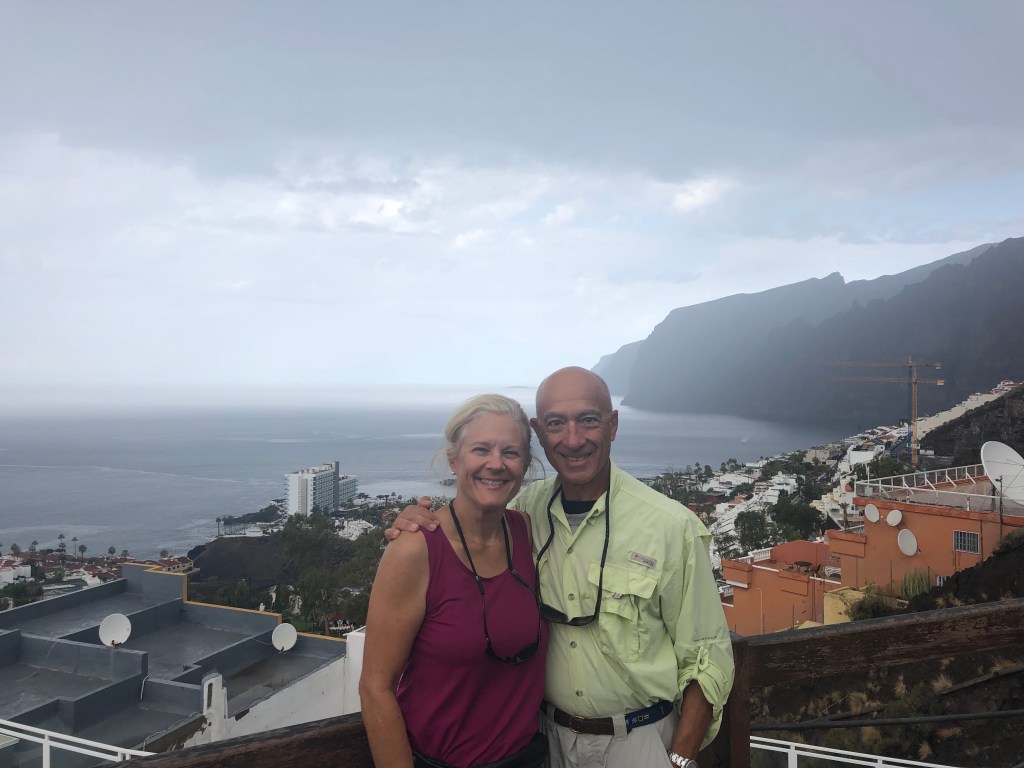
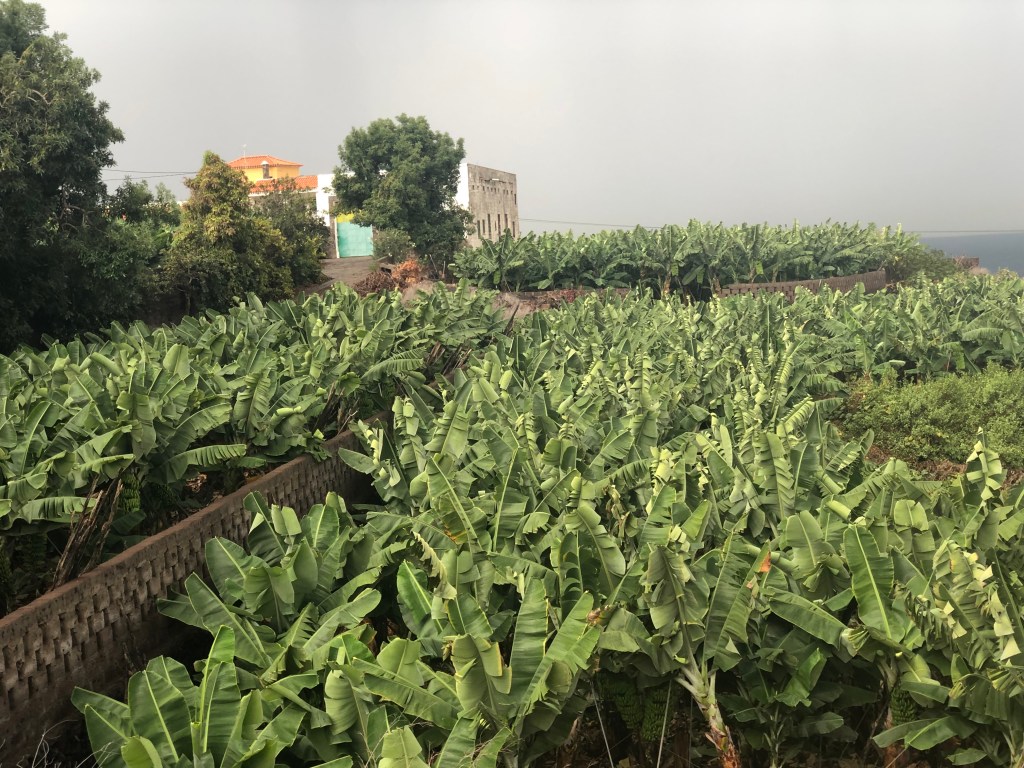
We rented a car at the local airport for two days and were able to get a good feel of the island despite the rainy weather. We visited the rock cliffs of Los Gigantes and saw lush fields of banana trees along the way.
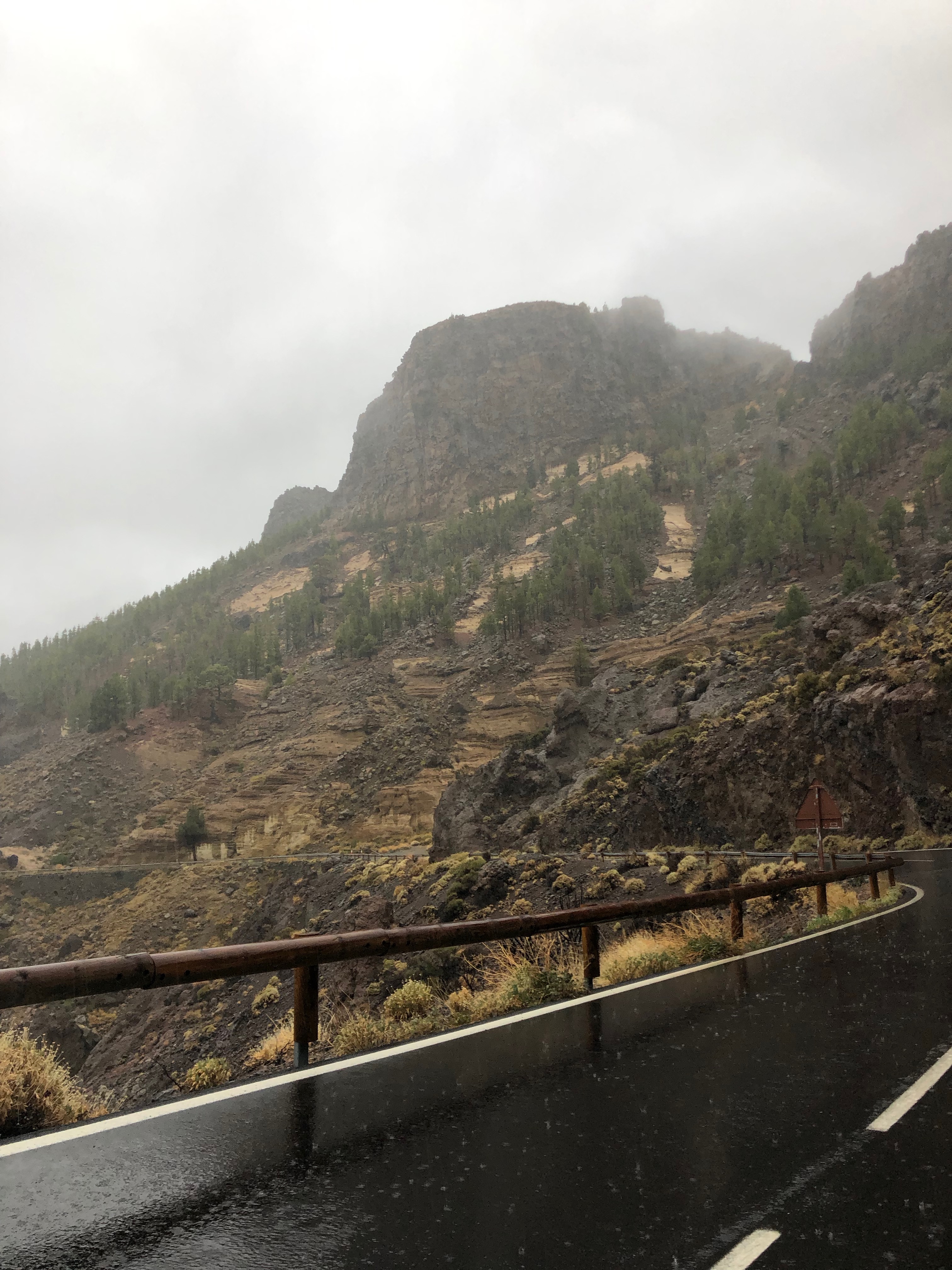
Our drive up and over Mount Teide had moments of limited visibility due to the rain, wind and mist but we were grateful to have a warm and dry place in the car to sit and watch!
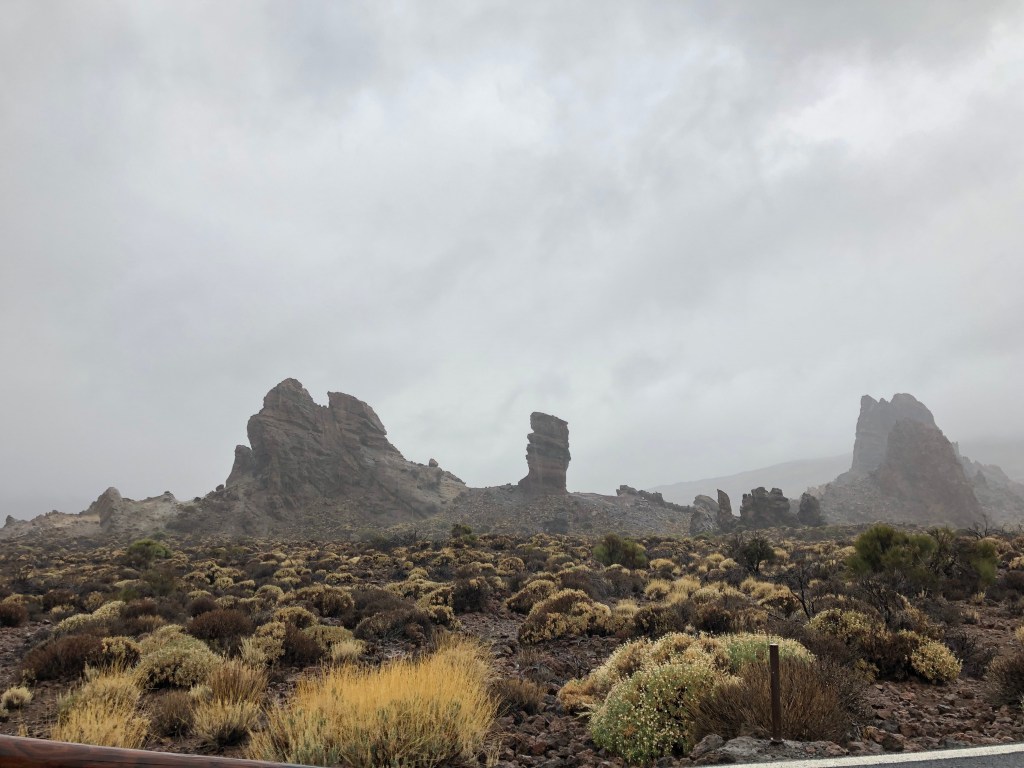
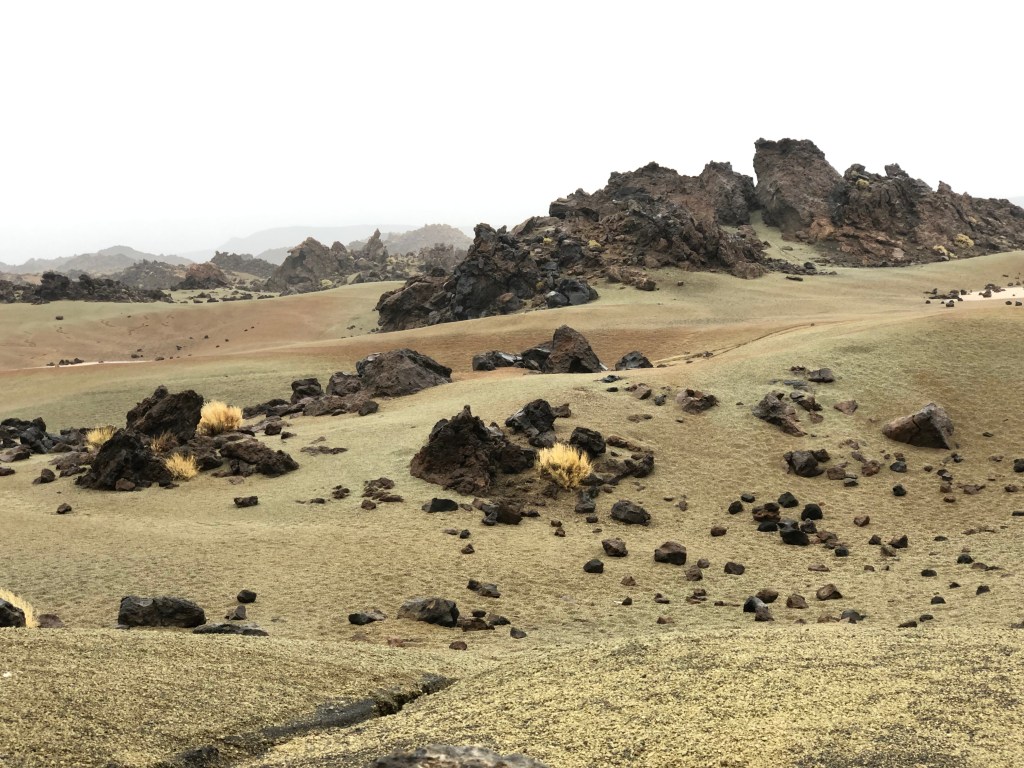

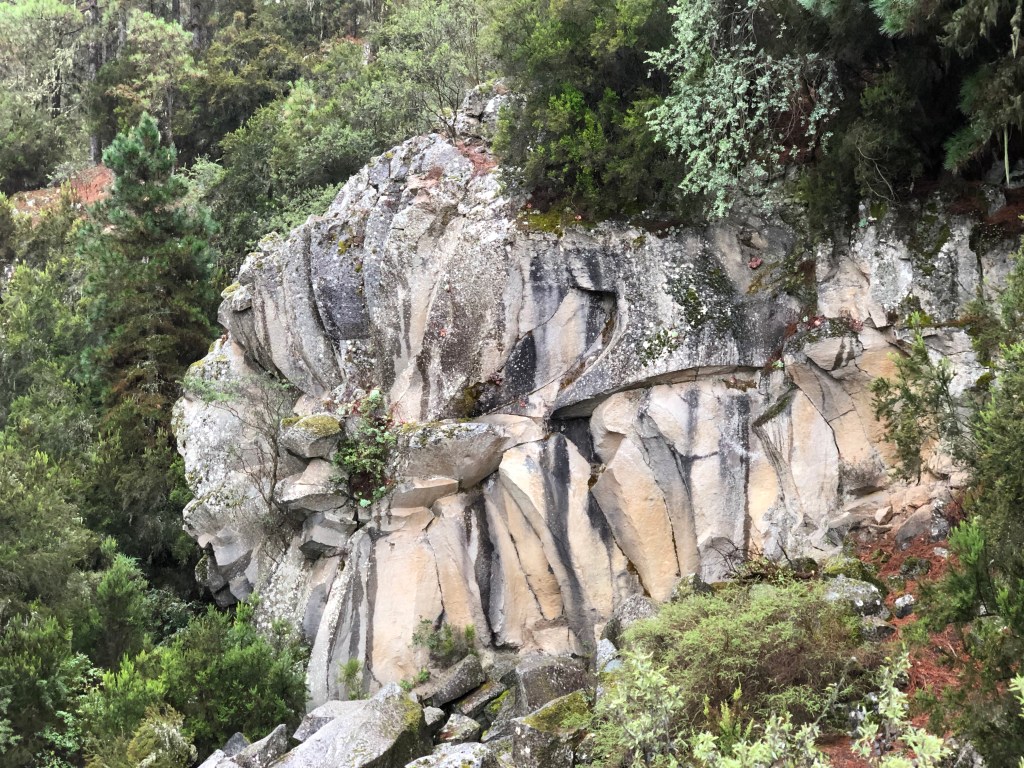
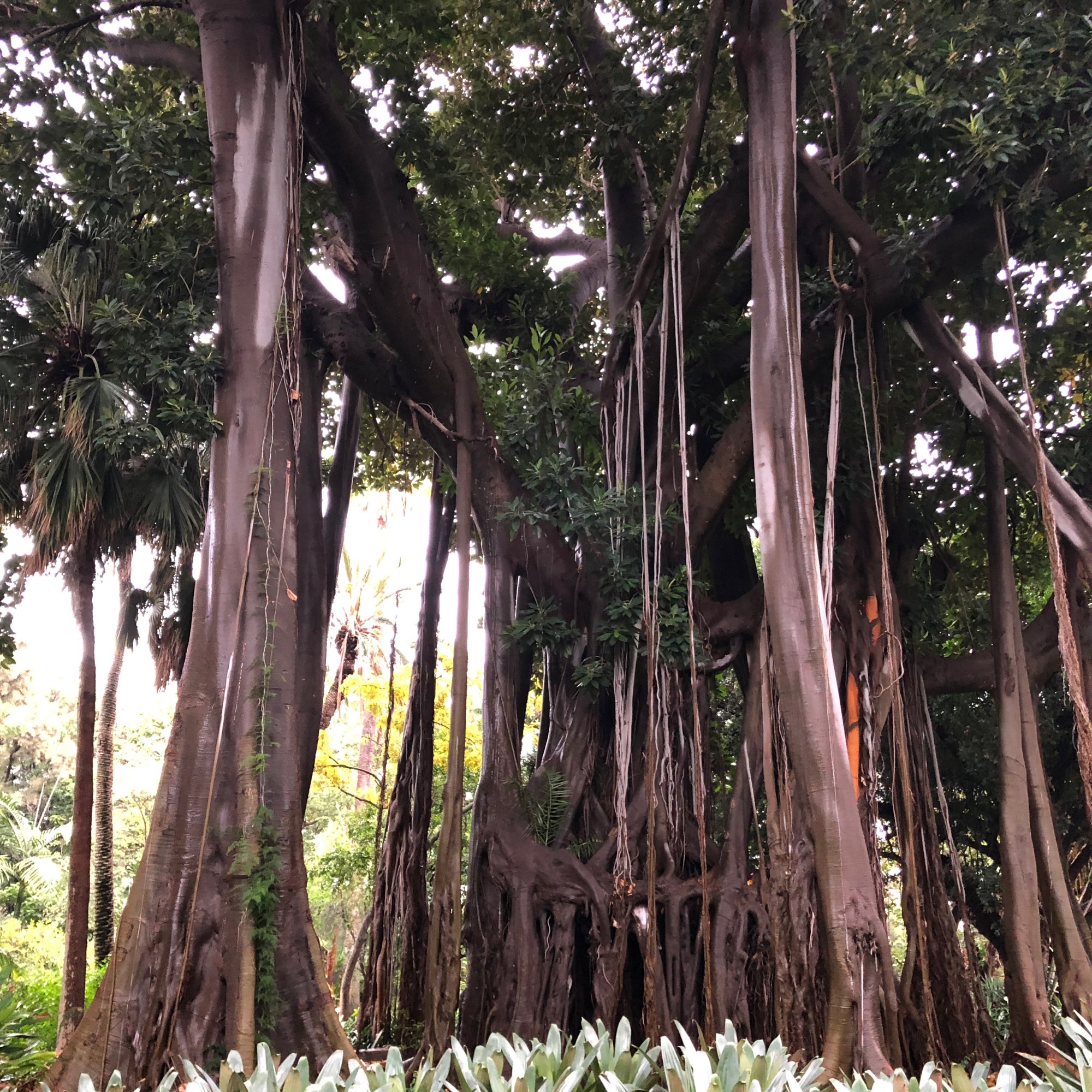
We descended into Puerto de la Cruz on the northern coast. An 18th century fort and a 17th century customs house are relevant in the old town, but the most impressive place we visited there was a 18th century botanical garden, The ‘Acclimatization Garden of Orotava’ where trees from the Caribbean were brought here to adapt to a different European climate. The garden is beautifully maintained and still very active as an international scientific institution.
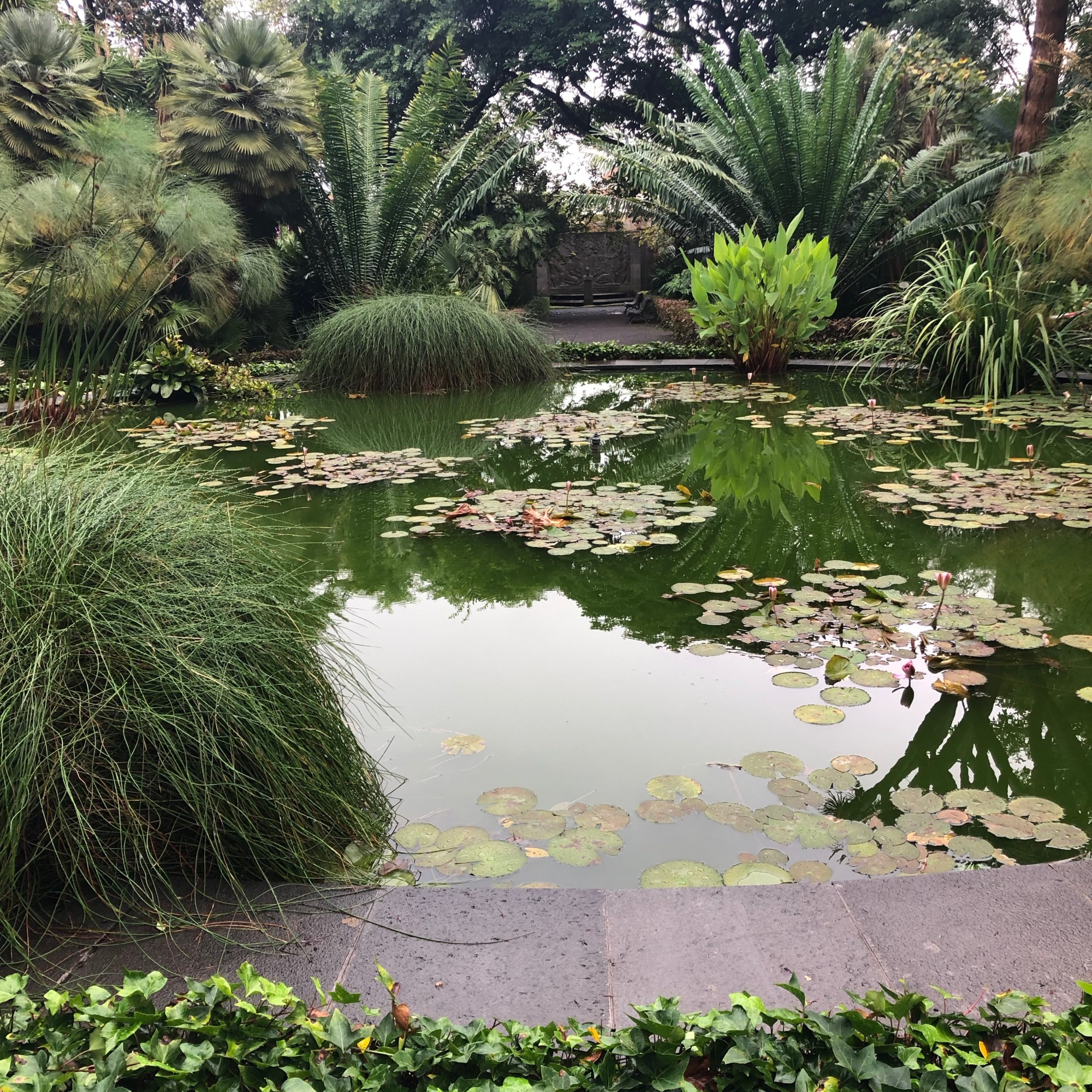
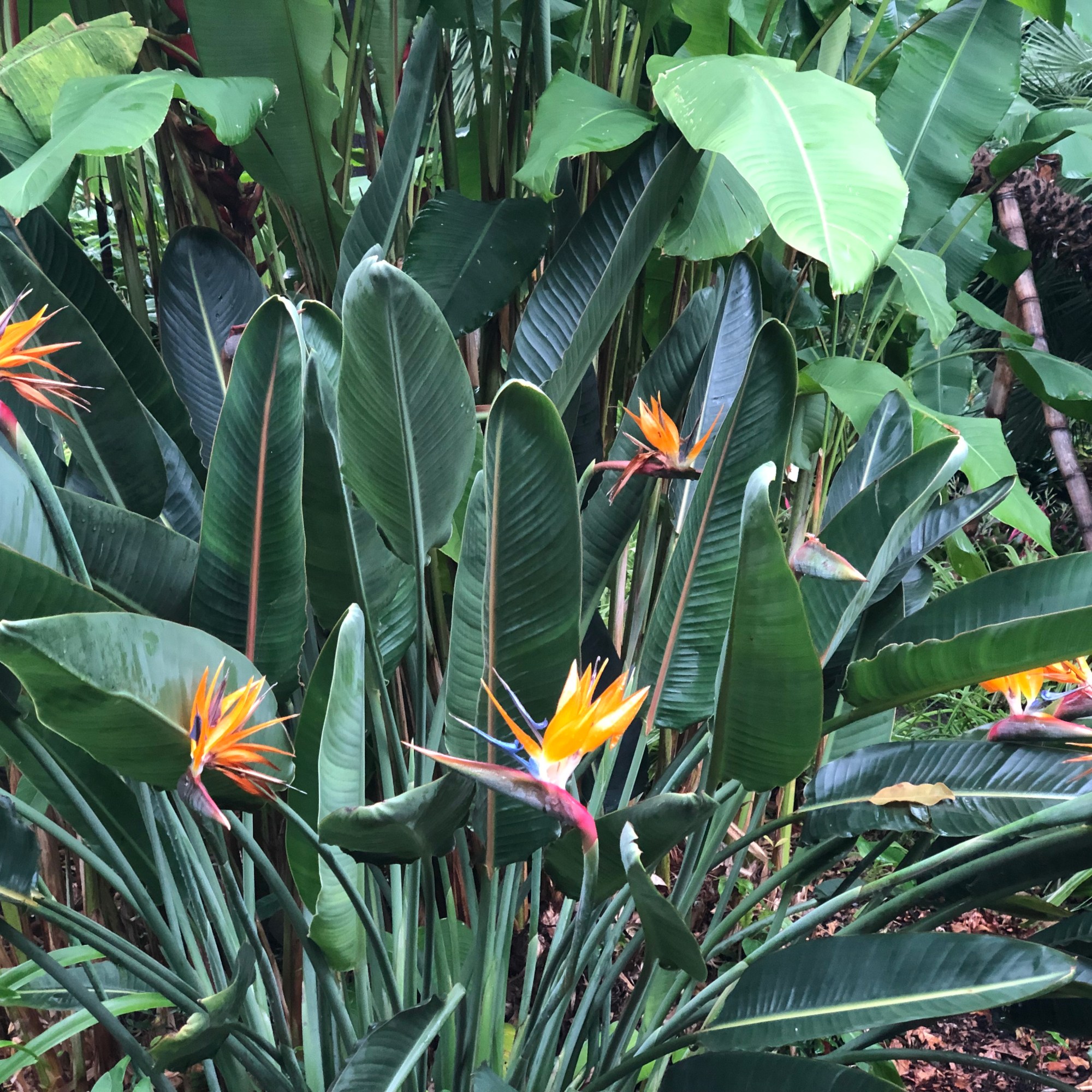
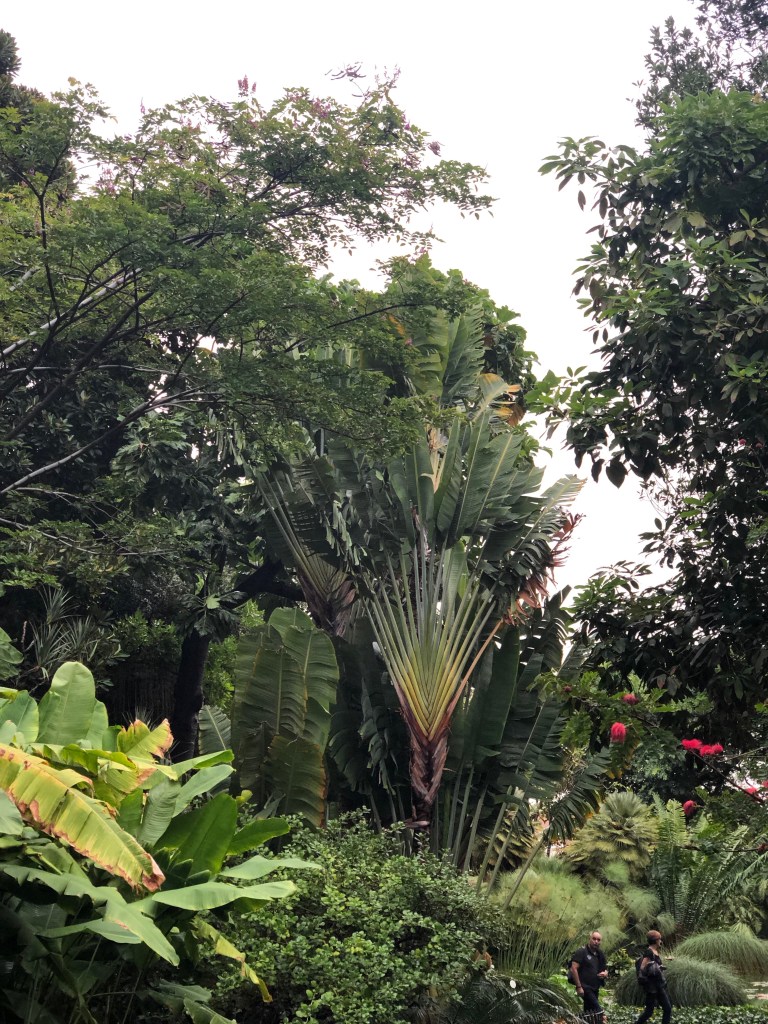
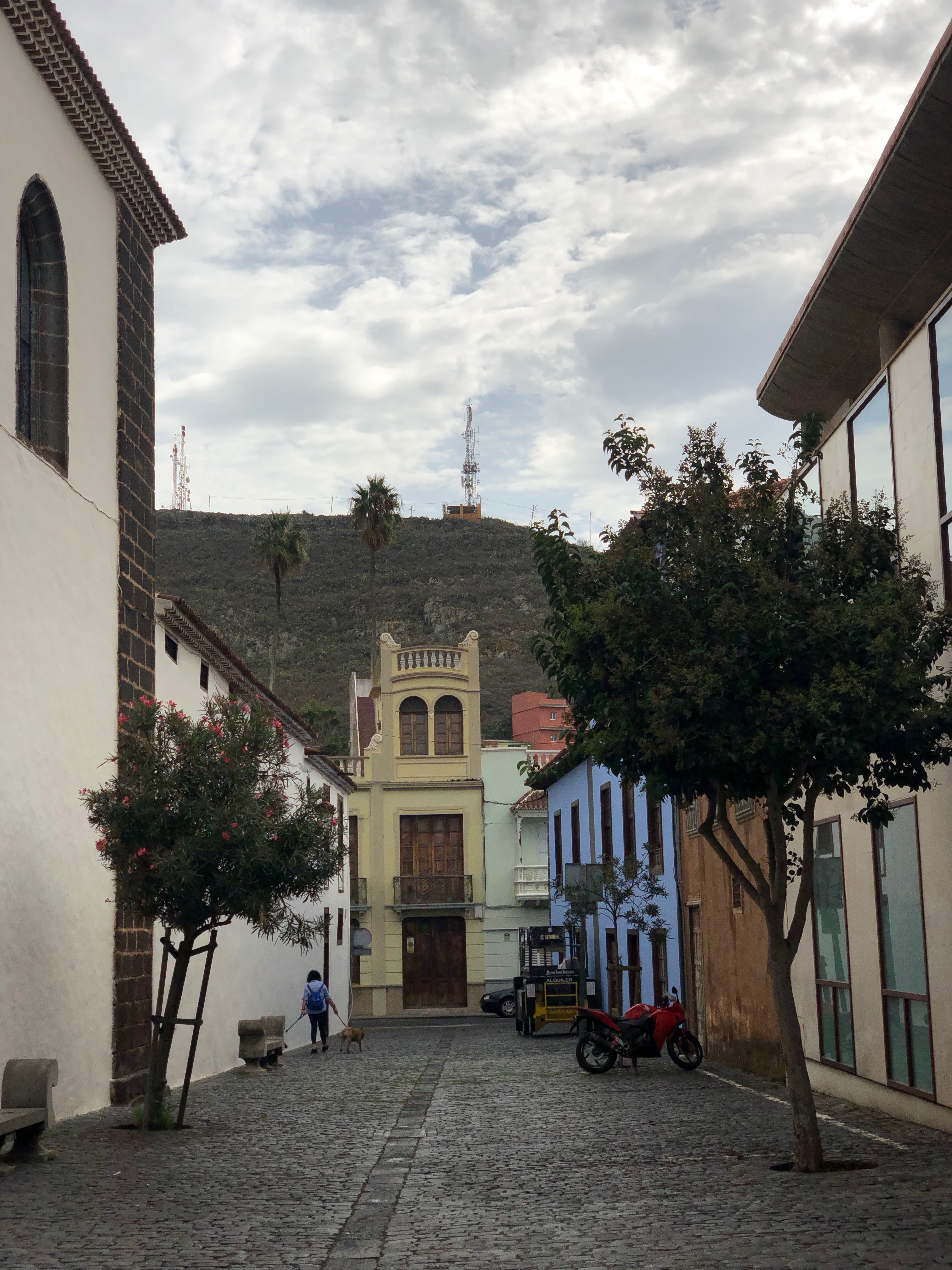
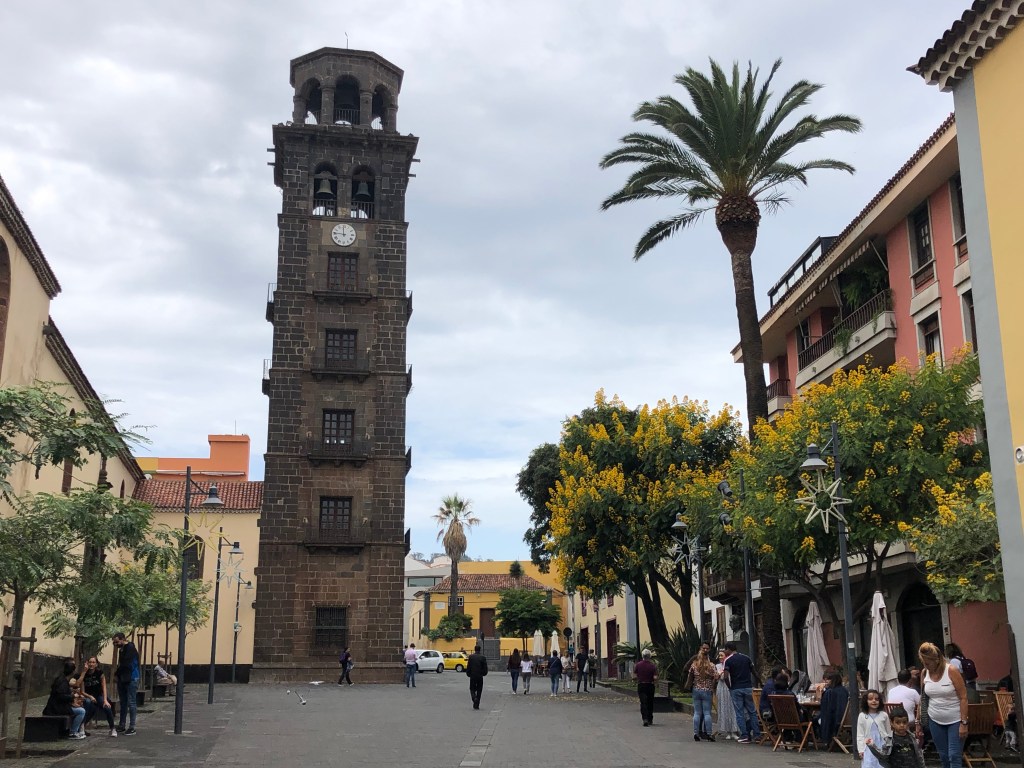
La Laguna, in the north, was the ancient capital of the Canaries and is the home of the first university on the islands, The University of La Laguna. Its historical center was declared a UNESCO World Heritage site in 1999 and is meticulously maintained with beautiful buildings, parks and churches.
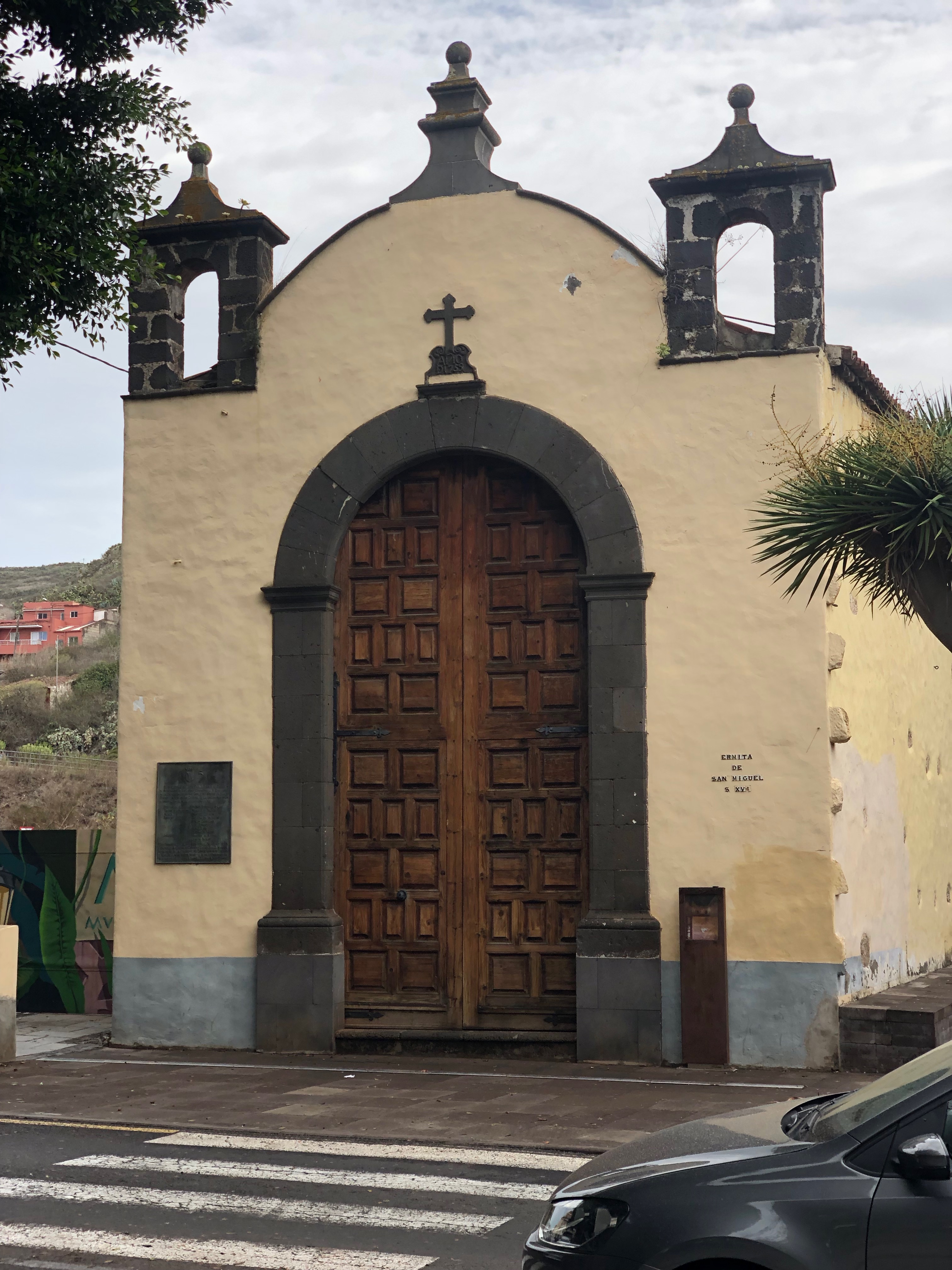
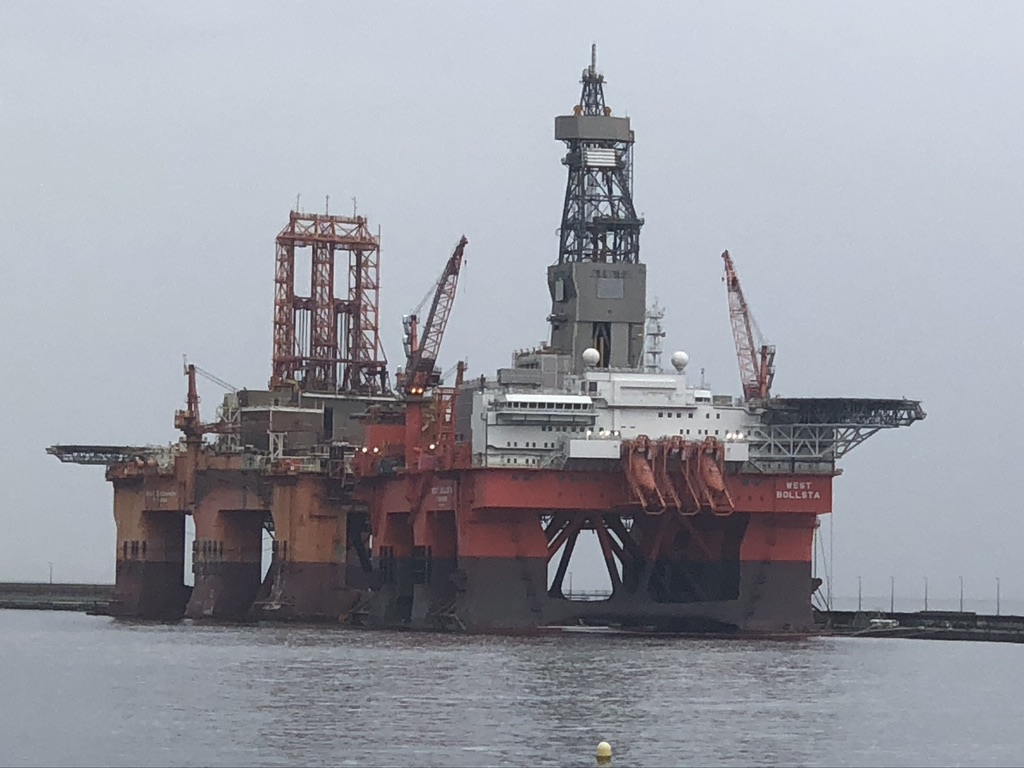
Santa Cruz is the capital and the largest city on the island. The ports along the harbor are filled with giant ships and oil platforms getting serviced.
It is also home to the Tenerife Auditorium which was designed by a Spanish architect and completed in 2003.

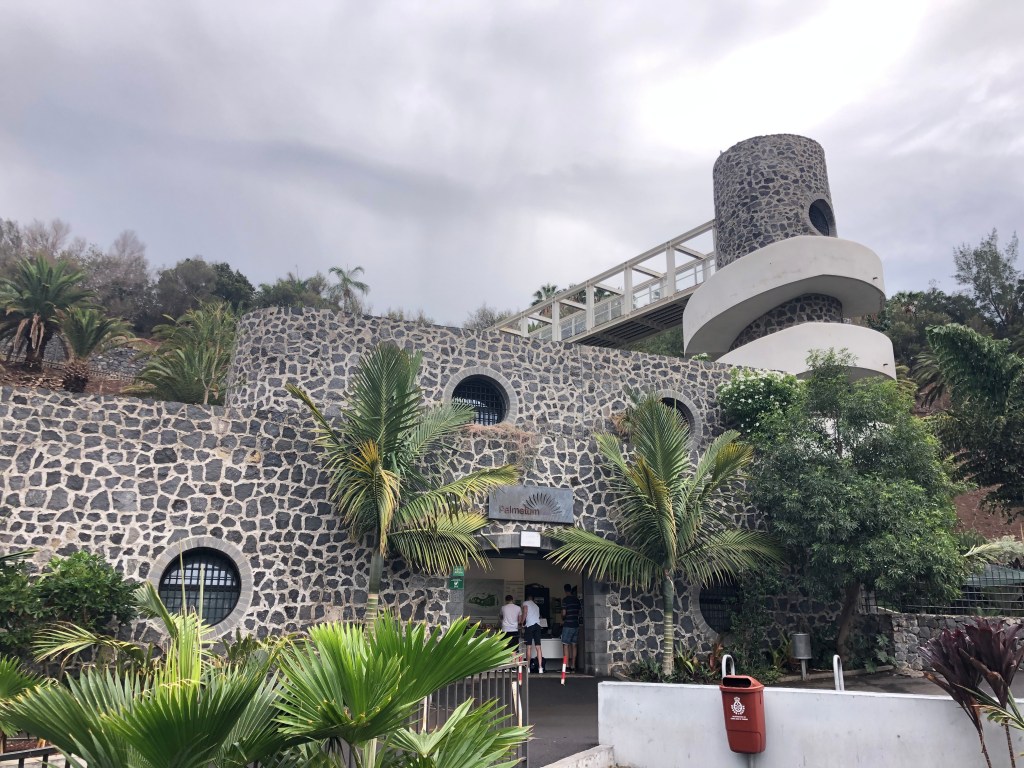
The most interesting place we visited here was the Palmetum, a botanical garden specializing in palm trees, which was transformed from a landfill in the late 1990s. The transformation of such an eyesore into a lush beautiful garden filled with birds and butterflies was inspirational to observe.
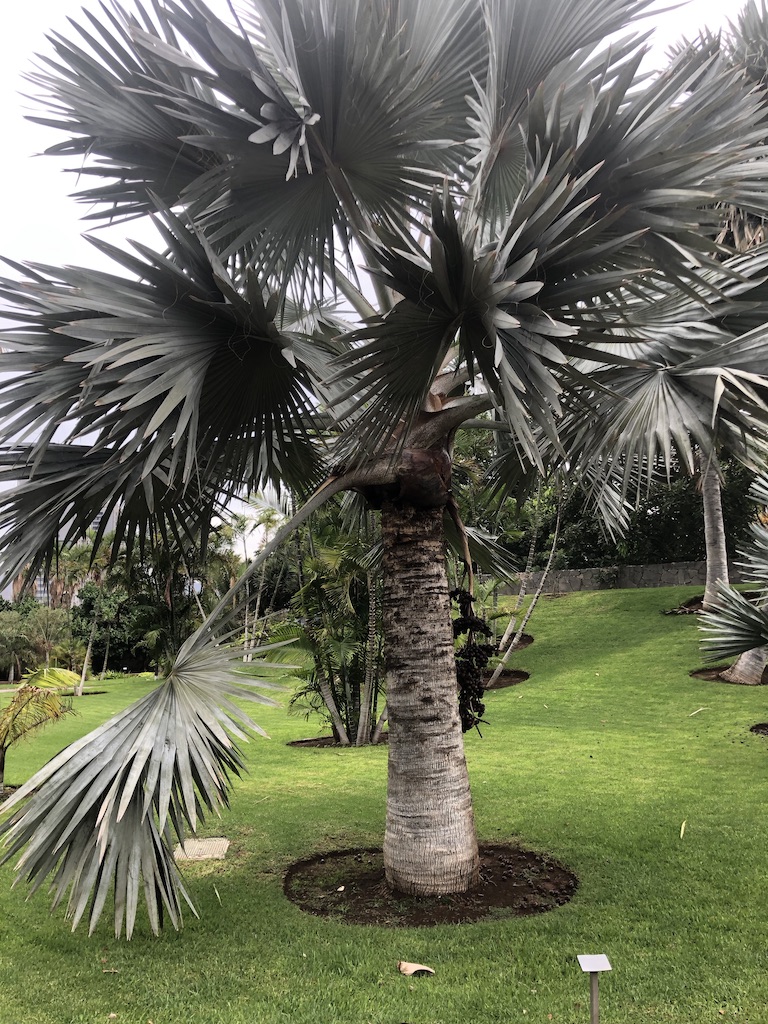
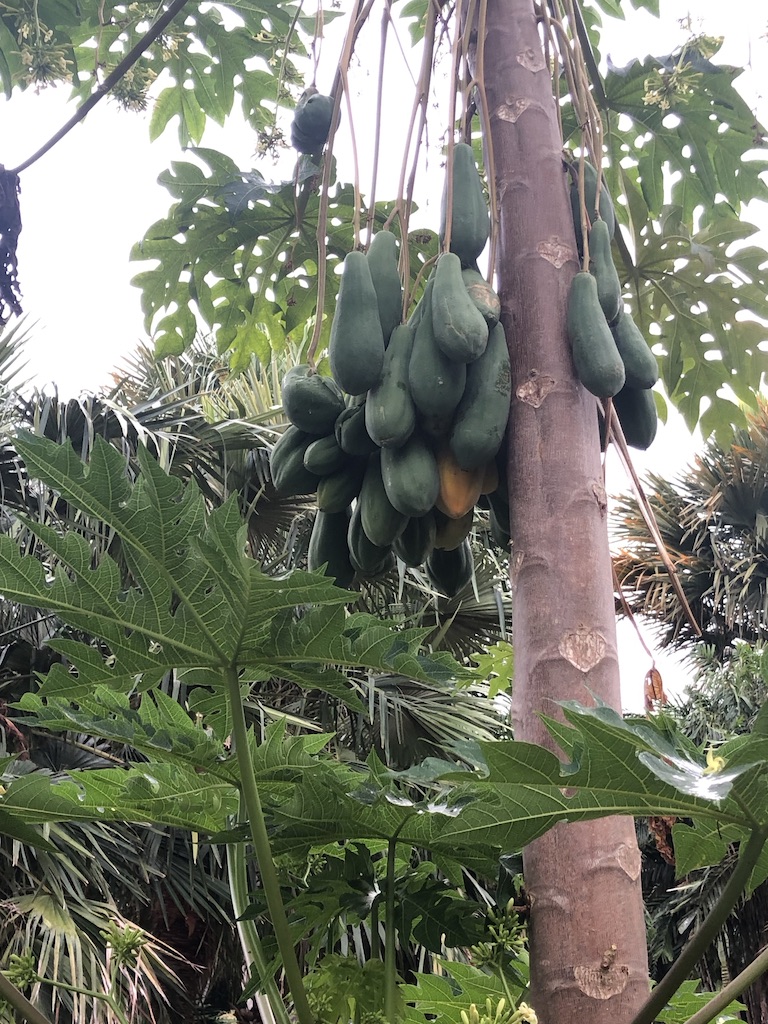
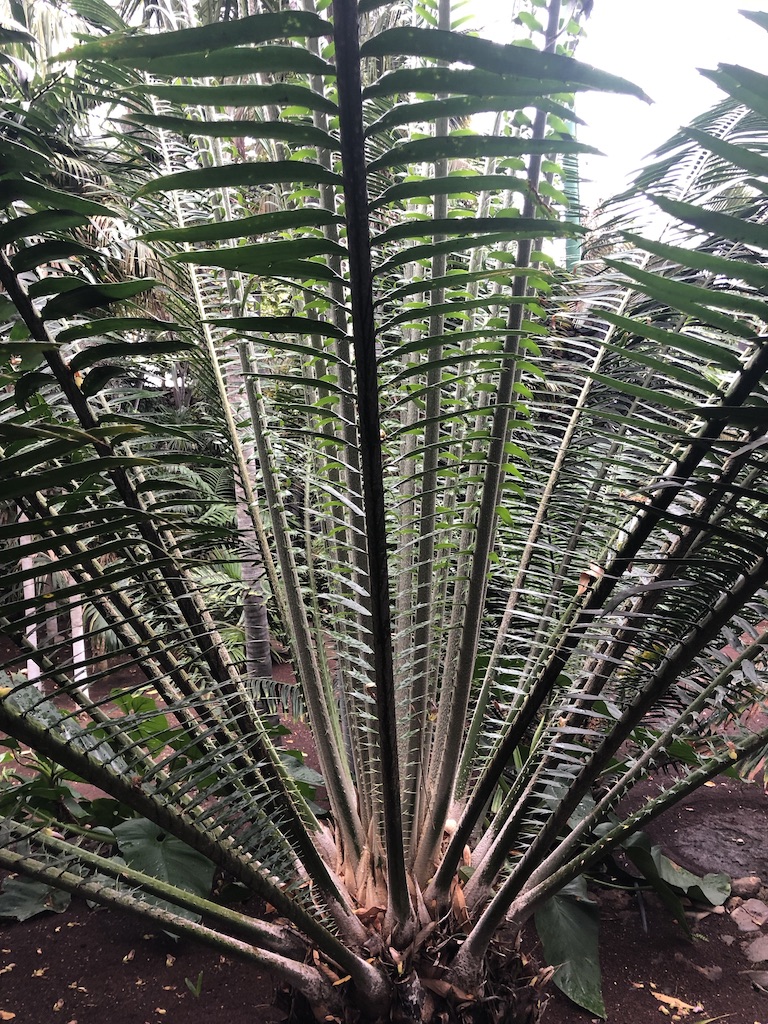
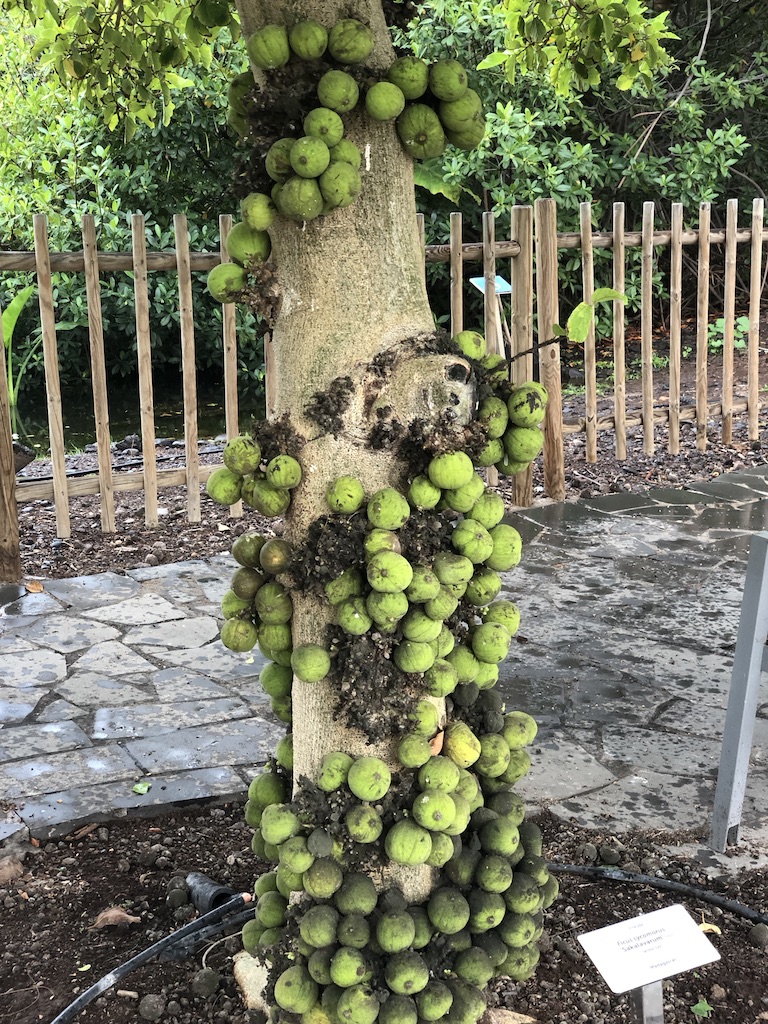
The southern coastline had miles and miles of wind farms. These giant white structures are imposing but graceful as the elegant wings spin gently.

ARC Final Preparations
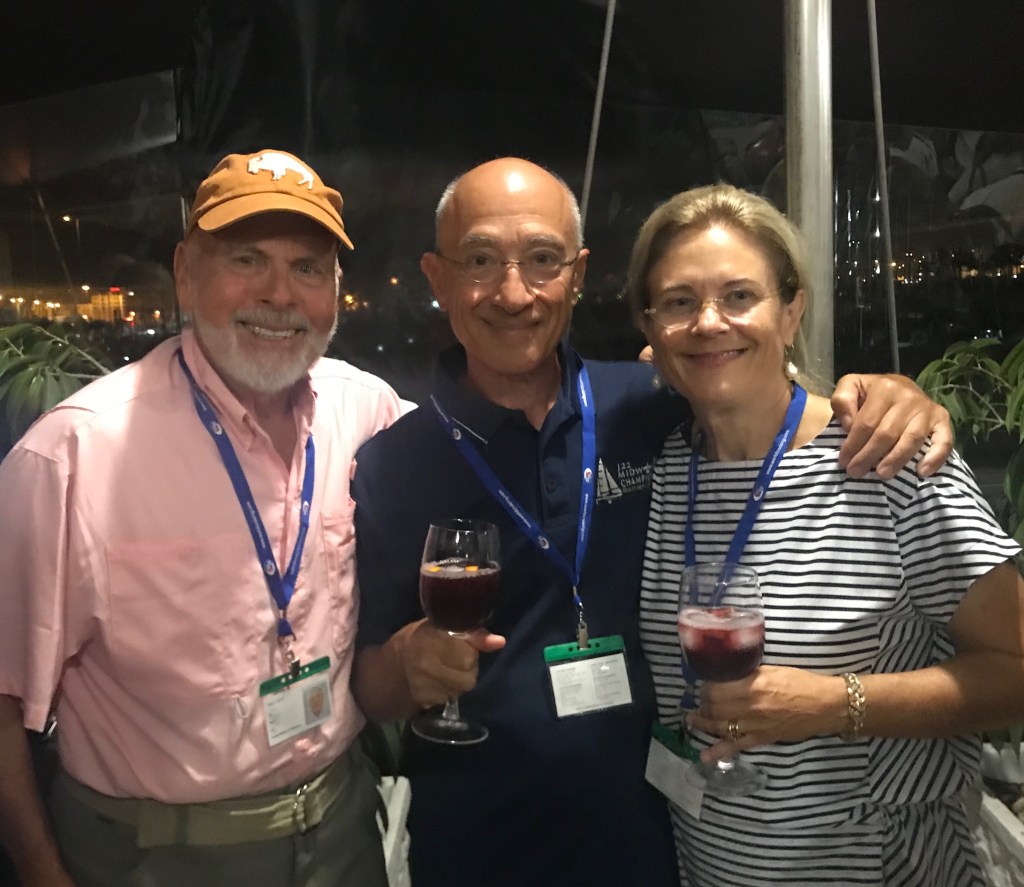
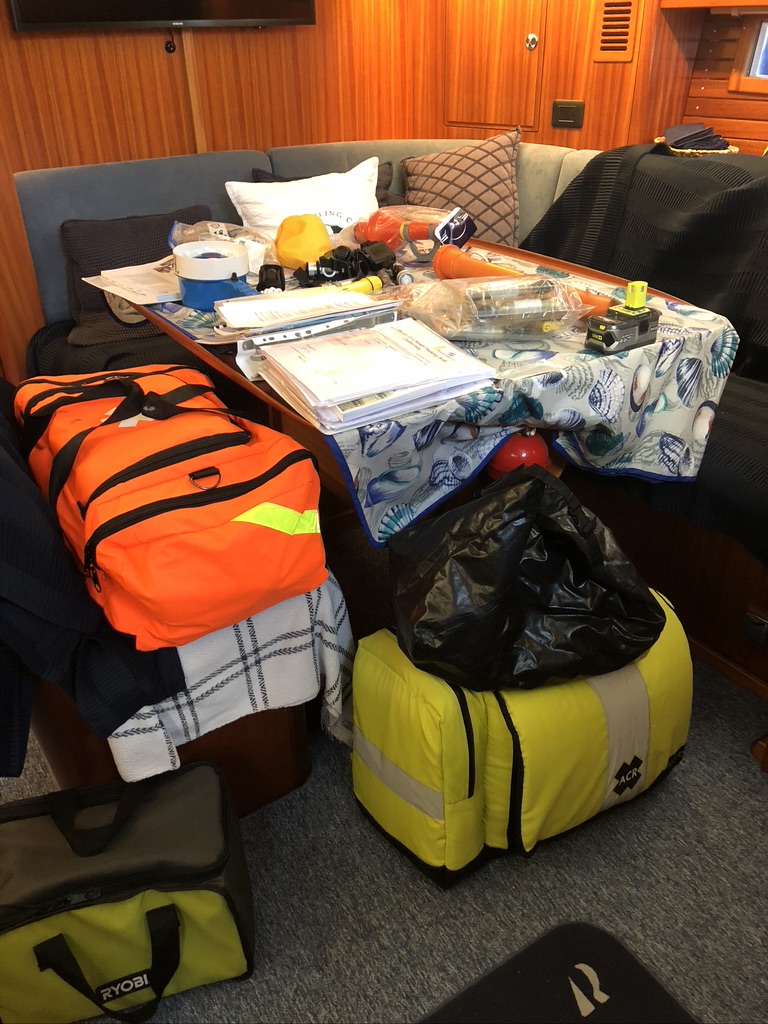
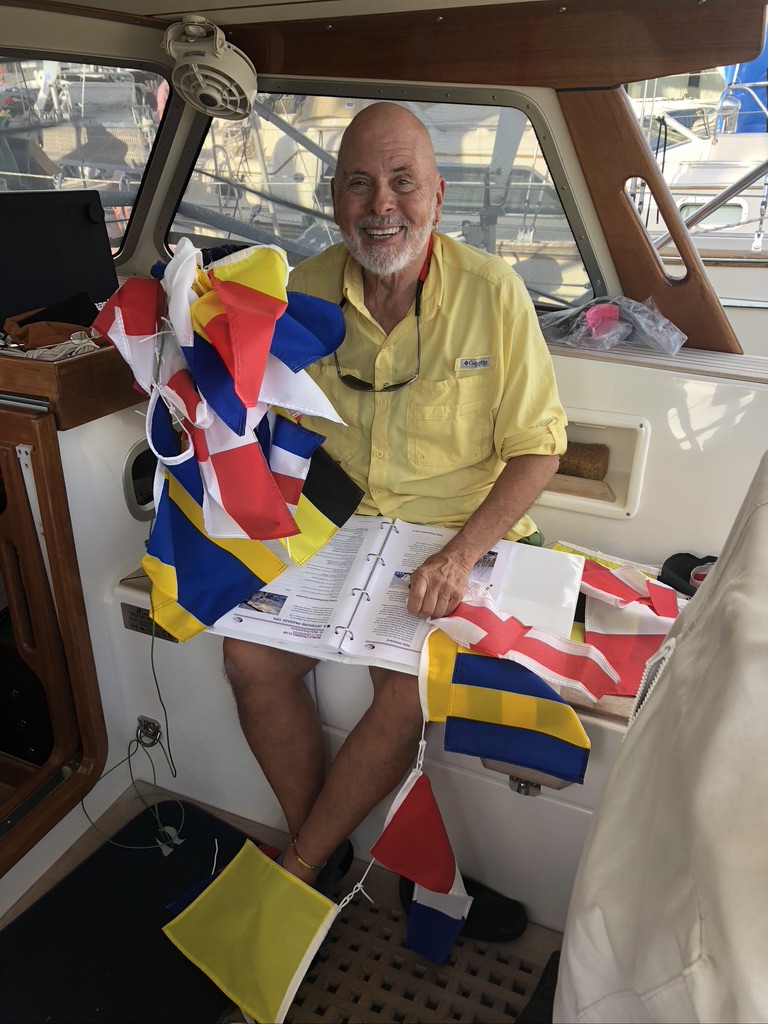
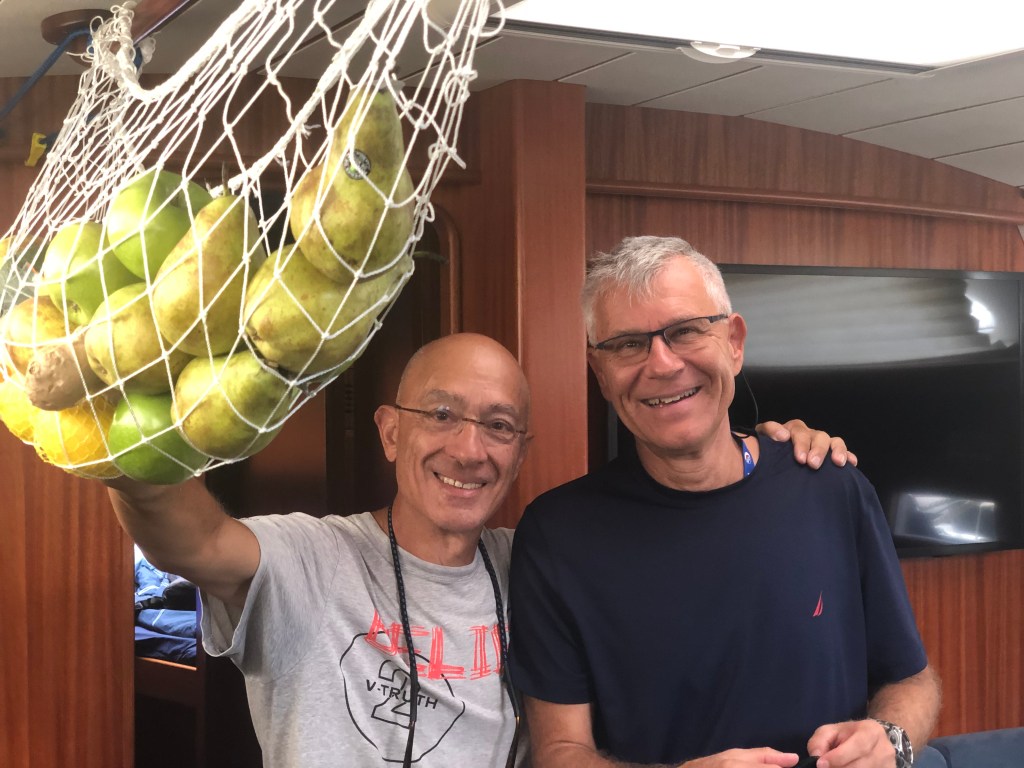
After returning to Las Palmas from Tenerife, the ARC provided a week full of social and educational events as we finished to prepare our boat for our safety inspection and provisioned her with food and water. We also picked up our crew: Tim from Park City, Utah, and Don from Bern, Switzerland. They will sail with us all the way to Saint Lucia!
On Sunday we will begin the first leg of the ARC+ to Mindelo, Cape Verde!


 The Adventures of SV JAN
Really enjoyed seeing your new posting. It looked like some really interesting places. Margaret
On Fri, Nov 8, 2019 at 6:21 PM The Adventures of S/V JAN wrote:
> The Adventures of S/V JAN posted: ” Our 4 day passage from Rabat, Morocco > to the Canary Islands was uneventful except for one major setback when we > were about halfway. Except for first 50 miles when the wind came from the > right side of the boat, or abeam to starboard, we would have mos” >
LikeLike