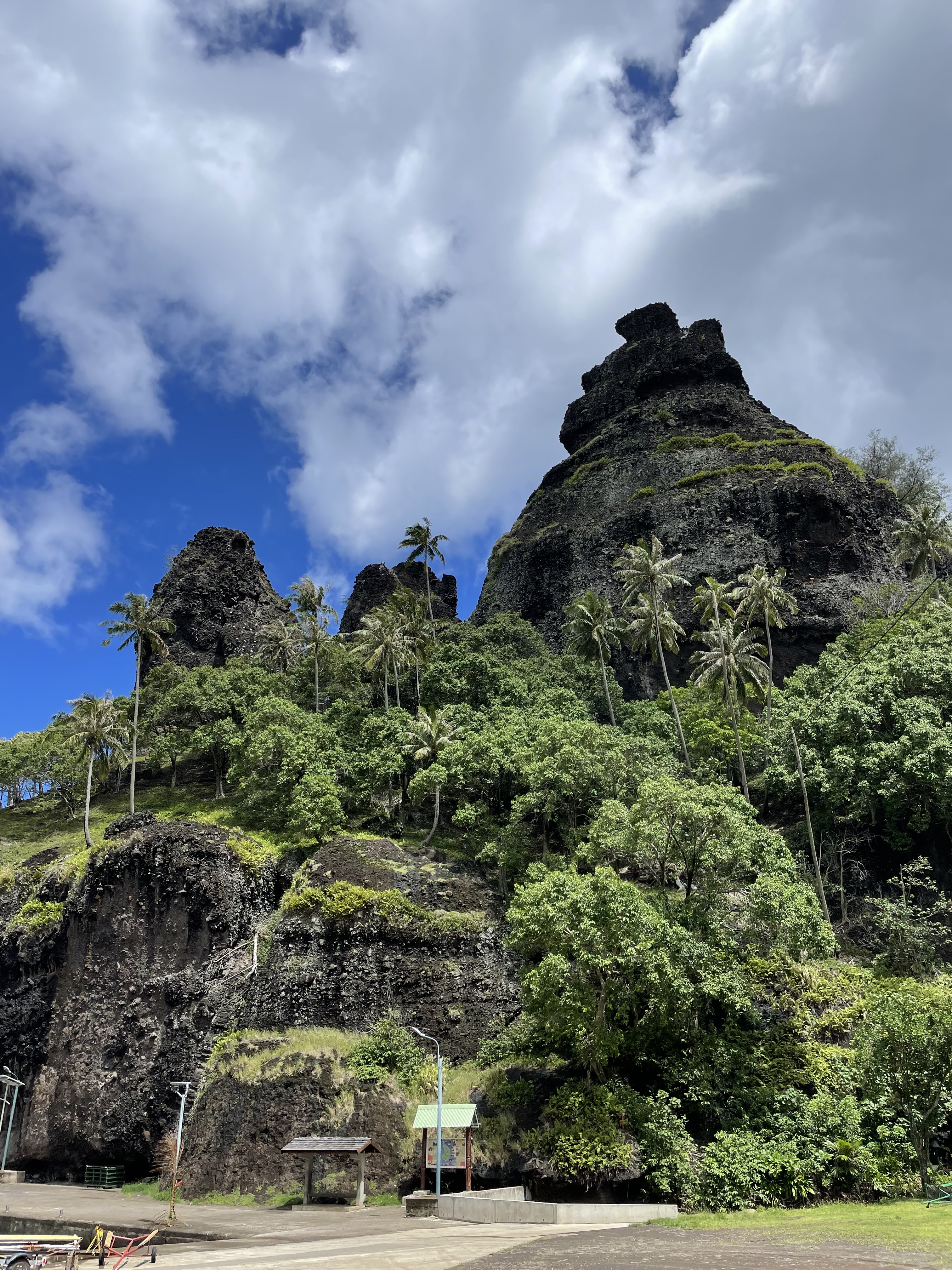
The long ride
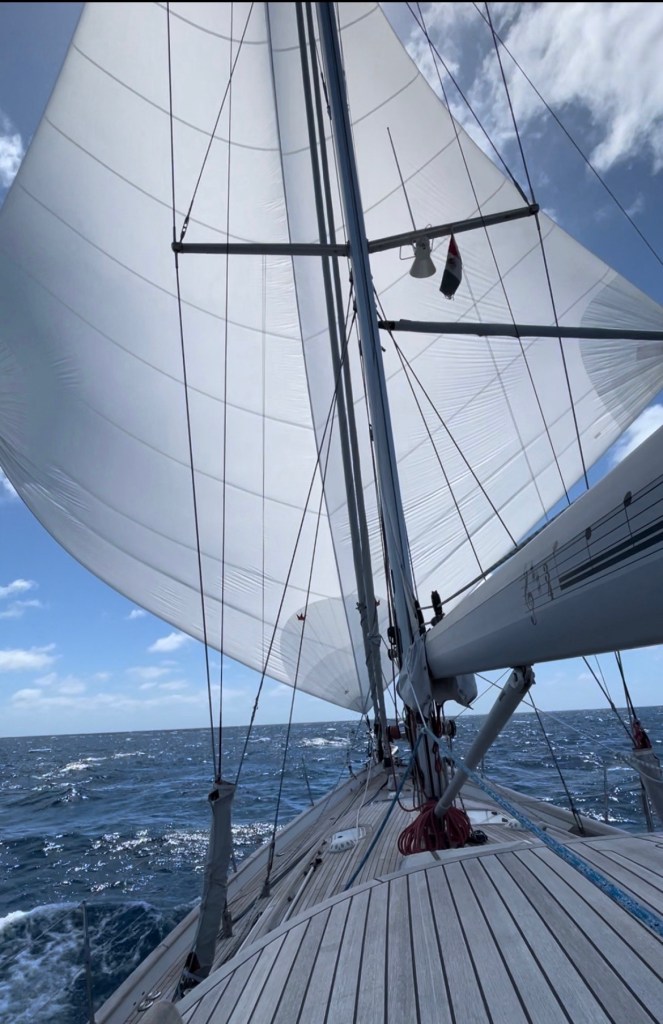
Our passage from Cabo San Lucas, at the southern tip of the peninsula called Baja California Sur in Mexico, to French Polynesia lasted 19 long days— 5 of which, unfortunately, were motoring. Our friend Kevin, Giorgio and I shared shifts of 3 hours on and 6 hours off during the trip of more than 2,700 nautical miles.

One of the most significant problems for sailors heading from North or Central America to French Polynesia is crossing the Intertropical Convergence Zone (ITCZ), also known as the “doldrums“, because of the common lack of wind at or near the equator. At these latitudes the effect of the sun is the strongest, heating and lifting warm-humid air which condenses at higher altitudes into a long band of clouds.
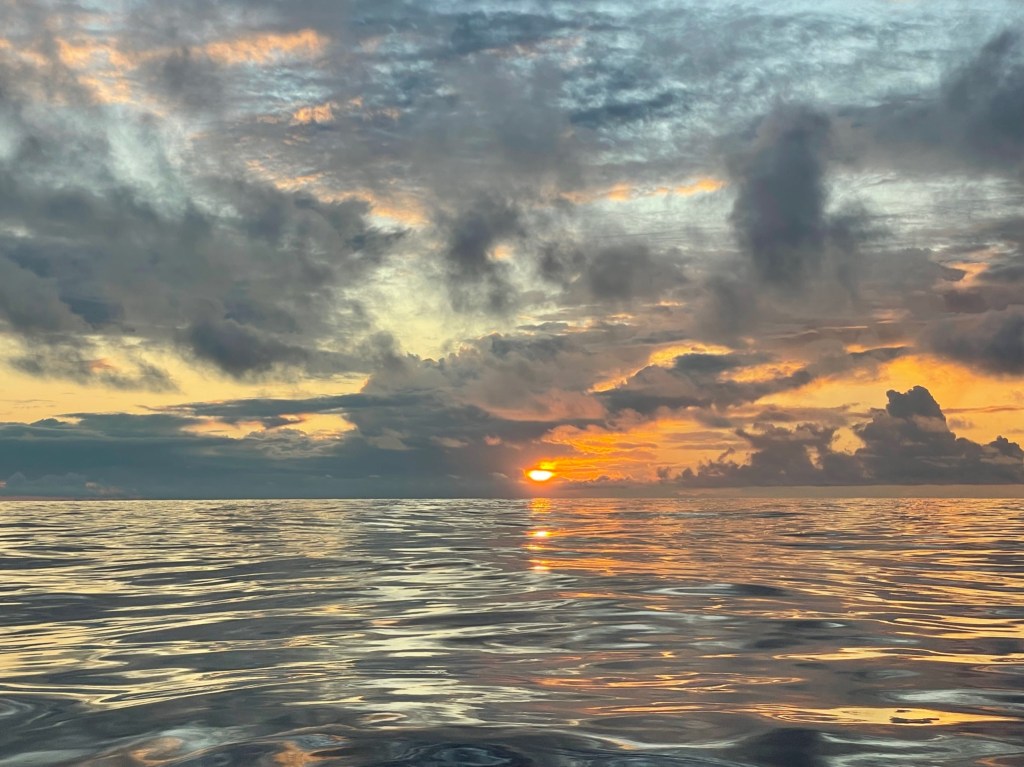
This uplifting creates an area of low pressure that triggers the movement of adjacent air masses, hundreds of miles wide, from both sides of the equator. This movement of air, north and south of the doldrums, forms the trade winds: from the northeast in the northern hemisphere and from the southeast in the southern hemisphere. If seen tridimensionally, the Hadley cells represent these atmospheric circulation patterns.
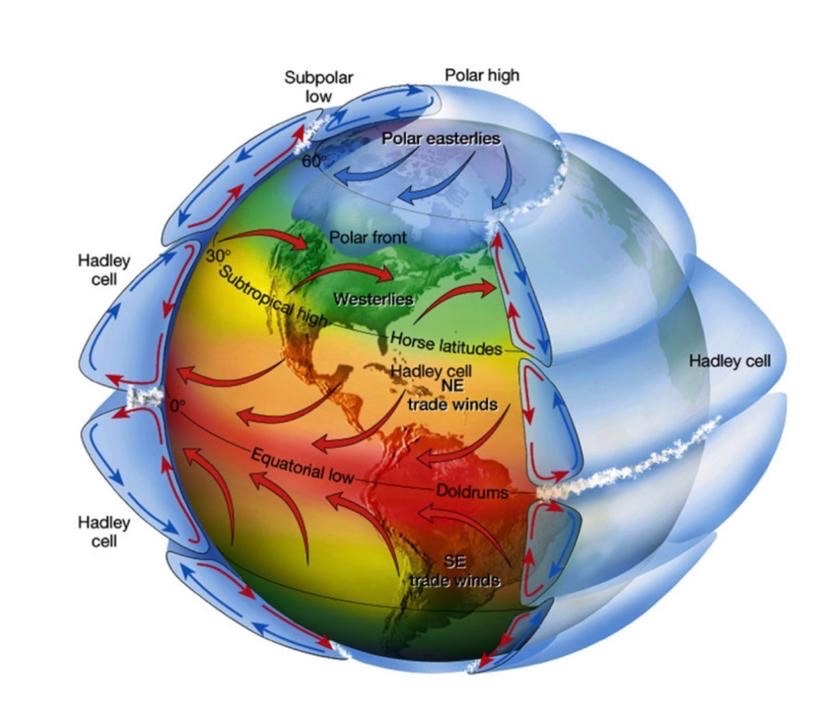
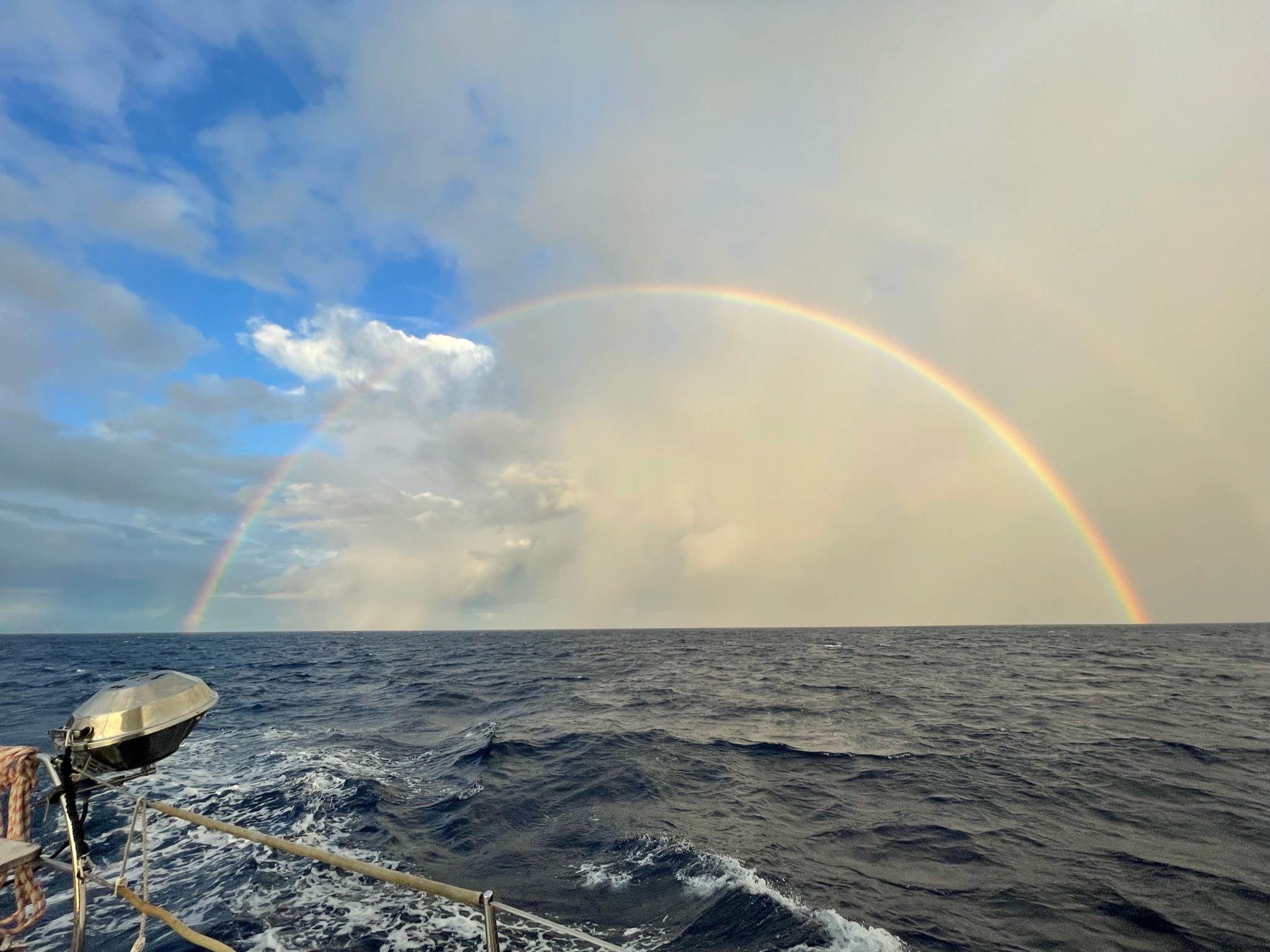
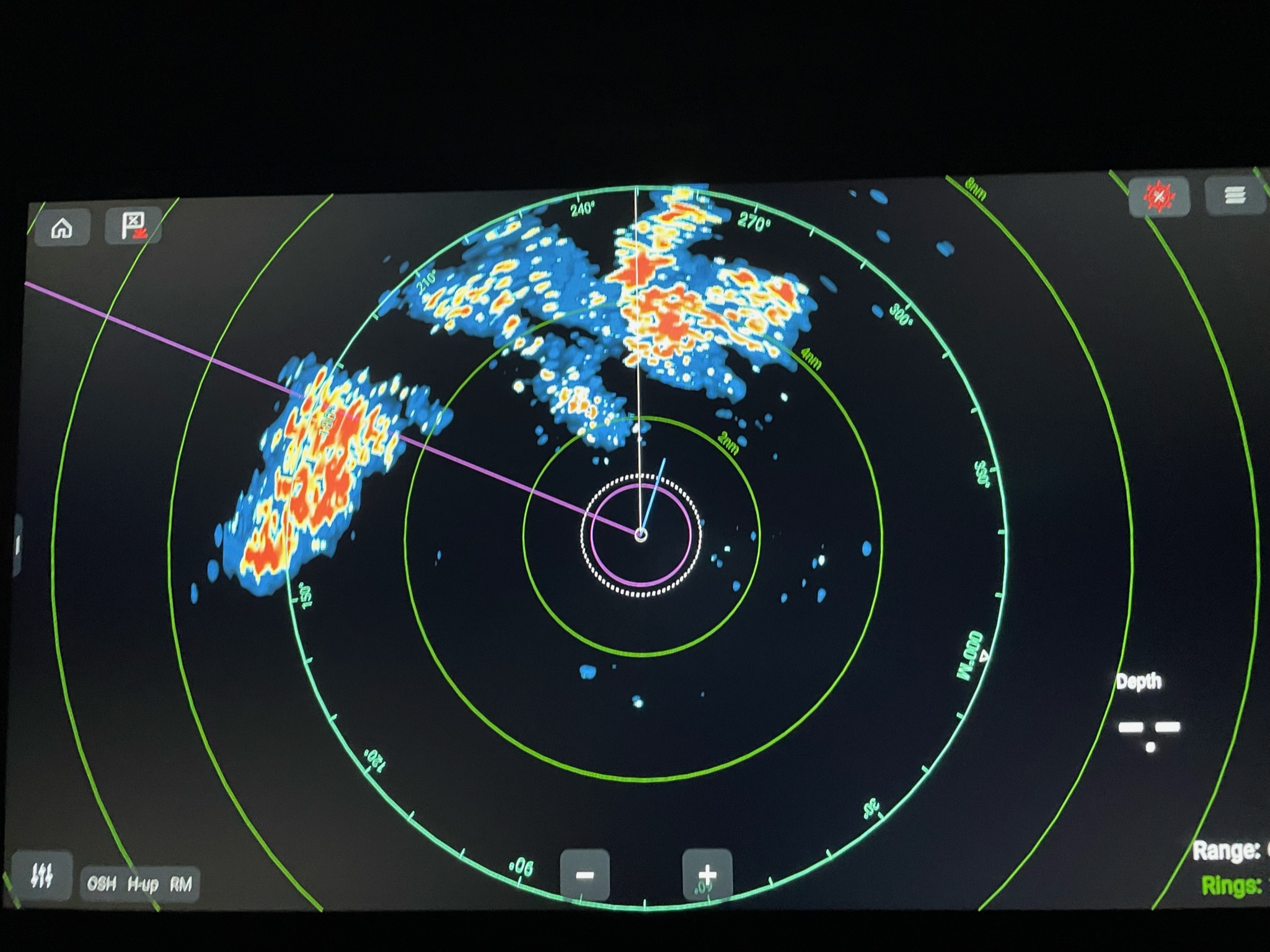
Areas of no wind, but with rain and storms (shown above on radar).
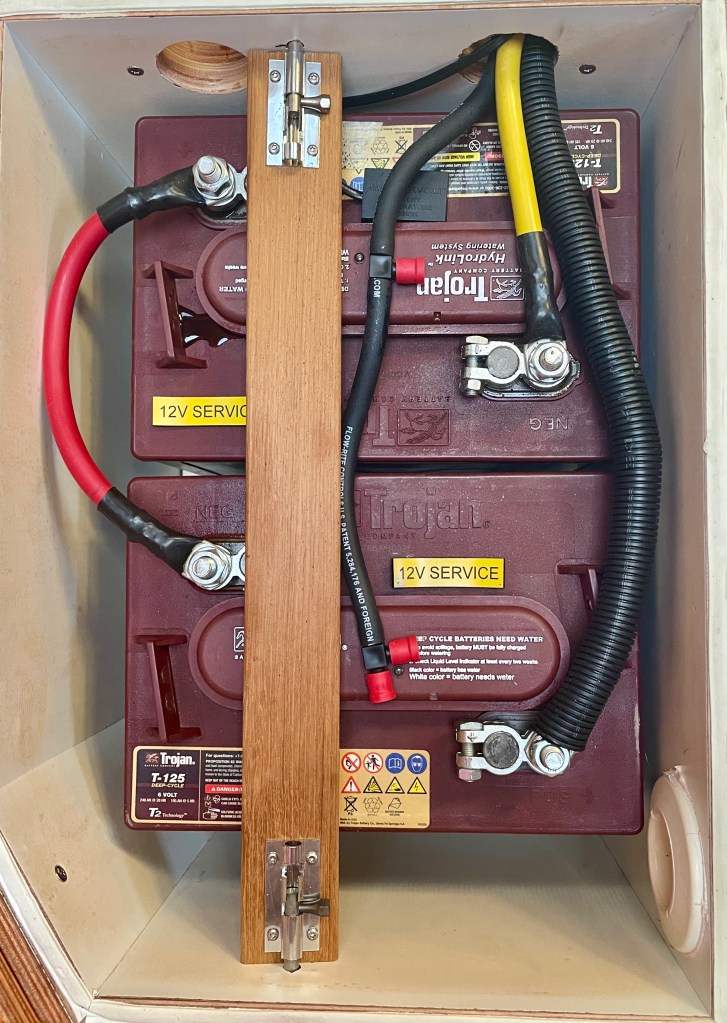
In our case, the ITCZ spanned several degrees of latitude (one degree = 60 nautical miles) and we ended up motoring for 5 days due to lack of wind. Not only the sound of the engine was annoying, but the amount of fuel consumed and the overcharging of two batteries (runaway batteries-see below) became problems for us and affected the overall mood on board.
The beauty of FP
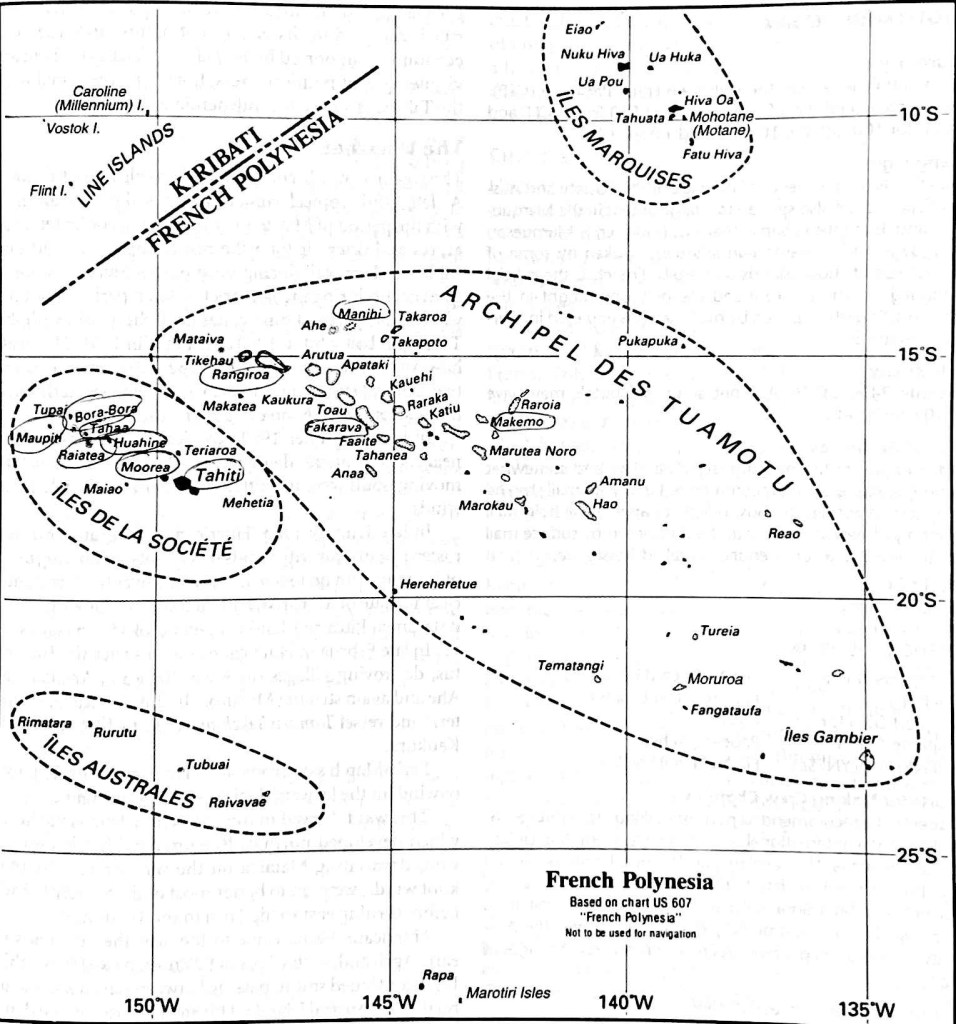
French Polynesia is an overseas territory of France. It includes four distinct island groups in the southeast corner of Oceania but we planned to visit only islands in the groups of the Marquesas, the Tuamotus and the Society Islands.
No group of islands captures the spirit and romance of the South Seas more completely than those of French Polynesia. Although known to Spanish and Dutch explorers as early as the sixteenth century, it was not until the eighteenth century that the islands came into scientific prominence with the explorations of Captain Cook. In 1843, France took formal possession of Tahiti and Moorea and, during the remainder of the nineteenth century, annexed all the islands of the Society, Marquesas, Tuamotu, and Austral groups into what we know today as French Polynesia.
These islands were settled by groups from Western Polynesia about 1,000 years ago. While the original center of religious and political power was on the island of Raiatea, Tahiti became the most populated and eventually gained political power over its neighbors. Today, Tahiti is the seat of government for French Polynesia, and as a result, all the peoples of French Polynesia are known as “Tahitians” to the rest of the world.
French is the official language of French Polynesia. Tahitian is the indigenous language of the Society Islands, while the Marquesas and the Tuamotus have their own indigenous languages.
The islands of French Polynesia are all volcanic in origin, each group of islands having formed at different times in the geological history of the Pacific landmasses. The northwestward movement of the Pacific tectonic plate against the Australian tectonic plate creates gaps, called “hot spots,” and form linear chains of underwater volcanoes, some of which reach the surface along the lines of contact between the tectonic plates. Therefore, these groups of islands are oriented from the southeast toward the northwest. The volcanoes that formed the islands of French Polynesia are now mostly inactive or dormient—the Tuamotus being the oldest of the group, and the Marquesas the youngest.
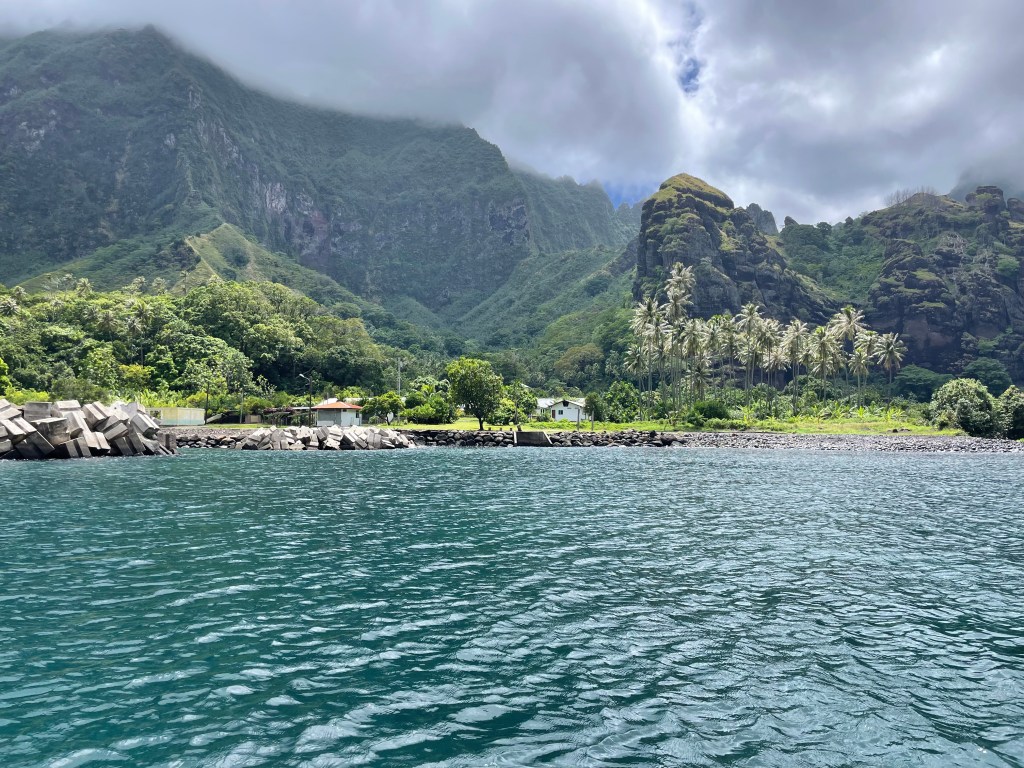
The Marquesas are tall islands, and too young to have developed into a coral reef by erosion. The lack of a protective reef leaves the anchorages exposed to an unpleasant swell. At the other extreme, the islands of the Tuamotu Archipelago are true atolls—remnants of the old volcanoes: only lagoons ringed by coral reefs are left. Instead, the Society Islands have tall mountains surrounded by coral reefs. The anchorages in the Society Islands are thus protected from the continuous swell.
The Marquesas and the Society islands, being tall and mountainous, have an abundance of rain and streams, supporting lots of vegetation. The Tuamotus, on the other hand, are flat and have only palms and mangroves, which are able to thrive in salt water.

We love French Polynesia and the feeling of being in France. The food, the services, the social structure have a European flair. Even more, the local people, the land, and the climate make French Polynesia a unique place on Earth.

Celebrating our arrival after 19 days at sea!

 The Adventures of SV JAN
Thank you so much for the history lesson on French Polynesia. And your trip was quite fast at 19 days, I assume with the motoring. Enjoy your time there. We are looking forward to crossing March of 2025. Lynn and Hugh of s/v Happy. Cheers to you!
LikeLike
Thank you Lynn!
Jan
<
div dir=”ltr”>
<
blockquote type=”cite”>
LikeLike